The Odyssey Audiobook & Text to Speech Guide (2026) — Homer's Ancient Greek Epic Behind Christopher Nolan's $250M July 2026 Universal Film with Matt Damon / Anne Hathaway / Tom Holland / Zendaya
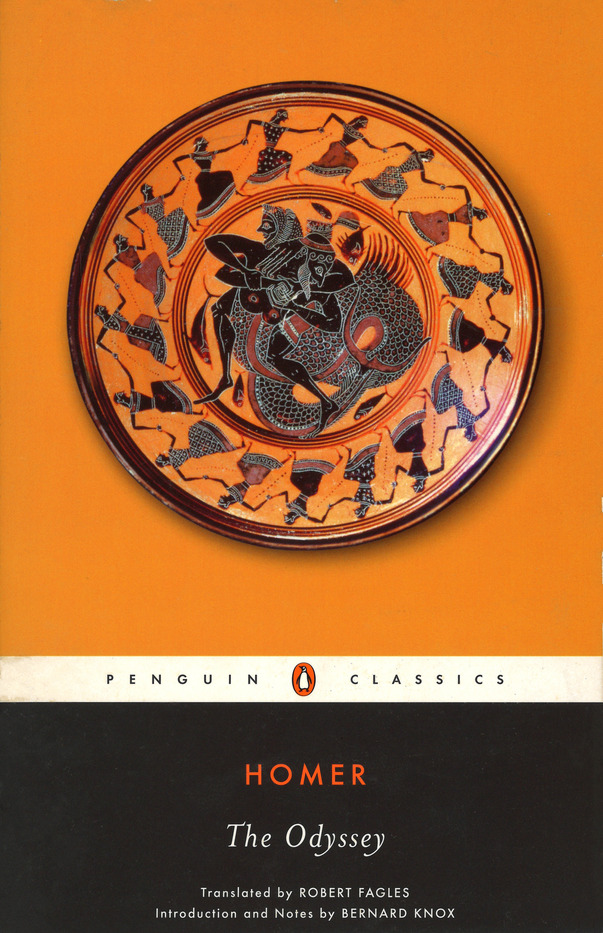
The Odyssey — Homer
Original composition: ~8th century BC — oral Greek tradition
Pages: 541 (Fagles 1996 Penguin Classics) / 582 (Wilson 2018 Norton) / 365 (Lattimore 1965 HarperCollins)
Goodreads: 3.84★ (1.21M+ ratings) · view
Audiobook runtime: 13h 20m Ian McKellen / Naxos Audiobooks (Fagles) · 13h 32m Claire Danes / Audible Studios (Wilson) · ~16h Lattimore (HarperCollins)
Commercial scale: 2,800 years continuous circulation · 100+ major English translations since Caxton 1488 · global public domain status for Homeric original and pre-20th-century translations · universally taught secondary-and-tertiary curriculum
Awards & Recognition: Foundational Western literature · Robert Fagles 1996 Penguin Classics PEN/Ralph Manheim Medal for Translation · Emily Wilson 2018 Norton first woman English translator (historical milestone)
Cultural position: Christopher Nolan's The Odyssey — Universal Pictures — $250M budget — July 17, 2026 theatrical release w/ Matt Damon (Odysseus) / Anne Hathaway (Penelope) / Tom Holland (Telemachus) / Zendaya (Helen of Troy) / Charlize Theron (Circe) / Lupita Nyong'o (Clytemnestra) / Robert Pattinson / Matthias Schoenaerts — Nolan's first post-Oppenheimer project · loose adaptations: O Brother Where Art Thou (Coen Brothers 2000), 1997 Konchalovsky NBC miniseries w/ Armand Assante
Homer's ~8th century BC ancient Greek epic — Odysseus's ten-year homecoming journey from the Trojan War to Ithaca, Penelope, and Telemachus — has been the foundational Western literary work for 2,800 years, with Ian McKellen's definitive 13h 20m Naxos reading of Robert Fagles's canonical 1996 translation, Claire Danes's 13h 32m Audible reading of Emily Wilson's historic 2018 first-woman-English-translator translation, and Christopher Nolan's upcoming $250M July 17, 2026 Universal film starring Matt Damon / Anne Hathaway / Tom Holland / Zendaya. Use CastReader AI TTS on Kindle The Odyssey text →
The Odyssey is Homer's ~8th century BC ancient Greek epic — one of the two foundational works of Western literature — chronicling the ten-year homecoming journey of Odysseus, king of Ithaca, from the Trojan War (subject of The Iliad) back to his wife Penelope and son Telemachus. Composed ~8th century BC in the oral-tradition dactylic-hexameter form (12,109 lines, 24 books), The Odyssey has been continuously transmitted for 2,800 years across scribal copying (Byzantine Greek manuscripts), Renaissance humanist translation (Caxton 1488, Chapman 1616), Enlightenment classical-literary absorption (Pope 1725-26), Victorian prose rendering (Butler 1900, Butcher-Lang 1879), and modern-verse canonical translation (Lattimore 1965, Fagles 1996, Wilson 2018). The epic's non-linear structure — in medias res opening ten years after Troy's fall, Telemachy in Books 1-4, Odysseus's wanderings narrated as flashback in Books 9-12 (Cyclops Polyphemus, Sirens, Circe, Scylla-and-Charybdis, Underworld consultation), Ithaca return and slaughter of the 108 Suitors in Books 13-24 — has defined Western narrative architecture. Christopher Nolan's upcoming July 17, 2026 $250M Universal film represents the single largest Odyssey-cultural-moment in 2,800 years of adaptation history. At 13h 20m with Ian McKellen's canonical Fagles-translation Naxos production — and 13h 32m with Claire Danes's contemporary Wilson-translation Audible production — The Odyssey is the universally-recommended introduction to ancient Greek epic literature.
This guide covers the 13h 20m runtime, the translation selection decision, the 24-book structure architecture, and every free / paid path.
Why 13h 20m Matters
Ancient-epic and foundational-Western-literature runtime benchmark.
| Title | Runtime | Era | Goodreads rating |
|---|---|---|---|
| The Odyssey (Homer, Fagles) — this book | 13h 20m | ~8th century BC | 3.84★ |
| The Iliad (Homer, Fagles) | 24h | ~8th century BC | 3.96★ |
| The Aeneid (Virgil, Fagles) | 12h 36m | ~29-19 BC | 3.87★ |
| Metamorphoses (Ovid) | 17h | ~8 AD | 4.04★ |
| The Divine Comedy (Dante, Musa) | 25h | ~1320 AD | 4.10★ |
| The Odyssey (Wilson) | 13h 32m | 2018 translation | 4.18★ |
| The Odyssey (Lattimore) | ~16h | 1965 translation | 4.21★ |
Takeaway: The Odyssey is substantially shorter than The Iliad and comparable in length to The Aeneid — making it the accessible-entry ancient-epic choice. Ian McKellen's 13h 20m Fagles production is the universal first-listen recommendation. Emily Wilson's 2018 translation (Claire Danes, 13h 32m) is the contemporary consensus alternative. For Christopher Nolan 2026 film preparation, pre-film epic-familiarity substantially enriches theatrical engagement.
The 8th Century BC to 2026 Trajectory
- ~8th century BC: Homer composes The Odyssey in oral dactylic-hexameter tradition — historical Homer's identity remains scholarly-debated (single author vs. multiple-author composite)
- ~6th century BC: Athenian Peisistratos orders first authoritative written text compilation
- ~3rd century BC: Alexandrian scholars (Zenodotus, Aristophanes of Byzantium, Aristarchus of Samothrace) establish canonical 24-book division
- ~1st century BC: Virgil consciously models The Aeneid on The Odyssey (Aeneas's Mediterranean wanderings parallel Odysseus's)
- 1488: William Caxton publishes first English Odyssey (from French intermediary translation)
- 1616: George Chapman publishes first English verse translation from Greek — the translation John Keats famously celebrated in 'On First Looking into Chapman's Homer' (1816)
- 1725-26: Alexander Pope publishes heroic-couplet Odyssey translation (co-translated with Elijah Fenton and William Broome) — remains the canonical historic English verse translation
- 1879: Samuel Butcher and Andrew Lang publish canonical Victorian prose translation
- 1900: Samuel Butler publishes prose translation (Butler famously argued the author was a Sicilian woman)
- 1925-27: T.E. Lawrence (Lawrence of Arabia) publishes prose translation under pseudonym 'T.E. Shaw'
- 1965: Richmond Lattimore publishes scholarly-standard verse translation (University of Chicago Press)
- 1996: Robert Fagles publishes Penguin Classics free-verse translation — awarded PEN/Ralph Manheim Medal; becomes canonical contemporary recommendation
- 1996: Ian McKellen records Fagles translation for Naxos Audiobooks — becomes canonical audiobook
- 1997: Andrei Konchalovsky's NBC Odyssey miniseries w/ Armand Assante / Greta Scacchi / Isabella Rossellini — Emmy-winning
- 2000: Joel and Ethan Coen release O Brother, Where Art Thou — loose Odyssey adaptation
- 2000: Stanley Lombardo publishes Hackett translation — contemporary-spoken-word register
- 2018: Emily Wilson publishes Norton translation — first woman to translate The Odyssey into English; iambic-pentameter line-for-line matching Homer's 12,109 lines
- 2018: Claire Danes records Wilson translation for Audible Studios (13h 32m)
- 2024-2025: Christopher Nolan films The Odyssey across Greece, Morocco, Sicily, Iceland — $250M Universal production
- 2026 April: Homer's epic remains universally assigned in global curricula · Fagles / McKellen and Wilson / Danes remain canonical audiobook choices
- 2026 July 17: Christopher Nolan's The Odyssey theatrical release — Matt Damon (Odysseus) / Anne Hathaway (Penelope) / Tom Holland (Telemachus) / Zendaya (Helen) / Charlize Theron (Circe) / Lupita Nyong'o (Clytemnestra) — expected to drive largest Odyssey-cultural-moment in 2,800 years of adaptation history
The 24-Book Structure Architecture
Understanding Homer's non-linear epic structure:
Books 1-4 (the Telemachy):
- Book 1: Council of gods on Olympus; Athena's visit to Telemachus in Ithaca; Telemachus's public censure of the Suitors
- Book 2: Telemachus's assembly; departure from Ithaca (with Athena disguised as Mentor)
- Book 3: Telemachus at Pylos with Nestor
- Book 4: Telemachus at Sparta with Menelaus and Helen; news of Odysseus's detention on Calypso's island
Books 5-8 (Odysseus released from Calypso / arrival on Phaeacia):
- Book 5: Hermes delivers Zeus's order to Calypso; Odysseus departs Ogygia; Poseidon's storm
- Book 6: Princess Nausicaa on Phaeacia; Odysseus's arrival
- Book 7: Odysseus at King Alcinous's palace
- Book 8: Phaeacian games; the bard Demodocus sings of Troy (bringing Odysseus to tears, prompting his own narration)
Books 9-12 (the wanderings, narrated by Odysseus to the Phaeacians as flashback):
- Book 9: The Lotus-eaters; the Cyclops Polyphemus (Odysseus blinds him, claiming his name is 'Nobody')
- Book 10: Aeolus and the bag of winds; the cannibalistic Laestrygonians; Circe's island (men turned to swine; Odysseus protected by Hermes's moly)
- Book 11: The Underworld (nekuia) — consultation with Tiresias, Odysseus's mother Anticlea, Agamemnon, Achilles, Ajax, Heracles
- Book 12: The Sirens; Scylla-and-Charybdis; the cattle of the Sun God Helios (all crewmates killed by Zeus's lightning)
Books 13-24 (the Ithaca return):
- Book 13: Phaeacians return Odysseus secretly to Ithaca; Athena's disguise-as-beggar instruction
- Book 14: Odysseus at the swineherd Eumaeus's hut
- Book 15: Telemachus's return journey from Sparta
- Book 16: Odysseus-Telemachus reunion at Eumaeus's hut
- Book 17: Odysseus (disguised) enters his own palace; old dog Argos dies recognizing him
- Book 18: The beggar Irus fight; Penelope's appearance before the Suitors
- Book 19: Odysseus speaks with Penelope (she does not recognize him); the old nurse Eurycleia recognizes the scar
- Book 20: Final night before the slaughter
- Book 21: The stringing-the-bow contest (only Odysseus strings his own bow)
- Book 22: The slaughter of the 108 Suitors — the epic's climactic battle
- Book 23: Penelope's bed-test (the olive-tree trunk Odysseus built their marriage bed around) — reunion
- Book 24: The Suitors' ghosts in the Underworld; Odysseus's reunion with his father Laertes; peace restored
24 books total, 12,109 lines, traditionally corresponding to 24 oral-performance sessions.
The Translation Selection Guide
Robert Fagles 1996 (Penguin Classics) — canonical contemporary first-listen recommendation:
- Free-verse modern English
- Awarded PEN/Ralph Manheim Medal for Translation
- Narrated by Ian McKellen for Naxos Audiobooks (13h 20m) — universal canonical audiobook
- Best balance of readability and Homeric diction preservation
Emily Wilson 2018 (Norton) — contemporary canonical alternative:
- Iambic pentameter, line-for-line matching Homer's 12,109 Greek lines (rare fidelity)
- First woman to translate The Odyssey into English (historical milestone)
- Narrated by Claire Danes for Audible Studios (13h 32m)
- Deliberately strips Victorian moralizing; accessible modern register
- Famous opening: 'Tell me about a complicated man'
Richmond Lattimore 1965 (HarperCollins / University of Chicago) — scholarly standard:
- Line-by-line precise translation
- Classical-studies undergraduate seminar canonical
- Audiobook runtime ~16h (longer due to line-density)
Stanley Lombardo 2000 (Hackett) — contemporary spoken-word register:
- Punchy modern English suitable for performance
- Lombardo has recorded his own translation in his distinctive spoken-word style
Alexander Pope 1725-26 — historic classical:
- Heroic-couplet rhyming verse
- Globally public domain — available free via Project Gutenberg / LibriVox
- Linguistically archaic for modern listeners; reserved for upper-division classical-literary study
For first-listeners: Fagles (McKellen). For contemporary readers: Wilson (Danes). For classical-studies: Lattimore. For free / public-domain: Pope.
Every Way to Listen
- Ian McKellen / Naxos Audiobooks (Fagles) — 13h 20m canonical first-listen recommendation
- Claire Danes / Audible Studios (Wilson 2018) — 13h 32m contemporary canonical alternative
- Lattimore 1965 HarperCollins Audio — ~16h scholarly-standard
- LibriVox (Pope 1725-26 / Butler 1900 / Butcher-Lang 1879 prose) — free public-domain audio (linguistically archaic for modern listeners)
- Audible Premium 1 credit — ~$14.95 covers any commercial translation
- Audible purchased audiobook — $22-28 for premium productions
- Libby (U.S. libraries) — 0-2 week wait; Fagles / Wilson / Lattimore reliably stocked
- Hoopla — classical-literature catalog; multiple translations available
- Spotify Premium audiobook — within 15-hour monthly allocation at 13h 20m-13h 32m
- Purchased Kindle edition — $10-18 for contemporary translations; free public-domain Kindle downloads
- Project Gutenberg / Standard Ebooks — free public-domain Kindle downloads of Pope / Butler / Butcher-Lang translations
- CastReader AI TTS with any Kindle Odyssey edition — unlimited re-listens, adjustable pace, particularly well-suited to Wilson iambic-pentameter regular-meter translation
Libby Wait Times (April 2026)
Survey of major U.S. library networks as of April 2026.
- NYPL / Brooklyn Public Library: 0-2 week wait (Fagles McKellen and Wilson Danes both prominently stocked)
- Los Angeles Public Library: 0-1 week wait
- Chicago Public Library: 0-2 week wait
- Seattle Public Library: 0-2 week wait
- Boston Public Library: 0-2 week wait (classical-catalog commitment)
The Odyssey has short library waits because its universally-assigned-curriculum status ensures every major US library system carries multiple digital copies across Fagles / Wilson / Lattimore translations. Libby is the recommended free path for contemporary translations; LibriVox is the free zero-cost path for public-domain Pope / Butler translations.
Why Kindle + CastReader Suits The Odyssey
The Odyssey's 24-book one-book-per-session structure and extended multi-week listening pattern make it uniquely well-suited to CastReader AI TTS — cross-device bookmarking preserves progress across extended 2-3 week one-book-per-day consumption.
Listeners commonly return to:
- Book 1 opening — 'Tell me about a complicated man' (Wilson) / 'Sing to me of the man, Muse' (Fagles) / 'The man of twists and turns' (Lattimore)
- Book 9 — the Cyclops Polyphemus cave and blinding ('Nobody' ruse)
- Book 10 — Circe's island and the men-into-swine transformation
- Book 11 — the Underworld consultation (nekuia) with Tiresias, Agamemnon, Achilles
- Book 12 — the Sirens' song and the Scylla-Charybdis passage
- Book 14 — the Eumaeus swineherd hut scenes
- Book 17 — old dog Argos's death (one of the most-quoted passages in world literature)
- Book 21 — the stringing-the-bow contest climax
- Book 22 — the slaughter of the 108 Suitors (the epic's climactic battle)
- Book 23 — Penelope's bed-test and the Odysseus-Penelope reunion
- Book 24 — Odysseus's reunion with Laertes
For 2026 Nolan film preparation, CastReader's bookmark-preservation enables structured pre-film epic-familiarity — pause on specific books, cross-reference translations, pre-absorb character architectures before theatrical release.
CastReader's pronunciation overrides handle Homeric proper-noun vocabulary: Odysseus (oh-DISS-yoos), Penelope (peh-NELL-oh-pee), Telemachus (tell-EM-uh-kus), Laertes (lay-ER-teez), Calypso (kuh-LIP-so), Polyphemus (pol-ih-FEE-mus), Nausicaa (nah-SIK-uh-ah), Alcinous (al-SIN-oh-us), Eumaeus (yoo-MEE-us), Eurycleia (yoor-ih-KLEE-ah), Antinous (an-TIN-oh-us), Tiresias (tai-REE-see-us), Laestrygonians (less-trih-GO-nee-uns), Phaeacia (fee-AY-shuh), Ithaca (ITH-uh-kuh), Achaea (uh-KEY-uh), Troy, Athena, Zeus, Poseidon, Hermes, Circe (SIR-see), Helios, Charybdis (kuh-RIB-dis), Scylla (SILL-ah). These are among the most-frequently-mispronounced proper nouns in AI TTS systems; CastReader's override library handles all Homeric names.
Send to Phone for 24-Book Structured Listening
At 13h 20m / 13h 32m The Odyssey rewards structured book-by-book pacing over 2-3 weeks. Send to Phone preserves CastReader position across device switches — complete Book 1 Telemachy during morning commute, Book 9 Cyclops scene during lunch walk, Book 22 Suitors-slaughter during evening desk-session. Book-by-book pacing mirrors ancient oral-performance tradition.
Limitations and Honest Notes
- Translation choice substantially affects experience — first-listeners often benefit from comparative sampling (Book 1 opening passage across Fagles / Wilson / Lattimore / Pope) before committing
- Homer's proper-noun density (Greek names, place-names, divine-names) challenges default AI TTS — CastReader's pronunciation library handles most but unusual epithets (e.g., 'Polymetis Odysseus', 'Thunderer Zeus', 'Earth-Shaker Poseidon') may require manual overrides
- Content considerations — battle violence (Suitors-slaughter, Cyclops-blinding), sexual content (Circe / Calypso affairs, Helen backstory), slavery as casual-social-institution, cultural-contextual assumptions foreign to modern readers — should be framed in appropriate historical-cultural context
- The Odyssey's non-linear structure (Books 1-4 Telemachy, Books 5-8 Phaeacia, Books 9-12 Odysseus's flashback wanderings, Books 13-24 Ithaca return) requires active listening-attention for first-listeners unfamiliar with epic conventions — the adventure-narrative Books 9-12 flashback is a narrated-within-narrated structure that can confuse expectations of linear chronology
- For first-time ancient-epic readers, The Odyssey's occasional catalog-passages (ship catalogs, genealogies, guest-gift lists) may feel slower than the adventure-narrative books — 1.25x-1.5x speed is commonly recommended for catalog-passages, 1.0x for dialogue and narrative
- Christopher Nolan's July 17, 2026 film adaptation will inevitably condense the 24-book epic into ~3-hour theatrical runtime — book purists recommend reading / listening to the full epic before the film to preserve structural-architectural familiarity
Related Reading
- Listen to Kindle — CastReader's Kindle-to-TTS path
- Send to Phone — cross-device position sync
- Kindle Text to Speech — Kindle TTS options overview
- Turn Kindle into Audiobook Free — free audiobook paths
- The Iliad (Homer) Audiobook Guide — Homer's companion epic
- The Aeneid (Virgil) Audiobook Guide — Roman ancient-epic canonical peer
- The Divine Comedy (Dante) Audiobook Guide — medieval canonical peer
- Crime and Punishment (Dostoevsky) Audiobook Guide — Russian canonical peer
