Crime and Punishment Audiobook & Text to Speech Guide (2026) — Dostoevsky's 1866 Russian Psychological Canon Behind 1935 Josef von Sternberg & 2002 BBC John Simm Adaptations
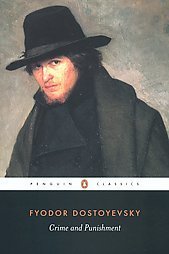
Crime and Punishment — Fyodor Dostoevsky (Pevear-Volokhonsky 1992 translation)
First published: January 1866 — The Russian Messenger monthly, 12 issues through December 1866; single-volume 1867
Pages: 671 (Pevear-Volokhonsky) / 656 (McDuff) / 624 (Oliver Ready)
Goodreads: 4.29★ (1.11M+ ratings) · view
Audiobook runtime: 21h 37m George Guidall / Recorded Books (Pevear-Volokhonsky) · 25h 17m Simon Vance / Blackstone Audio (McDuff) · 19h 58m Michael Scherer / Brilliance (Garnett) · LibriVox free Garnett volunteer recordings
Commercial scale: 25M+ cumulative global sales · 160 years continuous translation · 170+ language translations · global public domain
Cultural position: 1935 Josef von Sternberg Columbia film w/ Peter Lorre · 1969 Lev Kulidzhanov Soviet 220-min film · 1998 BBC Ben Kingsley film · 2002 Julian Jarrold BBC miniseries w/ John Simm · 2002 Menahem Golan film w/ Crispin Glover · 2006 PBS American Playhouse w/ Bryan Cranston Emmy-nominated
Dostoevsky's 1866 psychological-realism breakthrough — pioneering interior-monologue technique that prefigures Joyce / Woolf / Kafka 20th-century modernism — has become the canonical Russian-literature first-reading entry point, with 25M+ cumulative global sales, George Guidall's definitive 21h 37m Recorded Books Pevear-Volokhonsky production, and Julian Jarrold's 2002 BBC miniseries with John Simm. Use CastReader AI TTS on Kindle Crime and Punishment text →
Crime and Punishment is Fyodor Dostoevsky's 1866 psychological novel chronicling impoverished ex-law-student Rodion Romanovich Raskolnikov in 1860s St Petersburg, who, steeped in Enlightenment utilitarian philosophy and a self-invented 'extraordinary man' theory, murders pawnbroker Alyona Ivanovna with an axe; unexpectedly, he also murders her innocent sister Lizaveta who arrives mid-crime. Dostoevsky's 6-part-plus-epilogue structure traces Raskolnikov's psychological descent: fever-illness / guilt-haunting; the prolonged cat-and-mouse interrogation by police investigator Porfiry Petrovich; the Sonya Marmeladov redemption-encounter (the prostitute-daughter, Christian-faith archetype who reads Raskolnikov the Lazarus Bible chapter); the manipulative aristocrat Svidrigailov's blackmail-threat and suicide; Raskolnikov's public confession and Siberian exile sentencing; and the famously ambiguous religious-conversion epilogue. At 21h 37m with George Guidall's Recorded Books Pevear-Volokhonsky production, Crime and Punishment is the canonical Russian-19th-century first-entry point — now experiencing renewed audiobook demand through Julian Jarrold's 2002 BBC miniseries with John Simm and contemporary Pevear-Volokhonsky / Oliver Ready translation revival.
This guide covers the 21h 37m runtime, the Pevear-Volokhonsky / McDuff / Garnett / Ready translation comparison, the 6-part-plus-epilogue architecture, and every free / paid path.
Why 21h 37m Matters
Russian-19th-century-literature runtime and rating benchmark.
| Title | Runtime | Year | Goodreads rating |
|---|---|---|---|
| Crime and Punishment (Dostoevsky) — this book | 21h 37m | 1866 | 4.29★ |
| The Brothers Karamazov (Dostoevsky) | 37h 3m | 1880 | 4.32★ |
| The Idiot (Dostoevsky) | 26h 27m | 1869 | 4.19★ |
| Demons (Dostoevsky) | 27h 30m | 1872 | 4.21★ |
| Anna Karenina (Tolstoy) | 35h 5m | 1878 | 4.09★ |
| War and Peace (Tolstoy) | 61h 8m | 1869 | 4.18★ |
| Notes from Underground (Dostoevsky) | 5h 12m | 1864 | 4.18★ |
Takeaway: Crime and Punishment sits at the most-accessible length point in the canonical Russian-19th-century hierarchy — shorter than Tolstoy's two major novels and Dostoevsky's own Brothers Karamazov. George Guidall's 21h 37m Recorded Books Pevear-Volokhonsky production is the definitive contemporary English-language audiobook. For first-time Russian-literature listeners, Crime and Punishment is the consensus-choice first-book entry point.
The 1866-2026 Trajectory
- 1864 March: Dostoevsky publishes Notes from Underground — the philosophical-psychology precursor to Crime and Punishment
- 1865: Dostoevsky drafts Crime and Punishment under severe financial duress (gambling debts, publication contracts); completed in one year
- 1866 January: The Russian Messenger monthly begins serialization (12 issues through December 1866)
- 1867: Single-volume first edition published; immediate critical reception across Russia
- 1867-1880s: Russian sustained critical-and-commercial success; early French / German / English translations
- 1881 February: Dostoevsky dies; Crime and Punishment becomes his canonical novel
- 1914: Constance Garnett publishes her English translation — the dominant English-language Crime and Punishment translation through the mid-20th century
- 1935: Josef von Sternberg's Columbia film w/ Peter Lorre (88 min); same year Pierre Chenal's French adaptation
- 1969: Lev Kulidzhanov's canonical Soviet 220-minute adaptation wins 1970 Soviet State Prize
- 1991: David McDuff publishes Penguin Classics translation
- 1992: Richard Pevear and Larissa Volokhonsky publish their Vintage Classics translation — subsequently becomes the scholarly-consensus contemporary English edition
- 2002: Julian Jarrold's BBC 2-part miniseries w/ John Simm airs — becomes canonical contemporary English-language visual adaptation; same year Menahem Golan's Crispin Glover film
- 2006: Bryan Cranston stars in Emmy-nominated PBS American Playhouse adaptation
- 2014: Oliver Ready publishes Penguin Classics modern translation
- 2020-2025: Sustained classic-literature demand; Oliver Ready translation gains critical traction
- 2026 April: 25M+ cumulative global sales · 160 years continuous translation · Pevear-Volokhonsky 1992 remains scholarly-consensus contemporary English edition · George Guidall / Recorded Books canonical audiobook
The 6-Part-Plus-Epilogue Architecture
Understanding Dostoevsky's novel structure (Pevear-Volokhonsky 1992 671-page edition):
Part 1: The Crime (Chapters 1-7, ~95pp):
- Raskolnikov's St Petersburg apartment-staircase introduction and Alyona Ivanovna's pawnshop
- The Marmeladov tavern encounter and Sonya's introduction
- The Dunya-Luzhin-engagement letter from Pulcheria Alexandrovna
- The axe-murder chapter — dual murder of Alyona and Lizaveta (Part 1 climax)
- Raskolnikov's fever-illness psychological collapse begins
Part 2: Fever and Discovery (Chapters 1-7, ~90pp):
- Raskolnikov's feverish delirium and Razumikhin's intervention
- Marmeladov's fatal injury and Sonya's first direct encounter with Raskolnikov
- The Crystal Palace tavern detective-and-suspect psychological games
Part 3: The Interrogator (Chapters 1-6, ~110pp):
- Porfiry Petrovich's first interrogation — the 'just one more question' cat-and-mouse methodology
- Raskolnikov's 'On Crime' article surfaces — his extraordinary-man-theory published two months before the murders
- Svidrigailov's arrival in St Petersburg and the first Dunya-Svidrigailov confrontation
Part 4: Sonya and the Lazarus (Chapters 1-6, ~100pp):
- Raskolnikov's first deep conversation with Sonya
- The Lazarus Bible-reading chapter — Sonya reads Raskolnikov John 11 (Jesus raising Lazarus from the dead)
- Luzhin's attempted framing of Sonya for theft
Part 5: Confessions (Chapters 1-5, ~85pp):
- Luzhin's unmasking at Marmeladov's funeral
- Raskolnikov's confession to Sonya — 'it was I who killed' — the book's central emotional climax
- Katerina Ivanovna's descent into madness and death
Part 6: Resolution (Chapters 1-8, ~115pp):
- Porfiry's final interview — the investigator offers Raskolnikov partial-sentence confession opportunity
- The final Svidrigailov-Dunya confrontation (Dunya's fired revolver)
- Svidrigailov's suicide — the 'mysterious journey to America' euphemism
- Raskolnikov's public confession at the police station
- Sentencing to 8 years Siberian exile
Epilogue (Chapters 1-2, ~35pp):
- Nine months later — Siberian prison, Sonya's journey to join Raskolnikov
- The ambiguous religious-conversion closing — Raskolnikov picks up the New Testament and weeps
6 parts plus epilogue, 10 chapters-per-part average.
The Translation Comparison
Crime and Punishment has four canonical contemporary English translations:
- Richard Pevear and Larissa Volokhonsky 1992 (Vintage Classics) — scholarly-consensus contemporary definitive; preserves Dostoevsky's deliberate awkwardness; paired with George Guidall / Recorded Books 21h 37m
- David McDuff 1991 (Penguin Classics) — alternate scholarly-respected; slightly smoother prose; paired with Simon Vance / Blackstone Audio 25h 17m
- Constance Garnett 1914 (public domain) — historically-dominant Victorian-English translation; paired with Michael Scherer / Brilliance Audio 19h 58m + LibriVox free volunteer readings
- Oliver Ready 2014 (Penguin Classics) — most recent; restored narrative urgency
Pevear-Volokhonsky is widely regarded as the canonical first-listen recommendation for serious-engagement listeners. Constance Garnett + LibriVox is the canonical free-path recommendation.
Every Way to Listen
- Recorded Books audiobook (George Guidall / Pevear-Volokhonsky via Audible / Libby / Apple Books) — 21h 37m canonical contemporary production
- Blackstone Audio (Simon Vance / McDuff) — 25h 17m alternate scholarly-respected production
- Brilliance Audio (Michael Scherer / Garnett) — 19h 58m historically-dominant translation
- LibriVox free volunteer recordings (Constance Garnett translation) — entirely-free path via LibriVox.org
- Audible Premium 1 credit — ~$14.95 covers any commercial Dostoevsky production
- Audible purchased audiobook — $20-30 for Guidall Pevear-Volokhonsky production
- Libby (U.S. libraries) — 1-2 week wait; Recorded Books Guidall reliably stocked
- Hoopla — classics-catalog 1-3 week wait
- Spotify Premium audiobook — exceeds 15-hour monthly allocation by 6-10 hours depending on edition
- Purchased Kindle edition — $8-14 (Vintage Classics Pevear-Volokhonsky Kindle); free Project Gutenberg Garnett
- CastReader AI TTS with Kindle Crime and Punishment — unlimited re-listens, adjustable pace, works with free Gutenberg Garnett text
Libby Wait Times (April 2026)
Survey of major U.S. library networks as of April 2026.
- NYPL / Brooklyn Public Library: 0-2 week wait (multi-translation multi-narrator library stock)
- Los Angeles Public Library: 0-2 week wait
- Chicago Public Library: 0-1 week wait
- Seattle Public Library: 0-2 week wait
- Boston Public Library: 0-1 week wait (classics-canonical-catalog commitment)
Crime and Punishment has reliably short library waits because its Russian-literature-canonical status ensures every major US library system carries multiple digital translations and narrations. Libby is the recommended free-quality path; Project Gutenberg + CastReader is the recommended entirely-free path.
Why Kindle + CastReader Suits Crime and Punishment
Crime and Punishment's 671-page length and 3-4 week consumption pattern make it uniquely well-suited to CastReader AI TTS — the multi-week listen-window benefits from CastReader's bookmark-preservation across device switches and self-paced consumption flexibility.
Listeners commonly return to:
- The Part 1 apartment-staircase opening chapter (Dostoevsky's canonical interior-monologue introduction)
- The pawnbroker first-visit reconnaissance chapter (Raskolnikov's test-rehearsal)
- The axe-murder Part 1 climax chapter (widely regarded as the canonical psychological-realism murder scene in world literature)
- The Marmeladov tavern-encounter first Sonya introduction
- Porfiry Petrovich's first interrogation (the Colombo-esque 'just one more question' psychology)
- The 'On Crime' article-surfacing Part 3 chapter
- The Sonya-Lazarus Bible-reading chapter (John 11 as the book's spiritual center)
- Raskolnikov's confession to Sonya ('it was I who killed') Part 5 emotional climax
- Svidrigailov's suicide Part 6 psychological denouement
- The police-station public-confession scene
- The Siberian-epilogue religious-conversion closing
For multi-week commitment listeners, CastReader's bookmark-preservation across device switches enables flexible commuting-plus-evening-session pacing — start an evening chapter on iPad, continue on phone during the next day's commute, finish over weekend longer sessions.
CastReader's pronunciation overrides handle the Dostoevsky Russian-patronymic catalog: Rodion Romanovich Raskolnikov (Rodya / Rodenka), Sonya / Sofya Semyonovna Marmeladov, Avdotya Romanovna Raskolnikov (Dunya), Pulcheria Alexandrovna Raskolnikov, Semyon Zakharovich Marmeladov, Katerina Ivanovna Marmeladov, Polina (Polechka) Marmeladov, Dmitri Prokofich Razumikhin, Arkady Ivanovich Svidrigailov, Marfa Petrovna Svidrigailov, Pyotr Petrovich Luzhin, Porfiry Petrovich, Alyona Ivanovna, Lizaveta Ivanovna, Andrey Semyonovich Lebezyatnikov, Nikolai the painter, Mikolka, Haymarket Square, Nevsky Prospect, Crystal Palace tavern.
Send to Phone for Multi-Week Commitment Listening
At 21h 37m Crime and Punishment rewards multi-device commitment-listening. Send to Phone preserves CastReader position across device switches — start a morning commuting chapter on phone, continue evening session on iPad, finish weekend longer-session on laptop.
Limitations and Honest Notes
- At 21h 37m Crime and Punishment is a multi-week commitment — not a single-weekend listen
- Russian patronymic-name complexity challenges first-time listeners — multi-pass listening, or the use of a character-list sidebar, is commonly recommended
- Dostoevsky's deliberately-awkward prose style (preserved most fully in Pevear-Volokhonsky 1992) can feel uncomfortable to listeners expecting smooth Victorian-English prose — Garnett 1914 translation is smoother but substantially alters Dostoevsky's distinctive register
- The book's Christian-religious-conversion epilogue is polarizing — secular-literary readers (Nabokov prominently) have criticized the resolution as last-minute-convenient; devout-religious readers embrace it as the book's spiritual culmination
- Some contemporary readers object to Svidrigailov's sexual-predator backstory (servant-girl suicide, attempted rape of Dunya, marriage to a 16-year-old) — pre-reading content awareness is recommended
- Translation choice substantially affects reading experience — listeners should choose intentionally; Pevear-Volokhonsky for scholarly-contemporary, Garnett for historically-influential and free-path, McDuff for smoother-prose alternative, Ready for most-recent narrative-urgency
- The philosophical-density requires engaged attention — commuting-distraction listening may miss key Nietzsche-prefiguring / utilitarian / Christian philosophical exchanges
Related Reading
- Listen to Kindle — CastReader's Kindle-to-TTS path
- Send to Phone — cross-device position sync
- Kindle Text to Speech — Kindle TTS options overview
- Turn Kindle into Audiobook Free — free audiobook paths
- Anna Karenina (Tolstoy) Audiobook Guide — Russian-19th-century peer
- War and Peace (Tolstoy) Audiobook Guide — longer Russian canonical peer
- The Great Gatsby (Fitzgerald) Audiobook Guide — 20th-century psychological-classic peer
- 1984 (Orwell) Audiobook Guide — 20th-century-classic peer
