The Iliad Audiobook & Text to Speech Guide (2026) — Homer's ~8th Century BC Ancient Greek Epic and Nolan-2026-Odyssey Companion Foundational Western Literature
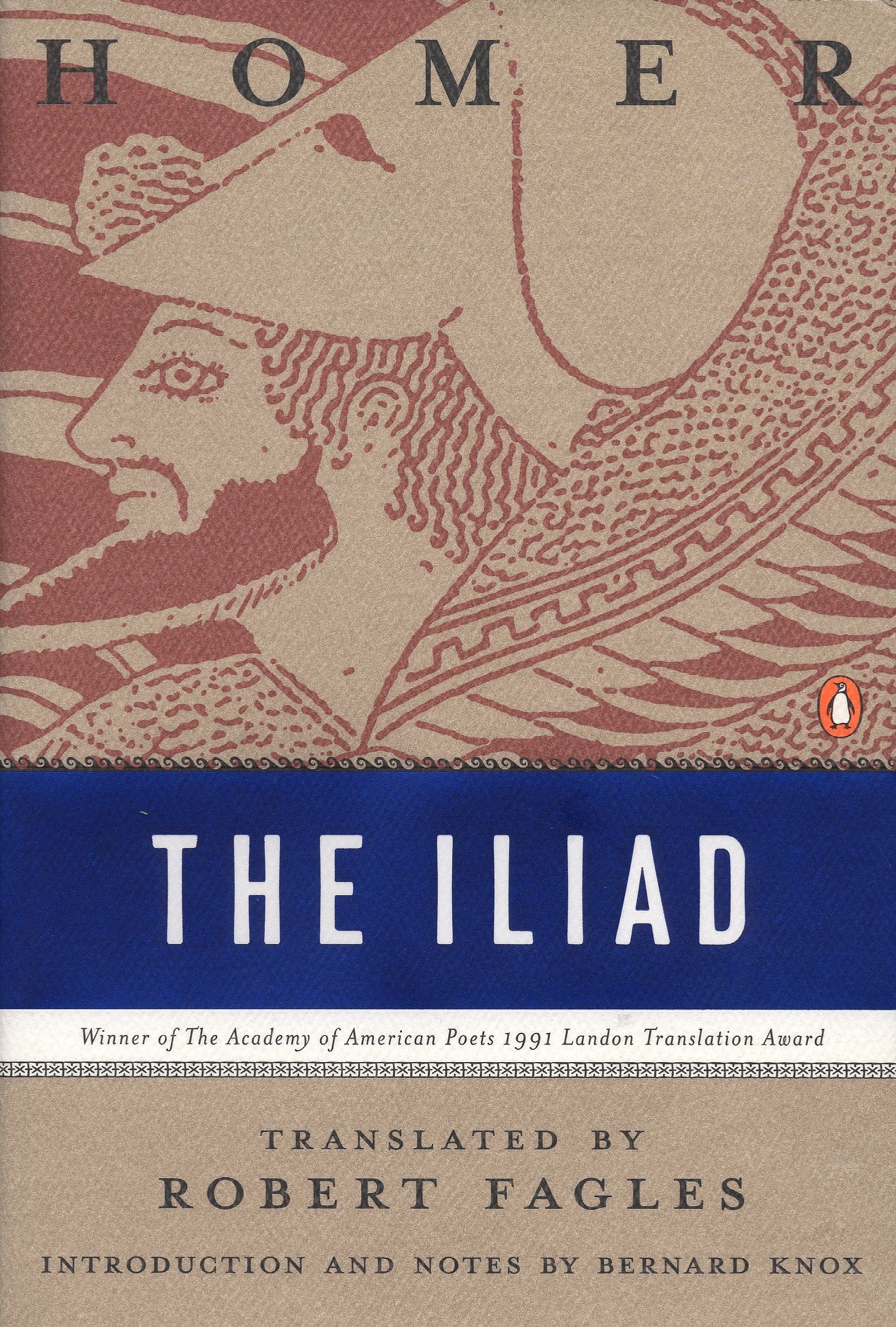
The Iliad — Homer (trans. Robert Fagles)
First composed: ~8th century BC (oral tradition) / ~725-675 BC textual composition
Pages: 614 (Penguin Classics / Fagles)
Goodreads: 3.93★ (517K+ ratings) · view
Audiobook runtime: ~18h Derek Jacobi / Naxos AudioBooks canonical English (Fagles) · 13h 20m Alfred Molina / Audible Studios (Wilson 2023) · ~24h Richmond Lattimore 1951 · LibriVox free Pope 1715-20 / Butler 1898
Commercial scale: 2,800+ years continuous literary tradition · foundational Western literature · global public-domain · universally-assigned classical-literature curriculum
Awards & Recognition: Harold Bloom Western Canon foundational-tier · 2002 Nobel Institute '100 Greatest Writers' poll recognition (w/ Odyssey) · Aristotle Poetics canonical exemplar · Alexander the Great's pillow-book · Virgil Aeneid direct-response foundational
Cultural position: Christopher Nolan Universal Pictures $250M July 17, 2026 theatrical release The Odyssey sets stage for renewed Iliad cultural-moment (Iliad is predecessor epic to Nolan's adapted Odyssey — the 10-year Trojan War backstory that Odyssey references) w/ Matt Damon / Anne Hathaway / Tom Holland / Zendaya / Charlize Theron / Lupita Nyong'o · 2004 Wolfgang Petersen Troy film $497M w/ Brad Pitt / Eric Bana / Orlando Bloom · Emily Wilson 2023 first-woman-English-translator · Madeline Miller Song of Achilles 2011 Patroclus-POV / Pat Barker Silence of the Girls 2018 Briseis-POV retellings
Homer's ~8th century BC foundational masterwork — the Iliad's 15,693-line 24-book dactylic-hexameter ancient Greek epic of Achilles's wrath during the final 51 days of the 10-year Trojan War, the Agamemnon-Briseis quarrel opening, Patroclus's death at Hector's hands, Achilles's return-to-combat rage-consuming slaughter, the Hector-Achilles duel, Hephaestus's forging of the Shield of Achilles (the Western literary ekphrasis foundational set-piece), and the Book 24 Priam-Achilles scene that is widely regarded as one of the greatest scenes in Western literature — has been universally regarded as the foundational text of Western literature and the template for all subsequent epic poetry for 2,800 years, with Derek Jacobi's canonical 18h Naxos AudioBooks production of Robert Fagles's 1990 translation, Alfred Molina's contemporary 13h 20m Audible Studios production of Emily Wilson's 2023 first-woman-English-translator W.W. Norton translation, Christopher Nolan's Universal Pictures $250M July 17, 2026 Odyssey theatrical release setting the stage for the largest Homer-cultural-moment in 2,800 years (Iliad is the predecessor epic whose backstory the Nolan Odyssey will reference), and Madeline Miller's Song of Achilles (2011 Patroclus-POV) and Pat Barker's Silence of the Girls (2018 Briseis-POV) establishing the contemporary Iliad feminist-critical-retelling renaissance. Use CastReader AI TTS on Kindle Iliad text →
The Iliad is Homer's ~8th century BC ancient Greek epic poem set during the final 51 days of the 10-year Trojan War, opening with the famous line 'Menin aeide thea Peleiadeo Achileos' ('Sing, O goddess, the anger of Achilles, son of Peleus') — the poem's central subject is Achilles's wrath (Menis) following Agamemnon's seizure of the slave-girl Briseis as retaliation for Agamemnon's forced return of Chryseis to Apollo's priest. Achilles withdraws from combat and prays to his sea-nymph mother Thetis for Zeus's intervention to ensure Greek defeats, forcing Agamemnon to regret his insult; Books 2-7 follow resulting Greek setbacks while Achilles sulks; Books 8-15 follow continued Trojan offensives with Hector (Trojan prince, Priam's eldest son, Troy's greatest warrior) pushing the Greeks back to their ships; Book 16 contains the crucial turning point — Patroclus (Achilles's beloved companion) wears Achilles's armor and is killed by Hector at the Scaean Gates, prompting Achilles's rage-consuming return to combat; Book 18 contains Hephaestus forging new armor for Achilles (the 'Shield of Achilles' extended ekphrasis); Book 22 contains the Achilles-Hector duel — Achilles kills Hector, drags his corpse behind his chariot around Troy's walls, and refuses to return it for burial; Book 24 contains the poem's concluding scene — Priam ventures alone into the Greek camp to plead with Achilles for Hector's body, Achilles receives him with unexpected sympathy (the 'Achilles-Priam scene'), Hector's body is returned to Troy, and the poem ends with Hector's funeral: 'And so the Trojans buried Hector breaker of horses.' The Iliad does NOT cover the Trojan Horse / Troy's destruction (those events are in the lost Epic Cycle poems, referenced in the Odyssey); the Iliad ends while Troy still stands. The poem's central themes — Achilles's rage, the cost of war, the mortality of the hero, the relationship between human agency and divine will — have been foundational to 2,800 years of Western literary engagement with war. At ~18h Derek Jacobi / Naxos AudioBooks's production of Robert Fagles's 1990 English translation is the canonical audiobook; Alfred Molina / Audible Studios's 13h 20m production of Emily Wilson's 2023 contemporary translation is the current feminist-critical-alternative; LibriVox hosts free public-domain productions of Alexander Pope's 1715-1720 verse translation and Samuel Butler's 1898 prose translation.
This guide covers the ~18h runtime, the 24-book structure, the canonical translation choices, Nolan 2026 Odyssey-companion preparation, and every free / paid path.
Why ~18h Matters
Ancient epic and classical literature runtime and rating benchmark.
| Title | Runtime | Year | Goodreads rating |
|---|---|---|---|
| The Iliad (Homer) — this book | ~18h | ~8th BCE | 3.93★ |
| The Odyssey (Homer) | 13h 20m | ~8th BCE | 3.84★ |
| The Aeneid (Virgil) | 12h | 19 BCE | 3.81★ |
| Metamorphoses (Ovid) | 20h | 8 CE | 4.04★ |
| The Divine Comedy (Dante) | 24h | 1320 | 4.08★ |
| Paradise Lost (Milton) | 12h | 1667 | 3.81★ |
| Beowulf | 3h 30m | ~8th-11th CE | 3.50★ |
| Song of Achilles (Miller) | 11h | 2011 | 4.36★ |
Takeaway: The Iliad is the foundational ancient Greek epic at 18h and 517K+ Goodreads ratings — longer and battle-denser than its Odyssey companion (13h 20m). For first-time classical-literature listeners: Homer (Odyssey 13h 20m → Iliad 18h as companion-pair 31h total) → Virgil Aeneid (12h Roman synthesis) → Ovid Metamorphoses (20h mythological compendium) → Dante Divine Comedy (24h medieval Christian engagement) forms the canonical ancient / classical-epic progression. The Iliad's 2,800 years of continuous literary tradition, foundational status for all subsequent Western epic poetry, and universal scholarly-canonical recognition establish it as one of the two most-important works in Western literary history (paired with the Odyssey).
The ~8th BCE-2026 Trajectory
- ~8th century BCE: Homer composes the Iliad in the Ionian Greek oral-tradition; 24 books, 15,693 lines dactylic-hexameter
- ~6th century BCE: Athenian tyrant Pisistratus establishes the canonical Iliad text for Panathenaic festival recitation
- ~4th century BCE: Alexandrian scholars (Zenodotus, Aristarchus) produce critical editions establishing the numbered-books structure
- ~4th century BCE: Aristotle's Poetics uses the Iliad as primary exemplar of epic poetry
- 333 BCE: Alexander the Great sleeps with Aristotle's Iliad-edition under his pillow throughout Persian conquests
- 19 BCE: Virgil publishes the Aeneid — the Roman response directly engaging Homeric material
- 1611: George Chapman English verse translation — Elizabethan-Jacobean canonical first English Iliad
- 1715-1720: Alexander Pope English rhymed-heroic-couplet translation — canonical 18th-century English Iliad
- 1791: William Cowper blank-verse translation
- 1898: Samuel Butler prose translation — accessible Project Gutenberg standard
- 1951: Richmond Lattimore English translation — canonical academic mid-20th-century standard
- 1990: Robert Fagles Penguin Classics English translation — universally-assigned contemporary undergraduate text
- 2000: Stanley Lombardo Hackett plain-speech translation
- 2004 May: Wolfgang Petersen's Troy film — $497M global; Brad Pitt / Eric Bana / Orlando Bloom
- 2011: Madeline Miller's Song of Achilles — Patroclus-POV Iliad retelling; 2012 Orange Prize; catalyzes 2020s Greek-mythology-retelling boom
- 2015: Caroline Alexander Ecco translation
- 2018: Pat Barker's Silence of the Girls — Briseis-POV Iliad feminist retelling
- 2023: Emily Wilson W.W. Norton translation — first-woman English Iliad translator (prefiguring her 2018 Odyssey pattern)
- 2024: Pat Barker's The Voyage Home — third volume of Women of Troy trilogy
- 2026 July 17: Christopher Nolan's Odyssey film releases — renewed cultural-engagement with Iliad as predecessor epic
- 2026 April: 2,800+ years continuous literary tradition · foundational Western literature · global public-domain · universally-assigned classical-literature curriculum
The 24-Book Structure
Understanding Homer's dactylic-hexameter epic architecture:
Books 1-8 (Setup and Greek Retreat):
- Book 1: Quarrel of Agamemnon and Achilles; Chryses / Apollo plague; Achilles's withdrawal from combat; Thetis's appeal to Zeus
- Book 2: Catalog of Ships — the 1,186-ship Greek expedition forces in encyclopedic listing
- Book 3: Duel of Paris and Menelaus; Helen's appearance on the Trojan walls
- Book 4: Pandarus breaks truce; battle resumes
- Book 5: Diomedes's aristeia (warrior's prime moment) — wounds Aphrodite and Ares
- Book 6: Hector-Andromache farewell scene on Troy's walls
- Book 7: Duel of Ajax the Greater and Hector
- Book 8: Trojan offensive pushes Greeks back; Zeus limits divine intervention
Books 9-15 (Embassy and Continued Battle):
- Book 9: Embassy to Achilles — Odysseus, Ajax, Phoenix attempt to persuade Achilles to return; he refuses
- Book 10: Night spying mission — Odysseus and Diomedes capture the Trojan Dolon
- Books 11-15: Extended battle scenes; Hector pushes Greeks to their ships; Hera seduces Zeus to distract him
Books 16-18 (Patroclus's Death and Achilles's Rage):
- Book 16: Patroclus's aristeia — wears Achilles's armor, rescues Greek ships, is killed by Hector at the Scaean Gates
- Book 17: Battle over Patroclus's body
- Book 18: Achilles's grief; Hephaestus forges new armor — the Shield of Achilles ekphrasis (world-in-miniature depiction)
Books 19-22 (Achilles Returns):
- Book 19: Achilles-Agamemnon reconciliation; Achilles rearms
- Book 20: Battle of the Gods — divine intervention in combat
- Book 21: Achilles's river-battle with Scamander
- Book 22: Achilles-Hector duel — Hector killed; corpse dragged around Troy's walls
Books 23-24 (Funeral and Closure):
- Book 23: Patroclus's funeral and funeral games
- Book 24: Priam's ransom of Hector — Priam's journey to Greek camp, Achilles-Priam reconciliation scene, Hector's body returned, Hector's funeral
24 books, approximately 15,693 lines total. The Homer textbook canonical set-pieces: Book 1 Achilles-Agamemnon quarrel (opening), Book 6 Hector-Andromache farewell (the poem's humanity apex), Book 9 Embassy to Achilles (philosophical climax), Book 16 Patroclus's death (turning point), Book 18 Shield of Achilles (ekphrasis foundation), Book 22 Hector-Achilles duel (climactic combat), Book 24 Priam-Achilles scene (moral apex and closing).
The Translation Landscape
Homer has a rich 400+ year English translation tradition. Choosing between translations significantly affects the listening experience:
English Translations:
- George Chapman 1611 — first complete English Iliad; Elizabethan-Jacobean verse register; historically significant (Keats's 'On First Looking into Chapman's Homer'); demanding archaism
- Alexander Pope 1715-1720 — canonical 18th-century English Iliad; rhymed heroic couplet register; widely-praised literary quality; archaic but rhythmic
- William Cowper 1791 — blank-verse translation; less-canonical but scholarly-respected
- Samuel Butler 1898 — prose translation; accessible Project Gutenberg free standard
- Richmond Lattimore 1951 — University of Chicago Press; widely-canonical academic standard for 75 years; literal-fidelity register preserving Homer's technical meter
- Robert Fagles 1990 — Penguin Classics; universally-assigned contemporary undergraduate text; accessible-modern register preserving Homeric rhythm; the translation used in Derek Jacobi / Naxos audiobook
- Stanley Lombardo 2000 — Hackett Publishing; plain-speech contemporary register; accessible but less-canonical
- Caroline Alexander 2015 — Ecco / HarperCollins; contemporary canonical; Alexander previously authored The War That Killed Achilles (2009 literary criticism)
- Emily Wilson 2023 — W.W. Norton; first-woman English Iliad translator; plain-speech muscular iambic-pentameter meter (same translation philosophy as her 2018 Odyssey); the translation used in Alfred Molina / Audible Studios audiobook
Ancient Greek Original:
- Oxford Classical Texts (Monro-Allen 1920 / Munro-Allen 1902) — scholarly canonical
- Loeb Classical Library (Wyatt-Murray 1924-1925) — parallel Greek-English teaching edition
- Bibliotheca Teubneriana (West 1998-2000) — contemporary scholarly critical edition
For first-time English readers: Robert Fagles 1990 (Penguin Classics) — canonical contemporary. For contemporary feminist-critical engagement: Emily Wilson 2023 (W.W. Norton). For free public-domain path: Samuel Butler 1898 (Project Gutenberg). For scholarly / academic engagement: Richmond Lattimore 1951. For literary-poetic appreciation: Alexander Pope 1715-1720 (if willing to engage 1700s verse-register).
First-Time Listener Guide
The Iliad is Homer's ~8th-century-BCE Bronze-Age war epic — 24 books, ~15,700 lines of dactylic hexameter, ~18 hours unabridged in the Fagles translation. Derek Jacobi's Naxos AudioBooks production (Fagles 1990 translation) is the canonical English audiobook; Alfred Molina's Audible Studios production (Emily Wilson 2023, ~13h 20m) is the contemporary feminist-critical alternative; LibriVox carries Samuel Butler 1898 prose-translation recordings (~12-15h, free, variable production quality).
1.0x baseline for first listen — Homer's catalog of ships (Book 2), the Achilles-Agamemnon quarrel (Book 1), the Hector-Andromache farewell (Book 6), the Patroclus death sequence (Book 16), the Achilles-Hector duel (Book 22), and the Priam-Achilles negotiation (Book 24) all carry structural weight that flattens past 1.1x. Save 1.25x for re-listens.
Translation choice matters. First-time English unabridged: Fagles (Jacobi Naxos production) — most-canonical contemporary English Homer voice. Feminist-critical or 2020s-contemporary: Wilson (Molina Audible production). Public-domain free: Butler (LibriVox). Avoid Pope (1715-1720) on first listen — beautiful but the heroic-couplet register is structurally a different work; reward only after Fagles.
If The Iliad is your first Homer: read The Iliad first, then The Odyssey — Homer's audience knew both, and The Iliad establishes the Trojan War context The Odyssey assumes. Recommended sequence: The Iliad (Fagles, 18h) → The Odyssey (Fagles, 14h), then Wilson's translations of both for the contemporary critical reading. Skip the Aeneid (Virgil) on first pass; read it after both Homer epics for the Trojan-War-aftermath Latin counterpart.
For paired-reading with Greek-myth retellings: pair The Iliad with The Song of Achilles (Madeline Miller, 2011, ~11h, Achilles-Patroclus love story), The Silence of the Girls (Pat Barker, 2018, ~10h, Briseis POV), and A Thousand Ships (Natalie Haynes, 2019, ~13h, women-of-Troy POV). The Homer-Miller-Barker-Haynes quartet is the contemporary canonical pairing.
For listeners coming from the 2026 Christopher Nolan Iliad film: complete Homer's Iliad before the November 2026 release. The audiobook (Fagles or Wilson) is the version that lets you walk into the theater with the canonical-text fresh. Nolan's adaptation will compress the 24-book structure; the audiobook restores what the film cuts.
Every Way to Listen
- Derek Jacobi / Naxos AudioBooks — ~18h canonical first-listen English (Robert Fagles 1990 translation)
- Alfred Molina / Audible Studios — 13h 20m contemporary feminist-critical (Emily Wilson 2023 translation)
- Richmond Lattimore productions — ~24h academic-canonical (Lattimore 1951 translation)
- Various Stanley Lombardo productions — plain-speech alternative
- LibriVox free public-domain — Alexander Pope 1715-20 verse; Samuel Butler 1898 prose; William Cowper 1791 blank verse
- Audible Premium 1 credit — ~$14.95 covers any commercial production
- Audible purchased audiobook — $20-30 for Jacobi ~18h canonical
- Libby (U.S. libraries) — 0-1 week wait; Jacobi / Naxos reliably stocked
- Hoopla — classical-literature catalog
- Spotify Premium audiobook — 18h exceeds 15h monthly allocation (requires cross-month rollover)
- LibriVox free — zero-cost Pope / Butler / Cowper paths (Iliad is global public-domain)
- Project Gutenberg free Kindle — Pope / Butler / Cowper / Chapman translations
- Purchased Kindle edition — $10-18 Fagles Penguin Classics / Wilson W.W. Norton / Lattimore University of Chicago Press
- CastReader AI TTS with Kindle Iliad edition — unlimited re-listens, adjustable pace
The Iliad's global public-domain status means comprehensive free-path options across Kindle / audio.
Libby Wait Times (April 2026)
Survey of major U.S. library networks as of April 2026.
- NYPL / Brooklyn Public Library: 0-1 week wait (Derek Jacobi / Naxos and Alfred Molina / Audible Studios both prominently stocked; universal-canonical-assignment demand)
- Los Angeles Public Library: 0-1 week wait
- Chicago Public Library: 0-1 week wait
- Seattle Public Library: 0-1 week wait
- Boston Public Library: 0-1 week wait (classical-literature curriculum commitment)
- Pre-Nolan-Odyssey demand surge expected: May-July 2026 Libby waits may extend to 1-2 weeks as Iliad demand surges ahead of July 17, 2026 Odyssey film release
The Iliad has very short library waits because its universal-canonical-assignment status ensures every major US library system carries multiple digital copies and multiple translations; Libby is strongly-recommended free path. Anticipated pre-Nolan-Odyssey demand surge in May-July 2026 warrants placing holds early for July-timed listening.
Why Kindle + CastReader Suits The Iliad
The Iliad's 24-book structure and substantial ~18h runtime make it uniquely well-suited to CastReader AI TTS — 2-3 week evening-session consumption pattern rewards pause-and-resume bookmark flexibility, and the epic's canonical-universal status means classical-literature students commonly re-read across semesters.
Listeners commonly return to:
- Book 1 opening invocation ('Sing, O goddess, the anger of Achilles, son of Peleus')
- Book 1 Achilles-Agamemnon quarrel (the poem's triggering conflict)
- Book 2 Catalog of Ships (encyclopedic expedition listing)
- Book 6 Hector-Andromache farewell scene on Troy's walls (the poem's humanity apex; widely-studied as the most-moving scene in Western literature after Achilles-Priam)
- Book 9 Embassy to Achilles (philosophical climax)
- Book 16 Patroclus's death at Hector's hands (turning point)
- Book 18 Shield of Achilles ekphrasis (world-in-miniature depiction; foundational for all subsequent Western ekphrastic tradition including Keats's Grecian Urn and Auden's Shield of Achilles)
- Book 22 Achilles-Hector duel (climactic combat; Hector's death)
- Book 24 Priam-Achilles scene (the poem's moral apex; Achilles's sympathy with Priam widely-regarded as the greatest scene in Western literature; the poem's closing 'And so the Trojans buried Hector breaker of horses')
For Nolan-2026-Odyssey preparation, CastReader's cross-device bookmarking enables Iliad (May-June 2026) → Odyssey (June-July 2026) sequential pre-film-release immersion. The Iliad's 10-year Trojan War backstory (Helen's abduction, Agamemnon's sacrifice of Iphigenia, the ship-catalog, Hector's death, the Trojan Horse, Troy's fall, Odysseus's departure homeward) is referenced throughout the Nolan Odyssey film — reading the Iliad first equips viewers with the full Homeric context.
CastReader's pronunciation overrides handle Homer's extensive Greek proper-noun catalog: Achilles (uh-KIL-eez), Agamemnon, Hector, Priam, Andromache, Patroclus, Briseis, Chryseis, Helen, Paris, Menelaus, Odysseus, Diomedes, Ajax the Greater / Lesser, Nestor, Phoenix, Chryses, Thetis, Peleus, Hecuba, Cassandra, Sarpedon, Glaucus, Aeneas, Idomeneus, Machaon, Podalirius, Automedon, Zeus, Hera, Athena, Apollo, Artemis, Aphrodite, Ares, Hephaestus, Poseidon, Hades, Iris, Scaean Gates, Ilium / Ilios, Troad, Tenedos. CastReader offers both Latinized (Achilles) and Hellenized (Akhilleus) pronunciation options.
Send to Phone for Homer + Nolan 2026 Progression
At ~18h The Iliad requires sustained commitment. Send to Phone preserves CastReader position across device switches — complete Books 1-12 during weekday commutes week 1-2, Books 13-24 during weekend sessions week 3 for a 3-week total consumption. For Homer companion-progression, completing The Iliad first (18h, Trojan War backstory) and proceeding to The Odyssey (13h 20m, Odysseus's homecoming journey) forms the canonical Homer immersion rhythm — optimal preparation for Nolan's July 17, 2026 Odyssey film.
Limitations and Honest Notes
- The Iliad's poetic-meter register (even plain-speech translations preserve Homer's dactylic-hexameter flavor) requires sustained attention at a different register than prose fiction — first-time readers used to modern novel-prose may need time to acclimate
- The Iliad's extensive character-catalog (300+ named warriors in Book 2's Catalog of Ships alone) creates tracking demands — Penguin Classics and W.W. Norton editions include glossaries; abridged editions or character-focused approaches (following Achilles-Hector-Patroclus rather than exhaustive warrior-catalog) help first-time readers
- The Iliad's divine-intervention premise (Zeus / Hera / Athena / Apollo directly participate in battles) requires accepting supernatural-in-heroic frame — readers conditioned to realist-only fiction commonly struggle with divine-intervention accommodation
- Content considerations — the Iliad contains extensive graphic battlefield violence (detailed description of spear-wounds, corpse-mutilation, armor-plundering — Homer's battle-scenes are widely regarded as among the most-violent in Western literature); sexual enslavement of women (Briseis, Chryseis, and the Trojan women are explicit war-spoils); period-specific frames around female value, slave-economy, and combat-casualties make the Iliad demanding for some contemporary readers
- Translation-dependency — reader experience varies significantly between Fagles accessible-modern, Wilson plain-speech-feminist, Lattimore literal-academic, and Pope 18th-century-verse translations; choice of translation materially affects the poem
- The Iliad does NOT cover the Trojan Horse / Troy's destruction (those events are in the lost Epic Cycle poems); readers expecting the full Trojan War story should supplement with the Odyssey (which references Troy's fall), Virgil's Aeneid (which dramatizes Troy's destruction), and contemporary retellings (Miller's Song of Achilles, Barker's trilogy)
- The complete Iliad at ~18h is a sustained 2-3 week commitment — shorter than the Odyssey (13h 20m) would be more accessible entry point; first-time readers may prefer starting with Odyssey, then returning to Iliad
- Nolan's July 17, 2026 Odyssey film adapts the Odyssey directly, not the Iliad — readers seeking 'the movie novel' should read the Odyssey first; Iliad provides the backstory but is not the primary Nolan adaptation source
Related Reading
- Listen to Kindle — CastReader's Kindle-to-TTS path
- Send to Phone — cross-device position sync
- Kindle Text to Speech — Kindle TTS options overview
- Turn Kindle into Audiobook Free — free audiobook paths
- The Odyssey (Homer) Audiobook Guide — Homer companion-epic; Christopher Nolan 2026 Universal Pictures adaptation July 17, 2026
- The Song of Achilles (Madeline Miller) Audiobook Guide — Patroclus-POV Iliad retelling (2011)
- Don Quixote (Cervantes) Audiobook Guide — foundational Western novel peer (2002 Nobel Institute poll recognition)
- War and Peace (Tolstoy) Audiobook Guide — 19th-century historical epic peer engaging war-literature Homeric tradition
