War and Peace Audiobook & Text to Speech Guide (2026) — Tolstoy's 1869 Russian Historical Epic and BBC 2016 Lily James Miniseries Napoleonic-Wars Masterwork
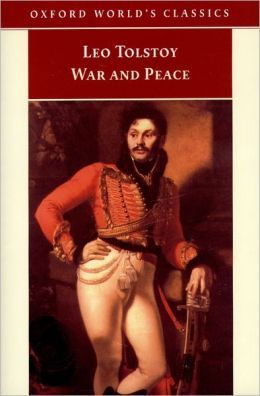
War and Peace — Leo Tolstoy (trans. Louise and Aylmer Maude)
First published: 1869 (Russkiy Vestnik serialization 1865-1867 collected 1869)
Pages: 1392 (Oxford World's Classics / Maude)
Goodreads: 4.17★ (370K+ ratings) · view
Audiobook runtime: ~61h Neville Jason / Naxos AudioBooks canonical English (Maude) · 60h Frederick Davidson / Blackstone (Maude) · Pevear-Volokhonsky 2007 productions · Anthony Briggs 2005 Penguin Classics · LibriVox free Maude / Garnett
Commercial scale: 157 years continuous literary tradition · foundational Russian-literature / world-canon novel · global public-domain · universally-assigned Russian-literature curriculum
Awards & Recognition: 2007 Newsweek '100 Greatest Books' #1 · 2002 Nobel Institute '100 Greatest Writers' poll canonical · Harold Bloom Western Canon foundational-tier · universal scholarly consensus as one of 10 greatest novels ever written
Cultural position: BBC 2016 6-part miniseries widely-praised w/ Lily James (Natasha) / Paul Dano (Pierre) / James Norton (Andrei) / Jim Broadbent / Stephen Rea / Gillian Anderson · 1966-1967 Sergei Bondarchuk Soviet 7h 27m $100M-equivalent four-film adaptation 1968 Academy Award Best Foreign Language · 1956 King Vidor film w/ Audrey Hepburn / Henry Fonda · Dave Malloy Natasha, Pierre & The Great Comet of 1812 Broadway musical 2016-2017
Tolstoy's 1869 Russian historical-epic masterwork — War and Peace's 1,392-page 4-volume 15-book-plus-2-epilogue Napoleonic-Wars panorama covering 1805-1820, the 559 named characters interweaving across Rostov-Bolkonsky-Bezukhov-Kuragin aristocratic families, Pierre Bezukhov's philosophical-spiritual quest through Freemasonry and prisoner-of-war captivity, Natasha Rostova's 1809 ballroom-debut and Anatole Kuragin near-elopement, Prince Andrei Bolkonsky's Austerlitz-wound and Borodino-mortality, the Battles of Austerlitz (1805) and Borodino (1812), the French invasion / Burning of Moscow / Napoleonic retreat, and Tolstoy's historical-philosophical essays arguing against Great Men and for mass-aggregate historical causality — has been near-universally regarded as one of the greatest novels ever written and foundational to the modern realist novel for 157 years, with Neville Jason's canonical 61h Naxos AudioBooks production of the Louise-Aylmer Maude 1922-1923 translation, the BBC 2016 widely-praised 6-part Andrew Davies adaptation w/ Lily James / Paul Dano / James Norton driving a sustained Russian-literature renaissance, the 1966-1967 Sergei Bondarchuk Soviet 7h 27m four-film adaptation (1968 Academy Award Best Foreign Language Film, largest Soviet-film-industry undertaking ever) continuing to serve as the most-faithful film adaptation, and Dave Malloy's Natasha, Pierre & The Great Comet of 1812 Broadway musical (2016-2017 w/ Josh Groban) demonstrating the novel's continuing adaptation-capacity. Use CastReader AI TTS on Kindle War and Peace text →
War and Peace is Leo Tolstoy's 1869 Russian historical-epic novel covering 1805-1820 — the Napoleonic Wars period — tracking five aristocratic families (Rostovs, Bolkonskys, Bezukhovs, Kuragins, Drubetskoys) through Russia's war with France under Napoleon Bonaparte. The novel opens in Anna Pavlovna Scherer's July 1805 St. Petersburg salon and tracks Pierre Bezukhov (illegitimate son inheriting Count Bezukhov's fortune; unfaithful marriage to Hélène Kuragina; philosophical-spiritual quest through Freemasonry and 1812 prisoner-of-war captivity; eventual marriage to Natasha), Prince Andrei Bolkonsky (cold-aristocratic officer; Austerlitz wound; broken engagement with Natasha; fatal Borodino injury; Natasha-reconciliation before death), Natasha Rostova (emotional center; 1809 ballroom debut as most-famous set-piece; Andrei engagement / Anatole seduction / Pierre marriage), Princess Marya Bolkonskaya (Andrei's pious sister; Nikolai Rostov marriage), and Nikolai Rostov (hussar officer serving multiple campaigns). Major historical set-pieces: Battle of Austerlitz (December 1805, Russia's catastrophic defeat), French invasion of Russia (June 1812), Battle of Borodino (September 7, 1812, the bloodiest single-day battle of the Napoleonic Wars), Burning of Moscow (September 1812), Napoleon's retreat through Russian winter (October 1812-January 1813). Tolstoy interleaves fictional family narrative with extended historical-philosophical essays — the First Epilogue (1820) shows surviving characters in marriage / family life; the Second Epilogue is pure philosophical essay on free will and historical determinism. Tolstoy's central claim: history is NOT made by 'great men' (Napoleon, Kutuzov) but by the aggregate actions of millions of ordinary individuals. At ~61h Neville Jason / Naxos AudioBooks's production of the Louise-Aylmer Maude 1922-1923 translation is the canonical audiobook; Frederick Davidson / Blackstone runs ~60h on the same translation; Pevear-Volokhonsky 2007 and Anthony Briggs 2005 contemporary translations have multiple productions; LibriVox hosts free public-domain productions of Maude and Garnett translations.
This guide covers the ~61h runtime, the 15-book 4-volume structure, the canonical translation choices, BBC 2016 miniseries companion-engagement, and every free / paid path.
Why ~61h Matters
19th-century-Russian-literature and epic-novel runtime and rating benchmark.
| Title | Runtime | Year | Goodreads rating |
|---|---|---|---|
| War and Peace (Tolstoy) — this book | ~61h | 1869 | 4.17★ |
| Anna Karenina (Tolstoy) | 35h | 1877 | 4.11★ |
| The Brothers Karamazov (Dostoevsky) | 37h | 1880 | 4.35★ |
| Crime and Punishment (Dostoevsky) | 25h | 1866 | 4.28★ |
| The Idiot (Dostoevsky) | 28h | 1869 | 4.25★ |
| Demons (Dostoevsky) | 28h | 1872 | 4.22★ |
| Don Quixote (Cervantes) | 39h | 1605/15 | 3.91★ |
| Les Misérables (Hugo) | 60h | 1862 | 4.21★ |
| In Search of Lost Time (Proust) | 160h+ | 1913-27 | 4.30★ |
Takeaway: War and Peace is the longest canonical 19th-century-Russian-literature novel at ~61h and 370K+ Goodreads ratings — matched only by Les Misérables (60h) and exceeded only by multi-volume epics like Proust's In Search of Lost Time (160h+). For first-time 19th-century-Russian-literature listeners: Crime and Punishment (25h, accessible focused-plot) → Anna Karenina (35h, society-novel) → The Brothers Karamazov (37h, philosophical) → War and Peace (61h, maximum-scale) forms the canonical Russian-classics progression. War and Peace's 157 years of continuous literary tradition, foundational status for all subsequent long-form realist novels, and universal scholarly-canonical recognition establish it as one of the 10 most-important novels in Western literary history.
The 1869-2026 Trajectory
- 1828 August 28: Leo Tolstoy born at Yasnaya Polyana estate, Tula Province, Russia
- 1852-1856: Young Tolstoy serves in Caucasus and Crimean War — Sevastopol Sketches establish his war-writing authority
- 1863-1869: Tolstoy writes War and Peace; originally conceived as novel about Decembrist Revolt of 1825, expanded backward into Napoleonic-Wars setting
- 1865-1867: War and Peace serialized in Mikhail Katkov's Russkiy Vestnik (Russian Messenger) journal
- 1869: Complete War and Peace published — immediate Russian literary sensation; Turgenev and Dostoevsky praise
- 1886: Clara Bell first English translation (abridged)
- 1904: Constance Garnett complete English translation — pioneering English-language Russian-classics transmission
- 1922-1923: Louise and Aylmer Maude translation — Tolstoy-authorized English translation; widely-canonical for 50+ years
- 1956 August: King Vidor's War and Peace film releases — $6.25M Paramount; Audrey Hepburn / Henry Fonda / Mel Ferrer; 3 Academy Award nominations
- 1966-1967: Sergei Bondarchuk Soviet four-film Voyna i Mir adaptation — 7h 27m total; $100M-equivalent largest Soviet-film-industry production; 1968 Academy Award Best Foreign Language
- 1972-1973: BBC 20-part TV miniseries w/ Anthony Hopkins as Pierre
- 2005: Anthony Briggs Penguin Classics translation — contemporary-accessible
- 2007: Richard Pevear & Larissa Volokhonsky Knopf translation — contemporary-canonical; preserves Tolstoy's French-language passages
- 2012 November: Dave Malloy's Natasha, Pierre & The Great Comet of 1812 premieres off-Broadway
- 2016 January-February: BBC 6-part War and Peace miniseries — widely-praised Andrew Davies adaptation; Lily James / Paul Dano / James Norton / Jim Broadbent / Stephen Rea / Gillian Anderson
- 2016 October - 2017 September: Natasha, Pierre & The Great Comet of 1812 Broadway run w/ Josh Groban; 12 Tony nominations
- 2022: Russian literature renaissance following Ukraine invasion context
- 2026 April: 157 years continuous literary tradition · foundational world-literature novel · global public-domain · universally-assigned Russian-literature curriculum · sustained BBC-2016-driven popular-reader engagement
The 15-Book 4-Volume Structure
Understanding Tolstoy's architectural organization:
Volume 1 (1805) — Books 1-3:
- Book 1 — Anna Pavlovna Scherer's St. Petersburg salon; introduction of Pierre, Andrei, Natasha, Hélène; early peace-setting
- Book 2 — Nikolai Rostov at Brunnau; Russian army 1805 Austrian campaign
- Book 3 — Battle of Austerlitz (December 2, 1805); Andrei wounded; Nikolai's cavalry baptism
Volume 2 (1806-1811) — Books 4-6:
- Book 4 — Pierre's Hélène marriage; Dolokhov duel
- Book 5 — Pierre's Freemasonry quest; Andrei's provincial return and Sonya-Nikolai plot
- Book 6 — Natasha's 1809 ballroom debut (the novel's most-famous set-piece); Andrei-Natasha engagement
Volume 2 continued (1811-1812) — Books 7-8:
- Book 7 — Natasha-Anatole Kuragin seduction / near-elopement; Great Comet of 1812 (the Dave Malloy musical's central material)
- Book 8 — Pierre's spiritual crisis; Bezukhov-Rostov family connections deepen
Volume 3 (1812) — Books 9-11:
- Book 9 — French invasion of Russia (June 1812); diplomatic prelude
- Book 10 — Russian retreat; Smolensk evacuation
- Book 11 — Battle of Borodino (September 7, 1812) — the novel's most-extensive battle-piece; Andrei fatally wounded; Kutuzov's command decisions
Volume 4 (1812-1813) — Books 12-15:
- Book 12 — Burning of Moscow (September 1812); Rostov evacuation; Pierre's decision to remain
- Book 13 — Pierre's prisoner-of-war captivity; meeting Platon Karataev (the peasant-philosopher who transforms Pierre's worldview)
- Book 14 — Andrei's death; Natasha's grief; partisan warfare
- Book 15 — Pierre's release; French retreat; Andrei-Marya-Natasha-Nikolai family reconciliation
Epilogues (1820):
- Epilogue 1 — The surviving characters in marriage / family life; Pierre-Natasha marriage; Nikolai-Marya marriage; family continuity
- Epilogue 2 — Pure philosophical essay on free will and historical determinism; no fictional narrative
4 volumes, 15 books, 2 epilogues, approximately 587,287 words, 559 named characters. The Tolstoy textbook canonical set-pieces: Volume 1 Book 1 Anna Pavlovna salon opening, Volume 1 Book 3 Battle of Austerlitz, Volume 2 Book 6 Natasha's 1809 ballroom debut, Volume 2 Book 7 Natasha-Anatole seduction / Great Comet of 1812, Volume 3 Book 11 Battle of Borodino, Volume 4 Book 12 Burning of Moscow, Volume 4 Book 13 Pierre-Karataev captivity, Epilogue 1 family-reconciliation, Epilogue 2 philosophical-essay — widely studied as the novel's nine structural pillars.
The Translation Landscape
Tolstoy has a rich 150+ year English translation tradition. Choosing between translations significantly affects the listening experience:
English Translations:
- Clara Bell 1886 — first English translation; abridged; historically-significant but superseded
- Constance Garnett 1904 — complete English translation; pioneering English-language Russian-classics transmission; Garnett translated Tolstoy / Dostoevsky / Chekhov / Turgenev / Gogol shaping 50+ years of English-language Russian-literature engagement; accessible-early-20th-century register
- Louise and Aylmer Maude 1922-1923 — Tolstoy-authorized translation (the Maudes were close friends of Tolstoy and translated with his approval); widely-canonical for 50+ years; slightly more-formal than Garnett; the translation used in Neville Jason / Naxos audiobook
- Rosemary Edmonds 1957 — Penguin Classics; less-canonical but solid mid-20th-century
- Anthony Briggs 2005 — Penguin Classics; contemporary-accessible; less-literal than Pevear-Volokhonsky but more-readable; controversially modernizes certain passages
- Richard Pevear & Larissa Volokhonsky 2007 — Knopf / Vintage; widely-canonical contemporary translation; preserves Tolstoy's French-language passages (pre-2007 translations had smoothed French to English for early-20th-century English readers); captures Tolstoy's register-shifts between aristocratic / peasant / military / philosophical styles more precisely than earlier translations; the canonical contemporary-English choice
- Andrew Bromfield 2007 — Ecco; translation of Tolstoy's 1865-1867 serialized first-draft rather than final 1869 novel; scholarly-interest alternative
Russian Original:
- Soviet Academy Edition (1935-1964 90-volume Complete Works) — scholarly canonical
- Jubilee Edition (Yubileynoye Izdaniye) 100-volume edition
For first-time English readers: Richard Pevear & Larissa Volokhonsky 2007 (Knopf) — canonical contemporary; preserves French-language passages and register-shifts. For accessible contemporary alternative: Anthony Briggs 2005 (Penguin Classics). For free public-domain path: Constance Garnett 1904 (Project Gutenberg). For scholarly / audiobook-canonical engagement: Louise-Aylmer Maude 1922-1923 (the Neville Jason / Naxos translation).
Every Way to Listen
- Neville Jason / Naxos AudioBooks — ~61h canonical first-listen English (Maude 1922-1923 translation)
- Frederick Davidson / Blackstone Audio — ~60h canonical alternative (Maude)
- Various Pevear-Volokhonsky productions — contemporary-canonical translation
- Various Anthony Briggs productions — accessible Penguin Classics alternative
- LibriVox free public-domain — Maude / Garnett translations
- Audible Premium 2 credits — ~$29.90 covers Neville Jason / Naxos or other ~60h productions
- Audible purchased audiobook — $30-40 for Jason ~61h canonical
- Libby (U.S. libraries) — 1-3 week wait; Jason / Naxos reliably stocked
- Hoopla — Russian-classics catalog
- Spotify Premium audiobook — 61h substantially exceeds 15h monthly allocation (requires 4-5 month cross-month rollover)
- LibriVox free — zero-cost Maude / Garnett paths (War and Peace is global public-domain)
- Project Gutenberg free Kindle — Garnett 1904 translation
- Purchased Kindle edition — $10-18 Pevear-Volokhonsky Knopf / Anthony Briggs Penguin Classics / Maude Oxford World's Classics
- CastReader AI TTS with Kindle War and Peace edition — unlimited re-listens, adjustable pace
War and Peace's global public-domain status means comprehensive free-path options across Kindle / audio.
Libby Wait Times (April 2026)
Survey of major U.S. library networks as of April 2026.
- NYPL / Brooklyn Public Library: 1-3 week wait (Neville Jason / Naxos prominently stocked; universal Russian-literature curriculum demand)
- Los Angeles Public Library: 1-3 week wait
- Chicago Public Library: 1-3 week wait
- Seattle Public Library: 1-3 week wait
- Boston Public Library: 1-3 week wait (Russian-literature curriculum commitment)
- BBC-2016-continued demand: library-network demand remained elevated following BBC 2016 miniseries release and 2025-2026 Russian-literature renaissance
War and Peace has moderate library waits — its universal-canonical-assignment status ensures every major US library system carries multiple digital copies and multiple translations. Libby is recommended free path for readers willing to wait; LibriVox Maude / Garnett is the zero-wait free path.
Why Kindle + CastReader Suits War and Peace
War and Peace's 15-book 4-volume architecture and substantial ~61h runtime make it uniquely well-suited to CastReader AI TTS — 4-6 week evening-session consumption pattern rewards pause-and-resume bookmark flexibility, and the novel's canonical-universal status means Russian-literature students commonly re-read across semesters.
Listeners commonly return to:
- Volume 1 Book 1 Anna Pavlovna Scherer salon opening (the novel's introduction of Pierre / Andrei / Hélène / Vasili)
- Volume 1 Book 3 Battle of Austerlitz — Andrei's famous sky-gazing wound scene ('the lofty, infinite sky')
- Volume 2 Book 6 Natasha's 1809 ballroom debut — widely-regarded as the novel's most-famous set-piece and one of the great scenes in 19th-century fiction
- Volume 2 Book 7 Natasha-Anatole seduction / Great Comet of 1812 — the Dave Malloy musical's central material; one of the novel's emotional climaxes
- Volume 3 Book 11 Battle of Borodino — the novel's most-extensive battle-piece; Andrei's fatal wound; Kutuzov's strategic decisions; widely-studied as the greatest war-writing in world literature
- Volume 4 Book 12 Burning of Moscow — Pierre's decision to remain; Rostov evacuation
- Volume 4 Book 13 Pierre-Platon-Karataev captivity — the novel's spiritual-philosophical climax; Karataev's peasant-Christianity transforming Pierre's worldview
- Volume 4 Book 14 Andrei's death — Natasha's grief; widely-regarded as one of the most-moving deathbed scenes in literature
- Epilogue 1 Rostov-Bolkonsky family reconciliation — Pierre-Natasha / Nikolai-Marya marriages; domestic-continuity conclusion
- Epilogue 2 pure philosophical essay — Tolstoy's final statement on historical determinism and free will
For BBC 2016 miniseries companion-engagement, CastReader's cross-device bookmarking enables reading-the-book after watching-the-adaptation (the novel contains approximately 10x the material depicted in the 6-hour miniseries — scenes cut from the BBC version are accessible via complete text) or watching-the-adaptation during reading (watching relevant episodes as scaffolding).
CastReader's pronunciation overrides handle Tolstoy's extensive Russian proper-noun catalog: Bezukhov (bye-ZOO-khof), Bolkonsky (bol-KON-skee), Natasha Rostova (nuh-TAH-shuh ros-TOH-vuh), Pierre (pyair — French-inflected), Andrei (ahn-DRAY), Marya (MAH-ryuh), Nikolai (nee-koh-LYE), Hélène (ay-LEN), Anatole (ah-nah-TOLE), Dolokhov (DOH-loh-khof), Denisov (deh-NEE-sof), Kuragin (koo-RAH-gin), Drubetskoy (droo-BYET-skoy), Karataev (kah-rah-TAH-yef), Kutuzov (koo-TOO-zof), Bagration (bah-grah-TEE-on), Anna Pavlovna Scherer (SHAY-rer), Austerlitz (OW-ster-litz), Borodino (boh-roh-DEE-noh), Smolensk (smol-YENSK), Moscow / Moskva, St. Petersburg, Krasnoe, Maloyaroslavets, Beresina. CastReader offers both French-inflected (Pierre, Hélène, Anatole) and Russian-vernacular (Pyotr, Yelena, Anatoliy) pronunciation options.
Send to Phone for Russian Classics Progression
At ~61h War and Peace requires extended commitment. Send to Phone preserves CastReader position across device switches — complete Volumes 1-2 (Books 1-8) during weeks 1-2 weekday commutes, Volume 3 (Books 9-11) and Volume 4 (Books 12-15) during weeks 3-5 mixed sessions, Epilogues during week 6 for total 4-6-week consumption. For Tolstoy companion-progression, completing War and Peace (61h) and proceeding to Anna Karenina (35h) and The Death of Ivan Ilyich (2h 10m) forms the canonical Tolstoy-immersion rhythm; broader Russian-classics progression continues through Dostoevsky (Brothers Karamazov 37h / Crime and Punishment 25h), Chekhov short stories, Turgenev Fathers and Sons (10h), and Gogol Dead Souls (13h).
Limitations and Honest Notes
- The Iliad-level character-tracking demand (559 named characters including Russian-naming-convention patronymic-formal-diminutive variations — Pierre / Pyotr Kirillovich Bezukhov / Petya / Petrusha; Andrei / Andrei Nikolayevich Bolkonsky; Natasha / Natalya Ilyinishna Rostova) creates the central accessibility challenge for first-time readers — contemporary editions (Pevear-Volokhonsky Knopf, Anthony Briggs Penguin Classics) include comprehensive character-lists at front-matter
- The ~61h total runtime is the longest canonical-novel commitment in 19th-century-Russian-literature — first-time Tolstoy readers typically benefit from starting with Anna Karenina (35h) or Crime and Punishment (Dostoevsky, 25h) before attempting War and Peace
- Russian-French bilingual register — Tolstoy's 1805-1820 Russian aristocrats speak French at salons and Russian elsewhere; Pevear-Volokhonsky 2007 translation preserves this bilingual texture (requiring reader engagement with French passages with English footnotes); earlier translations (Maude, Garnett) smooth to English throughout (more-accessible but loses texture)
- Extended philosophical-historical essays — Tolstoy's historical-philosophical essays on Napoleon / Kutuzov / historical causality are interleaved throughout and constitute the entirety of Epilogue 2; readers expecting conventional-novel pacing may find the essay-integration challenging — contemporary critical reception (James Wood, Orlando Figes) generally recommends engaging the essays as integral to Tolstoy's project rather than skipping
- Content considerations — battlefield violence (Austerlitz, Borodino — though less-graphic than Iliad); aristocratic-adultery (Hélène Kuragina); period-specific frames around female-value, serf-economy / slavery, and Russian-Orthodox religious practice may feel distant for contemporary readers; Tolstoy's late-novel anti-war pacifism emerges through Pierre's Karataev-peasant-Christianity transformation
- Translation-dependency — reader experience varies significantly between Pevear-Volokhonsky contemporary-canonical, Anthony Briggs accessible, Maude Tolstoy-authorized-traditional, and Garnett early-20th-century-pioneering translations; choice of translation materially affects the novel
- 2016 BBC miniseries (6 hours) is an excellent companion-watch but contains approximately 10% of the novel's material — readers should NOT treat the miniseries as substitute for reading the complete novel
Related Reading
- Listen to Kindle — CastReader's Kindle-to-TTS path
- Send to Phone — cross-device position sync
- Kindle Text to Speech — Kindle TTS options overview
- Turn Kindle into Audiobook Free — free audiobook paths
- Anna Karenina (Tolstoy) Audiobook Guide — Tolstoy's companion masterwork; 1877 adultery-tragedy
- The Brothers Karamazov (Dostoevsky) Audiobook Guide — Dostoevsky's philosophical masterwork; 1880 Russian-literature peer
- Crime and Punishment (Dostoevsky) Audiobook Guide — Dostoevsky's focused-tragedy; 1866 Russian-literature peer
- Les Misérables (Hugo) Audiobook Guide — French 19th-century historical-epic peer (60h scale)
