Les Misérables Audiobook & Text to Speech Guide (2026) — Victor Hugo's 1862 French Masterpiece Behind 2012 Tom Hooper Oscar Film and 40-Year-Running West End Musical
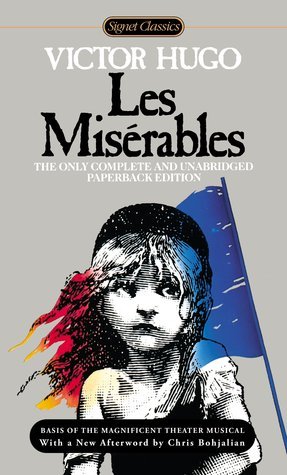
Les Misérables — Victor Hugo
First published: March 30, 1862 — A. Lacroix, Verboeckhoven & Cie
Pages: 1463 (Wilbour Signet Classics) / 1488 (Rose Modern Library) / 1232 (Denny Penguin abridged)
Goodreads: 4.21★ (851K+ ratings) · view
Audiobook runtime: 66h 3m George Guidall / Blackstone Audio (Wilbour) · 58h Adrian Lester / Audible Studios (Rose) · 60h Frederick Davidson / Blackstone alt
Commercial scale: 100M+ estimated cumulative global sales · 164 years continuous print · 50+ language translations · global public domain · universally-assigned world-literature curriculum
Awards & Recognition: Universally acknowledged French canon apex · Time Magazine Greatest Novels of All Time · Dominant 19th-century social-realism novel
Cultural position: 2012 Tom Hooper Universal Pictures $442M 8-Oscar-nom 3-win musical film w/ Hugh Jackman / Russell Crowe / Anne Hathaway / Amanda Seyfried / Eddie Redmayne · 1985 Boublil-Schönberg-Kretzmer West End musical continuously running 40+ years (2nd longest West End history) · 120M+ tickets sold 53 countries 22 languages · 2018 BBC 6-part non-musical miniseries w/ Dominic West / David Oyelowo / Lily Collins / Olivia Colman
Hugo's 1862 French canon apex — the ex-convict Jean Valjean's lifelong redemption through Bishop Myriel's Christian charity, the orphan Cosette's rescue from the Thénardiers, Inspector Javert's moral-philosophical pursuit, and the June 1832 Paris Uprising barricades — has been the dominant 19th-century social-realism novel for 164 years, with George Guidall's definitive 66h 3m Blackstone Audio production (Wilbour 1862 translation), Adrian Lester's 58h Audible Studios production (Julie Rose 2008 translation), the Boublil-Schönberg-Kretzmer 1985 West End musical running continuously for 40+ years, Tom Hooper's 2012 $442M 8-Oscar-nom Universal film with Hugh Jackman / Russell Crowe / Anne Hathaway, and global public domain status enabling free Project Gutenberg / LibriVox access to Wilbour and Hapgood translations. Use CastReader AI TTS on Kindle Les Misérables text →
Les Misérables is Victor Hugo's 1862 French novel chronicling the interconnected lives of multiple characters across 19 years of early-19th-century French post-Napoleonic history, centered on the redemption of the ex-convict Jean Valjean. The novel opens in 1815 with Bishop Myriel of Digne's extraordinary Christian charity toward Valjean (a paroled convict sentenced to 19 years' hard labor for stealing bread) — the Bishop offers Valjean shelter, and when Valjean steals the Bishop's silver, the Bishop lies to save him and gives him the additional silver candlesticks, telling him to 'use this silver to become an honest man'. This transformative moment launches Valjean's lifelong redemptive journey through his reinvention as Mayor 'Monsieur Madeleine' of Montreuil-sur-Mer, his rescue of the dying prostitute Fantine's daughter Cosette from the exploitative Thénardier innkeepers, his pursuit by the rigid-moralist Inspector Javert, his raising of Cosette in Paris, the young student Marius Pontmercy's love for the grown Cosette, the June 1832 Paris Uprising barricades (where Éponine Thénardier sacrifices herself to save Marius), Valjean's rescue of the wounded Marius through the Paris sewers, Javert's suicide over the moral impossibility of arresting his savior Valjean, and Valjean's deathbed reconciliation with Cosette and Marius. Hugo's novel — published in 1862 after 17 years of writing and revision — has sold an estimated 100M+ copies, been translated into 50+ languages, adapted to screen 25+ times (most prominently Tom Hooper's 2012 Oscar-winning musical film with Hugh Jackman / Russell Crowe / Anne Hathaway), and birthed the Boublil-Schönberg-Kretzmer 1985 West End musical that has run continuously for 40+ years (2nd longest-running West End musical in history). At 66h 3m with George Guidall's Blackstone Audio production of Charles Wilbour's 1862 translation — and with extensive free LibriVox recordings of Wilbour and Hapgood public-domain translations — Les Misérables is the universally-recommended French-canon mega-commitment.
This guide covers the 66h 3m runtime, the translation selection decision, the 5-part 48-book structure, and every free / paid path including the unique novel-to-musical-to-film progression.
Why 66h 3m Matters
French-canon and 19th-century-social-realism runtime and rating benchmark.
| Title | Runtime | Year | Goodreads rating |
|---|---|---|---|
| Les Misérables (Hugo) — this book | 66h 3m | 1862 | 4.21★ |
| The Count of Monte Cristo (Dumas) | 47h | 1844 | 4.34★ |
| Madame Bovary (Flaubert) | 12h | 1856 | 3.70★ |
| War and Peace (Tolstoy) | 67h | 1867 | 4.12★ |
| The Brothers Karamazov (Dostoevsky) | 43h | 1880 | 4.34★ |
| In Search of Lost Time (Proust, 7 vols combined) | 150+h | 1913-1927 | 4.22★ |
| Anna Karenina (Tolstoy) | 35h | 1878 | 4.11★ |
Takeaway: Les Misérables is the second-longest French / English canonical-novel audiobook commitment (after Proust's 7-volume In Search of Lost Time). George Guidall's 66h 3m Blackstone production of the Wilbour translation is the canonical first-listen recommendation. For first-time French-literature listeners seeking shorter entry points: The Count of Monte Cristo (Dumas, 47h) or Madame Bovary (Flaubert, 12h) offer accessible alternatives. But Les Misérables rewards the sustained multi-month commitment — pre-musical-familiarity for the Boublil-Schönberg-Kretzmer musical or pre-Tom-Hooper-2012-film preparation substantially eases engagement.
The 1862-2026 Trajectory
- 1845-1862: Hugo writes Les Misérables over 17 years of composition and revision (paused 1848-1852 during the French Second Republic political turmoil, during which Hugo was elected deputy, opposed Louis-Napoléon's 1851 coup, and fled to Belgium then to Guernsey in political exile where he completed the novel)
- 1862 March 30-June 30: Novel released in 10 volumes over three months across Paris, Brussels, and other European cities simultaneously — the largest-scale single-novel publication campaign of the 19th century
- 1862 December: First English translation by Charles E. Wilbour published (Carleton Publishing, New York) — becomes canonical English version for 140+ years
- 1885: Hugo dies; 2M mourners attend his funeral in Paris
- 1887: Isabel Florence Hapgood translation published
- 1907: First silent film adaptation
- 1935: Richard Boleslawski film w/ Fredric March / Charles Laughton
- 1958: French Jean-Paul Le Chanois film w/ Jean Gabin
- 1976: Norman Denny Penguin Classics abridged translation published
- 1978: Glenn Jordan TV film w/ Richard Jordan / Anthony Perkins
- 1980 September 17: Boublil-Schönberg's French-language musical premieres at Palais des Sports Paris
- 1985 October 8: Herbert Kretzmer English-adapted musical premieres at RSC Barbican London
- 1985 December 4: Musical transfers to Palace Theatre London (becomes continuously-running West End)
- 1987 March 12: Broadway premiere at Broadway Theatre (Colm Wilkinson as Valjean); 2 Tony Awards
- 1998: Bille August film w/ Liam Neeson / Geoffrey Rush / Uma Thurman / Claire Danes
- 2008: Julie Rose Modern Library translation published — contemporary critically-acclaimed
- 2012 December 25: Tom Hooper Universal Pictures musical film releases — Hugh Jackman / Russell Crowe / Anne Hathaway; $61M budget / $442M box office; 8 Oscar nominations 3 wins (Hathaway Best Supporting Actress, Best Makeup, Best Sound Mixing)
- 2013: Christine Donougher Penguin Classics translation published
- 2018: BBC 6-part non-musical miniseries w/ Dominic West / David Oyelowo / Lily Collins / Olivia Colman (Andrew Davies adaptation)
- 2019: West End musical moves from Queen's Theatre to renamed Sondheim Theatre
- 2025 October: 40-year continuous West End run milestone
- 2026 April: 164 years continuous print · 100M+ estimated global sales · 120M+ musical tickets sold · Guidall Blackstone remains canonical audiobook · Wilbour remains canonical translation · Tom Hooper 2012 film remains available on streaming · West End musical continues continuous running
The 5-Part 48-Book Structure
Understanding Hugo's monumental part-and-book architecture:
Part 1: Fantine (~220 pages, Books 1-8):
- Book 1: The Just Man (Bishop Myriel of Digne's life and Christian charity)
- Book 2: The Fall (Valjean arrives at Digne, steals the Bishop's silver, the Bishop's lie and candlesticks)
- Books 3-6: In 1817 (Fantine's Paris backstory, her abandonment by Félix Tholomyès, the baby Cosette, Fantine's departure for Montreuil-sur-Mer)
- Book 7: Valjean as Mayor 'M. Madeleine' of Montreuil-sur-Mer, his glass-bead factory, Javert's arrival
- Book 8: Fantine's decline and death, the Champmathieu trial, Javert's arrest attempt
Part 2: Cosette (~300 pages, Books 1-8):
- Book 1: Waterloo (19 chapters) — the famous Waterloo digression (often skipped or abridged)
- Book 2: The Ship Orion (Valjean's second arrest and escape)
- Book 3: Fulfilment of the Promise Made to the Dead Woman (Valjean rescues Cosette from the Thénardiers)
- Books 4-8: Valjean and Cosette in Paris, the Petit-Picpus Convent hiding place
Part 3: Marius (~280 pages, Books 1-8):
- Book 1: Parisian gamin architecture (introducing Gavroche)
- Books 2-4: Marius's backstory, M. Gillenormand his grandfather, Colonel Pontmercy his father
- Books 5-8: Marius's student life, his Friends of the ABC society, his romantic glimpses of Cosette in the Luxembourg Gardens
Part 4: Saint-Denis (~280 pages, Books 1-15):
- Books 1-2: Political background of the June 1832 Paris Uprising
- Book 7: Argot (7 chapters) — Parisian-slang linguistic digression
- Books 3-6: The barricade buildup, Éponine's unrequited love for Marius
- Books 8-15: The June 1832 barricades, Éponine's sacrifice, Gavroche's death
Part 5: Jean Valjean (~300 pages, Books 1-9):
- Books 1-2: The barricade final assault
- Book 2: The Intestine of Leviathan (7 chapters) — Paris sewers digression
- Book 3: Valjean carries Marius through the Paris sewers
- Book 4: Javert Derailed (Javert's suicide)
- Books 5-9: Marius and Cosette's marriage, Valjean's reveal to Marius, Valjean's death scene
5 parts, 48 books, 365 chapters, 1463 pages total. The 4 famous extended digressions — Waterloo (Part 2 Book 1), Argot (Part 4 Book 7), Paris Sewers (Part 5 Book 2), and the 1832 Uprising historical background (Part 4 Books 1-2) — are the novel's structural-digressive signature; Norman Denny's Penguin Classics abridged translation removes approximately 30-40% of these digressions.
The Translation Selection Guide
Charles E. Wilbour 1862 (Signet Classics, public domain) — canonical unabridged first-listen:
- Original English translation, authorized by Hugo's publisher
- George Guidall Blackstone Audio 66h 3m — definitive canonical audio
- Public domain globally — free via Project Gutenberg / LibriVox
- Victorian-register prose
Julie Rose 2008 (Modern Library) — contemporary critically-acclaimed:
- Modern English-Australian register modernizes Hugo's prose
- Adrian Lester Audible Studios 58h — contemporary canonical audio
- Preserves full unabridged scope including all digressions
Norman Denny 1976 (Penguin Classics) — mid-20th-century abridged standard:
- Abridges Waterloo and Paris sewers digressions for readability
- Most commonly assigned in undergraduate French-literature-in-translation courses
- Not recommended for readers wanting full Hugo experience
Isabel Florence Hapgood 1887 (public domain) — alternative Victorian translation Lee Fahnestock and Norman MacAfee 1987 (Signet Classics) — contemporary alternative Christine Donougher 2013 (Penguin Classics) — recent scholarly translation
For first-listeners unabridged: Wilbour (Guidall Blackstone, canonical). For contemporary unabridged: Julie Rose (Lester Audible). For abridged-digression readers: Denny (Penguin Classics). For free / public-domain: LibriVox Wilbour or Hapgood recordings.
First-Time Listener Guide
Les Misérables is Hugo's 1862 social-justice epic — five volumes, 48 books, ~1,500 pages, ~66 hours unabridged across the Wilbour translation. George Guidall's Blackstone Audio production (Wilbour translation, ~66h) is the canonical English unabridged; the Adrian Lester / Audible Studios production (Julie Rose 2008 translation, ~58h) is the contemporary alternative for listeners preferring modernized prose.
1.0–1.1x baseline for first listen — Hugo writes long historical-essay digressions (the Battle of Waterloo chapter, the Paris-sewers chapter, the convent-history chapter, the argot-slang chapter) that need room to land at first encounter. Speed past 1.25x and the Jean Valjean-Javert confrontation, the Cosette-Marius romance arc, and the June-1832-barricade sequence blur. Save 1.3x+ for re-listens once the structure is internalized.
Translation choice matters more than for shorter classics. First-time English unabridged listeners: Wilbour (Guidall Blackstone production). Contemporary readability: Rose (Lester Audible production). Public-domain free: LibriVox Wilbour (~60h, volunteer narrators, variable production quality). Avoid the Norman Denny (1976 Penguin Classics) abridged translation on first listen — it relocates Hugo's digressions to appendices, which works for modern readers but loses the structural rhythm.
If Les Misérables is your first 60-hour audiobook commitment: budget 3–4 months at 1 hour/day or 2 months at 1.5 hours/day. Don't binge — the structural payoff (Valjean's death, Javert's suicide, Marius-Cosette wedding) lands harder when the journey feels long. Take a one-week break between volumes (Fantine → Cosette → Marius → Saint-Denis → Jean Valjean) to mirror Hugo's original 5-volume publication rhythm.
For listeners coming from the 2012 Tom Hooper film or the 1985 stage musical: the audiobook restores the Battle of Waterloo, Paris-sewers, convent-history, and argot-slang chapters that the film and musical cut entirely. The Boublil-Schönberg musical is excellent introduction-level access; Hugo's full novel is structurally a different work, with the digressions doing the social-philosophical heavy-lifting that the songs compress.
Every Way to Listen
- George Guidall / Blackstone Audio (Wilbour) — 66h 3m canonical unabridged production
- Adrian Lester / Audible Studios (Rose 2008) — 58h contemporary canonical alternative
- Frederick Davidson / Blackstone Audio — 60h alternative unabridged
- Peter Batchelor / Naxos Audiobooks — UK-literary unabridged
- LibriVox (Wilbour 1862 / Hapgood 1887) — free public-domain audio (~60-70h)
- Audible Premium 1 credit — ~$14.95 covers any commercial translation
- Audible purchased audiobook — $50-60 for 60+ hour canonical productions
- Libby (U.S. libraries) — 1-3 week wait; Guidall Blackstone and Lester Audible reliably stocked
- Hoopla — classical-literature catalog; multiple translations
- Spotify Premium audiobook — far exceeds 15h monthly allocation (requires 4+ month rollover)
- Purchased Kindle edition — $12-18 for contemporary translations; free public-domain Kindle downloads
- Project Gutenberg / Standard Ebooks — free public-domain Kindle downloads of Wilbour / Hapgood translations
- CastReader AI TTS with any Kindle Les Misérables edition — unlimited re-listens, adjustable pace, particularly well-suited to extended multi-month listening
Libby Wait Times (April 2026)
Survey of major U.S. library networks as of April 2026.
- NYPL / Brooklyn Public Library: 1-3 week wait (Guidall Blackstone and Lester Audible both prominently stocked)
- Los Angeles Public Library: 1-2 week wait
- Chicago Public Library: 1-3 week wait
- Seattle Public Library: 1-3 week wait
- Boston Public Library: 0-2 week wait (French-canon multi-translation library stock)
Les Misérables has moderate library waits because the extended 60+ hour listening commitment means individual copies are held for 3+ weeks per borrower. Libby is the recommended free path for contemporary translations; LibriVox is the zero-cost free path for public-domain Wilbour / Hapgood translations.
Why Kindle + CastReader Suits Les Misérables
Les Misérables's 5-part 48-book structure and extended 3-4-month listening pattern make it uniquely well-suited to CastReader AI TTS — cross-device bookmarking preserves progress across extended multi-month one-book-per-week consumption.
Listeners commonly return to:
- Part 1 Book 1: Bishop Myriel of Digne's life and Christian charity
- Part 1 Book 2: Valjean's theft of the Bishop's silver and the Bishop's lie and candlesticks
- Part 1 Book 7: Valjean as 'M. Madeleine' Mayor of Montreuil-sur-Mer
- Part 1 Book 8: Fantine's death and the Champmathieu trial
- Part 2 Book 3: Valjean rescues Cosette from the Thénardiers
- Part 2 Book 1: Waterloo (the famous 19-chapter digression — either cherished or skipped)
- Part 4 Book 7: Argot (Parisian-slang digression)
- Part 4 Books 8-15: The June 1832 barricades, Éponine's sacrifice, Gavroche's death
- Part 5 Book 2: The Paris sewers rescue ('The Intestine of Leviathan')
- Part 5 Book 4: Javert's suicide ('Javert Derailed')
- Part 5 Book 9: Valjean's death scene
For Tom Hooper 2012 film preparation, CastReader's bookmark-preservation enables structured pre-film novel-engagement — pause on specific plot-points, cross-reference musical-songs-to-novel-scenes, pre-absorb character architectures before theatrical engagement.
For West End / Broadway musical pre-show reading, CastReader's novel-to-musical scene-jumping enables maximum appreciation of the musical's 60-70% novel-coverage; structured pre-show reading particularly enriches understanding of the Bishop Myriel Part 1 opening (barely-covered in the musical), the Waterloo digression (absent from musical), and Javert's full psychological arc (compressed in musical).
CastReader's pronunciation overrides handle Hugo's French-19th-century naming catalog: Jean Valjean (zhahn val-ZHAHN), Inspector Javert (zhah-VAYR), Fantine (fahn-TEEN), Cosette (koh-ZET), Marius Pontmercy, Éponine Thénardier (ay-poh-NEEN tay-nahr-DYAY), Thénardier (tay-nahr-DYAY), Bishop Myriel / Bishop of Digne, Monseigneur Bienvenu, Montreuil-sur-Mer, M. Madeleine, Enjolras (ahn-zhoh-LRAHS), Gavroche, M. Gillenormand, Colonel Pontmercy, Toussaint, Petit-Gervais, Saint-Denis, Patron-Minette gang (Claquesous, Gueulemer, Babet, Montparnasse), Friends of the ABC (Courfeyrac, Combeferre, Bossuet, Feuilly, Joly, Prouvaire, Bahorel, Grantaire). CastReader's override library handles Hugo's full French-literature architecture.
Send to Phone for Multi-Month French-Canon Listening
At 66h 3m Les Misérables is the longest single-novel audiobook commitment in the canonical French / English literary canon (after Proust's 7-volume In Search of Lost Time). Send to Phone preserves CastReader position across device switches — complete Part 1 Fantine during morning commutes of month 1, Part 2 Cosette during lunch walks of month 2, Parts 3-5 during extended weekend sessions of months 3-4. Part-by-part pacing mirrors Hugo's 1862 10-volume 3-month publication rhythm.
Limitations and Honest Notes
- Les Misérables's 66h commitment is substantial — first-listeners should plan 3-4 months of sustained engagement rather than attempting single-pass consumption
- Hugo's 4 extended digressions (Waterloo / Paris sewers / Argot / 1832 Uprising background) polarize readers — some treasure them as the novel's intellectual-historical signature, others find them tedious and skip to narrative chapters; Norman Denny Penguin Classics abridged translation removes ~30-40% of digression-content for readers preferring narrative-focus
- Translation choice substantially affects experience — first-listeners often benefit from comparative sampling (Bishop Myriel opening across Wilbour / Rose / Denny) before committing
- French proper nouns challenge default AI TTS — CastReader's pronunciation library handles most but unusual Parisian-argot slang terms may require manual overrides
- Content considerations — prostitution (Fantine), violence (barricades / robberies), death (multiple major-character deaths), references to galleys / execution, poverty and starvation — should be framed in appropriate historical-cultural context
- The Tom Hooper 2012 musical film compresses 1463 novel pages into 158 minutes through musical-theater conventions — book readers commonly find the film's compression emotionally-distilling but structurally-incomplete; unabridged novel reading / listening before film substantially enriches engagement
- The West End / Broadway musical covers approximately 60-70% of novel-content through songs and compressed dialogue; pre-show or post-show novel reading restores the remaining 30-40% novel-unique content
- Hugo's grace-and-redemption religious-philosophical architecture rewards mature engagement — secular-rationalist readers may find the Bishop Myriel / Valjean spiritual-conversion register challenging; Catholic-familiar readers will recognize Hugo's 19th-century French-Catholic cultural assumptions
- For first-time French-literature readers, Les Misérables's 66h commitment is ambitious — shorter accessible alternatives include Madame Bovary (Flaubert, 12h) or The Stranger (Camus, 3h); but Les Misérables rewards the sustained multi-month engagement
Related Reading
- Listen to Kindle — CastReader's Kindle-to-TTS path
- Send to Phone — cross-device position sync
- Kindle Text to Speech — Kindle TTS options overview
- Turn Kindle into Audiobook Free — free audiobook paths
- A Tale of Two Cities (Dickens) Audiobook Guide — French Revolution canonical peer
- Anna Karenina (Tolstoy) Audiobook Guide — 19th-century Russian-canon peer
- The Odyssey (Homer) Audiobook Guide — ancient-epic canonical peer
- Crime and Punishment (Dostoevsky) Audiobook Guide — Russian-canon psychological-novel peer
