Anna Karenina Audiobook & Text to Speech Guide (2026) — Leo Tolstoy's 1878 Russian Masterpiece Behind 2012 Joe Wright Film with Keira Knightley / Jude Law / Aaron Taylor-Johnson
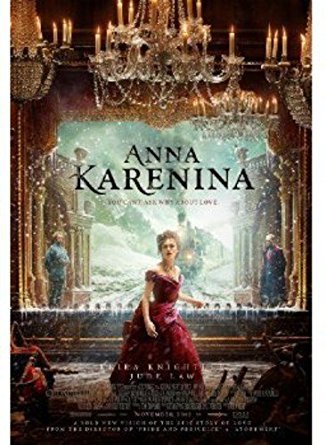
Anna Karenina — Leo Tolstoy
First published: 1878 (complete book) / 1875-1877 (Russian Messenger serialization)
Pages: 964 (Maude Penguin Classics) / 1024 (Pevear-Volokhonsky Penguin) / 848 (Bartlett Oxford)
Goodreads: 4.11★ (945K+ ratings) · view
Audiobook runtime: 35h 38m Maggie Gyllenhaal / Audible Signature Edition (Bartlett) · 37h 15m Nadia May / Blackstone Audio (Maude) · 35h 20m David Horovitch / Naxos Audiobooks (Maude)
Commercial scale: 50M+ estimated cumulative global sales · 148 years continuous print · 40+ language translations · 15+ screen adaptations · universally-assigned world-literature curriculum
Awards & Recognition: Universally acknowledged Russian canon apex alongside War and Peace · Time Magazine "10 Greatest Books of All Time" #1 · William Faulkner / Vladimir Nabokov / Virginia Woolf / F. Scott Fitzgerald professional writers' consensus-choice greatest novel
Cultural position: 2012 Joe Wright Focus Features $69M 4-Oscar-nom 1-win (Best Costume Design) film w/ Keira Knightley / Jude Law / Aaron Taylor-Johnson / Matthew Macfadyen / Alicia Vikander / Domhnall Gleeson · 1935 MGM Greta Garbo · 1948 Vivien Leigh · 1967 Soviet Alexander Zarkhi · 1997 Bernard Rose Sophie Marceau · 2013 Shakhnazarov Russian miniseries
Tolstoy's 1878 Russian canon apex — Anna's doomed affair with Count Vronsky paralleled by Levin's redemptive rural marriage to Kitty — has been the universally-recommended accessible Russian-literature entry point for 148 years, with Maggie Gyllenhaal's definitive 35h 38m Audible Signature Edition (Bartlett 2014 translation), Nadia May's 37h 15m Blackstone production, Joe Wright's 2012 $69M film starring Keira Knightley / Jude Law / Aaron Taylor-Johnson, and global public domain status enabling free Project Gutenberg / LibriVox access to Maude and Garnett translations. Use CastReader AI TTS on Kindle Anna Karenina text →
Anna Karenina is Leo Tolstoy's 1878 Russian novel chronicling two parallel plot lines set in 1870s Imperial Russia: the tragic illicit affair between Anna Arkadyevna Karenina and Count Alexei Vronsky (paralleled by her husband Karenin's cold official-government restraint and Anna's gradual isolation from society culminating in railway-track suicide), and the contrasting redemptive rural courtship-and-marriage of Konstantin Dmitrievich Levin (Tolstoy's autobiographical proxy) with Kitty Shcherbatskaya (culminating in Levin's Part 8 Christian-philosophical spiritual resolution). The novel opens with the famous line 'Happy families are all alike; every unhappy family is unhappy in its own way' — introducing Stiva Oblonsky's adultery crisis that brings Anna to Moscow where she first meets Vronsky at the train station (where a railway worker has been crushed to death, foreshadowing Anna's end). Serialized in The Russian Messenger 1875-1877 and published as a single volume in 1878, Anna Karenina has sold an estimated 50M+ copies, been translated into 40+ languages, adapted to screen 15+ times (most prominently Joe Wright's 2012 Focus Features film with Keira Knightley), and is universally regarded alongside War and Peace as the apex of Russian literary realism. At 35h 38m with Maggie Gyllenhaal's Audible Signature Edition production of Rosamund Bartlett's 2014 Oxford World's Classics translation — and with 40+ hours of free LibriVox recordings of Maude and Garnett public-domain translations — Anna Karenina is the universally-recommended accessible Russian-canon entry point.
This guide covers the 35h 38m runtime, the translation selection decision, the 8-part dual-plot structure, and every free / paid path.
Why 35h 38m Matters
Russian-canon and world-literature runtime and rating benchmark.
| Title | Runtime | Year | Goodreads rating |
|---|---|---|---|
| Anna Karenina (Tolstoy) — this book | 35h 38m | 1878 | 4.11★ |
| War and Peace (Tolstoy) | 61-67h | 1867 | 4.12★ |
| Crime and Punishment (Dostoevsky) | 21h 37m | 1866 | 4.29★ |
| The Brothers Karamazov (Dostoevsky) | 43h | 1880 | 4.34★ |
| The Master and Margarita (Bulgakov) | 17h | 1967 | 4.35★ |
| Dead Souls (Gogol) | 15h | 1842 | 4.11★ |
| Doctor Zhivago (Pasternak) | 26h | 1957 | 4.03★ |
Takeaway: Anna Karenina is roughly-half the length of War and Peace and midway between Crime and Punishment and the Brothers Karamazov — making it the universally-recommended accessible Russian-canon entry point. Maggie Gyllenhaal's 35h 38m Audible Signature production of the Bartlett translation is the canonical first-listen recommendation. For first-time Russian-literature listeners, Anna Karenina precedes the deeper dives into War and Peace (Tolstoy) and the Brothers Karamazov (Dostoevsky).
The 1878-2026 Trajectory
- 1875-1877: Serialized in Mikhail Katkov's The Russian Messenger (final installment censored by Katkov over Tolstoy's Russo-Turkish War critique; Tolstoy published the final part separately)
- 1878: First complete single-volume publication in Moscow
- 1886-1887: First English translation by Nathan Haskell Dole (Thomas Y. Crowell)
- 1901: Constance Garnett translation published (Modern Library) — shapes English-speaking readers' understanding of Tolstoy for generations
- 1918: Aylmer Maude translation published (Oxford World's Classics), authorized by Tolstoy himself — remains canonical for ~80 years
- 1935: MGM film w/ Greta Garbo — Garbo's iconic early-Hollywood Anna portrayal
- 1948: British film w/ Vivien Leigh / Ralph Richardson
- 1967: Soviet Alexander Zarkhi two-part film
- 1978: Tatiana Samoilova Soviet film
- 1997: Bernard Rose film w/ Sophie Marceau / Sean Bean (first major Hollywood Anna Karenina shot in Russia)
- 2000: Pevear and Volokhonsky Penguin translation published — becomes contemporary scholarly-authority benchmark
- 2004 August: Oprah's Book Club selects Anna Karenina (Pevear-Volokhonsky translation) — drives largest single-month Anna Karenina sales spike in history
- 2012 September: Joe Wright Focus Features film releases — Keira Knightley (Anna), Jude Law (Karenin), Aaron Taylor-Johnson (Vronsky), Matthew Macfadyen (Oblonsky), Alicia Vikander (Kitty), Domhnall Gleeson (Levin); budget $31M, box office $69M; 4 Oscar nominations 1 win (Best Costume Design)
- 2013: Karen Shakhnazarov Russian Anna Karenina: Vronsky's Story miniseries
- 2014: Rosamund Bartlett Oxford World's Classics translation published — contemporary accessible benchmark
- 2015: Marian Schwartz Yale University Press translation published
- 2016: Maggie Gyllenhaal / Audible Signature Edition recording of Bartlett translation releases — becomes contemporary canonical audiobook
- 2021: Karen Shakhnazarov Russian Anna Karenina film
- 2026 April: 148 years continuous print · 50M+ estimated global sales · Maggie Gyllenhaal Audible Signature remains canonical contemporary audiobook · Bartlett remains canonical contemporary translation · Joe Wright 2012 film remains available on streaming · universally-assigned world-literature curriculum
The 8-Part Dual-Plot Structure
Understanding Tolstoy's parallel-architecture 8-part novel:
Part 1 (~17 chapters) — Establishing:
- Opening line: 'Happy families are all alike; every unhappy family is unhappy in its own way'
- Stiva Oblonsky's adultery crisis; Dolly's despair
- Anna arrives Moscow to reconcile them; meets Vronsky at train station; railway-worker death
- Kitty's ballroom realization Vronsky has abandoned her for Anna
- Levin's first failed proposal to Kitty
Part 2 (~35 chapters) — Anna-Vronsky affair begins; Kitty's illness:
- Anna-Vronsky St. Petersburg consummation
- Kitty's illness; German spa cure; meets Varenka
- Levin's rural-estate reform experiments; his brother Nikolai's decline
- Anna's horse-race accident — Vronsky falls; Anna's reaction exposes affair to Karenin
Part 3 (~32 chapters) — The crisis develops:
- Anna's pregnancy by Vronsky
- Karenin's decision to maintain formal marriage despite Anna's infidelity
- Levin's agricultural-reform philosophical reading; Nikolai deteriorating
- Anna confesses affair directly to Karenin
Part 4 (~23 chapters) — Anna's near-death and Karenin's forgiveness:
- Anna's near-death in childbirth of Vronsky's daughter
- Karenin's Christian forgiveness of Anna and Vronsky at the deathbed
- Vronsky's suicide attempt
- Anna's recovery; she and Vronsky leave for Italy
- Levin's successful second proposal to Kitty (the famous chalk-letters scene)
Part 5 (~33 chapters) — Marriages and deaths:
- Levin and Kitty's wedding and early married life at Pokrovskoye
- Nikolai Levin's death scene (the novel's most-studied death scene)
- Anna and Vronsky return from Italy; Anna's reunion with her son Seryozha
- Karenin's growing religious-mystical absorption
Part 6 (~32 chapters) — Divergence intensifies:
- Summer at Pokrovskoye (Levin's estate); Dolly visits Anna-Vronsky at Vozdvizhenskoye
- Anna's isolation from Russian society
- Kitty's pregnancy
Part 7 (~31 chapters) — The tragic resolution:
- Kitty's childbirth — son Dmitri
- Anna's increasing paranoia about Vronsky's fidelity
- Anna's final argument with Vronsky; her journey to the Nizhny Novgorod station
- Anna throws herself under the moving train (deliberate parallel to Part 1 opening station death)
Part 8 (~19 chapters) — Levin's philosophical resolution:
- Vronsky's departure for Serbia (Russo-Turkish War volunteer)
- Levin's spiritual crisis and resolution
- Final chapters: Levin's Christian-existentialist philosophical conversion
- Closing image: Levin's sustained faith in the meaning of life
8 parts, 239 chapters, 964 pages total. Some critical readings view Parts 1-7 as Anna's tragedy and Part 8 as Levin's redemption — Tolstoy's deliberate choice to continue after Anna's death is a structural signature of the novel.
The Translation Selection Guide
Rosamund Bartlett 2014 (Oxford World's Classics) — canonical contemporary first-listen recommendation:
- Modern English, readability-prioritized translation
- Maggie Gyllenhaal Audible Signature Edition (35h 38m) — definitive contemporary audio
- Best balance of Tolstoyan-prose-rhythm and contemporary-listener accessibility
Pevear and Volokhonsky 2000 (Penguin Classics) — contemporary literary-authority alternative:
- Russian-idiom-fidelity prioritized translation
- Oprah Book Club 2004 selection — drove largest-ever Anna Karenina sales spike
- Scholarly-praised but some readers find P&V Russianisms less natural than Bartlett
Aylmer Maude 1918 (Oxford World's Classics / public domain) — canonical early-20th-century:
- Authorized by Tolstoy himself
- Global public domain — free via Project Gutenberg / Standard Ebooks
- LibriVox recordings free; linguistically somewhat dated
Constance Garnett 1901 (Modern Library / public domain) — canonical early-English:
- Shaped English-speaking Tolstoy reception for generations
- Global public domain — free via Project Gutenberg / Standard Ebooks
- LibriVox recordings free; shows Victorian-prose register
Marian Schwartz 2015 (Yale University Press) — contemporary scholarly alternative Joel Carmichael 1960 (Bantam Classics) — mid-century standard Louise and Aylmer Maude collaborative 1918 — Maude's wife co-translator
For first-listeners: Bartlett (Gyllenhaal Audible). For scholarly readers: Pevear-Volokhonsky. For free / public-domain: LibriVox Maude or Garnett.
Every Way to Listen
- Maggie Gyllenhaal / Audible Signature Edition (Bartlett 2014) — 35h 38m canonical contemporary production
- Nadia May / Blackstone Audio (Maude) — 37h 15m unabridged alternative
- David Horovitch / Naxos Audiobooks (Maude) — 35h 20m UK-literary alternative
- LibriVox (Garnett 1901 / Maude 1918) — free public-domain audio (linguistically dated)
- Audible Premium 1 credit — ~$14.95 covers any commercial translation
- Audible purchased audiobook — $30-40 for premium 35+ hour productions
- Libby (U.S. libraries) — 0-2 week wait; Bartlett Gyllenhaal / Maude May reliably stocked
- Hoopla — classical-literature catalog; multiple translations
- Spotify Premium audiobook — exceeds 15h monthly allocation by 20h+ (requires multi-month rollover)
- Purchased Kindle edition — $10-16 for contemporary translations; free public-domain Kindle downloads
- Project Gutenberg / Standard Ebooks — free public-domain Kindle downloads of Garnett / Maude translations
- CastReader AI TTS with any Kindle Anna Karenina edition — unlimited re-listens, adjustable pace, particularly well-suited to 8-part structured listening
Libby Wait Times (April 2026)
Survey of major U.S. library networks as of April 2026.
- NYPL / Brooklyn Public Library: 0-2 week wait (Gyllenhaal Audible Signature and May Blackstone both prominently stocked)
- Los Angeles Public Library: 0-1 week wait
- Chicago Public Library: 0-2 week wait
- Seattle Public Library: 0-2 week wait
- Boston Public Library: 0-1 week wait (Russian-canon multi-translation library stock)
Anna Karenina has short library waits because universally-assigned-curriculum status ensures every major US library system carries multiple digital copies across Bartlett / P&V / Maude translations. Libby is the recommended free path for contemporary translations; LibriVox is the zero-cost free path for public-domain Maude / Garnett translations.
Why Kindle + CastReader Suits Anna Karenina
Anna Karenina's 8-part structure and extended 6-8-week listening pattern make it uniquely well-suited to CastReader AI TTS — cross-device bookmarking preserves progress across extended multi-week one-part-per-week consumption.
Listeners commonly return to:
- Opening line: 'Happy families are all alike; every unhappy family is unhappy in its own way'
- Moscow train station first Anna-Vronsky encounter (Part 1) — the railway-worker death foreshadow
- The ballroom scene where Kitty realizes Vronsky has abandoned her
- Anna's horse-race accident — Vronsky's fall exposing affair (Part 2)
- Anna's near-death in childbirth and Karenin's Christian forgiveness (Part 4)
- Levin's chalk-letters proposal to Kitty (Part 4) — autobiographical-Tolstoy-proposing-to-Sofia-Behrs scene
- Levin-Kitty wedding scene (Part 5)
- Nikolai Levin's death scene (Part 5) — Tolstoy's most-studied death scene
- Anna's final train-station suicide scene (Part 7)
- Part 8 Levin's philosophical-spiritual resolution chapters
For Russian-canon progression preparation (Anna Karenina → War and Peace → Crime and Punishment → Brothers Karamazov), CastReader's cross-book bookmarking enables structured 4-book reading plan spanning 150+ hours of Russian canon across 6-12 months.
CastReader's pronunciation overrides handle Russian-literature canonical proper nouns: Anna Arkadyevna Karenina, Alexei Alexandrovich Karenin, Count Alexei Kirillovich Vronsky, Konstantin Dmitrievich Levin (LEH-vin), Ekaterina 'Kitty' Shcherbatskaya, Stepan 'Stiva' Arkadyevich Oblonsky, Darya 'Dolly' Alexandrovna Oblonskaya, Nikolai Levin (Konstantin's brother), Sergei Ivanovich Koznyshev, Seryozha (Anna's son), Annie (Anna's daughter with Vronsky), Princess Betsy Tverskaya, Countess Lydia Ivanovna, Pokrovskoye (Levin's estate), Vozdvizhenskoye (Vronsky's estate). Russian patronymic forms are especially prone to TTS mispronunciation; CastReader's override library handles the full Russian-canon naming architecture.
Free Public-Domain Options + Translation Comparison
Anna Karenina entered U.S. public domain in the 1920s (1873-1877 publication). UK / worldwide PD since the 1930s (Tolstoy died 1910). Translation choice is the single biggest variable in your free-listening experience:
- Constance Garnett 1901 — the canonical late-Victorian English translation, available free on Project Gutenberg. Garnett is widely-distributed but criticized by contemporary scholars for smoothing Tolstoy's prose register; many translation theorists prefer later versions.
- Pevear & Volokhonsky 2000 — the contemporary canonical scholarly translation (Penguin Classics). Under copyright until ~2095 (US). Maggie Gyllenhaal's Audible Studios canonical narration uses this translation.
- Rosamund Bartlett 2014 — Oxford World's Classics translation, alternative scholarly choice. Under copyright.
- Kyril Zinovieff & Jenny Hughes 2010 — Alma Classics translation, less commonly cited but academically respected.
Free fully-PD legitimate paths:
- LibriVox — multiple volunteer-recorded productions of Garnett translation, free. Quality varies by volunteer; the 2008 Sibella Denton complete recording is widely-cited as the strongest free volunteer edition.
- Project Gutenberg — full Garnett e-text, plain ASCII, perfect for CastReader AI TTS. The Maude translation (Aylmer & Louise Maude, 1918) is also PD and is widely considered slightly better than Garnett — check Gutenberg for the Maude edition specifically.
- Internet Archive — multiple AK audiobook recordings hosted free, including PD-era recordings.
- Kindle public-domain edition — free download of Garnett or Maude. Pair with CastReader free AI TTS for unlimited re-listens at zero cost.
For a 35h 38m unabridged commitment, the public-domain status enables fully-free unlimited re-listens — but the Pevear/Volokhonsky and Bartlett translations are widely considered superior to Garnett for first-time-listeners who can afford the commercial editions. If you're committing to a first-listen of Anna Karenina, the Maggie Gyllenhaal Audible Studios production (using Pevear/Volokhonsky) is widely considered the consensus contemporary canonical experience.
Send to Phone for Multi-Week Russian-Canon Listening
At 35h 38m Anna Karenina rewards structured 6-8-week listening. Send to Phone preserves CastReader position across device switches — complete Part 1 Moscow setup during morning commute, Part 5 Levin-Kitty wedding during lunch walk, Part 7 Anna's suicide during evening desk-session, Part 8 Levin philosophical resolution on weekend. Part-by-part pacing mirrors Tolstoy's 1875-1877 serialized publication rhythm.
Limitations and Honest Notes
- Translation choice substantially affects experience — first-listeners often benefit from comparative sampling (opening passage across Bartlett / P&V / Maude / Garnett) before committing
- Russian patronymic-form proper nouns challenge default AI TTS — CastReader's pronunciation library handles most but regional variants (e.g., 'Arkadyevna' vs 'Arkadievna' transliteration conventions) may require manual overrides
- Content considerations — adultery central plot, suicide (Anna's detailed railway-track death), childbirth scenes, death scenes (Nikolai's tuberculosis), implied sexual content (Victorian-restrained by contemporary standards), 19th-century aristocratic-society assumptions foreign to modern readers — should be framed in appropriate historical-cultural context
- The novel's 8-part structure with Part 8 continuing-after-Anna's-death divides reader reception — some readers find Tolstoy's Levin-philosophical Part 8 the novel's intellectual-spiritual climax, others find it anticlimactic after Anna's tragic resolution
- Tolstoy's sustained long-sentence philosophical-prose complexity challenges impatient first-listeners — 1.0x-1.25x pacing recommended for narrative-dense passages, 1.5x appropriate for Levin-philosophical reflection-passages after initial engagement
- For first-time Russian-literature readers, Anna Karenina's 35+ hour commitment is substantial but accessible; first-listeners should budget 6-8 weeks for sustained engagement rather than attempting single-pass consumption
- The 2012 Joe Wright film is widely praised as visually-stunning but is commonly criticized for compressing 964 pages into 130 minutes — book readers recommend reading / listening to the full novel before seeing the film to preserve Tolstoyan philosophical-depth
- Joe Wright's theatrical-stage directorial conceit polarizes viewers — Tolstoy purists find it stylistically distracting; others find it illuminating of Russian-aristocratic performativity
Related Reading
- Listen to Kindle — CastReader's Kindle-to-TTS path
- Send to Phone — cross-device position sync
- Kindle Text to Speech — Kindle TTS options overview
- Turn Kindle into Audiobook Free — free audiobook paths
- Crime and Punishment (Dostoevsky) Audiobook Guide — Russian canonical peer
- The Odyssey (Homer) Audiobook Guide — ancient-epic canonical peer
- Beloved (Toni Morrison) Audiobook Guide — literary Pulitzer-tier peer
- Pride and Prejudice (Austen) Audiobook Guide — 19th-century-romance canonical peer
