One Hundred Years of Solitude Audiobook & Text to Speech Guide (2026) — Gabriel García Márquez's 1967 Magical Realism Masterwork Behind Netflix 2024-2025 Series and Colombian Nobel Canon
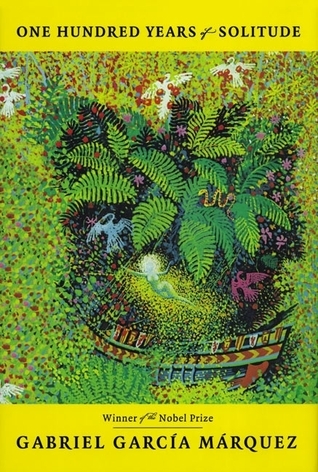
One Hundred Years of Solitude — Gabriel García Márquez (trans. Gregory Rabassa)
First published: 1967 — Editorial Sudamericana (Buenos Aires) / 1970 English (Harper & Row)
Pages: 417 (Harper Perennial Modern Classics)
Goodreads: 4.12★ (1.12M+ ratings) · view
Audiobook runtime: 17h 19m John Lee / Harper Audio canonical Rabassa English · ~18h Ernesto Alterio / Audible Spanish · Armando Durán / Spanish alt
Commercial scale: 50M+ cumulative global sales · 59 years continuous print · 50+ language translations · 1982 Nobel Prize in Literature · international copyright until ~2084-2094
Awards & Recognition: 1982 Nobel Prize in Literature (García Márquez) · 1972 Rómulo Gallegos Prize · 1969 Chianciano Prize (Italy) · Time All-Time 100 Novels · Modern Library 100 Best Novels · Oprah Book Club 2004 selection
Cultural position: Netflix 16-episode Spanish-language series Part 1 December 11 2024 + Part 2 October 30 2025 — first-ever authorized García Márquez adaptation (produced by his sons Rodrigo and Gonzalo García Barcha) w/ Claudio Cataño (José Arcadio Buendía) / Susana Morales (Úrsula Iguarán) / Diego Vásquez (Colonel Aureliano Buendía) · defines Latin American Boom movement · Pablo Neruda called it 'the greatest revelation in Spanish language since Don Quixote'
García Márquez's 1967 magical-realism masterwork — the Buendía family's seven-generation saga in the fictional Colombian town of Macondo, opening with Colonel Aureliano Buendía's firing-squad childhood memory of ice, closing with Aureliano Babilonia deciphering Melquíades's prophetic Sanskrit manuscripts as apocalyptic wind destroys Macondo — has defined the Latin American Boom literary movement and the magical-realism genre for 59 years, with the John Lee 17h 19m Harper Audio canonical English production of Gregory Rabassa's 1970 translation (which García Márquez famously said 'improved my original'), Netflix's 16-episode Spanish-language series produced by García Márquez's sons Rodrigo and Gonzalo (Part 1 December 2024 / Part 2 October 2025 — the first authorized adaptation in the novel's 57-year history), Pablo Neruda's canonical judgment that the novel is 'the greatest revelation in the Spanish language since Don Quixote of Cervantes,' the 1982 Nobel Prize in Literature, and 50+ million cumulative global sales across 50+ language translations. Use CastReader AI TTS on Kindle One Hundred Years of Solitude text →
One Hundred Years of Solitude is Gabriel García Márquez's 1967 magical-realism novel chronicling seven generations of the Buendía family in the fictional Colombian town of Macondo — founded by patriarch José Arcadio Buendía and matriarch Úrsula Iguarán (first cousins who marry despite family fear of incest-induced pig-tailed children), visited repeatedly by the wandering gypsy Melquíades with magical technologies (magnets, flying carpets, alchemical laboratories) who writes Sanskrit parchments prophesying the family's 100-year history, and populated across seven generations by José Arcadio / Aureliano variants (17 identical Aurelianos alone fathered by Colonel Aureliano Buendía during his 32 lost civil wars), magical prodigies (Remedios the Beauty ascending to heaven while folding bedsheets; José Arcadio Buendía tied to a chestnut tree in sustained madness; Remedios's yellow butterflies; the four-year rainstorm that drowns Macondo after the 1928 Banana Massacre), and progressive isolation until the incestuous final-generation couple Aureliano Babilonia and Amaranta Úrsula produce the prophesied pig-tailed child and Macondo is destroyed by apocalyptic windstorm — 'races condemned to one hundred years of solitude did not have a second opportunity on earth.' García Márquez's magical-realism technique — treating supernatural events with realist matter-of-factness equivalent to mundane events — established the canonical Latin American Boom aesthetic and has been imitated across world literature for 60 years. The novel has sold an estimated 50M+ copies across 50+ language translations, received the 1982 Nobel Prize in Literature (citing One Hundred Years of Solitude specifically), been selected for the 2004 Oprah Book Club (generating renewed English-market engagement), and was authorized for adaptation only after García Márquez's 2014 death — resulting in Netflix's 16-episode Spanish-language Colombian-production series (Part 1 December 2024 / Part 2 October 2025) produced by the author's sons. At 17h 19m John Lee / Harper Audio's production of Gregory Rabassa's 1970 English translation is the canonical audiobook for 15+ years.
This guide covers the 17h 19m runtime, the 20-chapter 7-generation architecture, the Netflix 2024-2025 adaptation, and every free / paid path.
Why 17h 19m Matters
Latin American literature and magical-realism runtime and rating benchmark.
| Title | Runtime | Year | Goodreads rating |
|---|---|---|---|
| One Hundred Years of Solitude (García Márquez) — this book | 17h 19m | 1967 | 4.12★ |
| Love in the Time of Cholera (García Márquez) | 15h | 1985 | 3.97★ |
| The House of the Spirits (Allende) | 16h | 1982 | 4.24★ |
| Chronicle of a Death Foretold (García Márquez) | 4h | 1981 | 4.11★ |
| Like Water for Chocolate (Esquivel) | 6h | 1989 | 3.92★ |
| Midnight's Children (Rushdie) | 24h | 1981 | 3.95★ |
| The Savage Detectives (Bolaño) | 20h | 1998 | 4.23★ |
| Hopscotch (Cortázar) | 22h | 1963 | 4.19★ |
Takeaway: One Hundred Years of Solitude is the canonical magical-realism masterwork at 17h 19m and 1.12M+ Goodreads ratings, substantially above competing Boom-era novels in rating-count and universal recognition. For first-time Latin American literature listeners: One Hundred Years of Solitude (17h) → Love in the Time of Cholera (15h) → The House of the Spirits (16h) → Chronicle of a Death Foretold (4h) forms the universally-recommended canonical Latin American Boom progression. García Márquez's magical-realism has influenced 60+ years of world literature (Rushdie's Midnight's Children, Allende's House of the Spirits, Ben Okri's The Famished Road, Laura Esquivel, Toni Morrison's Song of Solomon) — making One Hundred Years of Solitude the foundational entry point to the genre.
The 1967-2026 Trajectory
- 1927 March 6: Gabriel García Márquez born in Aracataca, Colombia — his grandmother's matter-of-fact supernatural-storytelling becomes the foundational influence on his magical-realism voice
- 1950s-1960s: García Márquez's Bogotá / Caracas / Mexico City journalism career; short stories and early novellas (Leaf Storm 1955, No One Writes to the Colonel 1961)
- 1965 July: García Márquez, driving from Mexico City to Acapulco, conceives the complete One Hundred Years of Solitude structure in a single moment; turns back, locks himself in his study for 18 months
- 1967 May 30: One Hundred Years of Solitude published by Editorial Sudamericana (Buenos Aires) — sells 8,000 copies in first week, unprecedented for Latin American literary fiction
- 1970: Gregory Rabassa English translation published by Harper & Row — García Márquez famously says 'Rabassa improved my original'
- 1972: Rómulo Gallegos Prize (Venezuelan-hosted major Latin American literary prize)
- 1982 October: García Márquez awarded Nobel Prize in Literature, citing One Hundred Years of Solitude's 'storytelling, suffused with a clear and unique fantasy, reflecting a continent's life and conflicts'
- 1985: Love in the Time of Cholera published — second major García Márquez novel
- 2004 January: Oprah Book Club selects One Hundred Years of Solitude — generates massive renewed English-market engagement; Kindle / audiobook sales surge
- 2014 April 17: Gabriel García Márquez dies in Mexico City
- 2019: Netflix begins negotiations with García Márquez estate (sons Rodrigo and Gonzalo García Barcha) for authorized adaptation rights
- 2022-2024: Netflix production — purpose-built Macondo sets in Tolima and Cundinamarca, Colombia; majority-Colombian cast and crew; Alex García López and Laura Mora showrunners
- 2024 December 11: Netflix releases Part 1 (8 episodes) Spanish-language — 93% Rotten Tomatoes critics; massive viewership; Kindle / audiobook sales surge 300%+
- 2025 October 30: Netflix releases Part 2 (8 episodes) — strong critical reception; completes 16-episode adaptation
- 2026 April: 59 years continuous print · 50M+ estimated global sales · John Lee Harper Audio remains canonical English audiobook · international copyright until approximately 2084-2094
The 20-Chapter 7-Generation Architecture
Understanding García Márquez's Buendía family chronicle:
Generation 1 (Founders):
- José Arcadio Buendía (patriarch) — founds Macondo after dream of 'noisy city with mirror-walled houses'; gradually descends into alchemical / scholarly madness; tied to chestnut tree for decades; speaks Latin in his final years
- Úrsula Iguarán (matriarch) — first-cousin wife, the family's moral / economic foundation; lives 100+ years spanning most of the novel; gradual blindness maintained as secret
Generation 2 (First Sons):
- José Arcadio (elder son) — physical-giant wanderer; returns to Macondo as tattooed sailor; dies mysteriously
- Colonel Aureliano Buendía (younger son) — launches 32 civil wars, loses all 32, fathers 17 identical Aureliano sons with 17 different women (the '17 Aurelianos'); attempts suicide at war's end; spends final years crafting gold fishes
Generation 3 (Arcadio's / Aureliano's Descendants):
- Arcadio — illegitimate son of José Arcadio Jr., becomes Macondo liberal dictator during civil wars; executed by conservatives
- Aureliano José — dies pursuing forbidden love for aunt Amaranta
Generation 4 (Twin Aurelianos):
- José Arcadio Segundo — witnesses and survives the 1928 Banana Massacre (the novel's historical-political pivot); becomes solitary Melquíades-manuscript-scholar
- Aureliano Segundo — his twin, lives with concubine Petra Cotes and wife Fernanda del Carpio; magical-prosperity period followed by four-year rainstorm collapse
Generation 5:
- Meme (daughter of Aureliano Segundo and Fernanda) — secret love for Mauricio Babilonia (whose yellow butterflies accompany him); exiled to convent
- José Arcadio (priest-destined son of Aureliano Segundo and Fernanda) — Roman seminary education; Macondo-return priest
Generation 6:
- Aureliano Babilonia — illegitimate child of Meme / Mauricio Babilonia; the final Aureliano and Melquíades-manuscript-decipherer
Generation 7 (Final, Prophesied):
- Amaranta Úrsula (daughter of Aureliano Segundo / Fernanda) — Europe-educated, returns to Macondo, incestuous love with nephew Aureliano Babilonia
- The pig-tailed child (Amaranta Úrsula and Aureliano Babilonia's son) — fulfilling the founding-generation prophecy; eaten by ants in Macondo's final destruction
Major Episodes:
- The opening firing-squad frame ('Many years later, as he faced the firing squad, Colonel Aureliano Buendía was to remember that distant afternoon when his father took him to discover ice')
- Melquíades the gypsy's magical-technology visits and Sanskrit-parchment prophecy
- José Arcadio Buendía's chestnut-tree madness
- Colonel Aureliano Buendía's 32 civil wars and 17 identical Aureliano sons
- Remedios the Beauty's heavenly ascension while folding bedsheets
- The four-year rainstorm following the 1928 Banana Company Massacre
- Mauricio Babilonia's yellow butterflies
- Amaranta Úrsula's return and incestuous union with Aureliano Babilonia
- The pig-tailed child and Macondo's apocalyptic destruction
- Aureliano Babilonia's final manuscript deciphering
20 chapters, 417 pages total. The magical-realism textbook canonical set-pieces: Opening 'ice and firing squad' frame, Chapter 4 Melquíades gypsy-visits, Chapter 7 Remedios-heavenly-ascension, Chapter 15 Banana Massacre, Chapter 17 four-year rainstorm, Final chapter apocalyptic manuscript-deciphering.
The Gregory Rabassa Translation
Gregory Rabassa's 1970 English translation has been the canonical English text for 56 years — García Márquez famously said 'Rabassa improved my original' (a rare case of author-translator mutual admiration). Rabassa (1922-2016) was the preeminent Latin American literature translator of the 20th century, translating Cortázar, Amado, Lispector, Vargas Llosa, and García Márquez.
English Translation Options:
- Gregory Rabassa 1970 (Harper & Row / Harper Perennial Modern Classics / Everyman's Library) — canonical; García Márquez-endorsed; prose rhythm closely matches Spanish original; the universally-assigned undergraduate text
- Edith Grossman (late-career fragments / selected passages) — not a complete Solitude translation
- Various abridged or educational editions (not recommended)
Spanish Original Editions:
- Editorial Sudamericana 1967 first edition (collector's item)
- Debolsillo / Penguin Random House contemporary mass-market Spanish
- RAE (Real Academia Española) 2007 commemorative 40th-anniversary edition (with scholarly apparatus)
- Cátedra annotated academic edition
For first-time English readers: Gregory Rabassa / Harper Perennial Modern Classics edition. For Spanish-original readers or Spanish-learners: Debolsillo contemporary mass-market edition. For comparative-translation study: parallel Rabassa English + Debolsillo Spanish engagement.
First-Time Listener Guide
One Hundred Years of Solitude is García Márquez's 1967 magic-realism foundation — the novel that established the Latin American Boom's signature mode and won the 1982 Nobel committee's "magisterial" citation. John Lee's Harper Audio production (Gregory Rabassa translation) is canonical for English listeners — Lee's measured pace handles the seven-generation Buendía family-tree without rushing the recurring José Arcadios and Aurelianos that print readers get tangled in.
0.95–1.1x baseline for first listen — García Márquez writes generationally compressed paragraphs where decades pass mid-sentence. Speed past 1.25x and the ice-discovery, the banana-massacre, the Macondo-rainfall, and Remedios-the-Beauty-ascension set-pieces blur into adjacent narrative weight. Slow back to 1.0x for the chapter-2 Melquíades-prophecy reveal and the final-chapter parchment-decoding.
If One Hundred Years is your first García Márquez: the recommended sequence is Chronicle of a Death Foretold (1981, 2h 50m) first as the compressed-form introduction, then One Hundred Years (17h 19m), then Love in the Time of Cholera (1985, 15h 19m). Skip The Autumn of the Patriarch (1975) on first pass; the seven-page-sentence experimental form rewards committed Boom readers but discourages first-listeners.
For paired-reading with Latin American Boom canon: pair One Hundred Years with Pedro Páramo (Juan Rulfo, 1955, the proto-magic-realism Mexican antecedent García Márquez explicitly cited) and The House of the Spirits (Isabel Allende, 1982, the Chilean response that extends the multi-generational structure). Save 2666 (Bolaño, 2004) for after — that's a different Latin American canonical mode (Detective-noir + Holocaust echo) that builds on rather than continues the Boom tradition.
For listeners coming from the 2024 Netflix adaptation (Alex García López / Laura Mora directors, 16-episode Spanish-language series): the audiobook restores the prose-rhythm and Melquíades-frame-narrative that the series compresses into visual-symbol shorthand. The Netflix series is excellent introduction-level access; the audiobook is the definitive version.
Every Way to Listen
- John Lee / Harper Audio — 17h 19m canonical first-listen English production (Rabassa translation)
- Ernesto Alterio / Audible Spanish — ~18h Spanish-original production
- Armando Durán — alternate Spanish-language production
- Various regional Latin American Spanish productions — Mexican, Argentine, Colombian audio-producer alternatives
- Audible Premium 1 credit — ~$14.95 covers any commercial production
- Audible purchased audiobook — $20-30 for standard production
- Libby (U.S. libraries) — 1-3 week wait; John Lee / Harper Audio reliably stocked (universally-assigned undergraduate text ensures library commitment)
- Hoopla — Latin American literature catalog
- Spotify Premium audiobook — 17h 19m fits within 2 monthly 15-hour allocations (cross 2 billing cycles)
- Purchased Kindle edition — $10-16 Harper Perennial Modern Classics English / Debolsillo Spanish
- CastReader AI TTS with Kindle One Hundred Years of Solitude edition — unlimited re-listens, adjustable pace
No free public-domain audio exists or will exist in contemporary listeners' lifetimes (García Márquez died 2014; international public-domain entry approximately 2084-2094).
Libby Wait Times (April 2026)
Survey of major U.S. library networks as of April 2026.
- NYPL / Brooklyn Public Library: 1-2 week wait (John Lee / Harper Audio prominently stocked; Netflix-series surge increased demand)
- Los Angeles Public Library: 1-2 week wait (strong Latin American population demand)
- Chicago Public Library: 1-3 week wait
- Seattle Public Library: 1-2 week wait
- Boston Public Library: 1-2 week wait (universal-undergraduate-assignment commitment)
- Miami-Dade Public Library: 2-4 week wait (highest Spanish-language demand; both Rabassa English and Spanish-original productions carried)
One Hundred Years of Solitude has moderate library waits — the Netflix 2024-2025 series drove demand surges that some library systems are still catching up on; Libby is the recommended free English path.
Why Kindle + CastReader Suits One Hundred Years of Solitude
One Hundred Years of Solitude's 20-chapter 7-generation architecture and substantial 17h 19m runtime make it uniquely well-suited to CastReader AI TTS — 3-4 week evening-session consumption pattern rewards pause-and-resume bookmark flexibility, and the novel's canonical-undergraduate status means world-literature students commonly re-read across semesters.
Listeners commonly return to:
- Opening firing-squad frame — 'Many years later, as he faced the firing squad, Colonel Aureliano Buendía was to remember that distant afternoon when his father took him to discover ice' (the most-quoted opening line in 20th-century literature)
- Chapter 4 Melquíades's gypsy-visits — magical-technology arrival (magnets, flying carpets, alchemical laboratory)
- Chapter 6 José Arcadio Buendía's chestnut-tree descent into sustained madness
- Chapter 7 Remedios the Beauty's heavenly ascension while folding bedsheets (the textbook magical-realism set-piece)
- The Colonel Aureliano-32-civil-wars sequence across chapters 6-13
- Chapter 15 1928 Banana Company Massacre — the novel's historical-political pivot
- Chapter 16 the four-year rainstorm that drowns Macondo
- Chapter 18 Mauricio Babilonia's yellow butterflies love-sign
- Chapter 19 Amaranta Úrsula's European-educated return
- Final chapter Aureliano Babilonia's apocalyptic manuscript-deciphering — 'races condemned to one hundred years of solitude did not have a second opportunity on earth'
For Netflix 2024-2025 series paired-viewing, CastReader's cross-device bookmarking enables episode-to-chapter parallel engagement — read chapters 1-5, watch episodes 1-3 of Part 1; read chapters 6-10, watch episodes 4-6; continue pattern through Part 2's October 2025 release. The Colombian-Spanish register of the Netflix adaptation preserved García Márquez's original language — paired with CastReader's Spanish-language support, the novel-series experience forms a coherent Spanish-immersive Latin American literature study.
CastReader's pronunciation overrides handle García Márquez's extensive Spanish proper-noun catalog: José Arcadio Buendía, Úrsula Iguarán, Aureliano Buendía, Colonel Aureliano Buendía, the 17 identical Aurelianos, José Arcadio Segundo, Aureliano Segundo, Amaranta, Amaranta Úrsula, Aureliano Babilonia, Rebeca, Remedios (Moscote), Remedios the Beauty, Mauricio Babilonia, Meme, Fernanda del Carpio, Pilar Ternera, Petra Cotes, Pietro Crespi, Colonel Gerineldo Márquez, Arcadio, José Arcadio, Melquíades, Macondo, Riohacha, the Guajira peninsula. The 17 identical Aurelianos (all named 'Aureliano Buendía' with different maternal surnames) create extreme tracking demands — CastReader's pronunciation overrides with contextual notes help listeners distinguish the Colonel's 17 sons across generations.
Send to Phone for Latin American Boom Progression
At 17h 19m One Hundred Years of Solitude requires substantial sustained commitment. Send to Phone preserves CastReader position across device switches — complete Chapters 1-8 during weekday commutes across 2 weeks, Chapters 9-14 across following 2 weeks, Chapters 15-20 across final 2 weeks for a 6-week total consumption. For Latin American Boom progression, completing One Hundred Years of Solitude first (17h) and proceeding to Love in the Time of Cholera (15h) then The House of the Spirits (16h) across 4-5 months forms the canonical magical-realism immersion rhythm.
Limitations and Honest Notes
- One Hundred Years of Solitude's 50+ character cast (with 17 identical 'Aureliano' sons of Colonel Aureliano Buendía) creates extreme tracking demands — first-time readers are strongly recommended to keep the Harper Perennial frontispiece family-tree diagram visible throughout reading; audiobook listeners can access the diagram via Kindle companion-text or printed family-tree
- García Márquez's non-linear chronology (the novel loops between founding-era and late-generations, uses prolepsis / analepsis extensively) challenges first-time readers expecting linear narrative — the recursive time-structure is deliberate and thematic
- Magical-realism interpretive demands require accepting supernatural events (levitating priests, ghosts, prophecy, Remedios's heavenly ascension) as narratively-authoritative rather than reading them as symbolic-metaphor; readers conditioned to realist-only fiction commonly struggle with this interpretive accommodation
- Content considerations — the novel contains explicit sexuality across generations (prostitution, incest between family members including the final pig-tailed child conception, child-bride relationship with 9-year-old Remedios Moscote, sexual awakening episodes), violence (civil war executions, the Banana Massacre), and controversial 19th-20th-century representation of indigenous / African-descended characters — make One Hundred Years of Solitude demanding for some contemporary readers
- The Spanish-language proper-noun density (50+ characters with Spanish names) presents pronunciation challenges in automated TTS — CastReader's pronunciation-override library handles García Márquez's full register, but some automated audio productions mispronounce characters
- The Gregory Rabassa English translation (universally canonical) is sometimes criticized for minor register-deviations from García Márquez's colloquial Colombian Spanish; for Spanish-fluent readers the Debolsillo / Editorial Sudamericana original is preferred
- No free public-domain audio exists or will exist in contemporary listeners' lifetimes — García Márquez died 2014; international public-domain entry approximately 2084-2094; commercial audiobook, Audible Premium, or library Libby hold are the only options
- The Netflix 2024-2025 series — while García-Márquez-family-authorized and faithful to the novel's tone — necessarily condenses 50+ characters and 100-year timeline into 16 episodes; book-purist listeners prefer the novel-first experience; Netflix-first viewers may find the novel's unconstrained magical-realism denser than the series adaptation
Related Reading
- Listen to Kindle — CastReader's Kindle-to-TTS path
- Send to Phone — cross-device position sync
- Kindle Text to Speech — Kindle TTS options overview
- Turn Kindle into Audiobook Free — free audiobook paths
- Anna Karenina (Tolstoy) Audiobook Guide — 19th-century multi-generational literary epic peer
- Les Misérables (Hugo) Audiobook Guide — 19th-century social-historical literary epic peer
- Don Quixote (Cervantes) Audiobook Guide — Spanish-language canonical peer (Neruda-comparison ground)
- Brave New World (Huxley) Audiobook Guide — 20th-century dystopian canon peer
