Brave New World Audiobook & Text to Speech Guide (2026) — Aldous Huxley's 1932 Dystopian Masterwork Behind 2020 Peacock Series and Orwell-Counterpart Dystopian Canon
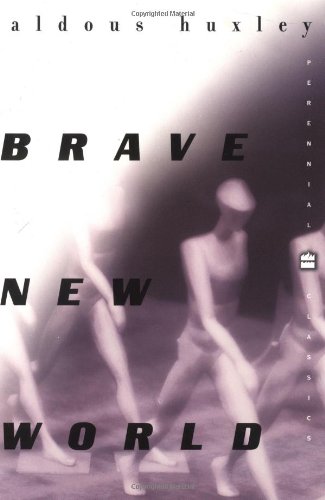
Brave New World — Aldous Huxley
First published: 1932 — Chatto & Windus (UK) / Harper & Brothers (US)
Pages: 288 (Harper Perennial Modern Classics)
Goodreads: 3.98★ (2.1M+ ratings — one of the highest rating-counts in world literature) · view
Audiobook runtime: 8h 1m Michael York / Blackstone Audio canonical · 7h 55m Audible Originals full-cast w/ Paul Giamatti / Paul Thiriot · Sam Tsoutsouvas / Recorded Books alt
Commercial scale: 20M+ estimated cumulative global sales · 94 years continuous print · 30+ language translations · UK public domain 2024 / US public domain 2028
Awards & Recognition: AP Literature / IB / Common Core dystopian-canon staple · paired canonical with Orwell's 1984 · Modern Library 100 Best Novels #5 · Time Magazine 100 Best English-language Novels
Cultural position: 2020 Peacock 9-episode series w/ Alden Ehrenreich / Harry Lloyd / Jessica Brown Findlay / Nina Sosanya / Demi Moore / Kylie Bunbury (cancelled after 1 season) · 1998 USA Network film w/ Peter Gallagher / Leonard Nimoy · 1980 NBC TV film · Huxley's sustained cultural-critical legacy (2026 contemporary critics widely regard Huxley's pleasure-based-dystopia prediction as more-accurate than Orwell's fear-based-dystopia)
Huxley's 1932 dystopian canon apex — the World State's year A.F. 632 caste-engineered Alphas-to-Epsilons society, soma-stabilized consumption, hypnopedia-conditioned happiness, Shakespeare-quoting John the Savage's tragic collision with Mustapha Mond's philosophical defense of sacrificing freedom for happiness — has been universally paired with Orwell's 1984 as the canonical 20th-century dystopian literature for 94 years, with Michael York's definitive 8h 1m Blackstone Audio production, Audible Originals' full-cast Paul Giamatti / Paul Thiriot contemporary production, the 2020 Peacock 9-episode series with Alden Ehrenreich / Harry Lloyd / Jessica Brown Findlay, and the universally-recognized argument that Huxley's pleasure-distraction-dystopia vision has proved more-accurate than Orwell's fear-surveillance-dystopia vision in contemporary 2010s-2020s algorithmic-smartphone society. Use CastReader AI TTS on Kindle Brave New World text →
Brave New World is Aldous Huxley's 1932 dystopian novel set in a futuristic World State (year A.F. 632, approximately 2540 CE — dated from Henry Ford, whom society reveres as 'Our Ford') where the global population is genetically-engineered in state Hatcheries via the Bokanovsky Process, sorted at decanting into five predetermined biological-social castes (Alphas / Betas / Gammas / Deltas / Epsilons), and conditioned from infancy through hypnopedia (sleep-teaching) to accept their caste and consume the state-provided happiness drug 'soma'. The novel follows Bernard Marx (an alienated Alpha-Plus psychologist) and his developing relationship with Lenina Crowne (a conditioned Beta-Plus Hatchery worker) through their visit to the New Mexico Savage Reservation, where they encounter John 'the Savage' — the illegitimate son of the Director of Hatcheries raised reading Shakespeare as his only book. Bernard brings John to London as a sociological exhibit; John rebels against the World State, confronts the World Controller Mustapha Mond over the philosophical basis for sacrificing freedom and truth for universal happiness, retreats to a lighthouse hermit-life, and eventually hangs himself after being driven by paparazzi pursuit to unconscious orgy-participation. The novel's title comes from Shakespeare's The Tempest (Miranda: 'O brave new world, / That has such people in't!') — John repeatedly quotes this line as bitter irony. Huxley's novel — published at the nadir of the Great Depression in 1932, anticipating both Nazi Germany's Lebensborn eugenics program and the 1950s consumer-capitalist pharmaceutical-mood-regulation culture — has sold an estimated 20M+ copies, been translated into 30+ languages, adapted to screen multiple times (most recently the 2020 Peacock 9-episode series with Alden Ehrenreich), and remains the AP Literature / IB / Common Core canonical dystopian-literature assignment alongside Orwell's 1984 and Bradbury's Fahrenheit 451. At 8h 1m with Michael York's Blackstone Audio production — the shortest canonical dystopian novel alongside Orwell's Animal Farm — Brave New World is the universally-recommended accessible entry point to 20th-century dystopian literature.
This guide covers the 8h 1m runtime, the Huxley-vs-Orwell canonical pairing, the 18-chapter structure, and every free / paid path.
Why 8h 1m Matters
Dystopian-canon and 20th-century-literature runtime and rating benchmark.
| Title | Runtime | Year | Goodreads rating |
|---|---|---|---|
| Brave New World (Huxley) — this book | 8h 1m | 1932 | 3.98★ |
| Nineteen Eighty-Four (Orwell) | 11h | 1949 | 4.20★ |
| Animal Farm (Orwell) | 3h 11m | 1945 | 4.02★ |
| Fahrenheit 451 (Bradbury) | 5h | 1953 | 3.97★ |
| The Handmaid's Tale (Atwood) | 11h | 1985 | 4.15★ |
| A Clockwork Orange (Burgess) | 7h | 1962 | 3.99★ |
| The Giver (Lowry) | 5h | 1993 | 4.16★ |
| We (Zamyatin) | 8h | 1924 | 3.90★ |
Takeaway: Brave New World is among the shortest canonical dystopian novels and carries 2.1M+ Goodreads ratings (one of the highest rating-counts in world literature, reflecting its curriculum-assignment universal-distribution). Michael York's 8h 1m Blackstone production is the canonical first-listen recommendation. For first-time dystopian-literature listeners: Brave New World (8h) → Nineteen Eighty-Four (11h) → Fahrenheit 451 (5h) → The Handmaid's Tale (11h) forms the universally-recommended canonical dystopian progression. Huxley's satirical pleasure-distraction dystopia is widely paired with Orwell's fear-surveillance dystopia for comparative-analysis — together they define the 20th-century genre.
The 1932-2026 Trajectory
- 1931 May-August: Huxley writes Brave New World at his Italian villa in Sanary-sur-Mer in approximately 4 months
- 1932 February: Brave New World published by Chatto & Windus (UK) and Harper & Brothers (US) — immediate critical attention, mixed initial reviews
- 1936-1938: Huxley emigrates to the United States; settles in Los Angeles
- 1939-1945: Huxley works as a Hollywood screenwriter (Pride and Prejudice, Jane Eyre) while continuing novels
- 1949 June: Orwell publishes Nineteen Eighty-Four; Huxley writes Orwell an approving but argumentative letter in October 1949 ('I feel that the nightmare of 1984 is destined to modulate into the nightmare of a world having more resemblance to that which I imagined in Brave New World')
- 1954: Huxley's The Doors of Perception — mescaline-experience philosophical essay, influences 1960s counterculture
- 1958: Huxley publishes Brave New World Revisited — essay collection revisiting 1932 predictions, arguing they were materializing faster than anticipated
- 1962: Huxley publishes Island — his utopian counterpart to Brave New World
- 1963 November 22: Huxley dies (same day as C.S. Lewis and US President John F. Kennedy)
- 1980 March 7: NBC two-part TV film airs — Bud Cort / Keir Dullea / Julie Cobb
- 1985: Neil Postman publishes Amusing Ourselves to Death — argues Huxley's dystopia-vision has proved more-accurate than Orwell's
- 1998 April: USA Network TV film — Peter Gallagher / Leonard Nimoy (as Mustapha Mond) / Tim Guinee (as John the Savage)
- 2013-2015: Ridley Scott / Leonardo DiCaprio Brave New World adaptation announced, later cancelled
- 2020 July 15: Peacock launches with Brave New World 9-episode series as flagship launch-title — Alden Ehrenreich / Harry Lloyd / Jessica Brown Findlay / Nina Sosanya / Demi Moore; cancelled after 1 season October 2020
- 2024 January 1: UK / EU / Commonwealth public domain entry (Huxley died 1963 + 60 years)
- 2026 April: 94 years continuous print · 20M+ estimated global sales · Michael York Blackstone remains canonical audiobook · universally-assigned AP Literature / IB curriculum · US public domain January 1, 2028 (pending)
The 18-Chapter Structure
Understanding Huxley's satirical-dystopian chapter architecture:
Chapters 1-3 (World State exposition):
- Chapter 1: Hatchery tour — the Director of Hatcheries explains the Bokanovsky Process, caste system, and Central London Hatchery and Conditioning Centre to students
- Chapter 2: Infant conditioning — the Neo-Pavlovian Conditioning Rooms, hypnopedia sleep-teaching, Delta-caste electric-shock aversion to books and flowers
- Chapter 3: Simultaneous scenes — Director on ancient 'mother' concept, Mustapha Mond philosophical lecture to students, Bernard Marx / Lenina Crowne / Fanny Crowne / Henry Foster personal exposition
Chapters 4-5 (Bernard's alienation):
- Chapter 4: Bernard's alienation, the Solidarity Service (parody of religious ritual)
- Chapter 5: Crematorium setting, Bernard-Lenina helicopter ride
Chapters 6-8 (Savage Reservation visit):
- Chapter 6: Bernard and Lenina travel to the New Mexico Savage Reservation
- Chapter 7: The Reservation — Malpais pueblo, Native American ritual, encounter with Linda and John
- Chapter 8: John's backstory — Linda's 20-year stranding on the Reservation, John's Shakespeare-only education, his hybrid-cultural formation
Chapters 9-13 (London return):
- Chapters 9-10: Bernard brings John and Linda to London as sociological exhibit; the Director's public humiliation and resignation
- Chapter 11: John's celebrity; Lenina's developing interest in John
- Chapter 12: Bernard's dinner party debacle
- Chapter 13: John-Lenina confrontation — John rejects Lenina's sexual advance through a Shakespeare-tirade about purity
Chapters 14-15 (Linda's death):
- Chapter 14: Linda's soma-overdose death in Park Lane Hospital
- Chapter 15: John's grief-induced rebellion — his attempt to incite Delta workers against soma distribution
Chapters 16-17 (Mustapha Mond confrontation):
- Chapter 16: Bernard, Helmholtz Watson, and John summoned to Mustapha Mond; Bernard and Helmholtz exile-sentence to islands
- Chapter 17: The philosophical confrontation — Mond and John debate freedom vs happiness, truth vs comfort, art vs stability (widely studied as the dystopian-literature textbook Socratic-dialogue set-piece)
Chapter 18 (John's tragic ending):
- John's retreat to Puttenham lighthouse hermit-life
- Paparazzi pursuit, 'feely' film about the Savage
- Unconscious orgy-participation and self-flagellation
- John's suicide by hanging — closing image of slowly-rotating feet
18 chapters, 288 pages total. The dystopian-literature textbook canonical set-pieces: Chapter 1 Hatchery tour (opening), Chapter 2 Neo-Pavlovian conditioning, Chapter 13 John-Lenina confrontation, Chapter 17 Mond-John philosophical debate, Chapter 18 John's ending.
The Translation Issue
Brave New World has only one original text — Huxley wrote in English. No translation choice. Some international markets have their own canonical translations (Jules Castier 1932 French, Italian multiple translations, Spanish Juan Antonio Gómez Pachón standard, German Herbert E. Herlitschka 1932 standard, Chinese multiple). English-speaking readers access Huxley's original 1932 text in Harper Perennial Modern Classics, Vintage Classics, and Penguin Classics editions — all identical text, differing introduction / critical-apparatus content.
First-Time Listener Guide
Brave New World is Huxley's 1932 anti-utopian foundation — the novel that established the pleasure-and-conditioning dystopia archetype before Orwell's 1948 surveillance variant. Michael York's Blackstone Audio production is canonical — York's measured British-register voice handles Huxley's satirical-detached prose without pushing into camp, which is the failure mode for first-time narrators.
0.95–1.1x baseline for first listen — Huxley's chapter 17 Mond-John philosophical confrontation requires close-listening pace; speed past 1.25x and the dialectical structure (Mond's pleasure-state defense vs. John's Shakespeare-purity rejection) blurs into a single voice. Slow back to 1.0x for chapters 16-17, return to 1.1x for the lighthouse-hermit ending.
If Brave New World is your first Huxley: do not skip to Brave New World Revisited (1958, Huxley's own reflection-essay, ~3h on audio) until after the novel — Revisited assumes you've absorbed the World-State satire and are ready for Huxley's 1958 commentary on whether his predictions are landing. Island (1962, Huxley's positive-utopia counterpart, 13h+) is recommended only for committed Huxley readers; it lacks the satirical compression of Brave New World.
For paired-reading with Orwell's 1984: the canonical dystopian-immersion sequence is Brave New World (8h 1m) first, then 1984 (11h). Reverse order works, but Huxley's 1932 prefigures Orwell's 1948 mechanically — reading Huxley first lets you catch what Orwell extends and what he rejects.
For listeners coming from The Handmaid's Tale: Brave New World is the audiobook that restores the male-counterpart to Atwood's gender-dystopia tradition. The structural choice (third-person omniscient with chapter-by-chapter POV migration) is what York's narration disambiguates that print readers often miss.
Every Way to Listen
- Michael York / Blackstone Audio — 8h 1m canonical first-listen production
- Audible Originals full-cast (Paul Giamatti / Paul Thiriot / Natalie Dormer) — 7h 55m contemporary full-cast alternative
- Sam Tsoutsouvas / Recorded Books — alternate unabridged production
- Simon Prebble — British-register alternative
- Audible Premium 1 credit — ~$14.95 covers any commercial production
- Audible purchased audiobook — $15-20 for standard production
- Libby (U.S. libraries) — 0-1 week wait; Michael York Blackstone and Audible Originals reliably stocked
- Hoopla — dystopian-literature catalog
- Spotify Premium audiobook — comfortably within 15-hour monthly allocation at 8h 1m
- Purchased Kindle edition — $10-15 Harper Perennial Modern Classics / Vintage Classics
- CastReader AI TTS with Kindle Brave New World edition — unlimited re-listens, adjustable pace
LibriVox US free public-domain audio not yet available — awaiting January 1, 2028 US public-domain entry. UK / EU readers can access Project Gutenberg Canada / Australia / European public-domain downloads (2024 entry).
Libby Wait Times (April 2026)
Survey of major U.S. library networks as of April 2026.
- NYPL / Brooklyn Public Library: 0-1 week wait (Michael York Blackstone and Audible Originals both prominently stocked)
- Los Angeles Public Library: 0-1 week wait
- Chicago Public Library: 0-1 week wait
- Seattle Public Library: 0-1 week wait
- Boston Public Library: 0-1 week wait (dystopian-canon curriculum commitment)
Brave New World has very short library waits because its AP Literature / IB curriculum-assignment status ensures every major US library system carries multiple digital copies; Libby is the recommended free path until US public domain entry in 2028.
Why Kindle + CastReader Suits Brave New World
Brave New World's 18-chapter structure and compact 8h 1m runtime make it uniquely well-suited to CastReader AI TTS — single-weekend or 2-week evening-session consumption pattern rewards pause-and-resume bookmark flexibility, and the novel's canonical-curriculum status means high-school and undergraduate readers commonly re-read across semesters.
Listeners commonly return to:
- Chapter 1 opening Hatchery tour ('A squat grey building of only thirty-four stories')
- Chapter 2 Neo-Pavlovian Conditioning Rooms — the Delta-caste book-and-flower aversion scene
- Chapter 3 Mustapha Mond philosophical lecture — 'History is bunk'
- Chapter 7 Malpais pueblo Native American ritual
- Chapter 8 John's Shakespeare-informed childhood
- Chapter 11 John as sociological celebrity
- Chapter 13 John-Lenina confrontation — John's Shakespeare-tirade purity rejection
- Chapter 14 Linda's soma-overdose death
- Chapter 15 John's failed Delta-revolution
- Chapter 16 Bernard and Helmholtz exile sentence
- Chapter 17 Mond-John philosophical debate (the dystopian-literature textbook Socratic-dialogue set-piece — widely studied)
- Chapter 18 John's lighthouse-hermit ending — self-flagellation / orgy / suicide
For paired-reading with Orwell's 1984 (the canonical dystopian-comparative-analysis exercise), CastReader's cross-book bookmarking enables parallel engagement — the Huxley-Mond chapter 17 and Orwell-O'Brien Room 101 chapter are widely studied as the textbook dystopian-philosophical-confrontation set-piece comparison.
CastReader's pronunciation overrides handle Huxley's neologism-heavy World-State vocabulary: Bernard Marx, Lenina Crowne, John the Savage, Mustapha Mond, Linda, Tomakin / Thomakin (Director), Helmholtz Watson, Henry Foster, Fanny Crowne, Darwin Bonaparte, Bokanovsky Process, soma, hypnopedia, feelies, Centrifugal Bumble-puppy, Obstacle Golf, 'Our Ford', 'Our Freud', Malpais, Popé, Puttenham. Huxley's future-English neologisms present TTS challenges; CastReader's override library handles the full Brave New World vocabulary.
Send to Phone for Dystopian-Canon Paired Reading
At 8h 1m Brave New World is the ideal dystopian-canon entry-level commitment. Send to Phone preserves CastReader position across device switches — complete Chapters 1-9 during weekday commutes week 1, Chapters 10-18 during weekend sessions week 2. For paired-reading with Orwell's 1984, completing Brave New World first (8h) and proceeding to 1984 (11h) over 3-4 weeks forms the canonical dystopian-literature immersion rhythm.
Limitations and Honest Notes
- Brave New World's satirical-register challenges adolescent first-readers — the novel's detached-ironic distance from the World State is commonly misread as literal-endorsement rather than satirical-critique
- Huxley's 1930s anthropological-othering of the Savage Reservation's indigenous-American characters reflects period-specific attitudes — contemporary readers should frame this as 1932-cultural-artifact rather than aspirational representation
- Content considerations — casual sexualization as World-State norm, childhood 'erotic play' conditioning scenes, drug normalization, caste-engineering eugenics allegory, suicide — make Brave New World emotionally demanding and controversial for secondary-school assignment; some US school districts have challenged or banned the novel
- The World-State's specific predictions are 1930s-anchored — Huxley's vision of centralized state-controlled Hatcheries, physical-token caste-markers, and soma-specific drug regulation differs from contemporary algorithmic-smartphone-pharmaceutical diffuse-corporate-state; critics debate whether Huxley's specific-mechanism predictions matter more than his general pleasure-distraction-dystopia vision
- The 2020 Peacock 9-episode series took substantial liberties with Huxley's novel — gender-swapping Mustapha Mond, introducing an unplanned Savage Lands revolution subplot, ending on series-cliffhanger rather than novel-tragedy; book purists commonly prefer the 1998 USA Network faithful-but-flawed adaptation or the 1980 NBC miniseries, or recommend sticking with the novel
- No US free public-domain audio available until January 1, 2028 — US readers must pay commercial audiobook rates or use library Libby hold; UK / EU readers have had public-domain access since 2024
- Huxley's 18-chapter structure lacks explicit part-divisions that the novel's thematic architecture suggests (chapters 1-3 exposition, 4-8 Bernard-Lenina-Reservation, 9-15 London-drama, 16-17 Mond-confrontation, 18 ending) — first-listeners benefit from mental-partitioning to sustain the 8h commitment
Related Reading
- Listen to Kindle — CastReader's Kindle-to-TTS path
- Send to Phone — cross-device position sync
- Kindle Text to Speech — Kindle TTS options overview
- Turn Kindle into Audiobook Free — free audiobook paths
- 1984 (Orwell) Audiobook Guide — canonical dystopian-literature comparative-analysis peer
- Animal Farm (Orwell) Audiobook Guide — Orwell's other canonical dystopia
- The Handmaid's Tale (Atwood) Audiobook Guide — feminist-dystopian peer
- The Road (McCarthy) Audiobook Guide — post-apocalyptic dystopian peer
