Jane Eyre Audiobook & Text to Speech Guide (2026) — Charlotte Brontë's Thandiwe-Newton-Audie-Winning Victorian-Governess-Gothic-Feminist-Canonical Masterpiece
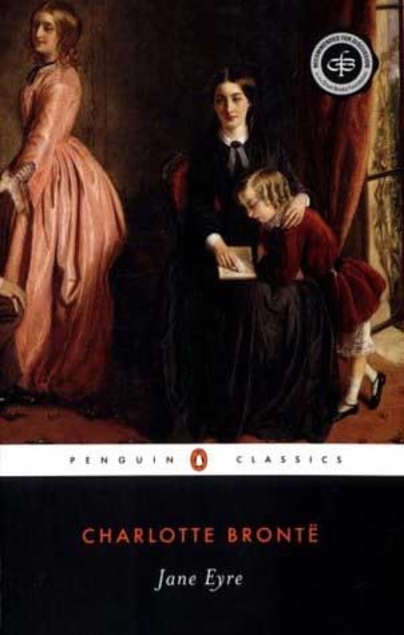
Jane Eyre — Charlotte Brontë
First published: October 19, 1847 · Smith, Elder & Co.
Pages: 532 (paperback)
Goodreads: 4.16★ (2.36M+ ratings) · view
Audiobook runtime: ~19h 5m · narrated by Thandiwe Newton (Naxos, 2012 Audie Award Solo Narration / Female winner)
Commercial scale: 10M+ global sales · 178+ years continuous print · foundational university English-literature curriculum
Cultural impact: Defining first-person-female-Bildungsroman · Victorian-Gothic-governess canonical text · madwoman-in-the-attic feminist-criticism origin · four major film adaptations 1943-2011
The 19th-century's defining first-person-female-Bildungsroman — 178 years of continuous print, 10+ million copies, Thandiwe Newton's 2012-Audie-winning canonical audiobook, and the novel that founded the orphan-governess-heroine literary subgenre. Skip the Libby wait with Kindle + free CastReader AI TTS →
Jane Eyre is Charlotte Brontë's October 1847 Victorian-governess-Gothic-feminist canonical text — the 532-page first-person novel where orphaned 10-year-old Jane Eyre endures Mrs. Reed's cruel guardianship at Gateshead Hall, is sent to the harsh Lowood Institution charity school, secures a governess position at Thornfield Hall tutoring Adèle Varens under brooding employer Edward Rochester, develops mutual love with Rochester, flees on discovery of his legally-insane first wife Bertha Mason confined in the third-floor attic, refuses cousin St. John Rivers's loveless-missionary marriage proposal at Moor House, and finally returns to marry now-free Rochester after Thornfield's destruction in the fire Bertha set. Jane Eyre has sold 10+ million copies globally, has never been out of print since 1847 (178+ years continuous print), and is standard university English-literature curriculum worldwide. The novel's direct-address-to-reader narrator ('Reader, I married him'), plain-orphan-heroine-with-inner-life, moral-refusal-of-mistress-status, and madwoman-in-the-attic figure founded foundational Victorian literary conventions and an entire feminist-literary-criticism tradition (Sandra Gilbert and Susan Gubar's 1979 The Madwoman in the Attic). The 4.16★ Goodreads rating across 2,358,602+ ratings places it among the most-rated Victorian classics. At 19h 5m with Thandiwe Newton's Naxos Audiobooks 2012-Audie-winning production, Jane Eyre is the genre-defining Victorian-Gothic-governess primary-source text.
This guide covers the 19h 5m runtime, the Thandiwe Newton Audie-winning canonical production, the Bertha Mason / Bertha-Mason-postcolonial dimension, and every free / paid path.
Why 19h 5m Matters for Victorian Gothic
Victorian-Gothic-governess-canon audiobook runtime benchmark.
| Title | Runtime | Year | Goodreads rating |
|---|---|---|---|
| Jane Eyre (C. Brontë) — this book | 19h 5m | 1847 | 4.16★ |
| Wuthering Heights (E. Brontë) | 12h 6m | 1847 | 3.90★ |
| Villette (C. Brontë) | 22h 7m | 1853 | 3.92★ |
| The Tenant of Wildfell Hall (A. Brontë) | 18h 14m | 1848 | 4.06★ |
| Rebecca (du Maurier) | 14h 7m | 1938 | 4.24★ |
| Wide Sargasso Sea (Rhys) | 5h 5m | 1966 | 3.56★ |
| Middlemarch (Eliot) | 35h 38m | 1871 | 3.99★ |
Jane Eyre sits at the Victorian-canonical median runtime, paced for the five-part Gateshead / Lowood / Thornfield / Moor House / return-to-Rochester structure. At 19h 5m, the novel reads comfortably across 10-14 days of commute listening or two weekends at 1.5x.
Three Listening Modes
Mode 1 — Canonical Audio (Thandiwe Newton Naxos Audiobooks). $14.95 Audible credit or library-borrow via Libby; Audible Plus subscribers check rotating availability. Newton's 2012-Audie-winning production is the definitive Jane Eyre — her British-literary-register with post-colonial dimension adds meaningful resonance to Bertha-Mason chapters.
Mode 2 — AI TTS via CastReader. Free, unlimited re-listens, adjustable speed, pronunciation overrides for Adèle Varens / Edward Rochester / Bertha Mason / St. John Rivers / Thornfield Hall / Lowood Institution. Particularly valuable for college-course re-reads or first-time readers wanting adjustable pace. See CastReader for Kindle.
Mode 3 — LibriVox + Project Gutenberg free public-domain. Multiple volunteer-narrated editions (quality varies); pair with free Project Gutenberg ebook. The 1847 public-domain status makes Jane Eyre one of the most-accessible-free literary classics globally.
The Thandiwe Newton Naxos Canonical Production
Thandiwe Newton (b. 1972, Zimbabwean-British actress — Westworld, Crash, Mission: Impossible 2) narrates the definitive 2011 Naxos Audiobooks edition in ~19h 5m. Her performance won the 2012 Audie Award for Solo Narration / Female — the industry's highest recognition for single-narrator audiobook craft.
Newton's British-literary-register training (Cambridge-educated, RADA-trained) suits Brontë's controlled first-person Victorian prose. Her distinguishing contribution: her ethnic-minority heritage subtly inflects the Bertha Mason chapters — Bertha is Creole from Spanish Town, Jamaica, a postcolonial-reading touchstone since Jean Rhys's 1966 Wide Sargasso Sea re-imagined Bertha's perspective. Newton reads Bertha's minimal direct-voice passages with intentional weight, and the Rochester-Jamaica-backstory passages with period-appropriate awareness.
For first-listeners: Newton Naxos is the standard commercial recommendation. The Juliet Stevenson Naxos earlier edition (~19h) is the classic-British-literary alternative for listeners preferring traditional Received-Pronunciation reading.
The Plot: Five-Part Bildungsroman Structure
Part 1 — Gateshead Hall (childhood). 10-year-old orphaned Jane lives with her cruel aunt Mrs. Reed and bullying cousin John Reed at Gateshead Hall in northern England. After the 'red-room' incident (Jane is locked in the room where her uncle died), she is sent away to the Lowood Institution charity school for clergy orphans.
Part 2 — Lowood Institution (schooling). Eight years at the harsh Lowood school — two as student, six as teacher. Jane forms a deep friendship with fellow pupil Helen Burns, who dies of tuberculosis in the novel's most-anthologized early chapter. Superintendent Miss Temple provides maternal support. The typhus epidemic that kills many pupils leads to reforms. Jane masters French, drawing, and the Protestant-ethic educational curriculum that will define her inner life.
Part 3 — Thornfield Hall (governess). 18-year-old Jane advertises for a governess position and is hired at Thornfield Hall by the housekeeper Mrs. Fairfax to tutor Adèle Varens, the young French ward of absent master Edward Rochester. Rochester returns; he and Jane develop an unlikely mutual love despite social and age-gap asymmetry. Mysterious events — strange laughter from the third-floor attic, Rochester's bed set on fire in the night, servant Mason mysteriously wounded — accumulate. Rochester proposes marriage. On their wedding day, barrister Briggs and Richard Mason reveal that Rochester is already legally married to Bertha Mason, Mason's Creole sister, hidden in the third-floor attic after her madness rendered her legally insane under 1840s Lunacy Law. Jane refuses to become Rochester's mistress and flees Thornfield with no money.
Part 4 — Moor House (exile). Destitute Jane is taken in by the Rivers siblings — clergyman St. John Rivers and his sisters Diana and Mary — at Moor House. She discovers they are her cousins; inherits £20,000 from a distant uncle; divides the inheritance equally among the four cousins. St. John proposes marriage on missionary terms (he is leaving for India); Jane rejects the loveless-duty-only proposal.
Part 5 — Return to Rochester. Jane hears Rochester's voice calling her supernaturally across the moors (a much-debated Gothic-element passage). She returns to find Thornfield destroyed in the fire Bertha set — Bertha died in the fire; Rochester was blinded saving servants; he lives at Ferndean Manor. Jane marries now-free Rochester; ten years later Rochester recovers partial sight; they have a son; Jane's direct-address closing 'Reader, I married him' resolves the Bildungsroman.
Why Jane Eyre Is the Defining Victorian Female Bildungsroman
Charlotte Brontë's October 1847 publication (under male pseudonym 'Currer Bell') established the first-person-female-Bildungsroman as a major Victorian literary form. The novel's foundational contributions:
The direct-address narrator. Jane speaks directly to the reader throughout ('Reader'), and the famous closing 'Reader, I married him' resolves the novel's five-part structure. This narrative mode became the Victorian-female-novel convention — George Eliot, Elizabeth Gaskell, and later novelists worked within and against Brontë's direct-address model.
The plain-orphan-heroine with inner life. Jane is explicitly described as 'plain' and 'poor' — Brontë's conscious rejection of the beautiful-heiress romance heroine. The novel's innovation is that Jane's inner moral-philosophical-emotional life is intrinsically compelling regardless of conventional beauty or social status.
The moral-refusal climax. Jane's refusal to become Rochester's mistress at Thornfield and her refusal of St. John's loveless marriage at Moor House together define the novel's ethical-philosophical architecture. Brontë's claim: a woman's moral autonomy is a fundamental value that outweighs both romantic love and religious duty.
The madwoman in the attic. Bertha Mason's confinement on Thornfield's third floor became one of literary criticism's most-discussed figures. Sandra Gilbert and Susan Gubar's 1979 The Madwoman in the Attic (titled after Brontë's Bertha) founded an entire feminist-literary-criticism tradition. Jean Rhys's 1966 Wide Sargasso Sea retold Bertha's story from her perspective and remains the essential postcolonial companion text.
Film Adaptations and Cultural Legacy
1943 Robert Stevenson adaptation. Orson Welles as Rochester, Joan Fontaine as Jane. The first major Hollywood Jane Eyre — foundational to 20th-century film-adaptation aesthetics of Victorian Gothic.
1996 Franco Zeffirelli adaptation. Charlotte Gainsbourg as Jane, William Hurt as Rochester. A period-accurate Italian-director European-cinema production.
2011 Cary Fukunaga adaptation. Mia Wasikowska as Jane, Michael Fassbender as Rochester, Judi Dench as Mrs. Fairfax. The contemporary canonical film adaptation — Fukunaga's non-linear structure and atmospheric Yorkshire-moors cinematography received strong critical reception and generated a major reading-revival cycle.
Multiple BBC TV adaptations (1956, 1973, 1983, 2006) cover the novel in long-form serial structure. The 2006 Ruth Wilson / Toby Stephens BBC miniseries is widely considered the definitive television adaptation.
Jane Eyre has inspired hundreds of re-tellings and continuations — contemporary romance, literary fiction, and the entire 'Reader, I married him' short-story anthology tradition. The novel remains active in curriculum, critical discussion, and popular-culture adaptation 178 years after publication.
Free and Paid Listening Paths (April 2026)
Free paths:
- LibriVox — multiple volunteer-narrated editions, full public domain, zero cost
- Project Gutenberg — free ebook (multiple formats), pairs with CastReader for free AI TTS
- Libby — commercial audiobooks via U.S. library card, 0-1 week wait as of April 2026
- Hoopla — commercial audiobooks, instant-lend (no wait)
- Audible Plus — rotating included-with-membership productions
- Spotify Premium — 15h monthly audiobook allocation (Jane Eyre at 19h 5m requires two-month allocation)
- CastReader — free AI TTS on any Kindle edition (public domain editions often $0)
Paid paths:
- Audible Premium — 1 credit ($14.95) for Thandiwe Newton Naxos or purchase $15-20
- Kindle ebook — $0-2 (public domain editions free or near-free)
- Physical — Penguin Classics paperback $10-14
Why Kindle + CastReader Wins for Jane Eyre
For listeners prioritizing flexible re-engagement over single-narrator craft, Kindle + CastReader free AI TTS is the optimal path:
- Unlimited re-listens — no credit cost per engagement, critical for college-course study
- Adjustable pace — particularly valuable through the Lowood Institution childhood chapters or Rochester dialogue-heavy chapters
- Pronunciation overrides — configure Adèle Varens, Edward Rochester, Bertha Mason, St. John Rivers, Thornfield Hall, Lowood Institution for consistent AI narration
- Paragraph highlighting — supports comprehension through Brontë's denser first-person interior-monologue passages
- Public-domain Kindle edition — often $0, making the total cost of unlimited CastReader listening effectively free
For listeners wanting the 2012-Audie-winning production on first listen, use Audible or Libby for Thandiwe Newton Naxos; then switch to CastReader for re-listens and adjustable-pace study.
Jane Eyre and the Brontë Sister Canon
The Brontë sisters' 1846-1848 three-year publication span produced four canonical novels:
- Jane Eyre (Charlotte, 1847) — first-person-female-Bildungsroman
- Wuthering Heights (Emily, 1847) — Gothic-moors-passion-tragedy
- Agnes Grey (Anne, 1847) — governess-social-realist novel
- The Tenant of Wildfell Hall (Anne, 1848) — proto-feminist abusive-marriage novel
This three-year span is literary history's most-concentrated single-family canon publication event. For listeners building the Brontë-canon in chronological order: Jane Eyre → Wuthering Heights → Agnes Grey → The Tenant of Wildfell Hall → Villette (Charlotte, 1853, mature autobiographical boarding-school novel) → Wide Sargasso Sea (Rhys, 1966, postcolonial Bertha-Mason prequel, essential companion).
Related Reading
For listeners building the Victorian-female-canon and Gothic-governess genre library, these CastReader guides pair naturally with Jane Eyre:
- Wuthering Heights (Emily Brontë) — TTS & Audiobook Guide · Brontë-sisters 1847 annus mirabilis Gothic-moors-passion-tragedy sister-novel
- Pride and Prejudice (Jane Austen) — TTS & Audiobook Guide · Rosamund Pike Audible Studios 2016 11h 35m, pre-Brontë Regency-romance canonical text
- To Kill a Mockingbird (Harper Lee) — TTS & Audiobook Guide · Sissy Spacek HarperAudio 2007-Audie-winner first-person-female-coming-of-age canonical descendant
- The Little Prince (Saint-Exupéry) — TTS & Audiobook Guide · Viggo Mortensen HMH Audio 2h, 200M-copy philosophical-fable peer
- The Hobbit (J.R.R. Tolkien) — TTS & Audiobook Guide · Andy Serkis HarperAudio 10h 25m, post-Brontë high-fantasy-canon descendant
Limitations and Honest Notes
- Full public domain worldwide — 1847 publication and 1855 author death place Jane Eyre far beyond any copyright jurisdiction. Free legal editions are universally available.
- Length commitment — at 19h 5m, Jane Eyre is a two-week+ commute-listening commitment; plan accordingly.
- Victorian prose style — Brontë's controlled Victorian-literary register may feel dense to readers accustomed to contemporary prose. The 1.0x pace on Newton Naxos is calibrated for comprehension; avoid 2x on first listen.
- Postcolonial dimension — contemporary engagement with Jane Eyre benefits from companion reading of Jean Rhys's Wide Sargasso Sea (5h 5m) to understand Bertha Mason's story from her own perspective.
- Film-adaptation viewing order — the 2011 Cary Fukunaga / Mia Wasikowska adaptation is the contemporary canonical film recommendation; the 1943 Orson Welles / Joan Fontaine adaptation is the classic-Hollywood recommendation.
Related: Listen to Kindle | Audible Alternative Free | Turn Ebook into Audiobook | Send to Phone | Kindle Audiobook Free
