The Hobbit Audiobook & Text to Speech Guide (2026) — J.R.R. Tolkien's 150M-Copy Andy-Serkis-Narrated Middle-earth-Entry-Point Fantasy-Canon Phenomenon
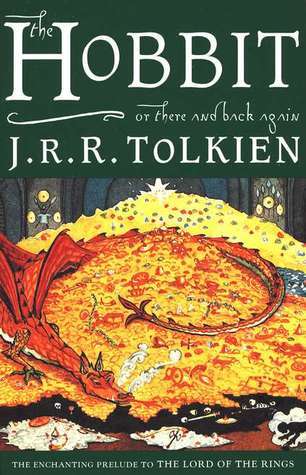
The Hobbit — J.R.R. Tolkien
First published: September 21, 1937 · George Allen & Unwin
Pages: 310 (paperback)
Goodreads: 4.30★ (4.52M+ ratings) · view
Audiobook runtime: ~10h 25m (Andy Serkis HarperAudio 2020) / ~11h 7m (Rob Inglis Recorded Books 1991)
Commercial scale: 150M+ global sales · 90+ years continuous print · Peter Jackson $2.9B film trilogy (2012-14) · top-10 best-selling novels of all time
Cultural impact: Defining modern high-fantasy entry-point · Middle-earth worldbuilding foundational text · direct ancestor of D&D / Shannara / ASoIaF / Cosmere / Harry Potter
The foundational text of modern high-fantasy literature — 150 million copies sold, 90 years of continuous print, and the single novel from which essentially all post-1960s Western high-fantasy genre tradition descends. Skip the Libby wait with Kindle + free CastReader AI TTS →
The Hobbit is J.R.R. Tolkien's September 1937 Middle-earth-canon foundational text — the 310-page novel where respectable middle-aged bachelor Bilbo Baggins is reluctantly recruited by the wizard Gandalf and thirteen dwarves led by Thorin Oakenshield into a quest to reclaim Erebor from the dragon Smaug, traveling across the Shire, Misty Mountains (where Bilbo wins the One Ring from Gollum in the iconic riddle contest), Mirkwood, and Lake-town to the Lonely Mountain confrontation and the Battle of Five Armies. The Hobbit has sold 150+ million copies globally, placing it among the top-10 best-selling novels of all time; generated Peter Jackson's $2.9B film trilogy (2012-2014); and is the foundational text of modern high-fantasy literature — the ancestor from which Dungeons & Dragons (1974), Terry Brooks' Shannara (1977), Terry Pratchett's Discworld (1983), Robert Jordan's Wheel of Time (1990), George R.R. Martin's A Song of Ice and Fire (1996), Brandon Sanderson's Cosmere (2006), and essentially all post-1960s Western fantasy genre descends. The 4.30★ Goodreads rating across 4,519,338+ ratings places it among the most-rated classic-fantasy titles. At 10h 25m with Andy Serkis' 2020 HarperAudio canonical production (or Rob Inglis' 1991 Recorded Books edition), The Hobbit is the genre-defining Middle-earth-entry-point fantasy primary-source text.
This guide covers the dual canonical narrator editions, Middle-earth-canon progression planning, and every free / paid path.
Why 10h 25m Matters for High-Fantasy Classics
High-fantasy-canon audiobook runtime benchmark.
| Title | Runtime | Year | Goodreads rating |
|---|---|---|---|
| The Hobbit (Tolkien) — this book | 10h 25m | 1937 | 4.30★ |
| The Fellowship of the Ring (Tolkien) | 20h 22m | 1954 | 4.39★ |
| The Two Towers (Tolkien) | 18h 24m | 1954 | 4.45★ |
| The Return of the King (Tolkien) | 21h 37m | 1955 | 4.51★ |
| The Silmarillion (Tolkien) | 16h 56m | 1977 | 3.95★ |
| Harry Potter and the Sorcerer's Stone (Rowling) | 8h 34m | 1997 | 4.47★ |
| The Lion, the Witch and the Wardrobe (Lewis) | 4h 5m | 1950 | 4.24★ |
| A Wizard of Earthsea (Le Guin) | 7h 22m | 1968 | 4.02★ |
The Hobbit sits at the accessible-high-fantasy entry-point runtime, paced for the single-quest Bilbo-journey structure. At 10h 25m, the novel reads comfortably across a week of commute listening or a weekend at 1.5x. Hobbit + LOTR trilogy combined run ~70 hours — the largest single high-fantasy audiobook commitment in the commercial catalog.
Three Listening Modes
Mode 1 — Canonical Audio (HarperAudio Andy Serkis 2020 or Recorded Books Rob Inglis 1991). One Audible credit ($14.95/mo) or library-borrow via Libby. Both productions are considered essential Hobbit audio.
Mode 2 — Free Library Audio (Libby / Hoopla). 0-2 week wait in U.S. metros — extreme library-copy counts given Peter-Jackson-film-tie-in and school-curriculum demand.
Mode 3 — Kindle + AI TTS (CastReader). $9-13 Kindle purchase + free AI TTS for unlimited re-listens. Ideal for Middle-earth-canon-progression re-reads where the extensive proper-noun vocabulary benefits from adjustable-pace re-engagement.
Platform-by-Platform Breakdown
Option A — Audible (dual canonical productions)
Two primary editions commercially available. Andy Serkis HarperAudio (~10h 25m, 2020) is the contemporary high-profile recommendation — Serkis, who voiced and motion-captured Gollum in Peter Jackson's film trilogies, brings biographical Middle-earth-cinematic continuity and extraordinary range across Bilbo, Thorin, Gollum, Smaug, and the full dwarf-company. Rob Inglis Recorded Books (~11h 7m, 1991) is the longstanding canonical recommendation — Inglis' measured-British-literary-register and his iconic Dwarf-and-Elven song-singing performance made his production the 1990s-2010s definitive Middle-earth audio. Serkis also narrates LOTR trilogy (2021) enabling unified-narrator Middle-earth progression.
Option B — Libby (free via library card)
Libby stocks The Hobbit (both Serkis and Inglis editions) with 0-2 week waits as of April 2026 — the 1937 classic has universal library-catalog coverage and copy counts are extreme given film-tie-in and school-curriculum demand. OverDrive MP3 or Libby-app streaming. Fully free with a U.S. public-library card.
Option C — Spotify Premium (15-hour monthly allocation)
Spotify Premium subscribers ($11.99/mo) can listen within the 15-hour monthly audiobook allocation. At 10h 25m (Serkis), The Hobbit consumes ~70% of a single month — leaves ~4h 35m for a short companion title. Reasonable value for Premium subscribers.
Option D — Kindle + CastReader AI TTS
$9-13 for the Kindle edition (frequently discounted to $5-8 during promos; occasional Kindle Unlimited rotation). Pair with CastReader free AI TTS for unlimited re-listens at adjustable pace. Best economic case for listeners planning full Middle-earth progression — the 70-hour Hobbit + LOTR total commitment is 7 Audible credits ($105) vs Kindle ownership ($50) + free CastReader re-listens.
TTS Settings for The Hobbit
| Setting | Recommended value | Notes |
|---|---|---|
| Voice | Male, British-literary register with warmth | Match Serkis/Inglis register; avoid cold-news-anchor pacing |
| Speed | 1.0-1.25x first listen; 1.5x re-listens | Tolkien's accessible prose supports moderate speed |
| Pronunciation overrides | Bilbo, Thorin, Gandalf, Smaug, Gollum, Erebor, Mirkwood, Rivendell, Esgaroth, and 13 dwarf names | Extensive override list; configure once in CastReader |
| Chapter markers | Enable | 19 chapters benefit from navigation |
| Auto-page-turn | Enable | 310 pages handle cleanly |
First-Time Listener Guide
If The Hobbit is your first Tolkien (or your first time on audio), Andy Serkis's 2020 HarperAudio production is the recommended starting point — Serkis voices Gollum (his Lord of the Rings film performance carries directly onto the page), the 13 dwarves with distinct vocal characterization, Bilbo's mild-Hobbit-of-the-Shire register, Smaug's predatory drawl, and the omniscient narrator's parenthetical asides. 1.0-1.25x baseline is recommended; Tolkien's prose contains long passages of song lyrics, geographical description, and parenthetical narrator-aside that reward a slightly slower pace than typical contemporary fiction.
For listeners considering The Hobbit before Lord of the Rings: The Hobbit first is the right sequence. The Hobbit is genuinely a children's-fantasy precursor (1937, before Tolkien expanded the legendarium); LotR (1954-55) is the adult continuation that assumes you've met Bilbo, Gandalf, and the One Ring through the Hobbit. Audio commitment for the full sequence: The Hobbit (10h 25m) → The Fellowship of the Ring (19h 7m) → The Two Towers (16h 10m) → The Return of the King (18h 16m). Total ~64 hours for the four core books. The Silmarillion (15h 30m) is appropriate as a fifth book only for committed readers — it's structurally a mythology compendium, not a narrative.
For listeners coming from Peter Jackson's films (Hobbit trilogy 2012-14, LotR trilogy 2001-03): the audiobook restores significant material the Hobbit films invented or expanded out of proportion to the novel (Tauriel, Azog's extended pursuit, the Hobbit-Smaug confrontation length). The audio version is closer to a children's fantasy — shorter, faster-paced, with a more deliberate narrator-aside structure than the films suggest. Many post-film readers describe being surprised by how lean and tonally lighter the original novel reads.
Free Listening Reality
The Hobbit is not yet public domain in most jurisdictions. UK copyright (Tolkien died 1973, +70 years) runs through ~2043. U.S. copyright (1937 publication, 95-year rule) runs through ~2032. No LibriVox authorized recordings exist; any "free Hobbit audiobook" online is pirated. Legitimate fully-free paths: Libby / Hoopla at U.S. and UK libraries (the Andy Serkis 2020 edition is universally stocked; 1-2 week waits typical), Audible 30-day trial (one credit covers Serkis or the older Rob Inglis edition), Spotify Premium (at 10h 25m fits cleanly within the 15-hour monthly allocation), Kindle ownership ($8-10) + free CastReader AI TTS for unlimited re-listens. For a fully-free public-domain alternative, listeners can wait until 2032-2043 — or read Tolkien's pre-1928 academic publications (his Beowulf translation lectures, Sigurd and Gudrún) as PD-adjacent reading.
Content Considerations
The Hobbit contains on-page content including: adventure-violence (goblin/orc battles, Smaug's dragon-fire destruction of Lake-town, the Battle of Five Armies with significant character deaths), spider-combat (Mirkwood sequences that some younger readers find genuinely frightening), death of major characters in the Battle of Five Armies concluding act, and sustained threat-and-peril atmosphere across the quest. The novel was marketed as children's fantasy in 1937 and is widely read as upper-middle-grade-and-up (age 10+); however, contemporary readers note that the Mirkwood-spiders and Battle-of-Five-Armies sequences are genuinely intense. The Hobbit is tonally lighter than The Lord of the Rings but still contains real stakes and deaths. Tolkien's biographical context — his WWI trench-warfare service (1916 Battle of the Somme), his 1930s-40s Oxford academic career, his close friendship with C.S. Lewis and the Inklings literary circle, and his 1937-1973 writing of The Hobbit, Lord of the Rings, and the larger legendarium — adds biographical and literary-historical weight to the reading.
Buying & Borrowing Links
- Audible (HarperAudio, Andy Serkis, 10h 25m) — one credit / $24.95 a la carte
- Audible (Recorded Books, Rob Inglis, 11h 7m) — one credit
- Libby / Hoopla — free with U.S. library card, 0-2 week wait
- Spotify Premium — within 15-hour monthly allocation
- Kindle — $9-13 (frequent $5-8 promos; occasional Kindle Unlimited rotation)
- Kindle + CastReader — $9-13 one-time + free AI TTS for unlimited re-listens
Related Reading
- Middle-earth canon progression — The Fellowship of the Ring (1954), The Two Towers (1954), The Return of the King (1955), The Silmarillion (1977 posthumous), Unfinished Tales (1980 posthumous)
- Children's fantasy peer set — The Chronicles of Narnia (Lewis, 1950-56), A Wrinkle in Time (L'Engle, 1962), The Dark Is Rising (Cooper, 1965-77), Harry Potter (Rowling, 1997-2007)
- Literary-fantasy peer set — A Wizard of Earthsea (Le Guin), The Neverending Story (Ende), The Last Unicorn (Beagle), Watership Down (Adams)
- Modern fantasy descendants — Harry Potter series (Rowling), The Wheel of Time (Jordan), A Song of Ice and Fire (Martin), The Stormlight Archive (Sanderson), The Empyrean / Fourth Wing (Yarros)
For listeners researching modern fantasy-genre foundations, Middle-earth canon entry-points, or children's-and-adult-crossover classic literature, The Hobbit is the essential primary-source text — 150M+ copies, 90+ years of continuous print, and foundational influence on essentially all post-1960s Western high-fantasy makes it the single most-load-bearing text of 20th-century fantasy literature.
The foundational text of modern high-fantasy — Tolkien's Bilbo-Baggins-and-thirteen-dwarves Erebor-quest novel has defined 90+ years of Middle-earth canon and served as the direct ancestor of essentially all post-1960s Western fantasy genre tradition. At 10h 25m with Andy Serkis' 2020 HarperAudio canonical production (or Rob Inglis' 1991 Recorded Books edition), The Hobbit rewards first-listen via Audible or Libby for the canonical narration craft, then Kindle + CastReader for Middle-earth-canon-progression re-listens and proper-noun vocabulary re-engagement at flexible pace.
