Lord of the Flies Audiobook & Text to Speech Guide (2026) — William Golding's Nobel-Laureate-Authored Martin-Jarvis-Narrated British-Schoolboys-Island-Allegory Universal-Curriculum Canonical Parable
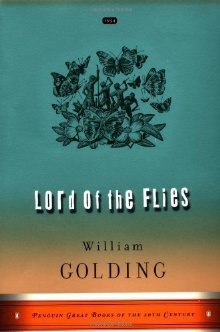
Lord of the Flies — William Golding
First published: September 17, 1954 · Faber and Faber
Pages: 182 (paperback)
Goodreads: 3.70★ (3.24M+ ratings) · view
Audiobook runtime: ~6h 33m · narrated by Martin Jarvis (Listening Library) / Dean Williamson (Audible Studios)
Commercial scale: 25M+ global sales · 70+ years continuous print · universal high-school AP / IB English-literature curriculum worldwide
Cultural impact: Golding's debut + canonical novel · 1983 Nobel Prize author · defining British-schoolboys-island-allegory · Peter Brook 1963 / Harry Hook 1990 film adaptations
The 20th-century's defining British-schoolboys-island-allegory — 1983 Nobel-laureate author's debut novel, 25 million copies, universal high-school curriculum, and the single most-studied 'civilization-is-a-thin-veneer-over-savagery' thesis in English literature. Skip the Libby wait with Kindle + free CastReader AI TTS →
Lord of the Flies is William Golding's September 1954 British-schoolboys-island-allegory canonical text — the 182-page debut novel where a plane of British schoolboys evacuated during a near-future nuclear war crash-lands on an uninhabited Pacific island; no adults survive. The approximately 30 boys aged 6-12 organize around charismatic 12-year-old Ralph (democratic order, elected chief for conch-shell-discovery authority), rational-physically-weak Piggy (civilization's voice, glasses-and-asthma), choir-leader Jack Merridew (dictatorial savagery, hunting group leader), and mystical-thinker Simon (Christ-figure, encounters the pig's-head 'Lord of the Flies' in a Chapter-8 philosophical seizure). As weeks pass, Jack's hunting group becomes ritualized and savage; Simon is murdered by the frenzied dancing boys who mistake him for the 'beast'; Piggy is killed by a boulder rolled by Jack's follower Roger; Jack's tribe hunts Ralph through the island. Ralph flees to the beach and collapses at the feet of a British naval officer whose rescue ship has arrived at the rising-from-Jack's-wildfire smoke — the officer surveys the savage schoolboys with professional disappointment and turns away to look at his cruiser, ironically revealing that the adult world beyond the island is engaged in its own nuclear-war savagery. William Golding won the 1983 Nobel Prize in Literature (Lord of the Flies is his debut novel and most-widely-read work; his later Booker-winning novels include Darkness Visible 1979 and Rites of Passage 1980). The novel has sold 25+ million copies globally, has never been out of print since 1954 (70+ years continuous print), and is universal high-school AP / IB English-literature curriculum worldwide — commonly taught in the dystopia-allegory-curriculum cluster alongside Animal Farm, 1984, The Crucible, and Brave New World. The 3.70★ Goodreads rating reflects the novel's polarizing required-reading-curriculum reception rather than canonical status. At 6h 33m with Martin Jarvis's Listening Library canonical production, Lord of the Flies is the genre-defining British-schoolboys-island-allegory primary-source text.
This guide covers the 6h 33m runtime, the four-main-characters allegorical architecture, the Chapter-8 pig's-head encounter, the concluding rescue-scene irony, and every free / paid path.
Why 6h 33m Matters for Dystopia Allegory
Dystopia-allegory-canon audiobook runtime benchmark.
| Title | Runtime | Year | Goodreads rating |
|---|---|---|---|
| Lord of the Flies (Golding) — this book | 6h 33m | 1954 | 3.70★ |
| Animal Farm (Orwell) | 3h 11m | 1945 | 4.00★ |
| 1984 (Orwell) | 11h 22m | 1949 | 4.20★ |
| Brave New World (Huxley) | 8h 8m | 1932 | 3.90★ |
| Fahrenheit 451 (Bradbury) | 5h 1m | 1953 | 3.98★ |
| The Crucible (Miller) | 2h 54m | 1953 | 3.63★ |
| The Coral Island (Ballantyne) | 11h 3m | 1857 | 3.75★ |
Lord of the Flies sits at mid-range dystopia-allegory runtime — longer than Animal Farm's 3h 11m and Fahrenheit 451's 5h 1m but considerably shorter than 1984's 11h 22m. At 6h 33m, the novel reads comfortably across 3-5 days of commute listening or in a single long weekend at 1.5x.
Three Listening Modes
Mode 1 — Canonical Audio (Martin Jarvis Listening Library or Dean Williamson Audible Studios). $14.95 Audible credit or library-borrow via Libby. Jarvis's decades-experienced British-actor register is the traditional recommendation; Williamson provides a slightly more contemporary alternative for Audible-first listeners.
Mode 2 — AI TTS via CastReader. Free, unlimited re-listens, adjustable speed, multi-voice configuration for the four-main-characters allegorical architecture — Ralph (democratic order), Jack (dictatorial savagery), Piggy (rational civilization), Simon (mystical Christ-figure) — plus adult-narrator Golding voice. Particularly valuable for student curriculum-study and essay preparation. See CastReader for Kindle.
Mode 3 — Libby library-borrow + Spotify Premium. Libby with 0-1 week wait (universal curriculum generates strong library-catalog availability) or Spotify Premium 15h monthly audiobook allocation (44% consumed by Lord of the Flies's 6h 33m — good value).
The Martin Jarvis Listening Library Canonical Production
Martin Jarvis (b. 1941, English actor — decades of literary-audiobook work, over 800 audiobooks narrated) narrates the canonical Listening Library edition in ~6h 33m. His distinguishing contribution: classic British-actor register with decades-refined literary-audiobook craft, ideally suited to Golding's Latinate adult-narrator voice and the British-schoolboys-English vocabulary. Jarvis's experience enables consistent character differentiation across the four-main-characters allegorical architecture without over-acting.
The Dean Williamson Audible Studios edition (~6h 40m) is the alternative canonical production with a slightly more contemporary delivery — Audible Plus subscribers should check monthly rotation for included-with-membership availability of either edition. The William Golding author-narrated edition (Caedmon, historical recording) exists as a historical document but is sonically dated.
For first-listeners: Martin Jarvis Listening Library is the standard contemporary recommendation. Dean Williamson Audible Studios is the alternative for Audible-first listeners.
The Plot: Four-Main-Characters Allegorical Architecture
Chapter 1 — The island. A plane of British schoolboys evacuated during a near-future nuclear war crash-lands on an uninhabited Pacific island. The pilot is killed; no adults survive. The novel opens with 12-year-old Ralph emerging onto the beach, meeting Piggy (his rational-civilization-voice companion throughout), and discovering the conch shell that will become the democratic-order symbol of the novel. Ralph uses the conch to summon the other boys; approximately 30 boys arrive, aged 6-12, including the choir led by Jack Merridew. Ralph is elected chief (for conch-shell authority and physical presence over Jack); Jack accepts responsibility for hunting pigs on the island.
Chapter 2-5 — Civilization attempts. Ralph proposes priorities: build shelters, maintain a signal fire for rescue, establish rules. The assembly meetings (Ralph's conch-symbolized democracy) function briefly. The younger 'littluns' develop fears of a 'beast' on the island. Jack's hunting group increasingly bypasses the shelter-and-signal-fire work to focus on hunting — Jack's first pig-kill marks the inflection-point toward ritualized savagery.
Chapter 6-7 — The beast. A dead paratrooper lands on the mountain in the night; the older boys see the movement of the parachute and mistake the body for the 'beast.' Ralph, Jack, and Roger climb the mountain to investigate and confirm the 'beast's' existence by sight. The 'beast' becomes a defining fear that justifies Jack's increasingly-savage hunting rituals.
Chapter 8 — Simon's pig's-head encounter. Jack's tribe kills a pig and stakes its head on a sharpened stick as 'offering to the beast.' Simon — the mystical-thinker older boy — has a seizure during which he encounters the pig's-head-on-a-stake ('the Lord of the Flies') that speaks to him about human evil: the 'beast' is the boys themselves. Simon's philosophical revelation is one of literary fiction's most-anthologized passages — Golding's direct articulation of the novel's allegorical thesis.
Chapter 9 — Simon's murder. Simon returns from the mountain (where he discovered the 'beast' is the dead paratrooper) to share his realization with the other boys. The boys are engaged in a frenzied pig-killing ritual-dance during a storm; they mistake Simon crawling out of the jungle for the 'beast' and beat him to death.
Chapter 10-11 — Piggy's murder. Jack's tribe splits from Ralph's, seizes Piggy's glasses (the only fire-starting technology on the island), and forms a separate camp at Castle Rock. Ralph, Piggy, Samneric (twins), and a few others attempt to recover the glasses. Jack's follower Roger rolls a boulder from Castle Rock that strikes Piggy, killing him; the conch is shattered in the same moment. Ralph flees.
Chapter 12 — The rescue. Jack's tribe sets the island on fire to hunt Ralph; the wildfire smoke signals a British naval ship. Ralph flees to the beach and collapses at the feet of a British naval officer. The officer surveys the savage schoolboys with professional disappointment ('I should have thought that a pack of British boys... would have been able to put up a better show than that') and turns away to look at his cruiser — ironically revealing that the adult world beyond the island is engaged in its own nuclear-war savagery. The novel ends with Ralph weeping 'for the end of innocence, the darkness of man's heart, and the fall through the air of the true, wise friend called Piggy.'
The Four-Character Allegorical Architecture
Golding's distinguishing literary achievement is the four-main-characters allegorical architecture — Ralph, Jack, Piggy, Simon as distinct civilizational types that function both as realistic schoolboy characters and as symbolic figures representing contested aspects of human nature.
Ralph — democratic order. Elected chief for conch-shell authority; advocates priorities of shelter, signal fire, rules; struggles with leadership against Jack's increasing appeal to the tribe's emotional-savage drives; represents liberal-democratic civilization vulnerable to authoritarian collapse.
Jack — dictatorial savagery. Choir-leader and hunting-group head; progressively abandons shelter-and-signal-fire civilization for hunting-and-ritual savagery; wears face-paint that enables his psychological break from pre-island identity; splits the tribe and takes control; represents authoritarian dictatorship that exploits fear and in-group rituals.
Piggy — rational civilization. Intellectual voice of civilization; physical vulnerabilities (asthma, obesity, glasses-vision-dependence) mark him as civilization-reliant; articulates the conch's democratic function; murdered by boulder-and-follower-Roger; his death + the conch's simultaneous shattering symbolize civilization's collapse on the island; represents Enlightenment rationalism vulnerable to physical-force dominance.
Simon — mystical Christ-figure. Older boy with epilepsy or epileptic-inclination; has philosophical insights through seizure-states; Chapter-8 encounter with the pig's-head-Lord-of-the-Flies produces the novel's allegorical thesis (the 'beast' is humanity itself); murdered by the tribe he attempts to enlighten; represents prophetic / religious / philosophical truth-telling destroyed by in-group mob-violence. Widely read as a Christ-figure in Golding's Christian-allegorical framework.
The Concluding Rescue-Scene Irony
The novel's final pages contain one of 20th-century literature's most-analyzed narrative inversions. Ralph, hunted through the island-wildfire by Jack's tribe, flees to the beach and collapses at the feet of a British naval officer whose rescue ship has arrived at the smoke signal.
The officer surveys the savage schoolboys with professional disappointment, saying words to the effect of 'I should have thought that a pack of British boys... would have been able to put up a better show than that' (referencing Ballantyne's The Coral Island 1857 — the Victorian-British-boys-island-adventure novel that Golding explicitly responds to and inverts). The officer then turns away from the boys to look at his cruiser — ironically revealing that the adult world beyond the island is engaged in its own nuclear-war savagery, the very savagery that sent the boys to the island in the first place.
The rescue is not salvation — the naval-officer adult-world savagery is simply the boys' island-savagery scaled up to nation-states. The novel's allegorical architecture is complete: the boys' island-savagery mirrors the adults' nuclear-war savagery; civilization is a thin veneer over inherent human savagery at every scale.
This concluding inversion is one of the novel's most-powerful literary achievements — it recontextualizes the entire island narrative in the final paragraphs and makes Lord of the Flies function at both the realistic-schoolboys level and the allegorical-civilizational level simultaneously.
Free and Paid Listening Paths (April 2026)
Free paths:
- Libby — commercial audiobooks via U.S. library card, 0-1 week wait as of April 2026 (universal curriculum generates strong library-catalog availability)
- Hoopla — commercial audiobooks, instant-lend (check your library's Hoopla access)
- Audible Plus — rotating included-with-membership availability
- Spotify Premium — 15h monthly audiobook allocation (Lord of the Flies at 6h 33m consumes ~44% — good value)
- CastReader — free AI TTS on Kindle edition (requires Kindle purchase $7-10)
Paid paths:
- Audible Premium — 1 credit ($14.95) for Martin Jarvis Listening Library or Dean Williamson Audible Studios or purchase $12-18
- Kindle ebook — $7-10 (under copyright, no public-domain edition until 2050 U.S.)
- Physical — Perigee Books paperback $10-14 / hardcover $16-20
Why Kindle + CastReader Wins for Lord of the Flies
For students, book clubs, and readers wanting flexible re-engagement with the four-main-characters allegorical architecture, Kindle + CastReader free AI TTS is the optimal path:
- Student curriculum-preparation — unlimited re-listens for AP / IB / college English-literature essay preparation on the Ralph / Jack / Piggy / Simon allegorical-architecture
- Multi-voice configuration — distinguish Ralph (democratic order), Jack (dictatorial savagery), Piggy (rational civilization), Simon (mystical Christ-figure), adult-narrator Golding that single-narrator productions consolidate
- Adjustable pace — slow through Simon's Chapter-8 pig's-head philosophical encounter, the concluding rescue-scene irony, or the ritualized-hunting-chant passages; speed through plot-focused passages
- Pronunciation overrides — configure Ralph, Piggy, Jack Merridew, Simon, Roger, Samneric (twins), Percival Wemys Madison, Maurice, the 'littluns,' the conch, the 'beast,' the 'Lord of the Flies' (pig's-head), Castle Rock, the signal fire for consistent AI narration
- Book-club preparation — unlimited re-listens for discussion-group preparation on Golding's allegorical-architecture thesis
For listeners wanting Jarvis's decades-experienced production on first listen, use Audible or Libby; then switch to CastReader for student study, book-club preparation, and re-listens through the four-main-characters structural analysis.
Lord of the Flies and Golding's Canon
William Golding's twelve-novel corpus establishes him as one of 20th-century British literature's major figures:
- Lord of the Flies (1954) — debut canonical novel, 25M+ copies
- The Inheritors (1955) — Neanderthal-vs-Cro-Magnon prehistoric novel
- Pincher Martin (1956) — drowning-delirium single-character novel
- Free Fall (1959) — autobiographical philosophical novel
- The Spire (1964) — medieval cathedral-building novel, Golding's second-most-canonical work
- Darkness Visible (1979) — Booker Prize shortlist
- Rites of Passage (1980) — Booker Prize winner, first novel of To the Ends of the Earth sea trilogy
- Close Quarters (1987) — sea trilogy book 2
- Fire Down Below (1989) — sea trilogy book 3
- The Double Tongue (1995, posthumous) — final incomplete novel
Golding won the 1983 Nobel Prize in Literature citing 'his novels which, with the perspicuity of realistic narrative art and the diversity and universality of myth, illuminate the human condition in the world of today.' For listeners building Golding's canon: Lord of the Flies + The Spire is the essential two-book commitment; add Rites of Passage (first of his Booker-winning sea trilogy) for Golding's mature work.
Related Reading
For listeners building the dystopia-allegory and British-canonical-literature library, these CastReader guides pair naturally with Lord of the Flies:
- 1984 (George Orwell) — TTS & Audiobook Guide · Simon Prebble Blackstone 11h 22m / Andrew Wincott Audible Plus 11h 21m political-dystopia canonical peer, 30M-copy totalitarian-phenomenon
- Animal Farm (George Orwell) — TTS & Audiobook Guide · political-fable-allegory peer, 3h 11m short-runtime canonical text
- The Hobbit (J.R.R. Tolkien) — TTS & Audiobook Guide · Andy Serkis HarperAudio 10h 25m contemporaneous-1954 British-canonical peer
- To Kill a Mockingbird (Harper Lee) — TTS & Audiobook Guide · Sissy Spacek HarperAudio 12h 17m 1960-mid-century curriculum-canonical peer
- The Catcher in the Rye (J.D. Salinger) — TTS & Audiobook Guide · Ray Hagen Caedmon 7h 43m 1951-post-war curriculum-canonical peer
Limitations and Honest Notes
- Under U.S. copyright until 2050 — Lord of the Flies is not in U.S. public domain; Golding died 1993, U.S. copyright expires 2050 under current terms. No free legal audiobook or ebook editions exist in the U.S.
- Polarizing required-reading rating — the 3.70★ Goodreads rating reflects required-curriculum reception rather than canonical status. Students forced to read Lord of the Flies in school frequently rate it lower than voluntary-reader ratings would produce; the novel's canonical-literary and Nobel-author status is independent of Goodreads-aggregate rating.
- Short runtime — at 6h 33m, Lord of the Flies is the shortest novel in the dystopia-allegory canonical cluster after Animal Farm's 3h 11m and The Crucible's 2h 54m. Suitable for single-weekend reading or 3-5-day commute listening.
- Violence-content note — the novel contains schoolboy-on-schoolboy violence (Simon's murder, Piggy's death, the rescue-hunt of Ralph). Appropriate for high-school AP / IB curriculum students but first-time readers should be prepared for the violence-trajectory.
- Companion-reading recommendation — The Coral Island (Ballantyne, 1857) is the Victorian-British-boys-island-adventure novel that Golding explicitly responds to and inverts. Readers encountering Lord of the Flies for literary-critical engagement benefit from reading or summarizing The Coral Island for the inversion-relationship context.
Related: Listen to Kindle | Audible Alternative Free | Turn Ebook into Audiobook | Send to Phone | Kindle Audiobook Free
