The Catcher in the Rye Audiobook & Text to Speech Guide (2026) — J.D. Salinger's 65M-Copy Ray-Hagen-Narrated American-Coming-of-Age Literary-Canon Phenomenon
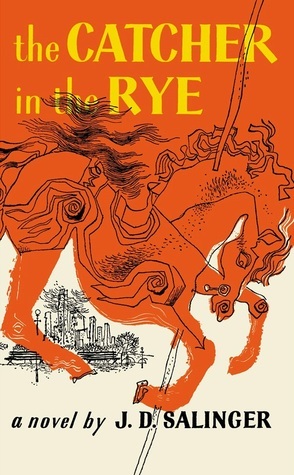
The Catcher in the Rye — J.D. Salinger
First published: July 16, 1951 · Little, Brown and Company
Pages: 277 (paperback)
Goodreads: 3.80★ (3.94M+ ratings) · view
Audiobook runtime: ~7h 43m (Ray Hagen Caedmon) / ~7h 26m (Matt Godfrey Blackstone)
Commercial scale: 65M+ global sales · 75+ years continuous print · 65%+ U.S. high-school curriculum adoption · no film adaptation (Salinger estate refusal)
Cultural impact: Defining American post-war coming-of-age · Holden-Caulfield first-person voice template · 'phoniness' lexicon permanently embedded in American cultural vocabulary
The defining American post-war coming-of-age novel — Salinger's three-day Holden-Caulfield-in-Manhattan narrative has saturated high-school English curricula for seventy-five years and permanently defined first-person teenage-narrator American fiction. Skip the Libby wait with Kindle + free CastReader AI TTS →
The Catcher in the Rye is J.D. Salinger's July 1951 American-coming-of-age canonical text — the 277-page novel following sixteen-year-old Holden Caulfield across three days in New York City after his Pencey Prep expulsion, his encounters with schoolmates and strangers, his bond with his ten-year-old sister Phoebe, and his breakdown before institutionalization. The Catcher in the Rye has sold 65+ million copies globally, placing it among the top-20 best-selling novels of all time; is assigned in 65%+ of U.S. high-school English curricula; and has defined the first-person-teenage-narrator American-fiction tradition that extends to Judy Blume, S.E. Hinton, Bret Easton Ellis, Jeffrey Eugenides, Stephen Chbosky, and John Green. The 3.80★ Goodreads rating across 3,939,730+ ratings reflects the polarized-reader-response pattern — Catcher is simultaneously the most-assigned and most-divisive post-war American novel. Salinger's reclusive post-1965 silence and his refusal of all film adaptation have made Catcher permanently print-only, preserving Holden's voice in unmediated literary form. At 7h 43m with Ray Hagen's Caedmon canonical production (or Matt Godfrey's Blackstone edition), The Catcher in the Rye is the genre-defining American post-war coming-of-age primary-source text.
This guide covers the dual canonical narrator editions, Salinger-canon progression planning, and every free / paid path.
Why 7h 43m Matters for Post-war American Classics
American post-war literary-canon audiobook runtime benchmark.
| Title | Runtime | Year | Goodreads rating |
|---|---|---|---|
| The Catcher in the Rye (Salinger) — this book | 7h 43m | 1951 | 3.80★ |
| To Kill a Mockingbird (Lee) | 12h 17m | 1960 | 4.26★ |
| The Bell Jar (Plath) | 7h 24m | 1963 | 4.06★ |
| On the Road (Kerouac) | 11h 8m | 1957 | 3.62★ |
| Slaughterhouse-Five (Vonnegut) | 5h 13m | 1969 | 4.10★ |
| A Separate Peace (Knowles) | 7h 5m | 1959 | 3.63★ |
| Invisible Man (Ellison) | 18h 36m | 1952 | 4.04★ |
| The Great Gatsby (Fitzgerald) | 4h 49m | 1925 | 3.93★ |
Catcher sits at the shorter-runtime end of American-literary-canon listening, paced for the three-day Holden-narration structure. At 7h 43m, the novel reads comfortably across a weekend or three to five days of commute listening. Salinger's first-person American-vernacular voice reads smoothly at 1.25-1.5x.
Three Listening Modes
Mode 1 — Canonical Audio (Caedmon Ray Hagen or Blackstone Matt Godfrey). One Audible credit ($14.95/mo) or library-borrow via Libby. Both productions are considered essential Catcher audio.
Mode 2 — Free Library Audio (Libby / Hoopla). 0-2 week wait in U.S. metros — extreme library-copy counts given English-department curriculum adoption.
Mode 3 — Kindle + AI TTS (CastReader). $8-11 Kindle purchase + free AI TTS for unlimited re-listens. Ideal for school-curriculum study, literary-voice re-engagement, and multi-decade adult re-reads where pacing flexibility supports Holden-voice comprehension.
Platform-by-Platform Breakdown
Option A — Audible (dual canonical productions)
Two primary editions commercially available. Ray Hagen Caedmon (~7h 43m) is the longstanding canonical recommendation — Hagen's American-vernacular first-person register matched Holden's voice and the production was widely used in school-curriculum audio-supplement contexts. Matt Godfrey Blackstone (~7h 26m) is the current high-profile recommendation — Godfrey's Holden delivers the phoniness-saturated teenage-narrator register with contemporary production craft. Salinger's estate historically restricted audiobook production — Catcher audiobook rights were contested for decades before commercial editions became broadly available.
Option B — Libby (free via library card)
Libby stocks Catcher (both Hagen and Godfrey editions) with 0-2 week waits as of April 2026 — the 1951 school-curriculum staple has universal library-catalog coverage and copy counts are extreme given English-department adoption. OverDrive MP3 or Libby-app streaming. Fully free with a U.S. public-library card.
Option C — Spotify Premium (15-hour monthly allocation)
Spotify Premium subscribers ($11.99/mo) can listen within the 15-hour monthly audiobook allocation. At 7h 43m (Hagen), Catcher consumes ~51% of a single month — leaves ~7h 17m for a companion title (The Bell Jar, A Separate Peace, or The Great Gatsby pair cleanly). Reasonable value for Premium subscribers.
Option D — Kindle + CastReader AI TTS
$8-11 for the Kindle edition (frequently discounted to $4-7 during promos; occasional Kindle Unlimited rotation). Pair with CastReader free AI TTS for unlimited re-listens at adjustable pace. Best economic case for listeners planning Salinger-canon progression — the 21-hour Catcher + Nine Stories + Franny and Zooey total commitment is 3 Audible credits ($45) vs Kindle ownership (~$25) + free CastReader re-listens.
TTS Settings for Catcher in the Rye
| Setting | Recommended value | Notes |
|---|---|---|
| Voice | Male, American-vernacular teenage register | Match Hagen/Godfrey register; avoid formal-British literary voices |
| Speed | 1.0-1.25x first listen; 1.5x re-listens | Salinger's vernacular prose supports moderate speed |
| Pronunciation overrides | Holden, Caulfield, Pencey, Phoebe, Antolini, Stradlater, Ackley | Minimal override list |
| Chapter markers | Enable | 26 short chapters benefit from navigation |
| Auto-page-turn | Enable | 277 pages handle cleanly |
First-Time Listener Guide
Catcher's narrator-voice is the entire point — Holden Caulfield's first-person 16-year-old register is what made the novel canonical. Audio-first works particularly well here because Salinger built the book to sound like someone talking. If you're 14-18, read the page first; Holden's voice on the page is its own apprenticeship in attentive reading. If you're 20+ revisiting (or first-encountering as an adult), the audio is the better entry — the digressions, the sudden tender moments with Phoebe, the unreliable-narrator structure all land harder when you can't accidentally skim.
Recommended cadence: 1.25x baseline, 1.0x for Phoebe scenes. The Phoebe-in-Central-Park sequence in chapters 25-26 is the emotional pivot of the book and rewards slower pace. Don't speed-listen the museum scene; that's where Salinger reveals what Holden actually wants. Skip nothing — at 7h 43m the runtime is short enough that completionism is the right approach.
For listeners pairing Catcher with related Salinger: do Franny and Zooey next (the quieter follow-up novellas with the Glass family), then Nine Stories (the masterful short-fiction collection where Salinger's craft shines tightest). Save Hapworth 16, 1924 for completionists only — the late-Salinger stylistic experiments divide even committed readers.
Free Listening Reality
Catcher in the Rye is not public domain and won't be until ~2046 (U.S. 95-year rule from 1951 publication). Salinger famously refused all audiobook authorization during his lifetime; the J.D. Salinger Literary Trust began authorizing recordings only after his 2010 death. There are no LibriVox volunteer recordings (they would be illegal); any pre-2014 "Catcher audiobook" online is pirated. Legitimate fully-free paths are institutional:
- Libby / Hoopla at U.S. libraries — universal classroom-curriculum stock keeps copy counts high. Wait times 1-2 weeks at most metros.
- Audible 30-day trial — one credit covers the canonical edition; the book stays in your library after canceling.
- Spotify Premium — fits within the 15-hour monthly allocation comfortably (7h 43m consumes ~52%).
For US-based listeners wanting unlimited re-listens, Kindle ownership ($7-10) + free CastReader AI TTS is the only legitimate unlimited path. CastReader doesn't redistribute the text — it OCR-narrates the Kindle ebook you legally own, treating it as fair-use accessibility equivalent to a screen reader.
Content Considerations
The Catcher in the Rye contains on-page content including: underage drinking and smoking (Holden drinks at multiple bars and hotel lounges throughout the three-day narrative), teenage depression and breakdown (the novel ends with Holden narrating from what is implied to be a psychiatric institution), implied sexual predation (the Antolini-apartment scene is widely read as a sexual-predation incident), death of Holden's younger brother Allie (referenced throughout as emotional backstory), an encounter with a prostitute (Sunny, in Holden's hotel room), profanity ('goddam', 'phony', and stronger language), and sustained adolescent-alienation-and-suicidal-ideation atmosphere. The novel is assigned to ages 14+ and is widely challenged/banned in U.S. schools — it has appeared on ALA's most-banned-books lists repeatedly since the 1960s. Salinger's biographical context — his WWII combat service (D-Day, Hurtgen Forest, liberation of Kaufering IV concentration camp), his post-1953 Cornish, New Hampshire reclusion, his refusal of all film adaptation, and the 1980 John Lennon murder (Mark David Chapman carried a copy at the scene) and 1981 Reagan attempt (John Hinckley Jr. also obsessed with Catcher) — adds biographical and cultural-historical weight to the reading.
Buying & Borrowing Links
- Audible (Caedmon, Ray Hagen, 7h 43m) — one credit / $19.95 a la carte
- Audible (Blackstone, Matt Godfrey, 7h 26m) — one credit
- Libby / Hoopla — free with U.S. library card, 0-2 week wait
- Spotify Premium — within 15-hour monthly allocation
- Kindle — $8-11 (frequent $4-7 promos; occasional Kindle Unlimited rotation)
- Kindle + CastReader — $8-11 one-time + free AI TTS for unlimited re-listens
Related Reading
- Salinger canon — Nine Stories (1953), Franny and Zooey (1961), Raise High the Roof Beam Carpenters and Seymour: An Introduction (1963), Three Stories (2019 posthumous)
- American coming-of-age peer set — To Kill a Mockingbird (Lee, 1960), A Separate Peace (Knowles, 1959), The Outsiders (Hinton, 1967), The Bell Jar (Plath, 1963), The Perks of Being a Wallflower (Chbosky, 1999), Looking for Alaska (Green, 2005)
- Post-war American literary canon — On the Road (Kerouac, 1957), Invisible Man (Ellison, 1952), Slaughterhouse-Five (Vonnegut, 1969), Revolutionary Road (Yates, 1961)
- First-person-vernacular-voice descendants — The Adventures of Huckleberry Finn (Twain, 1884, predecessor), Less Than Zero (Ellis, 1985), The Virgin Suicides (Eugenides, 1993)
For listeners researching American post-war literary-canon or coming-of-age literary-voice foundations, The Catcher in the Rye is the essential primary-source text — 65M+ copies, 75+ years of continuous print, and foundational influence on essentially all post-1950 American first-person-teenage-narrator fiction makes it the single most-load-bearing text of post-war American coming-of-age literature.
The defining American post-war coming-of-age novel — Salinger's three-day Holden-Caulfield-in-Manhattan narrative has saturated high-school English curricula for seventy-five years and permanently defined first-person teenage-narrator American fiction. At 7h 43m with Ray Hagen's Caedmon canonical production (or Matt Godfrey's Blackstone edition), The Catcher in the Rye rewards first-listen via Audible or Libby for the canonical narration craft, then Kindle + CastReader for school-curriculum-study re-listens and Holden-voice re-engagement at flexible pace.
