Fahrenheit 451 Text to Speech: Free Audio for Ray Bradbury's Book-Burning Dystopia
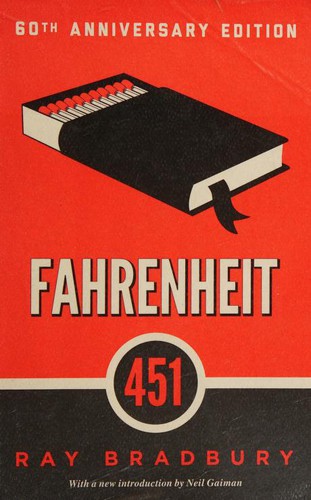
Author: Ray Bradbury (1920-2012, 27 novels + 600+ short stories, typed Fahrenheit 451 in 9 days on UCLA Powell Library basement rental typewriter for $9.80 total, Waukegan Illinois born / Los Angeles-based) Published: October 19, 1953 (Ballantine Books, US first edition limited 200 asbestos-bound copies) Pages: 249 · Goodreads: 3.97★ / 2.1M ratings Audiobook: Tim Robbins · Audible Studios · 5h 1m (2013 Audie Award Fiction Unabridged winner + AudioFile Earphones) · Christopher Hurt · Blackstone Audio · 5h 14m Awards: 1954 American Academy of Arts and Letters Literature Award · 1954 Commonwealth Club of California Literature Gold Medal · 1984 Prometheus Hall of Fame Award · Time 100 Best English-Language Novels 1923-2005 · Modern Library 100 Best Novels finalist · BBC 100 Novels That Shaped Our World · Radcliffe Publishing Course Top 100 · AP English Literature + AP English Language curriculum canonical · 10M+ copies global · 30+ language translations · 2004 National Book Foundation Medal for Bradbury's Lifetime Achievement · 2007 Pulitzer Prize Special Citation Adaptations: 1966 Universal film (François Truffaut directing, Oskar Werner as Montag + Julie Christie doubled as Linda and Clarisse + Cyril Cusack + Anton Diffring + Jeremy Spenser, 112 minutes, Bernard Herrmann score) · 2018 HBO film (Ramin Bahrani directing, Michael B. Jordan as Montag + Michael Shannon as Beatty + Sofia Boutella + Lilly Singh + Aaron Davis, 100 minutes, $20M budget) · 1988 Georg Katzer opera (Berliner Staatsoper) · 1986 Bradbury stage adaptation · 2006 Ray Bradbury Theater anthology series · BBC Radio 4 dramatization
Ray Bradbury's Fahrenheit 451 is the definitive book-burning dystopian novel. Published October 1953 by Ballantine Books and selling 10 million copies across 30 languages, its 1966 François Truffaut film and 2018 HBO Michael B. Jordan adaptation cemented it as canonical speculative fiction. If you own the Kindle or EPUB copy and want to hear the canonical 5-hour Tim Robbins Audie-winning narration while you commute, garden, or cook, use CastReader AI TTS to convert your copy to unabridged audio for free →.
The novel opens with the iconic line: "It was a pleasure to burn." Guy Montag is a Fireman — in this near-future American society, firemen don't put out fires, they start them, burning contraband books and the houses that hide them. Montag's wife Mildred is addicted to wall-sized "parlor TV" interactive programs and has overdosed on sleeping pills twice. A chance evening-walk encounter with 17-year-old neighbor Clarisse McClellan ("Are you happy?") begins Montag's questioning. Over three parts — "The Hearth and the Salamander", "The Sieve and the Sand", "Burning Bright" — Montag steals a book from a burning house, watches an old woman choose to burn alive with her books rather than leave them, is hunted by the Mechanical Hound surveillance-robot, murders Captain Beatty when Beatty forces him to burn his own home, flees through the river, and joins the Book People (refugees in the forest who each memorize one book to preserve it). The novel ends with a jet-driven nuclear war annihilating the city and Montag walking toward the ruins quoting the Book of Ecclesiastes: "To every thing there is a season, and a time to every purpose under the heaven." The Phoenix symbolism is explicit — rebirth from destruction.
Bradbury wrote the novel between May and November 1953 in the basement of UCLA's Powell Library on a rental typewriter at 10¢ per half-hour, paying $9.80 total for nine days of typing. He drew on the 1933 Nazi Bücherverbrennungen (25,000 books burned in Berlin's Bebelplatz May 10, 1933 — today a Micha Ullman memorial marks the spot), McCarthy-era HUAC blacklisting 1947-1954, Stalin's Soviet censorship, mass-book-burnings during US Revolutionary and Civil Wars, and his 1950s anxiety about television's rise (the three-wall "parlor TV" and Mildred's "family" characters eerily anticipate streaming-service immersion and parasocial-relationship 2020s culture).
Why 5 Hours 1 Minute Matters
Fahrenheit 451 is the shortest major-dystopian-canon audiobook — 249 pages, 5 hours standard. Bradbury's prose is famously lyrical, imagistic, and rhythmically declarative ("It was a pleasure to burn"; "We cannot tell the precise moment when friendship is formed"). The canonical Tim Robbins Audible edition handles the poetic register with measured vocal pacing — Robbins won the 2013 Audie Fiction Unabridged Award specifically for this recording's rhythmic precision on Beatty's speeches and Montag's Ecclesiastes memorization. CastReader's AI narration is cleaner for first-pass classroom use; Robbins is recommended for lyrical re-listen.
| Book | Audiobook Length | Goodreads | Why Listeners Compare |
|---|---|---|---|
| Fahrenheit 451 · Bradbury | 5h 1m | 3.97★ / 2.1M | Book-burning censorship dystopia |
| 1984 · Orwell | 11h 22m | 4.19★ / 4.6M | 1949 pain-state totalitarian dystopia |
| Brave New World · Huxley | 8h 0m | 3.87★ / 1.6M | 1932 pleasure-state dystopia |
| The Handmaid's Tale · Atwood | 11h 1m | 4.13★ / 2.2M | 1985 feminist religious dystopia |
| Slaughterhouse-Five · Vonnegut | 5h 13m | 4.09★ / 1.4M | 1969 time-displaced Dresden-firebombing novel |
| The Martian Chronicles · Bradbury | 7h 19m | 3.99★ / 240K | Bradbury's 1950 Mars-colonization story-cycle |
What Happens in Part 1 (Beatty's Speech)
The novel's most-quoted passage runs chapter 1 (roughly 1h of audio). Captain Beatty visits Montag at home to check on his "burn fatigue" and delivers a 20-page explanation of how book-burning historically evolved. Beatty's argument, reduced: (1) mass media accelerated — radio then TV then always-on parlor TV — eliminating reflection time; (2) minority groups began demanding books that offended them be removed; (3) majority preferences for simplicity supplanted serious literature; (4) intellectuals became socially suspect; (5) the state eventually codified what society already wanted — books were burned by popular preference not imposition. "If you don't want a man unhappy politically, don't give him two sides to a question to worry him; give him one. Better yet, give him none." Beatty's self-referential satire is remarkable — he is defending censorship by describing its social preconditions accurately. Bradbury's 1953 anticipation of social-media moderation, attention-economy dynamics, and cancel-culture debates is so precise that the speech is assigned in 2020s journalism-school curricula as foundational text.
Classroom & Book-Club Use
Standard on AP English Language, AP English Literature, AP US Government, and Journalism/Media-Studies university curricula since the 1960s. Common pairings: 1984 (Orwell — 1949 pain-state totalitarian dystopia), Brave New World (Huxley — 1932 pleasure-state dystopia), We (Zamyatin — 1924 Russian dystopia), A Clockwork Orange (Burgess — 1962 ultraviolence dystopia), The Handmaid's Tale (Atwood — 1985 feminist religious dystopia), Amusing Ourselves to Death (Postman — 1985 Huxley-vs-Orwell nonfiction analysis). Book-club discussion guides focus on: (1) Beatty's paradoxical speeches and self-referential irony of censoring anti-censorship novel, (2) the Mechanical Hound as early-AI-surveillance-metaphor anticipating 2020s facial-recognition/drone-policing, (3) parlor-wall TVs as streaming-service addiction parallel, (4) Clarisse's Socratic 'Why?' questioning as media-literacy-education template, (5) Book-People Phoenix-rebirth ending — what does 'memorized books' preservation mean in the age of Internet Archive?
Pairs Well With
- 1984 Text to Speech — Orwell's 1949 pain-state totalitarian dystopia
- Brave New World Text to Speech — Huxley's 1932 pleasure-state dystopia
- Slaughterhouse-Five Text to Speech — Vonnegut's 1969 anti-war time-displacement novel
- Catch-22 Text to Speech — Heller's 1961 satirical WWII masterwork
- A Clockwork Orange Text to Speech — Burgess's 1962 Nadsat-ultraviolence dystopia
First-Time Listener Guide
Fahrenheit 451 is the canonical 1953 dystopia of book-burning and mass-media-induced apathy — Ray Bradbury's 158-page novel is the shortest of the 20th-century-dystopia core trio (1984 / Brave New World / Fahrenheit 451) and the most-poetically-written. Tim Robbins's 2003 Caedmon Audio narration is canonical — Robbins's deliberate American-literary register handles Bradbury's prose-poetry passages cleanly; the audiobook won the 2003 Audie for Best Solo Performance. 1.0x baseline for first listen is essential — Bradbury's lyrical-prose-poetry density rewards slower pace; speed-listening past 1.25x flattens the alarm-bells-and-fire-trucks sensory writing into background dystopia.
If Fahrenheit 451 is your first Bradbury: the recommended next listen is The Martian Chronicles (1950, ~5h) — Bradbury's connected-short-story collection that established the Mars-colonization framework, or Something Wicked This Way Comes (1962, ~7h) — the dark-fantasy companion novel. The Illustrated Man (1951, ~7h) is the short-story collection that includes "The Veldt" and "Marionettes, Inc." Save Dandelion Wine (1957) for committed readers — its small-town-summer-1928 nostalgia is tonally distant from his SF/dystopia work.
For listeners considering Fahrenheit 451 as their first 20th-century-dystopia: the canonical sequencing is Brave New World (Huxley, 1932) → 1984 (Orwell, 1949) → Fahrenheit 451 (Bradbury, 1953) in publication order, or 1984 → Fahrenheit 451 → Brave New World for many high-school curricula (most concrete-totalitarian → most-poetic → most-philosophically-distinct). Combined runtime ~25 hours.
For listeners coming from the Ramin Bahrani 2018 HBO film (Michael B. Jordan, Michael Shannon): the audio restores significant material the film alters. The 2018 adaptation departed substantially from the novel; many readers describe the audio as the more-faithful and richer experience. Audio-first is the recommended sequence.
How to Listen on CastReader
- Open the Kindle/EPUB copy you already own (Amazon purchase or library-borrowed DRM-free)
- Upload to CastReader at castreader.ai/listen-to-kindle — the in-browser TTS reads instantly with no account
- Select a voice — CastReader offers 20+ AI voices; Adam or Daniel work well for Montag's first-person narration; use a firmer voice for Beatty's speeches
- Adjust speed — 1× for Beatty's speeches (Part 1 and Part 3), the Clarisse walking-conversation chapters, and the river-escape Ecclesiastes memorization sequence; 1.5× for the Fireman-station workday chapters; 2× for re-listen
- Bookmark Part 1 Chapter 1 (Beatty's explanation), Part 2 Chapter 2 (Faber's Dental-School coaching via green-bullet earpiece), Part 3 Chapter 3 (the Ecclesiastes ending) — these are the book's three structural peaks and benefit from re-listen
Why This Works for Fahrenheit 451 Specifically
Bradbury's prose is famously short-lined and imagistic — no Byatt structural experimentation, no Zafón gothic ornamentation. His sentences are declarative, rhythmic, sensory-dense. This is ideal TTS territory: AI narration doesn't struggle with tangled grammar, and Bradbury's invented vocabulary (Mechanical Hound, Salamander fire-truck, parlor TV, Seashell thimble earbud, Book People, firemen-burn-books inversion) reads cleanly because Bradbury defines each term in-line. 10 million readers and 30 languages have returned to the audiobook repeatedly since 1953 — the text rewards second and third listens as Beatty's speeches reveal new contemporary applications each pass. CastReader makes that repeat-listen frictionless.
Start converting your Kindle copy →
About CastReader — CastReader is a free in-browser AI TTS built for Kindle/EPUB owners who want canonical audiobook-quality listening without Audible subscription lock-in. Upload the copy you own; listen immediately with 20+ voices, 0.5×–3× speed, Chrome/Safari/mobile support. Learn more →