The Count of Monte Cristo Audiobook & Text to Speech Guide (2026) — Dumas's 1844 French Revenge-Epic and 2024 Bourboulon-$103M-Pathé + 2025 BBC Miniseries Cultural Moment
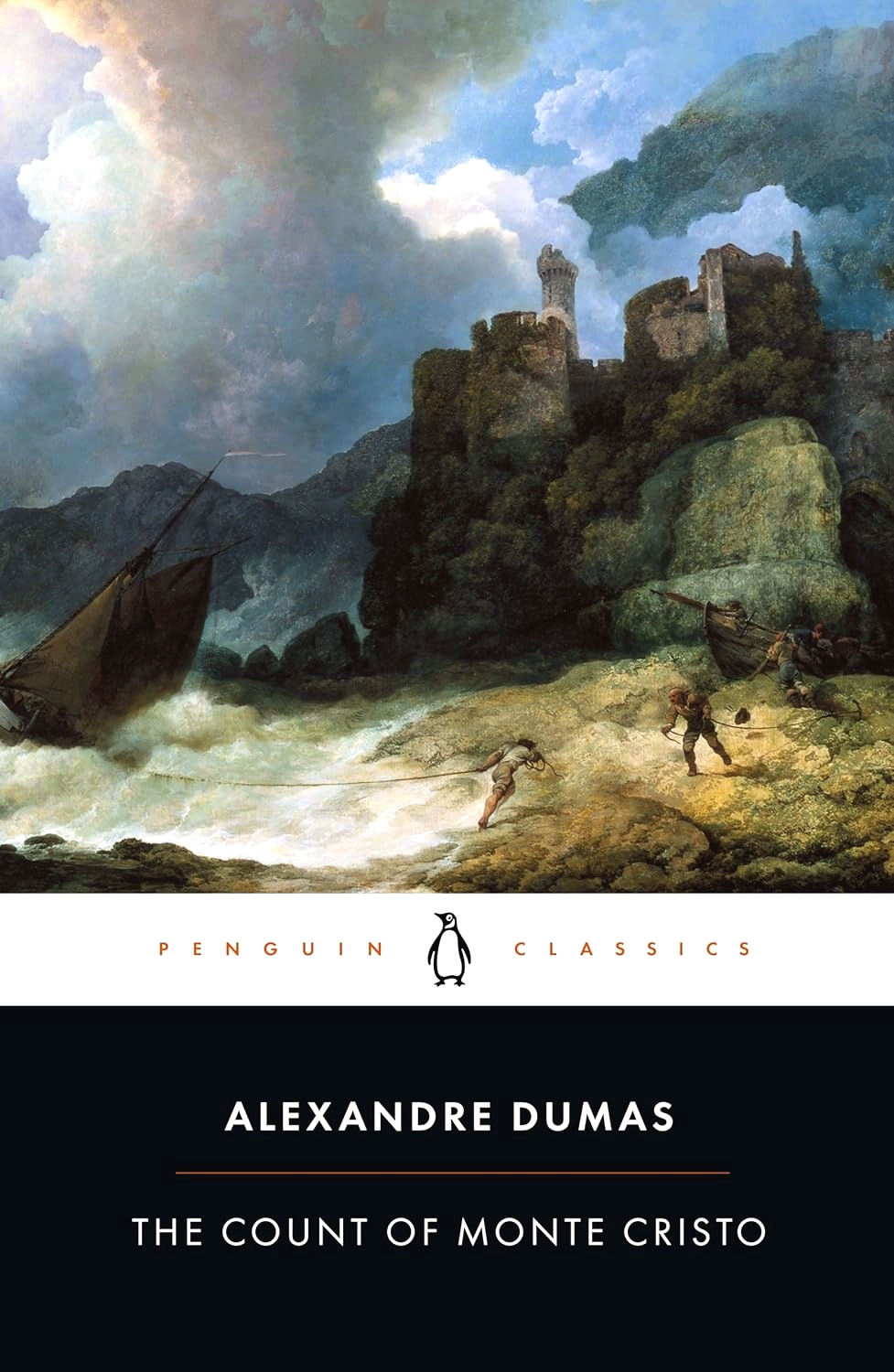
The Count of Monte Cristo — Alexandre Dumas (trans. Robin Buss)
First published: 1844-1846 (Journal des Débats serialization) / collected 1844-1845 Pétion
Pages: 1276 (Penguin Classics / Buss unabridged)
Goodreads: 4.33★ (1M+ ratings) · view
Audiobook runtime: ~52h John Lee / Blackstone canonical unabridged English (Buss) · ~47h Bill Homewood / Naxos unabridged · various abridged 12-20h · LibriVox free 1846 Chapman & Hall
Commercial scale: 180+ years continuous literary tradition · foundational adventure-fiction masterwork · global public-domain · universally-read world-literature · 1M+ Goodreads ratings
Awards & Recognition: Harold Bloom Western Canon French-tier · Umberto Eco Six Walks in the Fictional Woods chapter · Peter Washington Everyman's Library foundational · universally-cited revenge-narrative template
Cultural position: 2024 Martin Bourboulon Pathé $103M French film — 14M French admissions / 3h theatrical / 6th-highest-grossing French film ever · w/ Pierre Niney / Bastien Bouillon / Anaïs Demoustier · 2025 BBC 8-part miniseries in development (Sam Claflin rumored lead) · 2002 Kevin Reynolds Disney $75M film w/ Jim Caviezel / Guy Pearce · 30+ historical adaptations across French / English / Russian / Japanese / Mexican / Brazilian productions
Dumas's 1844 French revenge-epic masterwork — The Count of Monte Cristo's 1,276-page 117-chapter 23-year Napoleonic-era-to-post-Restoration-France saga of Edmond Dantès's unjust 14-year Château d'If imprisonment after conspirator-betrayal by Fernand Mondego / Danglars / Villefort, his Abbé Faria scholarly tutoring and Spada-treasure revelation, his miraculous escape and Monte Cristo-treasure recovery, and his 9-year systematic revenge-architecture culminating in Fernand's self-exposure-suicide / Danglars's bandit-ransom-bankruptcy / Villefort's family-poisoning-induced madness — has been near-universally regarded as one of the most-perfect adventure-novels ever written and foundational to 180 years of revenge-fiction tradition, with John Lee's canonical 52h Blackstone Audio production of Robin Buss's 1996 Penguin Classics unabridged translation, Martin Bourboulon's 2024 Pathé $103M French adaptation (Pierre Niney / Bastien Bouillon / Anaïs Demoustier, 14M French admissions making it the 6th-highest-grossing French film ever at €85M French box-office and $175M+ worldwide), 2025 BBC 8-part miniseries production underway (Sam Claflin rumored lead positioning as BBC's response to Bourboulon success), and the continuous 180-year adaptation tradition generating 30+ film / TV productions from 1908 French silent era through 2002 Kevin Reynolds Disney $75M Jim Caviezel / Guy Pearce to 2024 Bourboulon French cinema history. Use CastReader AI TTS on Kindle Monte Cristo text →
The Count of Monte Cristo is Alexandre Dumas's 1844 French adventure-revenge novel set 1815-1838 — tracking Edmond Dantès (a 19-year-old Marseille merchant sailor) across 23 years of unjust imprisonment, miraculous escape, fortune-acquisition, and systematic revenge. Part 1 (1815): Dantès returns from Mediterranean voyage as newly-promoted Pharaon captain-designate engaged to Catalan Mercédès; betrayed by Fernand Mondego (Mercédès's rival suitor) / Danglars (jealous Pharaon purser) / Caderousse (drinking-accomplice) / Gérard de Villefort (Royalist magistrate protecting his Bonapartist father); imprisoned in Château d'If. Part 2 (1815-1829): 14-year Château d'If solitary confinement; meets Abbé Faria (imprisoned Italian priest-scholar tutoring Dantès for 8 years); Faria reveals Spada treasure on uninhabited island of Monte Cristo; Faria dies before escape; Dantès substitutes himself for Faria's corpse and escapes into the sea. Part 3 (1829-1838): Dantès recovers Monte Cristo treasure (~100 million francs, Europe's wealthiest private individual); 9 years of traveling / language-learning / revenge-preparation; establishes Count of Monte Cristo / Lord Wilmore / Abbé Busoni / Sinbad the Sailor identities. Part 4 (1838): Rome introduction to Albert de Morcerf (Fernand and Mercédès's son); Parisian-society revenge-architecture — Fernand (Count de Morcerf, decorated general) exposed as Albanian traitor / shoots himself; Danglars (Baron Danglars, Parisian banker) financially-ruined / Eugénie-publicly-shamed / bandit-ransom-starvation; Villefort (Chief Prosecutor of Paris) buried-infant-scandal / Héloïse-poisoning-of-family / Benedetto-trial-exposure / insanity. Closing: Dantès, troubled by collateral innocent deaths, gifts Monte Cristo wealth to Valentine / Maximilien Morrel, retreats with Haydée (Ali Pasha's daughter), and sails East — final line 'Wait and hope' (Attendez et espérez). At ~52h John Lee / Blackstone Audio's production of Robin Buss's 1996 Penguin Classics unabridged translation is the canonical audiobook; Bill Homewood / Naxos runs ~47h unabridged; LibriVox hosts free public-domain 1846 Chapman & Hall English translation.
This guide covers the ~52h unabridged runtime, the 117-chapter 6-part structure, the canonical translation choices, 2024 Bourboulon / 2025 BBC adaptation companion-engagement, and every free / paid path.
Why ~52h Matters
Adventure-fiction and 19th-century-French-epic runtime and rating benchmark.
| Title | Runtime | Year | Goodreads rating |
|---|---|---|---|
| The Count of Monte Cristo (Dumas) — this book | ~52h | 1844 | 4.33★ |
| Les Misérables (Hugo) | 60h | 1862 | 4.21★ |
| The Three Musketeers (Dumas) | 24h | 1844 | 4.09★ |
| War and Peace (Tolstoy) | 61h | 1869 | 4.17★ |
| Anna Karenina (Tolstoy) | 35h | 1877 | 4.11★ |
| Don Quixote (Cervantes) | 39h | 1605/15 | 3.91★ |
| The Brothers Karamazov (Dostoevsky) | 37h | 1880 | 4.35★ |
| The Hunchback of Notre-Dame (Hugo) | 21h | 1831 | 3.85★ |
Takeaway: The Count of Monte Cristo is one of the highest-rated and most-read novels in world literature at 4.33★ / 1M+ Goodreads ratings — second only to The Brothers Karamazov (4.35★/365K) among canonical-19th-century-novels for combined-rating-and-ratings-count. For first-time 19th-century-French-literature listeners: Madame Bovary (Flaubert, 14h, canonical realism) → The Three Musketeers (Dumas, 24h, accessible adventure) → The Count of Monte Cristo (Dumas, 52h, revenge-epic) → Les Misérables (Hugo, 60h, social-epic) forms the canonical French-19th-century-novel progression. Monte Cristo's 180+ years of continuous adaptation tradition, universal cultural-literacy status, and exceptional narrative mastery establish it as one of the 10 most-important novels in Western literary history.
The 1844-2026 Trajectory
- 1802 July 24: Alexandre Dumas born Villers-Cotterêts, France (father General Thomas-Alexandre Dumas, Haitian-French)
- 1836-1843: Dumas establishes playwright / journalist / novelist career in Paris; befriends Victor Hugo
- 1844 August 28 - 1846 January 15: The Count of Monte Cristo serialized in Journal des Débats — 139 installments; immediate French literary sensation
- 1844-1845: Complete Monte Cristo published by Pétion in 18 volumes
- 1846: First English translation (unnamed, Chapman & Hall) — the public-domain canonical English for 150+ years
- 1870 December 5: Dumas dies Puys, France; public-domain global availability begins
- 1908: First film adaptation (French silent)
- 1934: Robert Donat Hollywood film
- 1943: 20th Century Fox film adaptation
- 1954: Jean Marais French film adaptation
- 1961: Claude Autant-Lara Le Comte de Monte Cristo — French canonical w/ Louis Jourdan
- 1975 March 10: Richard Chamberlain ITC TV film — classic American TV adaptation
- 1996: Robin Buss Penguin Classics translation — widely-canonical contemporary; restores Victorian-censored passages
- 1998: Gérard Depardieu 6-part French miniseries
- 2002 January 25: Kevin Reynolds Disney Touchstone The Count of Monte Cristo — $75M; Jim Caviezel / Guy Pearce / Richard Harris / Dagmara Domińczyk
- 2006: Russian multi-part TV adaptation
- 2009: Peter Washington Everyman's Library edition — contemporary hardcover-canonical
- 2024 June 28: Martin Bourboulon Pathé Le Comte de Monte-Cristo — $103M; 3h theatrical; Pierre Niney / Bastien Bouillon / Anaïs Demoustier; 14M French admissions, 6th-highest-grossing French film ever
- 2025 late: BBC 8-part miniseries production announced; Sam Claflin rumored lead
- 2026 April: 180+ years continuous literary tradition · foundational adventure-fiction masterwork · global public-domain · universally-read world-literature · 2024 Bourboulon cinema-success / 2025 BBC miniseries development · elevated 2024-2026 audiobook / Kindle sales
The 117-Chapter 6-Part Structure
Understanding Dumas's serialized-novel architecture:
Part 1: Betrayal (1815) — Chapters 1-21 (pre-imprisonment):
- Chapters 1-2 — Pharaon's Marseille arrival; Dantès's captain-promotion
- Chapters 3-5 — Fernand / Danglars conspiracy; Caderousse compliance; Dantès-Mercédès engagement
- Chapters 6-13 — Villefort's interrogation and burial-of-Noirtier-letter; Dantès sent to Château d'If
- Chapters 14-21 — Early Château d'If years; Dantès's despair; introduction to Abbé Faria
Part 2: Imprisonment and Transformation (1815-1829) — Chapters 22-30:
- Chapter 16 — Abbé Faria meeting (tunneling through cell wall)
- Chapters 17-18 — Faria's tutelage of Dantès (languages, mathematics, philosophy, chemistry)
- Chapters 19-20 — Faria reveals Spada treasure on Monte Cristo island
- Chapter 21 — Faria's death
- Chapter 22 — Dantès's escape (substituting himself for Faria's corpse; thrown into the sea)
Part 3: Fortune and Preparation (1829-1838) — Chapters 23-30:
- Chapters 23-25 — Dantès rescued by Tiboulen smugglers; recovery of Monte Cristo treasure
- Chapters 26-28 — Travel years; establishing Count of Monte Cristo / Lord Wilmore / Abbé Busoni / Sinbad identities
- Chapters 29-30 — Caderousse-inn confrontation (as Abbé Busoni); gathering intelligence on Fernand / Danglars / Villefort
Part 4: Rome and Parisian Debut (1838) — Chapters 31-60:
- Chapters 31-35 — Rome Carnival introduction to young Albert de Morcerf; Luigi Vampa bandits; Monte Cristo's rescue-of-Albert
- Chapters 36-40 — Count of Monte Cristo's Paris arrival; Hôtel du Prince mansion; society-introductions
- Chapters 41-60 — Systematic information-gathering; Eugénie Danglars piano-concert; telegraph-office-bribery-of-Danglars; Benedetto (Villefort's illegitimate son) masquerading as Prince Cavalcanti
Part 5: Revenge Architecture (1838) — Chapters 61-100:
- Chapters 61-75 — Fernand exposed: Haydée testifies against Count de Morcerf in Chamber of Peers as Albanian traitor; Fernand disgraced and shoots himself; Mercédès recognizes Dantès
- Chapters 76-90 — Danglars financial ruin: stock-market manipulation via false telegraph signals; Eugénie's elopement-with-Louise-d'Armilly publicly humiliates Danglars; bankruptcy
- Chapters 91-100 — Villefort's family-poisoning exposed: Héloïse de Villefort's serial-murdering of his family members for inheritance; Valentine saved by Dantès's intervention
Part 6: Conclusion and Withdrawal (1838) — Chapters 101-117:
- Chapters 101-110 — Benedetto's trial; Benedetto's revelation of Villefort's buried-infant scandal; Villefort's madness-onset
- Chapters 111-115 — Danglars's bandit-capture by Luigi Vampa; daily-ransom-installment starvation-forgiveness
- Chapter 116 — Mercédès-Albert-Villefort aftermath
- Chapter 117 — 'Wait and hope' (Attendez et espérez) — Dantès's letter to Maximilien Morrel / Valentine; Dantès departs with Haydée by sea
117 chapters, 6 parts, approximately 464,234 words, 23-year narrative span. The Dumas textbook canonical set-pieces: Chapter 7 Villefort's interrogation (conspiracy-exposure moment), Chapter 16 Abbé Faria meeting, Chapter 22 escape-from-Château-d'If, Chapter 31 Rome Carnival first-Count-introduction, Chapter 85 Caderousse-death-scene, Chapter 99 Fernand's self-exposure-suicide, Chapter 104 Danglars's bandit-capture, Chapter 113 Villefort's madness, Chapter 117 Attendez et espérez closing — widely studied as the novel's nine structural pillars.
The Translation Landscape
Monte Cristo has a rich 180-year English translation tradition. Choosing between translations significantly affects the listening experience:
English Translations:
- 1846 Chapman & Hall (anonymous) — first complete English translation; the canonical public-domain English for 150+ years; Victorian-era censorship of certain scenes (Haydée's sexualized slave-ward relationship, Eugénie Danglars's lesbian-relationship with Louise d'Armilly, Caderousse's explicit violence); accessible Victorian register but incomplete
- 1955 Lowell Bair (Bantam) — mid-20th-century abridged translation
- 1996 Robin Buss (Penguin Classics) — widely-canonical contemporary; unabridged; restores Victorian-censored passages (Haydée's candid sexuality, Eugénie's lesbian subplot, explicit violence); muscular contemporary English; the translation used in John Lee / Blackstone audiobook; the standard classroom-assigned edition
- 2009 Peter Washington (Everyman's Library) — contemporary hardcover-canonical; Washington edited rather than newly-translated (uses 1846 translation with extensive revisions)
- Various abridged editions — numerous publisher-abridged editions (400-600 pages vs. unabridged 1276 pages) cutting 60%+ of content; treat as introduction-only
French Original:
- 1846 Pétion edition (original book form)
- Gallimard Pléiade edition (scholarly critical)
- Folio Classique edition (accessible scholarly)
For first-time English readers: Robin Buss 1996 (Penguin Classics) — canonical contemporary; restores Victorian-censored content; most-complete and most-readable modern translation. For free public-domain path: 1846 Chapman & Hall (Project Gutenberg) — historically-significant but Victorian-censored. For hardcover-canonical: Peter Washington 2009 (Everyman's Library).
Every Way to Listen
- John Lee / Blackstone Audio — ~52h canonical unabridged first-listen English (Robin Buss 1996 Penguin Classics translation)
- Bill Homewood / Naxos AudioBooks — ~47h unabridged alternative canonical
- Various abridged productions — Blackstone abridged ~20h, Naxos abridged ~16h, various commercial abridged 12-20h (treat as introduction-only rather than substitute for unabridged)
- LibriVox free public-domain — 1846 Chapman & Hall translation (complete unabridged)
- Audible Premium 2 credits — ~$29.90 covers John Lee / Blackstone unabridged
- Audible purchased audiobook — $30-40 for Lee unabridged canonical
- Libby (U.S. libraries) — 0-2 week wait; John Lee / Blackstone and Bill Homewood / Naxos both reliably stocked
- Hoopla — adventure-fiction and 19th-century-French catalog
- Spotify Premium audiobook — 52h substantially exceeds 15h monthly allocation (requires 4-month cross-month rollover)
- LibriVox free — zero-cost 1846 Chapman & Hall unabridged path (Monte Cristo is global public-domain since 1870)
- Project Gutenberg free Kindle — 1846 Chapman & Hall translation (complete unabridged)
- Purchased Kindle edition — $10-18 Robin Buss Penguin Classics / Peter Washington Everyman's Library
- CastReader AI TTS with Kindle Monte Cristo edition — unlimited re-listens, adjustable pace
Monte Cristo's global public-domain status since Dumas's 1870 death means comprehensive free-path options across Kindle / audio.
Libby Wait Times (April 2026)
Survey of major U.S. library networks as of April 2026.
- NYPL / Brooklyn Public Library: 0-2 week wait (John Lee / Blackstone and Bill Homewood / Naxos both prominently stocked; 2024 Bourboulon post-release elevated demand)
- Los Angeles Public Library: 0-2 week wait
- Chicago Public Library: 0-2 week wait
- Seattle Public Library: 0-2 week wait
- Boston Public Library: 0-2 week wait (19th-century-French-literature curriculum commitment)
- Post-Bourboulon surge continuing 2024-2026: library-network demand remained substantially elevated following 2024 Bourboulon $103M French cinema success; 2025 BBC miniseries production announcement sustaining continued interest
Monte Cristo has short library waits — its universal cultural-literacy status ensures every major US library system carries multiple digital copies and multiple translations. Libby is strongly-recommended free path for readers willing to wait a week or two; LibriVox 1846 Chapman & Hall is the zero-wait free path.
Why Kindle + CastReader Suits The Count of Monte Cristo
Monte Cristo's 117-chapter 6-part architecture and substantial ~52h unabridged runtime make it uniquely well-suited to CastReader AI TTS — 4-6 week evening-session consumption pattern rewards pause-and-resume bookmark flexibility across the novel's complex plot-architecture, and the novel's universal cultural-literacy status means readers commonly return to it across years.
Listeners commonly return to:
- Chapter 1-2 Pharaon's Marseille arrival (the novel's famous opening; Dantès's youthful happiness)
- Chapter 7 Villefort's interrogation (the conspiracy-exposure moment; Dantès's final-hour-of-freedom)
- Chapter 16 Abbé Faria meeting (the prison-transformation catalyzing moment; Faria tunneling into Dantès's cell)
- Chapter 22 Escape from Château d'If (the novel's most-famous set-piece; substituting for Faria's corpse and thrown into the sea)
- Chapter 31 First Count of Monte Cristo introduction in Rome (the novel's turning point from preparation to revenge)
- Chapter 85 Caderousse's death (the first revenge-execution)
- Chapter 99 Fernand's self-exposure-suicide (Haydée's Chamber of Peers testimony; the most-dramatic revenge-climax)
- Chapter 104 Danglars's bandit-capture (the ironic-financial-revenge closure)
- Chapter 113 Villefort's madness (the darkest revenge-execution with innocent collateral)
- Chapter 117 Attendez et espérez ('Wait and hope') — the novel's concluding letter to Maximilien Morrel / Valentine; universally-quoted as one of the great novelistic closings
For 2024 Bourboulon $103M French film and 2025 BBC miniseries companion-engagement, CastReader's cross-device bookmarking enables reading-the-book before or after watching-the-adaptations — the 2024 Bourboulon 3h film compresses approximately 80% of novel content; complete reading provides comprehensive Dantès-transformation engagement that adaptations necessarily truncate.
CastReader's pronunciation overrides handle Dumas's extensive French-Italian-Mediterranean proper-noun catalog: Edmond Dantès (ed-MOHN don-TESS), Mercédès (mer-say-DESS), Fernand Mondego (fer-NAHN mohn-DAY-go), Danglars (DAHN-glars), Caderousse (kah-duh-ROOSS), Villefort (VEEL-for), Abbé Faria (ah-BAY fah-REE-ah), Haydée (eye-DAY), Morrel (mo-REL), Albert de Morcerf (al-BEHR duh mor-SEHRF), Eugénie Danglars (oo-zhay-NEE), Maximilien Morrel (mak-see-mil-YEN), Valentine de Villefort (vah-lan-TEEN), Benedetto (ben-eh-DET-toh), Franz d'Epinay (frahntz day-pee-NAY), Luigi Vampa (loo-EE-jee VAHM-pah), Ali (ah-LEE, Ali Pasha of Albania), Château d'If (shah-TOH deef), Monte Cristo (MON-tay KREES-toh), Marseille (mar-SAY), Rome, Paris, Constantinople, Janina (Yannina, Greece). CastReader's pronunciation-override library handles Dumas's multilingual register with French-vernacular, Italian, Arabic, and Greek pronunciation options.
Send to Phone for Dumas Progression
At ~52h The Count of Monte Cristo requires extended commitment. Send to Phone preserves CastReader position across device switches — complete Parts 1-2 (Chapters 1-30, through Abbé Faria and escape) during weeks 1-2 weekday commutes, Part 3 (Chapters 31-60, Rome and Paris establishment) during weeks 3-4 mixed sessions, Parts 4-6 (Chapters 61-117, revenge-execution and closure) during weeks 5-6 for total 4-6-week consumption. For Dumas companion-progression, completing Monte Cristo (52h) and proceeding to The Three Musketeers (24h) and Twenty Years After (27h) forms the canonical Dumas-immersion rhythm; broader 19th-century-French-literature progression continues through Hugo Les Misérables (60h), Flaubert Madame Bovary (14h), Zola Germinal (19h), and Balzac Le Père Goriot (12h).
Free Public-Domain Options
The Count of Monte Cristo entered U.S. public domain in the 1920s (1844-46 publication; far past the 95-year rule) and worldwide PD since 1920 (Dumas died 1870 + 50 years; UK extended to 70 but Dumas was already PD). Free legitimate paths:
- LibriVox — multiple volunteer-recorded productions of the full unabridged novel free, no library card required. Bill Homewood's commercial Naxos production remains the consensus canonical narration; LibriVox free volunteer alternatives are useful for budget-conscious listeners willing to accept production-quality variance.
- Project Gutenberg — full e-text in multiple translations (Buss, Robin Buss for Penguin Classics, the older anonymous Chapman & Hall translation), plain ASCII, perfect for upload into CastReader for AI TTS at chosen voice.
- Internet Archive — multiple Count of Monte Cristo audiobook recordings hosted free for streaming, including PD-era recordings and contemporary volunteer productions.
- Libby / Hoopla — free with library card; commercial productions like Bill Homewood Naxos stock universally.
- Kindle public-domain edition — free download. Pair with CastReader free AI TTS for unlimited re-listens at zero cost.
For a 52-hour multi-week commitment, the public-domain status is unusually valuable: zero-cost ebook + free AI TTS at adjustable pace = effectively infinite-budget unlimited re-listens across the multi-week reading window. Many committed Dumas readers describe completing Monte Cristo + The Three Musketeers + Twenty Years After (~103 hours combined) entirely on PD ebook + CastReader, which would otherwise require 6-8 Audible credits.
Translation choice matters more than usual for Dumas: the Robin Buss 1996 Penguin Classics translation is the contemporary canonical English version; the older Chapman & Hall 1846 anonymous translation is widely-distributed as PD but is heavily abridged and bowdlerized. If you're using AI TTS on a Gutenberg edition, prefer the Buss translation if you can find it (still under copyright until 2066), or the more-complete late-19th-century translations rather than the abridged early-Victorian editions. Free PD ebooks vary widely in translation quality; this is the single biggest variable in your free-listening experience.
Limitations and Honest Notes
- The 52h unabridged runtime is the longest-runtime canonical-adventure-novel commitment — first-time Dumas readers typically benefit from starting with The Three Musketeers (24h) before attempting Monte Cristo
- Extensive character-tracking demand — 117 chapters, 23 years, multiple geographic settings (Marseille → Château d'If → Monte Cristo → Rome → Paris), 50+ named characters with interwoven backstories — creates the central accessibility challenge; contemporary editions (Buss Penguin Classics, Washington Everyman's Library) include chapter-summary frontmatter and character-lists
- Content considerations — revenge-violence (exposure / suicide / bankruptcy / madness of the three conspirators), adultery themes (Mercédès's remarriage during Dantès's imprisonment), poisoning / attempted murder (Héloïse de Villefort's serial-family-poisoning), Haydée's literally-enslaved-Greek-ward status (Dumas frames sympathetically but it is chattel-slavery), aristocratic-duel-honor, period-specific frames around class / Bonapartist-vs-Royalist politics may feel distant for contemporary readers
- Translation-dependency — reader experience varies significantly between 1846 Chapman & Hall Victorian-censored, Robin Buss 1996 contemporary-unabridged, Peter Washington 2009 edited-traditional, and numerous abridged editions; Robin Buss 1996 Penguin Classics is strongly recommended for first-time readers as the only contemporary-canonical-unabridged translation that restores Victorian-censored passages
- Abridged editions — many paperback abridged editions (400-600 pages vs. unabridged 1276 pages) cut 60%+ of content including most Rome scenes, Abbé Faria's elaborated backstory, and substantial Parisian-society set-pieces; treat abridged editions as introduction-only rather than substitute for unabridged
- Dumas's writing style — serialized-publication origins created long paragraphs, extensive dialogue, and occasional repetition that contemporary readers used to tight-editorial-style may find looser than expected; the serialized-pacing is integral to the novel's architecture
- 2024 Bourboulon 3h film and 2002 Kevin Reynolds 2h 11m film are excellent companion-watches but necessarily compress 80%+ of novel material — readers should NOT treat film adaptations as substitute for reading the complete novel
Related Reading
- Listen to Kindle — CastReader's Kindle-to-TTS path
- Send to Phone — cross-device position sync
- Kindle Text to Speech — Kindle TTS options overview
- Turn Kindle into Audiobook Free — free audiobook paths
- The Three Musketeers (Dumas) Audiobook Guide — Dumas's companion masterwork; 1844 musketeer-buddy-adventure
- Les Misérables (Hugo) Audiobook Guide — French 19th-century social-epic peer; 1862
- Don Quixote (Cervantes) Audiobook Guide — foundational adventure-novel template; 1605/1615
- War and Peace (Tolstoy) Audiobook Guide — Russian Napoleonic-era epic peer; 1869
