The Adventures of Huckleberry Finn Audiobook & Text to Speech Guide (2026) — Twain's 1884 American-Realism Masterpiece and Percival Everett James 2024-2025 Pulitzer Cultural Moment
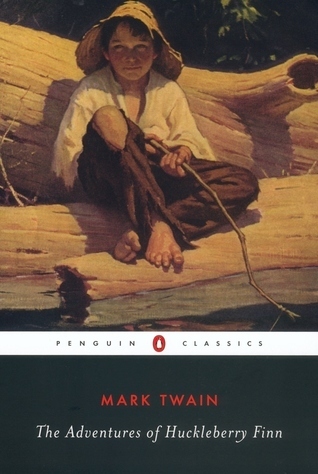
The Adventures of Huckleberry Finn — Mark Twain
First published: December 10, 1884 (UK Chatto & Windus first) / February 1885 (US Charles L. Webster & Company first with E.W. Kemble illustrations)
Pages: 366 (Penguin Classics edition)
Goodreads: 3.83★ (1.34M+ ratings) · view
Audiobook runtime: ~9h 30m Elijah Wood / Caedmon Audio 2010 canonical · ~10h Patrick Fraley / Blackstone · ~11h Norman Dietz / Recorded Books · Mark Hammer Blackstone · Dick Hill Brilliance · LibriVox free Annise Rogers multi-reader
Commercial scale: 142+ years continuous literary tradition · foundational American-realism canonical · universal public-domain · universally-assigned American-literature AP English curriculum · 1.34M+ Goodreads ratings
Awards & Recognition: Hemingway canonical declaration ('All modern American literature comes from Huckleberry Finn') · T.S. Eliot 1950 Cresset Press introduction · Harold Bloom Western Canon American-tier · universal American-literature foundational canonical
Cultural position: Percival Everett James (2024) 2025 Pulitzer Prize / 2024 National Book Award / 2024 Kirkus Prize winner — landmark Huckleberry Finn retelling from Jim's perspective · Steven Spielberg / Amblin James film adaptation in development 2024 w/ Taika Waititi · 1993 Stephen Sommers Disney w/ Elijah Wood as Huck / Courtney B. Vance as Jim · 1960 Michael Curtiz MGM · 1939 Richard Thorpe MGM · 1985 Broadway Big River (Roger Miller) 7 Tony Awards · 50+ film / stage adaptations
Twain's 1884-1885 American-realism masterpiece — The Adventures of Huckleberry Finn's 43-chapter 366-page Mississippi-River picaresque narrating 13-year-old Huckleberry Finn's raft-journey with escaped-slave Jim from St. Petersburg Missouri down-river through Jackson's Island, the wrecked Walter Scott, the Grangerford-Shepherdson generations-old-feud, the Duke and Dauphin's escalating frauds at Peter Wilks's funeral, and the final Phelps-farm Tom-Sawyer-elaborate-evasion sequence culminating in Miss Watson's posthumous emancipation of Jim and Huck's canonical closing declaration to 'light out for the Territory ahead of the rest' — has been universally regarded as the canonical American-novel since its 1884-1885 publication and Ernest Hemingway's 1935 canonical declaration ('All modern American literature comes from Huckleberry Finn'), with the Elijah Wood / Caedmon Audio 2010 production (Wood reprising his 1993 Disney-film Huck role through audio) widely-praised as the canonical contemporary audiobook, Percival Everett's James (2024 National Book Award / 2025 Pulitzer Prize / 2024 Kirkus Prize winning landmark retelling from Jim's perspective) triggering the most-substantial Huckleberry Finn critical-reappraisal in decades with Steven Spielberg / Amblin film adaptation in active development with Taika Waititi, and 142 years of continuous American-canon centrality / 50+ film / stage adaptations / universal high-school AP English curricular assignment / ongoing race-and-language scholarly-critical engagement establishing Huckleberry Finn as the most-essential single-novel engagement in American literary heritage and Twain's canonical-masterpiece. Use CastReader AI TTS on Kindle Huckleberry Finn text →
The Adventures of Huckleberry Finn is Mark Twain's 1884-1885 novel about 13-year-old Huckleberry Finn (the protagonist from Twain's earlier The Adventures of Tom Sawyer 1876) who escapes his drunken-violent father 'Pap' Finn and the respectable-but-stifling Widow Douglas and Miss Watson in St. Petersburg, Missouri (Twain's fictionalization of Hannibal), and travels down the Mississippi River on a raft with escaped-slave Jim (Miss Watson's slave fleeing down-river rather than being sold to New Orleans). Pap Finn kidnaps Huck; Huck escapes Pap by staging his own death, hiding on Jackson's Island, where he encounters Jim who has fled after overhearing Miss Watson's plans to sell him south for $800. Huck and Jim build a raft and travel down the Mississippi by night, hiding by day — Huck hoping to reach the Ohio River junction at Cairo, Illinois (Jim's intended-route to Ohio free-states). The raft-journey is interrupted by picaresque encounters: the wrecked steamboat Walter Scott with criminals aboard; the aristocratic Grangerfords and Shepherdsons generations-old feud (Buck Grangerford's tragic death); the Duke and the Dauphin (two confidence-men who join the raft and conduct escalating frauds including pretending to be the missing-brothers of the dead Peter Wilks); the Phelps farm where Huck learns Jim has been recaptured; the arrival of Tom Sawyer at the Phelps farm and Tom's elaborate-absurd 'evasion' plan for freeing Jim; the final revelation that Miss Watson had died two months earlier and freed Jim in her will. The novel ends with Huck's famous closing declaration — 'But I reckon I got to light out for the Territory ahead of the rest, because Aunt Sally she's going to adopt me and sivilize me, and I can't stand it. I been there before.' Central themes: racism and Huck's moral-conscience about Jim's humanity (Chapter 31 'All right, then, I'll go to hell' — the canonical American-literature moral-transformation); freedom and constriction; friendship and racial-honesty; Twain's critical anatomy of antebellum American hypocrisy; the Mississippi-River as American-literary-landscape. At ~9h 30m the Elijah Wood / Caedmon 2010 production is the canonical contemporary audiobook; Patrick Fraley / Blackstone runs ~10h single-narrator canonical; LibriVox hosts free public-domain productions.
This guide covers the ~9h 30m runtime, the 43-chapter structure, the Percival Everett James companion-engagement, and every free / paid path.
Why ~9h 30m Matters
American-realism / 19th-century-American-novel runtime and rating benchmark.
| Title | Runtime | Year | Goodreads rating |
|---|---|---|---|
| The Adventures of Huckleberry Finn (Twain) — this book | ~9h 30m | 1884-1885 | 3.83★ |
| The Adventures of Tom Sawyer (Twain) | 7h | 1876 | 3.93★ |
| Moby-Dick (Melville) | 18h 30m | 1851 | 3.56★ |
| The Scarlet Letter (Hawthorne) | 7h | 1850 | 3.42★ |
| Little Women (Alcott) | 19h | 1868 | 4.10★ |
| The Great Gatsby (Fitzgerald) | 5h | 1925 | 3.93★ |
| As I Lay Dying (Faulkner) | 7h | 1930 | 3.79★ |
| Beloved (Morrison) | 11h | 1987 | 3.89★ |
| James (Everett) | 12h | 2024 | 4.36★ |
Takeaway: The Adventures of Huckleberry Finn at 3.83★ / 1.34M+ Goodreads ratings ranks among the most-rated American-literature classics — matched only by Moby-Dick (687K) / Scarlet Letter (745K) / Little Women (2.5M) / Great Gatsby (5.3M) for combined canonical-status and reader-engagement. For first-time American-literature listeners: The Adventures of Tom Sawyer (7h, Huck's canonical companion; optional read-before) → The Adventures of Huckleberry Finn (9h 30m, Twain's masterpiece) → Percival Everett James (12h, 2025 Pulitzer Huckleberry-Finn-retelling) → The Great Gatsby (5h, Jazz-Age Modernism) → Beloved (11h, African-American-slavery Pulitzer) → Moby-Dick (18h 30m, American-Renaissance epic) forms the canonical American-literature 19th-20th-21st century progression. Huckleberry Finn's 142 years of continuous critical-adaptation tradition, universal American-literature curricular assignment, and foundational American-canon position establish it as the most-essential single-novel engagement in American literary heritage.
The 1876-2026 Trajectory
- 1835 November 30: Samuel Langhorne Clemens (Mark Twain) born Florida, Missouri
- 1839: Clemens family moves to Hannibal, Missouri (Twain's fictional St. Petersburg setting)
- 1857-1861: Clemens as Mississippi River steamboat pilot — Mississippi-River experience directly-foundational for Huckleberry Finn
- 1876 June: The Adventures of Tom Sawyer — Twain's earlier Hannibal-novel; establishes Huckleberry Finn as Tom's friend-companion; Huckleberry Finn sequel-development begins
- 1876-1884: Twain drafts Huckleberry Finn across 8 years of intermittent composition — pauses publication multiple times
- 1883 May: Life on the Mississippi — Twain's Mississippi-River memoir; companion-nonfiction
- 1884 December 10: The Adventures of Huckleberry Finn — Chatto & Windus UK first-edition
- 1885 February: Charles L. Webster & Company US first-edition with E.W. Kemble's 174 illustrations
- 1885 March: Concord (Massachusetts) Public Library bans Huckleberry Finn — begins 140-year banning-controversy history
- 1889: A Connecticut Yankee in King Arthur's Court
- 1894 November: Pudd'nhead Wilson — Twain's Missouri racial-identity novel
- 1895 April: Hartford home financially-collapses; Twain global-lecture tour
- 1910 April 21: Samuel Clemens (Mark Twain) dies Redding, Connecticut
- 1935: Ernest Hemingway's canonical declaration in Green Hills of Africa — 'All modern American literature comes from one book by Mark Twain called Huckleberry Finn'
- 1939: Richard Thorpe's MGM The Adventures of Huckleberry Finn — Mickey Rooney / Rex Ingram
- 1948: Lionel Trilling's influential essay — canonical 20th-century academic-reappraisal
- 1950: T.S. Eliot's Cresset Press introduction — argues Huckleberry Finn's structural-canonicity
- 1960: Michael Curtiz's MGM The Adventures of Huckleberry Finn — Eddie Hodges / Archie Moore
- 1974: J. Lee Thompson's Reader's Digest Huckleberry Finn — Jeff East / Paul Winfield
- 1985: Broadway Big River — Roger Miller musical adaptation; 7 Tony Awards including Best Musical
- 1986: PBS American Playhouse Huckleberry Finn — Patrick Day / Samm-Art Williams
- 1993 April: Stephen Sommers's Disney The Adventures of Huck Finn — Elijah Wood as Huck / Courtney B. Vance as Jim; faithful-accessible (establishes Wood's future-audio-narrator credentials)
- 1996: Toni Morrison's Oxford UP introduction — 'This Amazing, Troubling Book' essay establishing contemporary African-American critical perspective
- 2005: Nancy Rawles My Jim — Sadie / Jim's wife's perspective novel
- 2007: Jon Clinch Finn — Pap Finn's prequel-perspective novel
- 2010: Elijah Wood / Caedmon Audio 2010 production — Wood reprises 1993 Disney Huck through audio
- 2011: NewSouth Books edition (controversial scholarly-decision to replace 'n***er' with 'slave')
- 2024 March 19: Percival Everett's James — Doubleday publication; retells Huckleberry Finn from Jim's perspective
- 2024 November: James wins National Book Award for Fiction 2024
- 2024 October: James wins Kirkus Prize for Fiction 2024
- 2025 May: James wins Pulitzer Prize for Fiction 2025
- 2024: Steven Spielberg / Amblin Entertainment options James for film adaptation; Taika Waititi in director-development
- 2026 April: 142+ years continuous American-canon centrality · foundational American-realism canonical · universal public-domain · universally-assigned American-literature AP English curriculum · elevated 2024-2026 audiobook / Kindle sales driven by Everett James cultural-moment
The 43-Chapter Structure
Understanding Twain's novel architecture:
Part 1: St. Petersburg / Jackson's Island (Chapters 1-11) — the escape set-up:
- Chapter 1 — St. Petersburg, Missouri; Widow Douglas and Miss Watson 'civilizing' of Huck; opening-reference to Tom Sawyer treasure
- Chapters 2-3 — Tom Sawyer's gang; Tom's romantic-adventure imagination vs. Huck's practical realism
- Chapters 4-7 — Pap Finn's return; custody-case for Huck; Pap kidnaps Huck to cabin; Pap's drunken abuse; Huck stages his own death
- Chapters 8-11 — Huck on Jackson's Island; meets Jim (fled Miss Watson overhearing sale-plan); Huck and Jim in island-hideout
Part 2: Mississippi River Raft-Journey (Chapters 12-16):
- Chapter 12 — Huck and Jim build raft; begin Mississippi-River down-journey
- Chapter 13 — Wrecked Walter Scott steamboat encounter; criminals aboard
- Chapters 14-15 — Huck and Jim's canonical moral-development scenes; Huck apologizes to Jim (Chapter 15 canonical Huck-Jim friendship-moment)
- Chapter 16 — Huck and Jim miss Cairo, Illinois (Ohio-River-junction) in the fog; Huck's first-moral-crisis about turning Jim in; raft struck by steamboat and separated
Part 3: Grangerford-Shepherdson Feud (Chapters 17-18):
- Chapter 17-18 — Huck with the Grangerford family; generations-old Grangerford-Shepherdson feud; Buck Grangerford's tragic death; Huck's horror at 'civilized' violence
Part 4: The Duke and the Dauphin (Chapters 19-30):
- Chapters 19-20 — Duke of Bridgewater and Dauphin of France (two confidence-men) join the raft
- Chapters 21-23 — Duke-Dauphin's small-town frauds; Colonel Sherburn kills Boggs in public; Sherburn confronts-mob scene; Royal Nonesuch fraudulent-performance
- Chapters 24-30 — Peter Wilks fraud sequence: Duke and Dauphin pretend to be Peter Wilks's missing-brothers from England to steal the Wilks daughters' inheritance; Huck's moral-revulsion; Huck exposes the fraud; Mary Jane Wilks canonical female-character; Wilks-siblings moral-development
Part 5: Phelps Farm / Tom Sawyer's Evasion (Chapters 31-42):
- Chapter 31 — 'All right, then, I'll go to hell' — Huck's canonical moral-transformation-scene; decides NOT to send Miss Watson the letter about Jim's whereabouts; the universally-studied American-literature moral-conscience passage
- Chapter 32 — Huck arrives at Phelps farm; coincidentally Tom Sawyer's Aunt Sally and Uncle Silas; Huck impersonates Tom Sawyer
- Chapters 33-42 — Tom Sawyer's elaborate 'evasion' plan for freeing Jim from Phelps-farm-slave-cabin; Tom's romantic-adventure fantasies (inspired by The Count of Monte Cristo / Dumas / Dickens prison-escape readings) transform simple-escape into weeks-long absurd-rope-ladder / spider / snake / rat / coat-of-arms elaborate-sequence; Jim needlessly-suffers; Tom wounded in final escape
Part 6: Revelation / 'Territory' Ending (Chapter 43):
- Chapter 43 — revelation: Miss Watson had died two months earlier and freed Jim in her will — Tom's elaborate-freeing-scheme revealed cruel-retrospectively-unnecessary; Tom gives Jim $40 compensation; Jim reveals to Huck that Pap Finn has died (the corpse in the floating-house earlier in the novel was Pap); Huck's famous final declaration: 'But I reckon I got to light out for the Territory ahead of the rest' — the canonical American-literature-protagonist escape-westward closing
43 chapters, approximately 109,571 words. The Twain textbook canonical set-pieces: Chapter 1 'civilizing' opening / Chapter 6 Pap Finn's custody / Chapter 8 Jim on Jackson's Island / Chapter 15 Huck's apology to Jim / Chapter 17-18 Grangerford-Shepherdson feud / Chapter 19-30 Duke and Dauphin's escalating frauds / Chapter 23 'Sovereigns' soliloquy / Chapter 31 'All right, then, I'll go to hell' canonical American moral-transformation / Chapter 32-42 Tom Sawyer's elaborate 'evasion' plan / Chapter 43 final 'light out for the Territory' — widely studied as the novel's ten structural pillars.
Every Way to Listen
- Elijah Wood / Caedmon Audio 2010 — ~9h 30m canonical contemporary American; Wood also played Huck in 1993 Disney film
- Patrick Fraley / Blackstone Audio — ~10h single-narrator canonical
- Norman Dietz / Recorded Books — ~11h alternative single-narrator
- Mark Hammer / Blackstone — ~10h alternative
- Dick Hill / Brilliance Audio — alternative single-narrator
- Garrick Hagon / Naxos abridged — prestige abridgment
- Flo Gibson / Classics Audio — vintage canonical
- Ron McLarty / Grover Gardner — alternating narrators on select Brilliance productions
- LibriVox free public-domain — Annise Rogers multi-reader canonical; Mark F. Smith, John Greenman, Phil Chenevert solo narrators
- Audible Premium 1 credit — ~$14.95 covers Wood Caedmon or any commercial single-narrator production
- Audible Plus Catalogue free-for-Premium-members — various productions at various periods
- Libby (U.S. libraries) — 0-1 week wait; multiple productions reliably stocked; surge Q1 2026 driven by Everett James Pulitzer award
- Hoopla — American-literature catalog; multiple productions
- Spotify Premium audiobook — 9h 30m fits within 15h monthly allocation
- LibriVox free — zero-cost Annise Rogers multi-reader path (Huckleberry Finn is global public-domain)
- Project Gutenberg free Kindle — complete 43-chapter text with E.W. Kemble's 1885 illustrations
- Purchased Kindle edition — $5-15 Penguin Classics / Oxford World's Classics / Norton Critical Edition / Library of America
- CastReader AI TTS with Kindle Huckleberry Finn edition — unlimited re-listens, adjustable pace
Huckleberry Finn's universal public-domain status and 142-year continuous-popularity mean comprehensive free-path and premium-path options.
Libby Wait Times (April 2026)
Survey of major U.S. library networks as of April 2026.
- NYPL / Brooklyn Public Library: 0-1 week wait (Elijah Wood / Caedmon, Patrick Fraley / Blackstone, Norman Dietz / Recorded Books all reliably stocked; continuing sustained-demand driven by universal AP English curriculum + Everett James 2025 Pulitzer cultural-moment)
- Los Angeles Public Library: 0-1 week wait
- Chicago Public Library: 0-1 week wait
- Seattle Public Library: 0-1 week wait
- Boston Public Library: 0-1 week wait (particular Concord-ban historical-context)
- Everett James Pulitzer-award demand surge: Q2-Q3 2025 library waits briefly extended to 1-2 weeks following James Pulitzer award; moderating into Q1-Q2 2026
Huckleberry Finn has very short library waits — its universal-canonical-AP-assignment and 1.34M+ Goodreads rating ensure every major US library system carries multiple digital copies and multiple productions. Libby is strongly-recommended free path. LibriVox Annise Rogers multi-reader is the zero-wait free path.
Why Kindle + CastReader Suits The Adventures of Huckleberry Finn
Huckleberry Finn's 43-chapter structure and accessible ~9h 30m runtime make it particularly well-suited to CastReader AI TTS — 2-3 week evening-session consumption pattern is manageable in weekday-commute+weekend-sessions, and the novel's universal AP-English-canonical status means students commonly re-read across semesters.
Listeners commonly return to:
- Chapter 1 'civilizing' opening (the canonical American-literature-opening vernacular-first-person-introduction)
- Chapter 15 Huck's apology to Jim (canonical friendship-development scene)
- Chapter 17-18 Grangerford-Shepherdson feud (Buck Grangerford's tragic death; Huck's horror-at-'civilized'-violence)
- Chapters 19-30 Duke and Dauphin's escalating frauds (Twain's satirical-anatomy-of-American-hypocrisy)
- Chapter 24-30 Peter Wilks fraud sequence (canonical Duke-Dauphin fraud; Mary Jane Wilks)
- Chapter 31 'All right, then, I'll go to hell' — the universally-studied canonical American-literature moral-transformation-scene
- Chapters 32-42 Tom Sawyer's elaborate 'evasion' plan (scholarly-contested whether Twain's structural-satire or structural-failure)
- Chapter 43 final 'light out for the Territory' — the canonical American-literature closing
For Percival Everett James companion-reading: CastReader's cross-device bookmarking enables Huckleberry Finn and James dialog-reading — Everett himself has urged readers to engage both in dialog; either order recommended (read Huckleberry Finn first then James for retelling-perspective-recognition; or read James first to encounter Jim's interior before meeting him as portrayed by Huck's narration); this reading-practice is the canonical 2024-2026 American-literature engagement.
CastReader's pronunciation overrides handle Twain's Mississippi-River / Missouri-vernacular / African-American-Vernacular-English register: Huckleberry 'Huck' Finn (HUK-ul-BERee FIN), Jim, Tom Sawyer (TAHM SAW-yer), Pap Finn, Widow Douglas, Miss Watson, Aunt Polly, St. Petersburg (Missouri), Hannibal, Mississippi River, Jackson's Island, Cairo (KAY-roh — Illinois town), Ohio River, Arkansas (AR-kan-saw), Duke of Bridgewater, Dauphin (DAW-fan — fraudulent 'Dauphin of France'), Walter Scott (wrecked-steamboat), Grangerfords, Shepherdsons, Buck Grangerford, Colonel Sherburn, Boggs, Peter Wilks (WILKS), Mary Jane Wilks, Susan Wilks, Joanna Wilks, Silas Phelps, Sally Phelps, Aunt Sally, Uncle Silas, Royal Nonesuch. Twain's sustained vernacular-first-person register requires 1840s-Missouri-colloquial / African-American-Vernacular-English register-handling with period-appropriate American regional options.
Send to Phone for American-Literature Progression
At ~9h 30m The Adventures of Huckleberry Finn fits a 2-3 week consumption timeline. Send to Phone preserves CastReader position across device switches — complete Part 1-3 (St. Petersburg through Grangerford-Shepherdson) during weekday commutes week 1, Parts 4-6 (Duke-Dauphin through 'Territory' ending) during weekend sessions weekend 2-3. For Twain companion-progression, completing Huckleberry Finn (9h 30m) and proceeding to The Adventures of Tom Sawyer (7h), Life on the Mississippi (17h), A Connecticut Yankee (14h), Pudd'nhead Wilson (7h), The Prince and the Pauper (9h 30m) forms the canonical Twain-immersion rhythm (~65h combined); broader American-literature progression continues through The Scarlet Letter (7h), Moby-Dick (18h 30m), The Great Gatsby (5h), Beloved (11h), and Percival Everett James (12h) for canonical dialog-reading.
Limitations and Honest Notes
- Racial-slur frequency — the novel uses the racial-slur 213 times across 43 chapters, reflecting Twain's accurate-period-representation of 1840s-Missouri / Arkansas racial-vernacular; contemporary educational practice differs dramatically — some educators teach uncensored with scholarly-contextualization, some use NewSouth Books 2011 edition (replaces 'n***er' with 'slave' throughout — controversial), some teach only excerpts, some teach Percival Everett's James (2024) as canonical-successor-text alongside or instead-of Huckleberry Finn; readers should engage with scholarly-annotated editions (Norton Critical Edition) for contextualization
- Racial depiction of Jim — Jim's characterization is scholarly-contested — some critics argue Jim is noble-moral-center and foundational-African-American-literary-figure; others argue Jim's register and depiction carry minstrel-tradition residue; Percival Everett's James directly-engages this question by retelling-from-Jim's-interior-perspective; recommended dialog-reading
- Banning-history — Huckleberry Finn has been challenged / banned / censored repeatedly from American schools 1885-present; contemporary-challenges consistently among top-10 ALA banned-books complaints annually; readers should understand the banning-history as canonical cultural-context
- Graphic-period-violence — Grangerford-Shepherdson feud deaths (Buck Grangerford); Colonel Sherburn's public killing of Boggs; Pap Finn's drunken-abusive violence against Huck; violence-implied-against-Jim; antebellum-slavery frames throughout
- Tom Sawyer's 'evasion' sequence (Chapters 32-42) — scholarly-contested structural-element; some critics (Hemingway, Trilling) view as structural-failure diminishing novel's moral-seriousness; other critics view as structural-satire-of-romantic-adventure-fiction and Tom Sawyer's moral-limitations; either-way the sequence tests reader-patience and needlessly-prolongs Jim's suffering as final-arc critique
- Huck's 'sivilize' vs. 'civilize' vernacular-spellings — Twain's sustained vernacular-orthography throughout requires readers develop ear-for-19th-century-American-colloquial-English; initially-challenging then becomes-familiar
- Translation-equivalent — since Huckleberry Finn is original-English, readers don't face translation-choices, but the 1884 UK first-edition and 1885 US first-edition have minor textual-variations; scholarly engagement benefits from Norton Critical Edition or Library of America
- 1993 Disney film (108 minutes) compresses significantly but faithful-accessible for first-time engagement; 1939 / 1960 / 1974 film adaptations are more-period-and-variable-quality; readers should NOT treat film adaptations as substitute for reading
- Percival Everett James (2024) is canonical-successor-text — readers engaging Huckleberry Finn in 2024-2026 should read James as canonical dialog-reading; the 2025 Pulitzer / 2024 National Book Award / 2024 Kirkus Prize recognition establishes James as definitive contemporary Huckleberry-Finn-critical-reappraisal
Related Reading
- Listen to Kindle — CastReader's Kindle-to-TTS path
- Send to Phone — cross-device position sync
- Kindle Text to Speech — Kindle TTS options overview
- Turn Kindle into Audiobook Free — free audiobook paths
- Moby-Dick (Melville) Audiobook Guide — American-Renaissance epic peer; 1851
- The Picture of Dorian Gray (Wilde) Audiobook Guide — late-Victorian contemporary; 1890
- The Count of Monte Cristo (Dumas) Audiobook Guide — Tom Sawyer's cited-reading-inspiration; 1844-1846
- The Adventures of Sherlock Holmes (Doyle) Audiobook Guide — late-Victorian detective-fiction contemporary; 1892
