Moby-Dick Audiobook & Text to Speech Guide (2026) — Melville's 1851 American Whaling Epic and Captain Ahab-White-Whale Great-American-Novel Canonical Masterwork
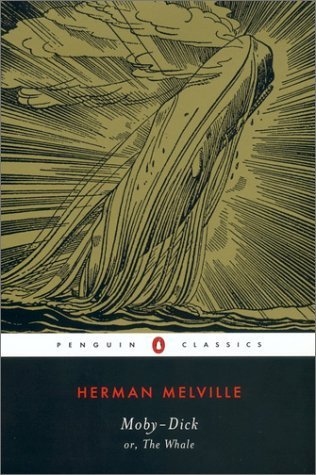
Moby-Dick, or, The Whale — Herman Melville
First published: October 18, 1851 (Richard Bentley London) / November 14, 1851 (Harper & Brothers New York)
Pages: 720 (Penguin Classics / Norton Critical Edition)
Goodreads: 3.57★ (622K+ ratings) · view
Audiobook runtime: ~24h William Hootkins / Naxos canonical English · ~21h Anthony Heald / Blackstone American-register · Frank Muller / Recorded Books historical · LibriVox free Stewart Wills / multiple readers
Commercial scale: 175 years continuous literary tradition (post-1920s critical revival) · foundational Great-American-Novel-debate central text · global public-domain · universally-assigned American-literature curriculum
Awards & Recognition: 1999 Modern Library '100 Best Novels' #17 · 2006 Time Magazine All-Time 100 Novels · 2015 BBC 'Greatest American Novels' expert-poll #1 · Harold Bloom Western Canon foundational-tier · F.O. Matthiessen American Renaissance foundational
Cultural position: John Huston 1956 film w/ Gregory Peck (Ahab) / Richard Basehart / Orson Welles (Father Mapple) / Leo Genn; Ray Bradbury co-screenwriter · Ron Howard 2015 In the Heart of the Sea Universal $100M w/ Chris Hemsworth / Cillian Murphy (Essex-whaleship historical backstory) · 1998 Patrick Stewart USA Network miniseries · 2011 William Hurt 4-part TV adaptation · 20+ historical adaptations across television / theater / opera / graphic-novel · 'Call me Ishmael' universally-cited opening line
Melville's 1851 American whaling-epic masterwork — Moby-Dick's 720-page 135-chapter narrative of Captain Ahab's obsessive monomaniacal pursuit of the white sperm whale Moby Dick aboard the Nantucket whaling ship Pequod, told through the survivor-narrator Ishmael from the famous 'Call me Ishmael' opening, the extensive multinational harpooneer-crew (Polynesian-Queequeg, Native American-Tashtego, African-Daggoo, Parsee-Fedallah), chief mate Starbuck's Quaker-moral-opposition, the 30+ extended cetology / philosophy / theology digressions interleaving with maritime-voyage narrative, the three-day climactic Chase of Moby Dick in the Pacific, the Pequod's ramming-and-sinking, Ahab's harpoon-entanglement-death, and the Job-quoted Epilogue 'And I only am escaped alone to tell thee' with Ishmael's coffin-buoy rescue by the Rachel — has been universally regarded as the central text of the American literary canon and the foundational Great-American-Novel since the 1920s critical revival, with William Hootkins's canonical 24h Naxos AudioBooks production widely-regarded as one of the greatest audiobook narrations ever recorded, the 1956 John Huston film w/ Gregory Peck / Orson Welles (Ray Bradbury co-screenplay) establishing the canonical visual-interpretation, Ron Howard's 2015 In the Heart of the Sea dramatizing the Essex-whaleship historical backstory that inspired Melville, and 175 years of continuous literary-critical / adaptation / environmental-humanities / ecocritical reinterpretation establishing Moby-Dick as one of the most-canonical works in world literature. Use CastReader AI TTS on Kindle Moby-Dick text →
Moby-Dick is Herman Melville's 1851 American novel about Captain Ahab's obsessive monomaniacal pursuit of the white sperm whale Moby Dick on the Nantucket whaling ship Pequod, narrated by Ishmael (a young American schoolteacher-turned-sailor). The famous opening 'Call me Ishmael' launches the shore-life chapters following Ishmael's December 1840s journey through New Bedford and Nantucket, his meeting with the South Pacific harpooneer Queequeg (Polynesian prince-in-exile from Kokovoko), and the Pequod's departure. The ship's elusive captain Ahab — aging Nantucket whaling master who lost his left leg to Moby Dick and now vows revenge — commands a multinational crew: chief mate Starbuck (Quaker moral-opposition), second mate Stubb (dark-humorist), third mate Flask (dismissive), and harpooneers Queequeg / Tashtego (Native American Gay Head) / Daggoo (African) / Fedallah (Zoroastrian Parsee mystic, Ahab's secret prophet-harpooneer). The narrative interleaves maritime-voyage narrative (shore chapters 1-22 → Pequod departure 23-28 → South Atlantic whaling 29-100 → Pacific-approach 101-132 → three-day Chase 133-135) with extended cetology / philosophy / Shakespearean-dramatic-digressions (approximately 30 chapters of essays on whaling / anatomy / history / theology). The Chase: Day 1 (Moby Dick sighted; three whaleboats destroyed); Day 2 (more whaleboats destroyed; Fedallah dies lashed to Moby Dick's flank); Day 3 (Moby Dick rams and sinks the Pequod; Ahab's harpoon-line entangles his neck and drowns him; Moby Dick escapes). Epilogue: Ishmael alone survives clinging to Queequeg's coffin-buoy; rescued by the Rachel (a ship earlier encountered seeking its own lost captain's son) — 'And I only am escaped alone to tell thee' (Book of Job). Melville's philosophical project: simultaneously whaling-voyage adventure, cetology encyclopedia, Shakespearean-tragic-drama (Melville obsessively re-read King Lear during composition), theological meditation on evil / free-will / providence, American-political allegory (Pequod as United States), psychological examination of obsession / monomania, meta-novel about narrative / authority / interpretation. Moby Dick the white whale is simultaneously: real natural phenomenon (albino sperm whales are documented), symbol of nature's indifference, symbol of evil (Ahab's view), symbol of divine providence (Starbuck's view), test-surface for readers' own interpretations. At ~24h William Hootkins / Naxos AudioBooks's production is the canonical audiobook; Anthony Heald / Blackstone runs ~21h American-register; LibriVox hosts free public-domain productions.
This guide covers the ~24h runtime, the 135-chapter structure, the cetology-digression-architecture, and every free / paid path.
Why ~24h Matters
American 19th-century-literature and epic-novel runtime and rating benchmark.
| Title | Runtime | Year | Goodreads rating |
|---|---|---|---|
| Moby-Dick (Melville) — this book | ~24h | 1851 | 3.57★ |
| The Scarlet Letter (Hawthorne) | 8h | 1850 | 3.42★ |
| Huckleberry Finn (Twain) | 10h | 1884 | 3.81★ |
| The Adventures of Tom Sawyer (Twain) | 7h 40m | 1876 | 3.93★ |
| Little Women (Alcott) | 19h | 1868 | 4.15★ |
| Uncle Tom's Cabin (Stowe) | 20h | 1852 | 3.90★ |
| The Portrait of a Lady (James) | 24h | 1881 | 3.78★ |
| The Red Badge of Courage (Crane) | 5h | 1895 | 3.38★ |
Takeaway: Moby-Dick's 3.57★ Goodreads rating is moderate relative to peer American-19th-century canon — reflecting the novel's substantial reading difficulty (cetology digressions, Shakespearean register-shifts, theological-philosophical depth) that divides first-time readers into those who love it and those who find it impenetrable. At 622K+ ratings Moby-Dick has among the highest total-engagement counts in American-literature canon. For first-time American-19th-century-literature listeners: Huckleberry Finn (Twain, 10h, accessible adventure) → The Scarlet Letter (Hawthorne, 8h, focused tragedy) → Moby-Dick (Melville, 24h, epic masterwork) forms the canonical American-Renaissance progression. Moby-Dick's 175 years of continuous critical-adaptation-reinterpretation, universal classroom assignment, and foundational Great-American-Novel-debate status establish it as one of the 10 most-important novels in world literature.
The 1851-2026 Trajectory
- 1819 August 1: Herman Melville born New York City
- 1841-1844: Melville signs on Acushnet whaler (1841); deserts in Marquesas; Polynesian experiences become Typee (1846) / Omoo (1847); Navy service on USS United States (1843-1844)
- 1846-1850: Early-career novels Typee / Omoo / Mardi / Redburn / White-Jacket establish Melville as popular sea-adventure novelist
- 1850 August: Melville meets Nathaniel Hawthorne in Massachusetts; Hawthorne-friendship transforms Moby-Dick composition — novel becomes philosophically-ambitious rather than popular sea-adventure
- 1851 October 18: The Whale (later Moby-Dick) published in London by Richard Bentley
- 1851 November 14: Moby-Dick, or, The Whale published in New York by Harper & Brothers; commercial failure; mixed-to-negative contemporary reviews
- 1852: Pierre published; commercial disaster; critical hostility
- 1856-1857: Melville writes The Confidence-Man and travels to Europe / Levant; turns to poetry
- 1866-1885: Melville works as New York customs inspector; writes poetry; dies 1891 virtually forgotten
- 1921: Raymond Weaver's Herman Melville: Mariner and Mystic biography — begins Moby-Dick critical revival
- 1923: D.H. Lawrence's Studies in Classic American Literature chapter on Moby-Dick; Van Wyck Brooks critical advocacy
- 1924: Billy Budd, Sailor posthumously published — transforms Melville's late-career reputation
- 1930: Rockwell Kent Lakeside Press illustrated edition — widely-praised canonical illustrated edition
- 1941: F.O. Matthiessen's American Renaissance — establishes Moby-Dick as American-Renaissance canonical foundational
- 1956 July 4: John Huston's Moby Dick film — Gregory Peck (Ahab) / Richard Basehart (Ishmael) / Orson Welles (Father Mapple); Ray Bradbury co-screenwriter; 3 Academy Award nominations
- 1988: Northwestern-Newberry scholarly edition — establishes current critical-reference Moby-Dick text
- 1998: Patrick Stewart USA Network miniseries
- 2000: Nathaniel Philbrick's In the Heart of the Sea — National Book Award-winning Essex-whaleship history
- 2008: Philip Hoare's Leviathan or the Whale — Samuel Johnson Prize-winning Moby-Dick ecocritical engagement
- 2011: William Hurt 4-part TV miniseries adaptation
- 2015 December 11: Ron Howard's In the Heart of the Sea — Universal $100M w/ Chris Hemsworth / Cillian Murphy / Benjamin Walker (Essex-whaleship historical backstory)
- 2020: Rebecca Giggs's Fathoms: The World in the Whale — contemporary ecocritical Moby-Dick engagement
- 2026 April: 175 years continuous literary tradition · foundational Great-American-Novel-debate central text · global public-domain · universally-assigned American-literature curriculum · continuing ecocritical / environmental-humanities reinterpretation
The 135-Chapter Structure
Understanding Melville's unusual architectural organization:
Shore-Life Chapters (1-22) — Ishmael's pre-voyage journey:
- Chapter 1 'Loomings' — famous opening 'Call me Ishmael'; New Bedford arrival
- Chapter 3 'The Spouter-Inn' — Queequeg encounter; sharing-the-bed scene (canonical queer-Americana)
- Chapter 9 'The Sermon' — Father Mapple's whaling sermon on Jonah (the novel's theological prelude)
- Chapters 15-21 — Nantucket arrival; Pequod signing-on; Captains Peleg and Bildad
- Chapter 22 'Merry Christmas' — Pequod departure
Pequod Early Voyage (23-40) — South Atlantic whaling introduction:
- Chapter 28 'Ahab' — Ahab's first on-deck appearance
- Chapter 32 'Cetology' — Melville's classification of whales (the first major cetology digression)
- Chapter 36 'The Quarter-Deck' — Ahab's doubloon-nailing speech; crew-oath to pursue Moby Dick
- Chapter 40 'Midnight, Forecastle' — Shakespearean-dramatic crew-scene with stage directions
Cetology-Philosophy-Narrative Interleaving (41-100):
- Chapter 41 'Moby Dick' — the title whale's narrative introduction
- Chapter 42 'The Whiteness of the Whale' — canonical philosophical chapter on whiteness-as-symbol (widely-cited as the novel's philosophical apex)
- Chapter 54 'The Town-Ho's Story' — first major gam (ship-meeting) encounter
- Chapters 55-105 — extensive cetology digressions interleaved with whaling-action scenes and gams (Jeroboam, Virgin, Rose-Bud, Samuel Enderby, Bachelor, Delight)
- Chapter 94 'A Squeeze of the Hand' — canonical chapter on spermaceti-squeezing and male-communal-tenderness
Pacific Approach (101-132) — gathering prophetic-foreshadowing:
- Chapters 101-110 — approach to Pacific; multiple ominous gams
- Chapter 119 'The Candles' — typhoon with St. Elmo's Fire; Ahab's defiance
- Chapter 132 'The Symphony' — Ahab-Starbuck final conversation (widely-studied philosophical apex)
The Chase (133-135) — three-day climactic conclusion:
- Chapter 133 'The Chase — First Day' — Moby Dick sighted; three whaleboats destroyed
- Chapter 134 'The Chase — Second Day' — more whaleboats destroyed; Fedallah dies lashed to Moby Dick's flank
- Chapter 135 'The Chase — Third Day' — Moby Dick rams and sinks Pequod; Ahab harpooned and drowned; Pequod crew all die
Epilogue — 'And I only am escaped alone to tell thee' — Ishmael's coffin-buoy rescue by the Rachel
135 chapters, approximately 206,052 words. The Melville textbook canonical set-pieces: Chapter 1 'Loomings' opening, Chapter 9 'The Sermon' Mapple's Jonah sermon, Chapter 28 Ahab's first appearance, Chapter 36 'The Quarter-Deck' doubloon-nailing, Chapter 42 'The Whiteness of the Whale' philosophical apex, Chapter 132 'The Symphony' Ahab-Starbuck, Chapters 133-135 'The Chase' three-day conclusion, Epilogue — widely studied as the novel's eight structural pillars.
Every Way to Listen
- William Hootkins / Naxos AudioBooks — ~24h canonical first-listen English (widely-regarded as one of the greatest audiobook narrations ever recorded)
- Anthony Heald / Blackstone Audio — ~21h American-register alternative canonical
- Frank Muller / Recorded Books — historically-significant earlier production
- LibriVox free public-domain — Stewart Wills complete recording; various multi-reader community productions
- Audible Premium 1-2 credits — ~$14.95-$29.90 covers any commercial production
- Audible purchased audiobook — $20-30 for Hootkins ~24h canonical
- Libby (U.S. libraries) — 0-2 week wait; Hootkins / Naxos and Heald / Blackstone both reliably stocked
- Hoopla — American-Renaissance catalog
- Spotify Premium audiobook — 24h exceeds 15h monthly allocation (requires 2-month cross-month rollover)
- LibriVox free — zero-cost public-domain path (Moby-Dick is universal public-domain since Melville's 1891 death)
- Project Gutenberg free Kindle — multiple editions including Rockwell Kent illustrated
- Purchased Kindle edition — $8-15 Penguin Classics / Norton Critical Edition (extensive footnotes) / Oxford World's Classics
- CastReader AI TTS with Kindle Moby-Dick edition — unlimited re-listens, adjustable pace
Moby-Dick's global public-domain status means comprehensive free-path options.
Libby Wait Times (April 2026)
Survey of major U.S. library networks as of April 2026.
- NYPL / Brooklyn Public Library: 0-2 week wait (Hootkins / Naxos and Heald / Blackstone both prominently stocked; universal American-literature curriculum)
- Los Angeles Public Library: 0-2 week wait
- Chicago Public Library: 0-2 week wait
- Seattle Public Library: 0-2 week wait
- Boston Public Library: 0-2 week wait (New England American-Renaissance curriculum particular emphasis; Nantucket / New Bedford historical connection)
- Fall semester surge: September-November waits typically extend to 2-3 weeks as American-literature undergraduate courses assign
Moby-Dick has short library waits outside academic-year peaks — its universal-canonical-assignment status ensures every major US library system carries multiple digital copies; Libby is strongly-recommended free path. LibriVox Stewart Wills is the zero-wait free path.
Why Kindle + CastReader Suits Moby-Dick
Moby-Dick's 135-chapter structure and substantial ~24h runtime make it particularly well-suited to CastReader AI TTS — 2-3 week evening-session consumption pattern rewards pause-and-resume bookmark flexibility across cetology-narrative interleaving, and the novel's universal classroom-canonical status means American-literature students commonly re-read across semesters.
Listeners commonly return to:
- Chapter 1 'Loomings' opening ('Call me Ishmael' — universally-cited as one of the most-famous opening lines in world literature)
- Chapter 3 'The Spouter-Inn' (Queequeg encounter; canonical queer-Americana scholarly-read)
- Chapter 9 'The Sermon' (Father Mapple's Jonah-whaling sermon; the novel's theological prelude)
- Chapter 28 Ahab's first on-deck appearance
- Chapter 36 'The Quarter-Deck' (doubloon-nailing speech; crew-oath to pursue Moby Dick)
- Chapter 41 'Moby Dick' (title whale's narrative introduction)
- Chapter 42 'The Whiteness of the Whale' (canonical philosophical chapter on whiteness-as-symbol; widely-cited as the novel's philosophical apex; foundational for 20th-century American-philosophical-literary engagement)
- Chapter 94 'A Squeeze of the Hand' (spermaceti-squeezing and male-communal-tenderness; canonical queer-Americana chapter)
- Chapter 132 'The Symphony' (Ahab-Starbuck final conversation; philosophical apex)
- Chapters 133-135 'The Chase' (three-day climactic conclusion; Moby Dick destroying whaleboats and Pequod; Ahab's harpoon-entanglement-death)
- Epilogue ('And I only am escaped alone to tell thee' — universally-quoted Book-of-Job closing; Ishmael's coffin-buoy rescue by the Rachel)
For ecocritical / environmental-humanities engagement: CastReader's cross-book bookmarking supports Moby-Dick → Philip Hoare's Leviathan → Nathaniel Philbrick's In the Heart of the Sea → Rachel Carson's The Sea Around Us → Rebecca Giggs's Fathoms ecocritical-canon progression.
CastReader's pronunciation overrides handle Melville's extensive multinational-maritime-mythological proper-noun catalog: Ishmael (ISH-mah-el), Ahab (AY-hab), Queequeg (KWEE-kwegg), Starbuck (STAR-buk), Stubb (STUB), Flask (FLASK), Tashtego (tash-TEE-go), Daggoo (DAG-oo), Fedallah (feh-DAH-lah), Pip (PIP), Peleg (PEH-leg), Bildad (BIL-dad), Mapple (MAP-pul), Pequod (PEE-kwod), Moby Dick (MOH-bee DIK), Nantucket, New Bedford, Martha's Vineyard, Cape Horn, Japan-Cruising-Ground, Sperm Whale (Physeter macrocephalus), Right Whale (Eubalaena), cetology, harpoon, flensing, try-works, gam, Leviathan, the Rachel, Jonah, Kokovoko, Typee / Omoo / Marquesas. CastReader handles Melville's multilingual-mythological register including Polynesian (Queequeg, Kokovoko), Biblical (Ahab, Ishmael, Leviathan, Jonah, Rachel), Zoroastrian-Parsee (Fedallah), and Native American (Tashtego) character-names.
Send to Phone for American-Literature Progression
At ~24h Moby-Dick requires sustained commitment. Send to Phone preserves CastReader position across device switches — complete shore-life Chapters 1-22 during weekday commutes week 1, early-voyage Chapters 23-60 during weekend sessions week 1-2, cetology-interleaving Chapters 61-132 during weeks 2-3, and Chase Chapters 133-135 + Epilogue during final session for a 2-3 week total consumption. For American-Renaissance companion-progression, completing Moby-Dick (24h) and proceeding to The Scarlet Letter (Hawthorne, 8h), Huckleberry Finn (Twain, 10h), Leaves of Grass (Whitman, 13h), and Walden (Thoreau, 10h) forms the canonical American-Renaissance-immersion rhythm.
Limitations and Honest Notes
- Melville's register-shifts — chapters alternate between Ishmael's accessible meditative-narrator voice, Ahab's elevated Shakespearean-Lear register, and extended cetology / philosophy essays written in scientific / theological / Miltonic prose; readers expecting consistent-narrative voice commonly struggle
- Extended cetology digressions — approximately 30 chapters (Chapters 32-105 interspersed) are extended essays on whaling / anatomy / history / philosophy rather than plot-narrative; many first-time readers skip these chapters, though scholarly consensus holds the digressions are integral to Melville's novel-as-encyclopedia architecture; readers encountering Moby-Dick expecting continuous-plot structure should be forewarned
- Theological-philosophical depth — Melville's Calvinist-versus-Enlightenment engagement, Miltonic-allusions, and Shakespearean-dramatic structure demand literary-historical context; Norton Critical Edition footnotes substantially help
- Vocabulary demand — maritime / whaling / cetological / theological technical vocabulary is extensive (flensing, try-works, cetus, ambergris, spermaceti, harpoon, gaff, lash, aft, fo'c'sle, quarter-deck); contemporary editions include glossaries
- Content considerations — graphic whaling violence (Chapter 61 'Stubb Kills a Whale,' multiple-chapter cetology-anatomy explicit descriptions of whale-slaughter at industrial scale that contemporary ecocritical scholarship reads as environmental-destruction precedent); period-specific frames around Pacific-indigenous peoples (Queequeg treated sympathetically but the 'cannibal' frame is period-specific); implicit-homoerotic Ishmael-Queequeg bedroom scene in Chapter 3 (scholarly-read as canonical queer-Americana); Ahab's monomania themes; Pip's mental-breakdown after ocean-abandonment (Chapter 93); total Pequod-crew death and universe-indifferent-nature theme may feel darker than expected
- The 3.57★ Goodreads rating reflects the novel's polarizing structure — Moby-Dick divides first-time readers sharply between those who love Melville's encyclopedic ambition and those who find the cetology-digressions unbearable; readers entering with realistic expectations of the digression-structure fare significantly better
- 1956 Huston film (Gregory Peck, 116 minutes) substantially compresses the novel's philosophical depth — readers should NOT treat film adaptations as substitute for reading the complete novel; the 2011 William Hurt 4-part miniseries covers more novel content but still necessarily truncates
Related Reading
- Listen to Kindle — CastReader's Kindle-to-TTS path
- Send to Phone — cross-device position sync
- Kindle Text to Speech — Kindle TTS options overview
- Turn Kindle into Audiobook Free — free audiobook paths
- The Scarlet Letter (Hawthorne) Audiobook Guide — American Renaissance peer; 1850
- Huckleberry Finn (Twain) Audiobook Guide — Great American Novel companion-candidate; 1884
- Leaves of Grass (Whitman) Audiobook Guide — American Renaissance poetry peer; 1855
- One Hundred Years of Solitude (García Márquez) Audiobook Guide — Latin American great-novel peer engaging encyclopedic-novel tradition
