Madame Bovary Text to Speech: Free Audio for Gustave Flaubert's Realist French Adultery Tragedy
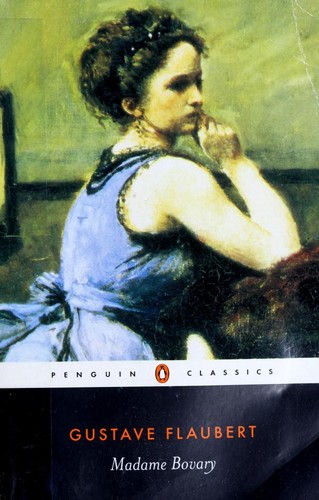
Author: Gustave Flaubert (1821-1880, 5 novels + Three Tales + correspondence, Rouen Normandy-born / Croisset-based, canonical French Realist + mot-juste stylist pioneer, Maupassant's literary godfather, taught / influenced James, Joyce, Nabokov, Kundera) Published: Revue de Paris serialization October 1 – December 15, 1856 · Michel Lévy Frères book edition April 1857 (after the 1857 obscenity trial acquittal) Pages: 329 (Penguin Classics Lydia Davis 2010 translation) · Goodreads: 3.71★ / 280K ratings Audiobook: Juliet Stevenson · Naxos AudioBooks · 16h 13m (canonical, Alan Russell 1950 translation) · Kate Winslet · Audible Studios 2016 · 15h 2m (Lydia Davis 2010 translation) · Edith Grossman · Penguin Audio · 15h 40m (alt) · Françoise Gillard · Audiolib 2014 · 14h 6m (French original) Awards: 1857 Obscenity Trial Acquittal (Flaubert + Revue de Paris editor Léon Laurent-Pichat + printer Auguste-Alexis Pillet acquitted February 7, 1857 by prosecutor Ernest Pinard — landmark French literary free-speech precedent) · Modern Library 100 Best Novels of the 20th Century (Board list) · Le Monde 100 Books of the Century · Harold Bloom Western Canon · BBC 100 Novels That Shaped Our World · Guardian 100 Greatest Novels · Time 100 Best Novels · AP French Literature + comparative-literature + Realism-canon required reading · 3M+ copies global · 40+ language translations · Henry James: 'the masterpiece of French fiction' · Vladimir Nabokov's Cornell 'three greatest modern novels' (w/ Anna Karenina + Ulysses) Adaptations: 1949 MGM film (Vincente Minnelli directing, Robert Ardrey screenplay, Jennifer Jones as Emma + Van Heflin as Charles Bovary + Louis Jourdan as Rodolphe Boulanger + James Mason as Flaubert in trial framing + Christopher Kent as Léon Dupuis + Gene Lockhart as Homais, 115 minutes, $2.2M budget / $2.3M box office, 1 Oscar nomination Best Art Direction–Set Decoration B&W) · 1991 French film (Claude Chabrol directing + screenplay, 140 minutes, MK2/Canal+, Isabelle Huppert as Emma + Jean-François Balmer as Charles + Christophe Malavoy as Rodolphe + Lucas Belvaux as Léon + Jean Yanne as Homais, 1991 Prix Louis-Delluc Best Director nomination, widely-considered the most-faithful Bovary adaptation) · 2014 film (Sophie Barthes directing, 118 minutes, Alchemy Films, Mia Wasikowska as Emma + Henry Lloyd-Hughes as Charles + Logan Marshall-Green as Rodolphe + Ezra Miller as Léon + Paul Giamatti as Homais + Rhys Ifans as Lheureux) · 2000 BBC miniseries (Tim Fywell directing, 2×90 min, Heidi Thomas screenplay, Frances O'Connor as Emma + Hugh Bonneville as Charles + Greg Wise as Rodolphe) · 2021 Sterlin Harjo short film adaptation · multiple French TV adaptations 1958-1978 including Jean-Daniel Verhaeghe 1974 French TV
Gustave Flaubert's Madame Bovary is the canonical French Realist novel. Serialized in the Revue de Paris from October to December 1856 — prosecuted for obscenity by Ernest Pinard in January 1857 alongside Baudelaire's Les Fleurs du Mal six months later — acquitted February 7, 1857 in a landmark French literary free-speech precedent — and published as a Michel Lévy Frères book in April 1857, Madame Bovary has sold 3 million copies across 40+ languages. Henry James called it "the masterpiece of French fiction"; Nabokov taught it at Cornell as one of his "three greatest modern novels" (with Anna Karenina and Ulysses); Harold Bloom placed it in the Western Canon core. Claude Chabrol's 1991 film starring Isabelle Huppert is the most-faithful adaptation; Sophie Barthes's 2014 film with Mia Wasikowska is the most-recent English-language treatment. If you own the Kindle or EPUB copy and want to hear Juliet Stevenson's canonical 16-hour Naxos narration (Alan Russell translation) or Kate Winslet's 15-hour Audible edition of Lydia Davis's 2010 translation while you commute, cook, or walk, use CastReader AI TTS to convert your copy to unabridged audio for free →.
Emma Rouault, the beautiful farm-daughter of a Norman farmer, marries Charles Bovary, a country doctor whose dullness and mediocrity quickly bore her. Raised on romantic novels and convent-school keepsake-album poetry — Walter Scott, Lamartine, Chateaubriand — Emma expects marriage to be passionate, luxurious, and poetic. In Tostes (Part 1) and then Yonville-l'Abbaye (Parts 2-3, a fictional Normandy village), she realizes Charles will never be what her romantic imagination demands. She takes refuge in luxury purchases on credit (enabled by Lheureux, the silk merchant), in a first affair with Rodolphe Boulanger (wealthy landowner, seduces her at the Agricultural Fair in Part 2 Chapter 8 — Flaubert's most-anthologized set piece with its simultaneous seduction-and-agricultural-prize double dialogue, abandons her when she proposes to elope to Italy), and in a second affair with Léon Dupuis (law clerk, Rouen-hotel assignations weekly). As her debts mount to 8,000 francs and Lheureux threatens bankruptcy and seizure, Emma begs Rodolphe, Léon, and Binet the tax-collector for money — all three refuse. She steals arsenic from Homais's pharmacy (Homais is the pretentious-progressive village pharmacist, the novel's comic-villain, who receives the Legion of Honor in the final chapter — Flaubert's ultimate ironic detail) and dies slowly over three days. Charles discovers her letters to Rodolphe and Léon, collapses emotionally, dies a year later. Their orphaned daughter Berthe is sent to work in a cotton mill.
Flaubert worked on the manuscript for 4 years 7 months (September 1851 to April 1856), averaging 200 words per day, reading every sentence aloud in his gueuloir (roaring room at Croisset, his Normandy estate) to test rhythm. He pioneered le mot juste (the exact word) and le style indirect libre (free indirect discourse) — narrative techniques that would define 20th-century fiction from Joyce to Hemingway.
Why 16 Hours 13 Minutes Matters
Madame Bovary's prose is Flaubert's obsessive mot-juste construction — every sentence rhythm-tested in his gueuloir. Juliet Stevenson's canonical Naxos edition handles the Rouen-opera-Lagardy scene, the Agricultural Fair double-dialogue (Part 2 Chapter 8), the Homais comic-pharmacist chapters, and Emma's arsenic-death scene with distinct vocal textures. Kate Winslet's Audible Studios narration of Lydia Davis's 2010 translation is the contemporary consensus — Davis's translation won the 2010 PEN Translation Prize. CastReader's AI narration is cleaner for classroom-use and first-pass comparative-literature reading; Stevenson or Winslet are recommended for nuanced re-listen.
| Book | Audiobook Length | Goodreads | Why Listeners Compare |
|---|---|---|---|
| Madame Bovary (Flaubert, 1856) | 16h 13m | 3.71★ / 280K | Yonville Normandy / Emma-Rodolphe-Léon / arsenic |
| Anna Karenina (Tolstoy, 1877) | 35h 35m | 4.12★ / 800K | St Petersburg-Moscow / Anna-Vronsky / train |
| The Red and the Black (Stendhal, 1830) | 19h 7m | 3.78★ / 85K | Verrières-Besançon-Paris / Julien Sorel / carbonari |
| Sentimental Education (Flaubert, 1869) | 15h 16m | 3.69★ / 30K | 1848 Paris / Frédéric Moreau / Mme Arnoux |
| Old Goriot (Balzac, 1835) | 8h 25m | 3.93★ / 45K | 1819 Paris Pension Vauquer / Rastignac / Goriot |
| The Awakening (Chopin, 1899) | 6h 10m | 3.66★ / 150K | Grand Isle Louisiana / Edna Pontellier / Bovary-Amer |
| The House of Mirth (Wharton, 1905) | 12h 9m | 3.99★ / 80K | 1905 Manhattan / Lily Bart / Rosedale |
8 Key Elements of the Novel
- Emma Rouault Bovary — Norman farmer's daughter, convent-educated, saturated by romantic novels. Marries Charles expecting passion, finds only dullness. Isabelle Huppert 1991 film portrayal is canonical.
- Charles Bovary — Country doctor in Tostes, then Yonville. Dull, adoring, mediocre. Jean-François Balmer's 1991 portrayal captures his kind stolidity. The novel's most-quoted first sentence — "Nous étions à l'étude, quand le proviseur entra" ("We were in class when the headmaster came in") — introduces Charles, not Emma.
- Rodolphe Boulanger — Wealthy landowner, Emma's first lover. Seduces her at the Agricultural Fair (Part 2 Chapter 8 — Flaubert's double-dialogue masterpiece). Abandons her via a letter signed 'Votre ami' with a peach-juice tear.
- Léon Dupuis — Law clerk, Emma's second lover. Rouen-hotel weekly assignations. Flees to Paris when Emma's debts surface. Emma's last-gasp request for money — he refuses.
- Homais — Yonville pharmacist, pretentious-progressive, anti-clerical. The novel's comic-villain. Receives the Legion of Honor in the final chapter (Flaubert's ultimate ironic sting). Paul Giamatti 2014 portrayal.
- Lheureux — Silk merchant / usurer. Enables Emma's debts (8,000 francs) through promissory notes. Triggers the bankruptcy seizure that drives Emma to suicide. Rhys Ifans 2014 portrayal.
- The Agricultural Fair (Part 2 Chapter 8) — Flaubert's most-anthologized passage. Rodolphe seduces Emma in the town hall window while the Councillor intones agricultural prizes below. The double dialogue — "sheep fattening…" / "our souls…" — is Flaubert's formal invention.
- Arsenic — Homais's pharmacy. Emma's suicide method. Flaubert based the slow-death scene on consultations with his friend Achille-Cléophas Flaubert (his father, Rouen hospital chief surgeon). The 3-day agonal dying is clinically accurate.
How to Listen to Madame Bovary with CastReader
- Own a Kindle or EPUB copy — Penguin Classics Lydia Davis 2010 translation recommended (PEN Translation Prize winner) for contemporary readers; Penguin Alan Russell 1950 for classic Victorian-feel; Geoffrey Wall 1992 for academic comparative-literature reference; Eleanor Marx-Aveling 1886 free on Gutenberg for historical first-English-translation interest.
- Upload to CastReader — paste the text, select Jenny/Aria voice (Emma's romantic-delusion interior monologues work well with Aria's breathier tone, Homais's pompous register with Guy Neural, Rodolphe's seductive-cynical register with Davis or Ryan). CastReader handles Flaubert's 3-part / 35-chapter structure.
- Listen at your pace — 0.5×–3× control. First-time listeners: 0.85× for the Agricultural Fair double-dialogue (Part 2 Chapter 8) and Emma's arsenic-death scene (needs careful pacing); 1× for most chapters; 1.5-2× for the Homais pharmacy-register chapters and Yonville village-politics passages.
- Use the sleep timer — 16-hour unabridged pacing. Good for 4-5 evenings of commute + bedtime listening. The Agricultural Fair scene and the Rouen-opera Lagardy scene are ideal for single long walks or drives.
Flaubert's Realist Legacy
Madame Bovary pioneered the Realism movement that would dominate Western fiction for 70 years. Its direct descendants: Zola's Naturalism (Thérèse Raquin 1867, Nana 1880, Germinal 1885 — Zola dedicated his career to Flaubert's mot-juste method), Maupassant's short stories (Flaubert was Maupassant's godfather and writing mentor 1867-1880), Tolstoy's Anna Karenina (1877 — the Russian adultery-Realist companion, explicit Bovary comparison in criticism), George Eliot's Middlemarch (1871-72 — the English Realist counterpart), Henry James's Portrait of a Lady (1881 — James called Bovary 'the masterpiece of French fiction'), and Theodor Fontane's Effi Briest (1894 — the German-Bovary with near-identical arc). In the 20th century: Joyce's Dubliners (1914 — explicit Flaubertian homage, mot-juste method), Hemingway's iceberg theory (Flaubert-descended), Nabokov's Lolita (1955 — Nabokov taught Bovary at Cornell), Mario Vargas Llosa's The Perpetual Orgy (1975 — book-length Bovary homage).
Flaubert's 1857 obscenity trial was the 19th-century literary-free-speech landmark, preceding Baudelaire's Les Fleurs du Mal trial (same prosecutor, six months later — Baudelaire convicted), Hugo's Les Misérables free circulation (1862), and D.H. Lawrence's Lady Chatterley's Lover trials (1959-60).
Listen Free Today
Madame Bovary is the canonical French Realist novel — Yonville's provincial-bourgeois mediocrity, Emma's romantic-delusion adultery arc, the Agricultural Fair double-dialogue masterpiece, Rodolphe's peach-juice-teared abandonment letter, Léon's Rouen-hotel assignations, Homais's comic-villain Legion of Honor, the slow arsenic-death scene. Whether you're encountering Flaubert for the first time or revisiting after watching the Chabrol 1991 or Barthes 2014 films, audio brings Flaubert's mot-juste prose and Emma's interior monologues to life. Start listening free with CastReader → — upload your Kindle or EPUB copy, pick a voice, and Emma is arriving at Yonville in sixty seconds.
Related reading:
- Anna Karenina text to speech → — Tolstoy's Russian adultery-Realist companion
- The Stranger text to speech → — Camus's French existentialist companion
- Lolita text to speech → — Nabokov's Humbert-Bovary descent-companion
- Kindle text to speech (Free) — full guide to Kindle + TTS
- Audible alternative free — other free audiobook paths