The Stranger Text to Speech: Free Audio for Albert Camus's Algerian-French Existentialist Masterwork
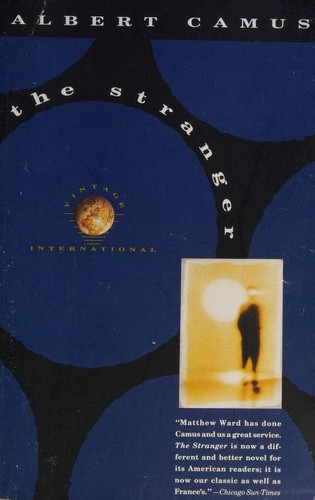
Author: Albert Camus (1913-1960, born Mondovi French Algeria now Dréan to pied-noir French-Algerian family — widowed mother Catherine Sintès Camus with partial hearing loss, raised in Belcourt Algiers working-class neighborhood, University of Algiers philosophy 1936, tuberculosis-survivor, Resistance-activist WWII editor of Combat newspaper, 4 novels + philosophical essays + plays + journalism career, 1957 Nobel Prize in Literature winner (second-youngest Nobel laureate ever at age 43), car-crash death January 4 1960 near Sens France, age 46) Published: May 19, 1942 (Gallimard Paris — during Nazi Occupation of France, under German censorship) · Stuart Gilbert English translation 1946 (Hamish Hamilton UK / Knopf US) · Matthew Ward 1988 translation canonical English (Vintage International) Pages: 123 · Goodreads: 4.02★ / 850K ratings Audiobook: Jonathan Davis · Blackstone Audio 2009 · 3h 28m (canonical Matthew Ward translation) · Jonathan Cake · Random House Audio 2003 · 3h 24m (alt, AudioFile Earphones Award) · Frank Muller · Recorded Books · 3h 48m (alt) Awards: 1957 Nobel Prize in Literature (for Camus career) · Modern Library 100 Best Novels 20th Century #94 · Le Monde 100 Books of the Century #1 · Time 100 Best English-Language Novels 1923-2005 · BBC 100 Novels That Shaped Our World · Harold Bloom Western Canon · Observer 100 Greatest Novels · AP English Literature + AP French Literature + IB HL + Philosophy-survey canonical · 10M+ copies global · 60+ language translations · defining literary work of absurdism philosophy · Kamel Daoud Meursault Investigation 2013 counter-narrative won 2015 Prix Goncourt du Premier Roman Adaptations: 1967 Paramount / Dino de Laurentiis film (Luchino Visconti directing, Suso Cecchi d'Amico + Luchino Visconti + Georges Conchon + Emmanuel Roblès screenplay, Marcello Mastroianni as Meursault + Anna Karina as Marie Cardona + Bernard Blier as the Defense Lawyer + Bruno Cremer as the Chaplain + Pierre Bertin as the Judge + Georges Geret as Raymond Sintès + Angela Luce + Georges Wilson + Alfred Adam, 110 minutes, Italian-French Algiers-shot, Venice Film Festival 1967 In-Competition entry + 1968 Nastro d'Argento Best Director + Best Cinematography) · 2020 Romain Roll stage adaptation Paris Théâtre de la Gaîté-Montparnasse · 1991 Zaentz-Film abandoned Hollywood adaptation (Saul Zaentz producing, James Dean replacement never cast) · Classical music: Krzysztof Penderecki 1966 Die Teufel von Loudun choral cantata adapted some themes · Kamel Daoud 2013 Meursault Investigation counter-narrative novel is itself a literary response-adaptation
Albert Camus's The Stranger is the defining novel of French absurdism. Published May 1942 by Gallimard during Nazi Occupation and selling 10 million copies across 60 languages, its Le Monde 100 #1 ranking, Time 100, BBC 100, and Modern Library 100 cement its canonical status. Camus received the 1957 Nobel Prize in Literature at age 43, becoming the second-youngest Nobel laureate in history. Luchino Visconti's 1967 Paramount film (Venice 1967 In-Competition, 1968 Nastro d'Argento Best Director + Best Cinematography) starring Marcello Mastroianni and Anna Karina remains the only major feature adaptation. Algerian-French novelist Kamel Daoud's 2013 The Meursault Investigation (Prix Goncourt du Premier Roman 2015) retells the story from the Arab's younger brother's perspective, reigniting post-colonial debate about Camus's French-Algerian pied-noir perspective. If you own the Kindle or EPUB copy and want to hear Jonathan Davis's canonical 3.5-hour narration while you commute, garden, or cook, use CastReader AI TTS to convert your copy to unabridged audio for free →.
The novel is structured in two parts. Part 1 (6 chapters, 18 days): Meursault, a 30-year-old French-Algerian office clerk in Algiers, receives a telegram. 'Maman died today. Or maybe yesterday, I can't be sure.' He attends the funeral at Marengo Nursing Home (60 miles away), refuses to see the body, smokes and drinks coffee during the vigil. The next day he attends a comedy film with former colleague Marie Cardona. They swim at the beach and begin a sexual affair. Across 18 days Meursault befriends his shady neighbor Raymond Sintès (a pimp), who writes a letter luring his estranged Moorish girlfriend to an assault, then has Meursault witness his beating of her. Brothers of the assaulted woman follow Raymond. On a Sunday beach-shack trip with Raymond and his friend Masson, Meursault and Raymond encounter two Arab men (the brothers of Raymond's girlfriend). A fight ensues; Raymond is stabbed; the Arabs flee. Later that afternoon Meursault returns alone to the beach in blinding heat, encounters one of the Arabs (with a knife), is blinded by sun-glare reflecting off the knife, and shoots him once. After a pause — 'the trigger gave way' — he shoots 4 more times into the unmoving body. Part 2 (5 chapters, months of pre-trial detention and trial): Meursault in prison, the examining magistrate who cannot understand Meursault's emotional-indifference, the prosecutor who in court constructs Meursault's character through his failure to weep at his mother's funeral, the chaplain's attempts at religious conversion, Meursault's refusal of false-confession, and the closing monologue: 'I opened myself to the gentle indifference of the world. Finding it so much like myself — so like a brother, really — I felt that I had been happy and that I was happy again. For everything to be consummated, for me to feel less alone, I had only to wish that there be a large crowd of spectators the day of my execution and that they greet me with cries of hate.'
Camus drafted the novel 1938-1940 in Algiers and Paris and published it May 1942 with Gallimard — during Nazi Occupation of France. The companion philosophical essay The Myth of Sisyphus (October 1942) theorizes the 'absurd' concept the novel illustrates. Jean-Paul Sartre's 1943 review 'Explication de L'Étranger' in Cahiers du Sud praised the novel extensively and began the Camus-Sartre friendship that would break 1952 over Camus's The Rebel. Camus won the Nobel in 1957 and died in a January 4 1960 car-crash age 46, his unfinished autobiographical novel The First Man in the glove compartment (published posthumously 1995).
Why 3 Hours 28 Minutes Matters
The Stranger is one of the shortest canonical novels of the 20th century — 123 pages. The brevity matches Camus's zero-degree-writing prose style: short sentences, passé-composé tense, minimal metaphor. Jonathan Davis's canonical Blackstone Audio edition handles Meursault's philosophical-indifference register perfectly — neither apathetic nor cold, but absurdist-aware. The Algiers-beach sun-hallucination chapter (Part 1 Chapter 6) and the closing prison-monologue are especially well-performed. CastReader's AI narration is excellent for classroom re-read at 1× or 1.25×; Davis is recommended for first-pass to hear Meursault's voice as a trained actor interpreted it. Camus's original French reading (available via Gallimard/BnF archives) is worth seeking for French-fluent listeners.
| Book | Audiobook Length | Goodreads | Why Listeners Compare |
|---|---|---|---|
| The Stranger (Camus, 1942) | 3h 28m | 4.02★ / 850K | Algiers / Meursault / absurdism / 'Maman died today' |
| The Plague (Camus, 1947) | 11h 14m | 4.04★ / 320K | Oran quarantine / Dr. Rieux / Nazi-Occupation-allegory |
| The Fall (Camus, 1956) | 3h 25m | 4.01★ / 120K | Amsterdam / Jean-Baptiste Clamence monologue |
| The Myth of Sisyphus (Camus, 1942) | 5h 0m | 4.24★ / 100K | Philosophical-essay-companion / 'Sisyphus happy' |
| Nausea (Sartre, 1938) | 8h 46m | 3.76★ / 80K | Bouville / Antoine Roquentin existentialist debut |
| The Trial (Kafka, 1925) | 7h 48m | 3.99★ / 460K | Josef K. / Prague / surreal-bureaucracy-prosecution |
| Notes from Underground (Dostoevsky, 1864) | 5h 15m | 4.21★ / 360K | St. Petersburg / anonymous-narrator / spite-man |
8 Key Elements of the Novel
- Meursault — 30-year-old Algiers office clerk. First-person narrator. Refuses to lie about his emotions. Shoots the Arab on the beach; convicted at trial more for failing to cry at his mother's funeral than for the murder itself. Marcello Mastroianni 1967 Visconti film portrayal.
- 'Maman died today' — opening line. 'Aujourd'hui, maman est morte.' Variations of translation: 'Mother died today' (Stuart Gilbert 1946), 'Maman died today' (Matthew Ward 1988 canonical). The French 'maman' (informal-intimate) vs 'mère' (formal) is untranslatable; Ward's decision to keep the French word is canonical.
- Marie Cardona — Meursault's former colleague. Brief affair begins the day after his mother's funeral. Proposes marriage; Meursault agrees while noting indifference. Anna Karina 1967 portrayal.
- Raymond Sintès — Meursault's shady neighbor. Pimp. Writes the letter that precipitates the Moorish girlfriend's assault. Georges Geret 1967 portrayal.
- The Arab — unnamed victim. The brother of Raymond's assaulted girlfriend. Meursault shoots him 5 times on the beach. Kamel Daoud's 2013 Meursault Investigation retells the story from the Arab's brother's perspective, naming him 'Moussa.'
- The beach shooting — Part 1 Chapter 6. The novel's climactic scene. Meursault in blinding sun, sweat-blinded, encounters the Arab with a knife. 'It was because of the sun.' (His courtroom confession.) The unmotivated-by-malice-but-caused-by-absurd-circumstance murder.
- The courtroom prosecutor — Part 2. Constructs Meursault's character from his failure to weep at his mother's funeral, his affair with Marie the day after, his cigarette during the vigil. The moral-monstrosity-narrative that produces the death sentence.
- 'The gentle indifference of the world' — closing monologue. 'I opened myself to the gentle indifference of the world.' The novel's most-quoted line. Meursault's absurdist serenity in facing his execution. Camus's illustration of the 'Sisyphean happiness' theorized in The Myth of Sisyphus.
How to Listen to The Stranger with CastReader
- Own a Kindle or EPUB copy — Vintage International's Matthew Ward translation 1988 is the canonical English edition. For French readers, the Gallimard Folio 1972 edition is essential.
- Upload to CastReader — paste the text, select Guy Neural voice (Meursault's register works well with Guy, the trial chapters can shift to a more authoritative Tony). CastReader handles the Part 1 (Algiers-daily-life) and Part 2 (prison-trial) tonal shifts cleanly.
- Listen at your pace — 0.5×–3× control. First-time listeners: 0.85× for the opening 'Maman died today' passage, the beach shooting, and the closing 'gentle indifference of the world' monologue — Camus's pared-down prose rewards slow absorption. 1.25-1.5× for most chapters.
- Use the sleep timer — 3.5-hour unabridged pacing. Good for a single evening of commute + bedtime listening. Re-read value is high because Camus's patterned imagery (sun, sea, light, silence) reveals itself only on 2nd and 3rd passes.
Camus's Absurdist Legacy
The Stranger pioneered French absurdist literary fiction — a genre that would define 20th-century French and international literary fiction. Its direct descendants include Jean Genet's Miracle of the Rose (1946), Samuel Beckett's Waiting for Godot (1953), Eugène Ionesco's The Bald Soprano (1950), Harold Pinter's The Birthday Party (1957), Tom Stoppard's Rosencrantz and Guildenstern Are Dead (1967), and in fiction: Iris Murdoch's Under the Net (1954), J.D. Salinger's Catcher in the Rye (1951), Paul Auster's New York Trilogy (1987). The Algerian-French pied-noir post-colonial debate continues — Kamel Daoud's 2013 Meursault Investigation is the canonical counter-narrative. The philosophical 'absurdism' Camus codified in The Myth of Sisyphus has become a standard undergraduate-philosophy concept.
Camus is one of the canonical 20th-century French philosophical novelists alongside Jean-Paul Sartre, Simone de Beauvoir, and Samuel Beckett. His 4-novel corpus (The Stranger 1942, The Plague 1947, The Fall 1956, The First Man 1995 posthumous) plus his philosophical essays continue to anchor undergraduate and graduate French-literature + Philosophy curricula worldwide.
Listen Free Today
The Stranger is the canonical French absurdist novel — Meursault's Algiers-clerk indifference, the opening 'Maman died today,' the blinding Algiers-beach sun-hallucination shooting, the courtroom prosecution of his emotional-monstrosity, and the closing 'gentle indifference of the world' monologue. Whether you're encountering Camus for the first time or revisiting after reading Kamel Daoud's counter-narrative, audio brings Camus's pared-down prose and Meursault's absurdist register to life. Start listening free with CastReader → — upload your Kindle or EPUB copy, pick a voice, and Meursault is receiving the telegram in sixty seconds.
Related reading:
- The Trial text to speech → — Kafka's surreal-bureaucracy-prosecution absurdist counterpart
- Crime and Punishment text to speech → — Dostoevsky's Russian-literary-canon murder-and-conscience counterpart
- Kindle text to speech (Free) — full guide to Kindle + TTS
- Audible alternative free — other free audiobook paths