The Road Audiobook & Text to Speech Guide (2026) — Cormac McCarthy's 2006 Pulitzer-Prize-Winning Post-Apocalyptic Masterwork Behind 2009 John Hillcoat Film with Viggo Mortensen
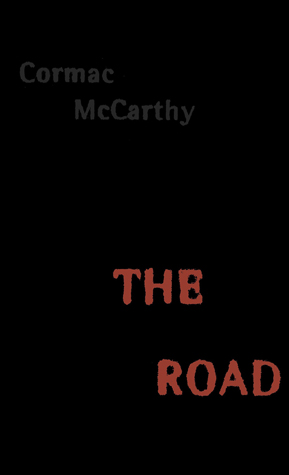
The Road — Cormac McCarthy
First published: September 26, 2006 — Knopf
Pages: 241
Goodreads: 4.00★ (1.06M+ ratings) · view
Audiobook runtime: 6h 39m Tom Stechschulte / Recorded Books · 6h 42m Simon & Schuster Audio Rupert Degas alternate
Commercial scale: 3M+ cumulative global sales · 20 years continuous print · 40+ language translations · AP / IB / Common Core curriculum increasingly assigned
Awards & Recognition: 2007 Pulitzer Prize for Fiction · 2006 James Tait Black Memorial Prize · 2007 Oprah's Book Club April selection · 2007 Audie Award nomination
Cultural position: 2009 John Hillcoat Dimension Films / The Weinstein Company film w/ Viggo Mortensen / Kodi Smit-McPhee / Charlize Theron / Robert Duvall / Guy Pearce $27.6M · McCarthy catalog canonical shortest-Pulitzer entry point
McCarthy's 2006 Pulitzer-winning masterwork — an unnamed Father and Boy walking south through post-apocalyptic America — has become the canonical post-apocalyptic literary novel, with 3M+ global sales, Tom Stechschulte's definitive 6h 39m Recorded Books production, John Hillcoat's 2009 $27M film with Viggo Mortensen / Kodi Smit-McPhee, and April 2007 Oprah's Book Club pick-status. Use CastReader AI TTS on Kindle The Road text →
The Road is Cormac McCarthy's 2006 post-apocalyptic novel chronicling an unnamed Father and his unnamed Boy (approximately 9-10 years old) walking south through a devastated American landscape toward the Gulf Coast, several years after an unspecified cataclysm (widely inferred as a nuclear-or-impact event that blocked sunlight and destroyed most organic life). The Father, exhausted and coughing blood, knows he is dying. Armed with a revolver containing only two bullets (one for each of them if necessary) and pushing a grocery cart of scavenged supplies, they encounter hostile survivors (cannibalistic gangs, roadside ambushers), find a hidden bomb-shelter offering brief respite, confront a captured-humans cellar implying cannibalism-preservation, and eventually reach the ashen-gray Gulf Coast. The Father dies shortly after; a family of other 'good guys carrying the fire' arrives within hours to take the Boy. McCarthy's non-chaptered single-continuous-narrative structure, unpunctuated-quotation prose, and the closing brook-trout paragraph ('Once there were brook trouts in the streams in the mountains') have made The Road the most-studied contemporary post-apocalyptic literary novel. At 6h 39m with Tom Stechschulte's Recorded Books production — the canonical McCarthy-catalog voice — The Road is the shortest Pulitzer-Prize-winning post-2000 Fiction novel in audiobook format, now experiencing sustained audiobook demand through the 2009 Hillcoat film and ongoing climate-anxiety cultural resonance.
This guide covers the 6h 39m runtime, the Tom Stechschulte / Recorded Books catalog, the non-chaptered structure architecture, and every free / paid path.
Why 6h 39m Matters
Post-apocalyptic-literature and Pulitzer-winner runtime and rating benchmark.
| Title | Runtime | Year | Goodreads rating |
|---|---|---|---|
| The Road (McCarthy) — this book | 6h 39m | 2006 | 4.00★ |
| The Stand (King) | 47h 47m | 1978 | 4.35★ |
| Station Eleven (Mandel) | 10h 40m | 2014 | 4.03★ |
| World War Z (Brooks) | 12h 9m | 2006 | 4.04★ |
| Blood Meridian (McCarthy) | 14h 25m | 1985 | 4.32★ |
| No Country for Old Men (McCarthy) | 7h 25m | 2005 | 4.07★ |
| All the Pretty Horses (McCarthy) | 9h 50m | 1992 | 4.06★ |
Takeaway: The Road is the shortest major McCarthy novel and among the shortest Pulitzer Prize for Fiction winners in audiobook format. Tom Stechschulte's 6h 39m Recorded Books production is the definitive narration. For first-time McCarthy listeners, The Road is the universal accessible-entry-point recommendation.
The 2006-2026 Trajectory
- 2006 September: Knopf publishes The Road — McCarthy, aged 73, had been intermittently publishing since 1965 debut The Orchard Keeper
- 2006 November: James Tait Black Memorial Prize awarded
- 2007 April: Oprah Winfrey's Book Club selects The Road — McCarthy grants his only-ever career-long television interview to Oprah (his famous reclusiveness)
- 2007 April: Pulitzer Prize for Fiction awarded — McCarthy's long-delayed mainstream-literary recognition (he had been a Guggenheim Fellow in 1965, MacArthur 'Genius Grant' Fellow in 1981, but remained a cult-literary figure until the 2005 No Country for Old Men commercial success)
- 2007-2009: Sustained sales growth; The Road establishes McCarthy as post-2005 mainstream American literary figure
- 2009 November: John Hillcoat's The Road film releases — Viggo Mortensen, Kodi Smit-McPhee, Charlize Theron, Robert Duvall, Guy Pearce; Dimension Films / Weinstein Company $25M / $27.6M box office; 76% Rotten Tomatoes; sustained post-theatrical streaming presence
- 2015-2020: The Road becomes increasingly assigned in AP / IB / Common Core high-school and undergraduate English curricula
- 2022 October: McCarthy publishes The Passenger and Stella Maris (final two novels, paired companion works)
- 2023 June: McCarthy dies at age 89 — The Road cements as his canonical commercially successful legacy work
- 2026 April: 3M+ cumulative global sales · 20 years continuous print · Recorded Books Stechschulte production remains canonical audiobook · 2009 Hillcoat film remains available on streaming · sustained AP / IB curriculum assignment
The Non-Chaptered Structure Architecture
Understanding McCarthy's continuous-narrative 241-page structure (no chapter breaks):
Opening passage (~pp.1-20):
- The opening 'When he woke in the woods in the dark and the cold of the night' first-line
- The Father and Boy's first scavenging cycle introduction
- The Mother's backstory flashback — her pregnancy-coincident cataclysm-witnessing, her later suicide
The cross-country southward trek (~pp.20-180):
- Encounter with first hostile survivor group (the Veteran's attempted abduction of the Boy at knifepoint)
- The Father's killing of the Veteran with the revolver's first bullet
- Discovery of a cellar of captured humans kept alive as food (the canonical Road horror scene)
- Narrow escape from the cannibal household
- The Father-Boy recurring exchange: 'Are we still the good guys?' 'Yes. We're still the good guys.'
- The 'carrying the fire' metaphor establishment
- The coke-can 'for you' Father-to-Boy gift scene
- The hidden bomb shelter respite chapter — canned food, hot water, soap, briefly restorative
The middle trek (~pp.180-220):
- The thief who steals the grocery cart while Father and Boy sleep
- Father's retrieval and punishment of the thief (taking all his clothes)
- Boy's moral-disagreement protest ('He was just a starving man, just like us')
- Ely the old-man-survivor encounter — Biblical allusion (Elijah-or-Old-Testament-prophet), one of only two named characters in the novel
- Another hostile encounter — the archer in the abandoned house
The Gulf Coast and the Father's death (~pp.220-241):
- The ocean Gulf Coast arrival — long-anticipated as salvation, revealed equally-ashen
- The Father's health decline — coughing blood, weakening
- The Father's final instructions to the Boy
- The Father's death
- The Veteran's family-of-good-guys arrival within hours — the man who had been tracking them
- The Boy's choice to go with the family
- The brook-trout closing paragraph: 'Once there were brook trouts in the streams in the mountains. You could see them standing in the amber current where the white edges of their fins wimpled softly in the flow'
Non-chaptered continuous narrative, 241 pages total.
The Tom Stechschulte McCarthy-Catalog Audio Catalog
Stechschulte narrated essentially all of McCarthy's major novels for Recorded Books:
- The Orchard Keeper — Tom Stechschulte (7h 30m)
- Outer Dark — Tom Stechschulte (8h)
- Child of God — Tom Stechschulte (4h 10m)
- Suttree — Tom Stechschulte (19h 30m)
- No Country for Old Men — Tom Stechschulte (7h 25m)
- The Road — Tom Stechschulte (6h 39m)
- The Crossing — Tom Stechschulte (16h 24m)
- Cities of the Plain — Tom Stechschulte (9h 40m)
Outside Stechschulte's catalog: Richard Poe narrated Blood Meridian (14h 25m, Blackstone Audio); Frank Muller and Eli Wallach narrated All the Pretty Horses (9h 50m, Simon & Schuster Audio / Random House Audio respectively).
Tom Stechschulte / Recorded Books is widely regarded as the canonical first-listen McCarthy-catalog recommendation. Stechschulte's even-tempered spare delivery preserves McCarthy's unpunctuated-quotation prose integrity.
Every Way to Listen
- Recorded Books audiobook (Tom Stechschulte via Audible / Libby / Apple Books) — 6h 39m canonical contemporary production
- Simon & Schuster Audio Rupert Degas alternate — 6h 42m alternate production
- Audible Premium 1 credit — ~$14.95 covers any commercial McCarthy production
- Audible purchased audiobook — $18-24 for Stechschulte Recorded Books production
- Libby (U.S. libraries) — 0-1 week wait; Recorded Books Stechschulte reliably stocked
- Hoopla — literary-classics catalog 1-2 week wait
- Spotify Premium audiobook — well within 15-hour monthly allocation at 6h 39m
- Purchased Kindle edition — $10-14 (Vintage International Kindle)
- CastReader AI TTS with Kindle The Road text — unlimited re-listens, adjustable pace, supports re-read-and-study engagement
Libby Wait Times (April 2026)
Survey of major U.S. library networks as of April 2026.
- NYPL / Brooklyn Public Library: 0-1 week wait (Recorded Books Stechschulte prominently stocked)
- Los Angeles Public Library: 0-1 week wait
- Chicago Public Library: 0-1 week wait
- Seattle Public Library: 0-1 week wait
- Boston Public Library: 0-1 week wait (Pulitzer-canonical-catalog commitment)
The Road has reliably short library waits because its Pulitzer-canonical-status ensures every major US library system carries multiple digital copies. Libby is the recommended free path.
Why Kindle + CastReader Suits The Road
The Road's 241-page length and single-session consumption pattern make it uniquely well-suited to CastReader AI TTS — the short single-session length is ideal for re-listeners and literary-study close-readers.
Listeners commonly return to:
- The opening 'When he woke in the woods in the dark and the cold of the night' first-line
- The Mother's-pregnancy-coincident-cataclysm flashback (one of the novel's few explicit pre-cataclysm references)
- The Veteran's attempted abduction and Father's first-bullet killing
- The captured-humans cellar discovery (the canonical Road horror scene)
- The Father-Boy 'are we still the good guys?' exchange
- The 'carrying the fire' metaphor establishment chapters
- The coke-can 'for you' Father-to-Boy gift scene
- The bomb-shelter respite chapter
- The thief scene — Boy's moral-disagreement protest
- The Ely old-man encounter (Biblical allusion)
- The Gulf Coast ocean arrival
- The Father's death scene
- The brook-trout closing paragraph (widely regarded as one of the most-quoted closings in contemporary American literature)
For re-read-and-study-oriented listeners, CastReader's bookmark-preservation across device switches enables flexible close-reading pacing — pause on McCarthy's unpunctuated-quotation exchanges, rewind the brook-trout closing paragraph, cross-reference McCarthy's Western-Gothic theological register.
CastReader's pronunciation overrides handle the Road catalog: the Father, the Boy, the Mother (flashback), Ely (the old man survivor — likely a pseudonym), the Veteran (initial hostile encounter), the thief (the cart-theft survivor), the family of good guys (closing — the man and woman and boy and girl), the grocery-cart, the revolver with two bullets, 'carrying the fire', the Gulf Coast, the bomb shelter, the brook-trout. Notable: the novel contains very few named entities and no place-names — AI TTS pronunciation is unusually stable.
Send to Phone for Literary-Study Close Reading
At 6h 39m The Road rewards literary-study close-reading. Send to Phone preserves CastReader position across device switches — pause on a specific passage during morning commute, continue evening session for close-reading at desk, finish weekend longer-session alongside McCarthy secondary-literature reading.
Limitations and Honest Notes
- McCarthy's unpunctuated-quotation prose (no quotation marks for dialogue; minimal apostrophes; few commas) is polarizing — some listeners find the dialogue-non-delimitation destabilizing; Tom Stechschulte's narration substantially addresses this by clearly tonally-distinguishing Father / Boy exchanges
- Content considerations — cannibalism, implied sexual violence, child-death implications, extreme post-apocalyptic bleakness — make The Road inappropriate for ages below 15 and emotionally demanding for all readers
- The novel's ending is ambiguous — McCarthy does not specify whether the family-of-good-guys who find the Boy are trustworthy; some readers find the resolution unsatisfying
- The 2009 John Hillcoat film is widely regarded as faithful-and-well-acted but is commonly criticized for literalizing what McCarthy deliberately keeps atmospheric (the cataclysm's cause, the specific geography) — book purists recommend reading the novel before seeing the film
- McCarthy's theological-apocalyptic undercurrent (the father-son love as ethical ground in ash-world, 'carrying the fire' as secularized-religious metaphor) is polarizing — secular-rationalist readers sometimes find the religious-aestheticism uncomfortable
- For first-time McCarthy readers, The Road's accessibility may misrepresent the complexity of Blood Meridian / Suttree / the Border Trilogy — Road-readers graduating to other McCarthy novels should expect substantially increased difficulty
- McCarthy's 2023 death means The Road remains under copyright until 2093 (life-plus-70 U.S.); entirely-free audio paths are not legally available
Related Reading
- Listen to Kindle — CastReader's Kindle-to-TTS path
- Send to Phone — cross-device position sync
- Kindle Text to Speech — Kindle TTS options overview
- Turn Kindle into Audiobook Free — free audiobook paths
- The Stand (King) Audiobook Guide — post-apocalyptic epic peer
- Beloved (Morrison) Audiobook Guide — Pulitzer-Prize literary peer
- 1984 (Orwell) Audiobook Guide — dystopian-fiction canonical peer
- The Great Gatsby (Fitzgerald) Audiobook Guide — American-literature-canon peer
