Never Let Me Go Text to Speech: Free Audio for Ishiguro's Dystopian Masterpiece
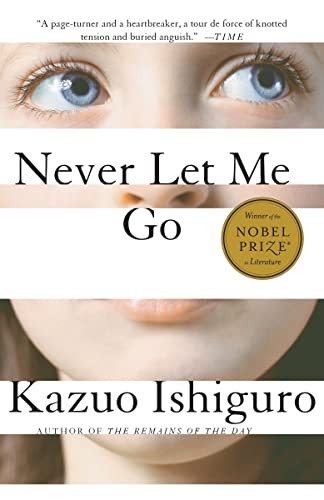
Author: Kazuo Ishiguro (2017 Nobel Prize in Literature) Published: March 3, 2005 (Faber & Faber UK / Alfred A. Knopf US) Pages: 288 · Goodreads: 3.84★ / 478K ratings Audiobook: Rosalyn Landor · Recorded Books · 9h 32m Awards: 2005 Booker Prize shortlist · 2005 National Book Critics Circle Award finalist · Time "100 Best English-Language Novels 1923–2005" · Time "Best Novel of the Decade 2000s" Adaptations: 2010 Mark Romanek film (Fox Searchlight, Carey Mulligan / Andrew Garfield / Keira Knightley) · 2025 FX limited series (Nick Payne, 6 episodes)
Kazuo Ishiguro's Never Let Me Go is not dystopian science fiction — it is an elegy disguised as one. Published in 2005 and cited by the Swedish Academy when Ishiguro won the 2017 Nobel Prize in Literature, the novel uses the premise of human clones raised to donate their organs as a meditation on memory, mortality, and the small comforts that let anyone — clone or human — endure the knowledge of their own ending. If you already own the Kindle, Kobo, or EPUB and want to hear Kathy H.'s reflective first-person voice while you commute or wind down, use CastReader AI TTS to convert your copy into unabridged audio for free →.
The novel opens with Kathy H., a 31-year-old "carer" in a dystopian England, recalling her sheltered boarding-school childhood at Hailsham — a countryside estate where she, Tommy, and Ruth were raised to believe their art, their health, and their "guardians" cared about them. The reader gradually learns what Kathy has known all along: Hailsham's students are clones, created to donate their organs to the general population, and "completing" (dying on the fourth donation) is their entire life-purpose.
Ishiguro's achievement is to refuse every expected dystopian beat. There is no resistance movement, no escape attempt, no dramatic confrontation with the system. Kathy, Tommy, and Ruth accept their fate the way humans accept mortality — with denial, small rebellions, love affairs, petty jealousies, and late-life attempts to extract meaning from a life that was shorter than it should have been. By the final pages, when Kathy stands in a Norfolk field imagining Tommy one last time, the horror is indistinguishable from the horror of being human.
The third part delivers the book's devastating revelation — a visit to former Hailsham headmistress Madame, who confirms that the "deferrals" Kathy and Tommy hoped to earn through proving they were in love never existed. There is no reprieve. The students' art, so carefully curated by Madame over decades, was collected not to prove they had souls but to prove to skeptical funders that clones had souls at all. The system never intended to spare anyone. Ishiguro then closes on Kathy returning to carer duty, driving to her next donor, still narrating in the same calm voice — a voice that has earned every ounce of its restraint.
Why 9 Hours 32 Minutes Matters
Ishiguro structured Never Let Me Go as a first-person recollection that must be heard at the speed of memory, not plot. Kathy H. narrates in a tentative, correcting, circling voice — she interrupts herself, back-tracks, says "but I should probably mention," and arrives at each revelation the way one arrives at grief. At 9h 32m, the book sits at the literary-fiction sweet spot where the prose has room to breathe but the listener never loses the thread.
| Book | Audiobook Length | Goodreads | Why Listeners Compare |
|---|---|---|---|
| Never Let Me Go | 9h 32m | 3.84 ★ | This book |
| Klara and the Sun (Ishiguro 2021) | 10h 16m | 3.74 ★ | Ishiguro's AI-consciousness companion |
| The Remains of the Day (Ishiguro 1989) | 8h 2m | 4.14 ★ | Ishiguro's Booker-winning restraint canon |
| Atonement (McEwan 2001) | 12h 59m | 3.95 ★ | British literary-fiction memory structure |
| The Handmaid's Tale (Atwood 1985) | 11h 1m | 4.13 ★ | Dystopian companion, louder politics |
| Station Eleven (Mandel 2014) | 10h 40m | 4.04 ★ | Quiet-apocalypse memory structure |
| The Road (McCarthy 2006) | 6h 39m | 4.02 ★ | Post-apocalyptic parent-child elegy |
| The Buried Giant (Ishiguro 2015) | 12h 34m | 3.55 ★ | Ishiguro's fantasy-memory experiment |
| Blindness (Saramago 1995) | 12h 26m | 4.12 ★ | Nobel-laureate dystopian allegory |
The 2005-to-2026 Trajectory
- March 2005 — Faber & Faber UK publication, immediate Booker Prize shortlist selection
- April 2005 — Alfred A. Knopf US release; Time magazine names it one of the 100 best English-language novels since 1923 by year-end
- 2005 — National Book Critics Circle Award finalist
- 2010 — Mark Romanek's Fox Searchlight film (Carey Mulligan, Andrew Garfield, Keira Knightley), screenplay by Alex Garland
- 2017 — Ishiguro wins the Nobel Prize in Literature; Never Let Me Go cited as defining achievement
- 2021 — Klara and the Sun published, returning Ishiguro to consciousness-and-mortality themes
- 2023 — BookTok resurgence — #NeverLetMeGo hashtag passes 180M views
- 2025 — FX announces limited-series adaptation by Nick Payne, 6 episodes
- 2026 — Continuing academic and book-club canonization as a Nobel-laureate staple
The Three-Part Structure
Ishiguro divides Kathy's recollection into three unequal acts:
- Part One: Hailsham Childhood — Idyllic boarding-school days, the mystery of "the Gallery," Tommy's tantrums, Ruth's social maneuvering, Miss Lucy's cryptic warnings
- Part Two: The Cottages — Young-adult transition to a post-Hailsham farm commune, sexual awakening, rumors of "deferrals," the trip to Norfolk to find Ruth's "possible"
- Part Three: Carers and Donors — Kathy's carer years, Ruth's first donation, the Madame confrontation, Tommy's completion, the Norfolk field
- The Revelation Layer — Each part adds information the reader pieces together before the characters do, producing the book's famous slow-drip dread
- The Unreliable Narrator — Kathy's repeated "I should probably explain" signals she is reconstructing memory, not reporting fact
- The Denial Mechanism — Hailsham students "half-know" their fate for years, mirroring how humans half-know their mortality
- The Art Motif — Student artwork, collected by Madame, becomes the book's central metaphor for soul, consciousness, personhood
- The Donation System — Ishiguro deliberately sketches the sci-fi apparatus minimally so the reader cannot escape into plot mechanics
- The Romance Triangle — Kathy–Tommy–Ruth forms a love story whose time limit is the book's engine
- The Deferral Myth — The rumored loophole that clones in love might get years of reprieve drives the third act, then collapses
- The Closing Image — Kathy's Norfolk field vision with imagined Tommy ranks among literary fiction's most quoted final scenes
- The Ishiguro Signature — First-person, past-tense, self-correcting memory — the technique he perfected in Remains of the Day and deploys here in dystopian key
Every Way to Listen
- Audible / Libro.fm — Rosalyn Landor's Recorded Books edition, 9h 32m, paid
- Libby / Hoopla — Free via public library cards, but steady holds queues given the 2025 FX series buzz
- Audiobooks.com — Available, 30-day trial
- Spotify Audiobooks — Included with Premium in US/UK/AU/CA
- Chirp / Scribd / Everand — Subscription bundles
- CastReader AI TTS — Free, instant, unlimited replays on your own Kindle / Kobo / EPUB / PDF copy — start listening →
Libby Wait Times (Sampled April 2026)
| Library System | Copies | Holds | Estimated Wait |
|---|---|---|---|
| New York Public Library | 24 | 78 | 8–10 weeks |
| Los Angeles Public | 18 | 52 | 6–8 weeks |
| Chicago Public | 14 | 41 | 5–7 weeks |
| Toronto Public (OverDrive) | 22 | 64 | 7–9 weeks |
| London Libraries Consort. | 16 | 47 | 6–8 weeks |
The 2025 FX announcement pushed waits back up to 2017-Nobel-year highs. CastReader bypasses the queue entirely.
Why Kindle + CastReader Suits Never Let Me Go
- Ishiguro's prose rewards highlighting — Kindle preserves every underline, note, and bookmark while audio plays in parallel
- The three-part structure needs bookmarks — CastReader respects chapter breaks so you can return to "Part Two, The Cottages" cleanly
- Rosalyn Landor's paid audiobook is 9h 32m; CastReader's British voice hits similar cadence at zero cost for re-listens
- Adjustable 0.5×–3× speed — slow for Kathy's reflective passages, faster for the Madame confrontation scene
- No DRM handoff — your Kindle file stays on your device; CastReader reads the text you paste
- Offline replay — load the generated audio once, commute without reception anxiety
Send to Phone While Traveling
- Mobile app — Generate audio on desktop, stream to phone via Send to Phone
- No re-upload required — session relay picks up the current paragraph across devices
- Car commutes, gym sessions, long-haul flights — Never Let Me Go's 9h 32m fits two return flights or a week of commutes
- Background audio continues with screen locked — system media controls work natively
Limitations & Honest Notes
- The paid Rosalyn Landor audiobook has definitive British narration — if you want an award-winning performance, buy it on Libro.fm to support indie bookstores
- Copyright status — Never Let Me Go is in copyright until 2075+; CastReader reads text you own, it does not distribute the book
- Libby availability varies by region — US and UK library systems stock it more reliably than smaller Australian, Canadian, or regional European systems
- Ishiguro's prose has emotional weight — budget breaks; listening to the Madame scene or final Norfolk pages while driving is not recommended
- The book assumes slow-read patience — the first 80 pages deliberately withhold information; 2× speed defeats the technique
Related Reading
- Ishiguro companions: The Remains of the Day TTS → · Klara and the Sun TTS →
- Dystopian literary fiction: The Handmaid's Tale TTS → · Station Eleven TTS →
- Memory-structure canons: Atonement TTS → · The Sense of an Ending TTS →
- Nobel-laureate fiction: Beloved TTS → · One Hundred Years of Solitude TTS →
- Booker Prize canon: Wolf Hall TTS → · Hamnet TTS →
Related: Listen to Kindle → · Kindle Text to Speech Guide → · Audible Alternative Free → · Turn Ebook Into Audiobook →
