Mrs Dalloway Audiobook & Text to Speech Guide (2026) — Virginia Woolf's 1925 Modernist Masterpiece and 100th Anniversary Cultural Moment
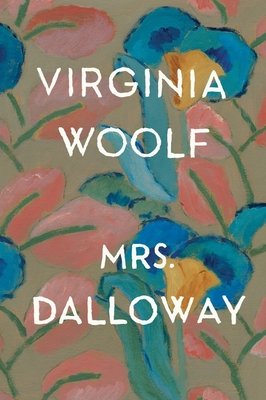
Mrs Dalloway — Virginia Woolf
First published: May 14, 1925 (Hogarth Press, London — founded by Leonard and Virginia Woolf 1917)
Pages: 194 (Penguin Modern Classics standard edition)
Goodreads: 3.77★ (363K+ ratings) · view
Audiobook runtime: ~7h 55m Juliet Stevenson / Naxos AudioBooks canonical · ~7h 45m Virginia Leishman / Blackstone · Annabel Scholey / Audible Studios · Kristine Sutherland / Commuters · LibriVox multi-reader (post-January-1-2026 US public-domain) / UK LibriVox (since 2012)
Commercial scale: 100+ years continuous literary tradition · foundational modernist + foundational feminist + canonical 20th-century-novel · US public-domain January 1, 2026 · UK public-domain since 2012 · universally-assigned curriculum · 363K+ Goodreads ratings · Bloomsbury Group canonical
Awards & Recognition: Modern Library 100 Best Novels of 20th Century #41 · Time 100 Best English-Language Novels · BBC 100 Novels That Shaped Our World · Guardian 100 Greatest Novels · Harold Bloom Western Canon · universal modernist / feminist / women-writers / queer-studies curricular
Cultural position: 2025 Centennial celebration (May 14, 1925 100th anniversary; Oxford World's Classics Centennial Edition) · Stephen Daldry 2002 The Hours Paramount $108M w/ Nicole Kidman Academy Award Best Actress / Julianne Moore / Meryl Streep 9-Oscar-nom / Ed Harris · Marleen Gorris 1997 Mrs Dalloway w/ Vanessa Redgrave / Rupert Graves · Hogarth Press centenary retrospectives · The Hours (Cunningham 1998 Pulitzer)
Woolf's 1925 foundational-modernist-and-feminist masterwork — Mrs Dalloway's single-June-day-1923-Bloomsbury-London narrative following society-hostess Clarissa Dalloway's preparation for an evening party (buying flowers at Mulberry's / receiving her first-love Peter Walsh returning from India / her daughter Elizabeth's evangelical-Christian former-tutor Miss Doris Kilman / the party itself attended by Peter Walsh and radical-bohemian Sally Seton and the Prime Minister) interwoven with shell-shocked WWI veteran Septimus Warren Smith's psychic-disintegration in Regent's Park under the failed-psychiatric-authority of Dr. Holmes and Sir William Bradshaw, culminating in Septimus's window-suicide before Bradshaw's commitment-men can arrive, with the two protagonists never meeting directly but united in Clarissa's evening-meditation-recognition 'She felt somehow very like him — the young man who had killed himself,' the novel structured by Big Ben's hourly chimes, using Woolf's pioneering 'tunnelling process' stream-of-consciousness technique — has been universally regarded as one of the great foundational modernist novels of the 20th century alongside Joyce's Ulysses and Eliot's The Waste Land since its 1925 Hogarth Press publication, with the Juliet Stevenson / Naxos AudioBooks production widely-praised as the canonical contemporary audiobook, 2025 May 14 Centennial celebrations marking the 100th anniversary with Oxford World's Classics Centennial Edition and multiple academic conferences, US public-domain entry January 1, 2026 enabling free digital distribution, Stephen Daldry's 2002 The Hours Paramount adaptation w/ Nicole Kidman (Academy Award Best Actress for Virginia Woolf) / Julianne Moore / Meryl Streep bringing the novel to global mainstream visibility, and 100+ years of continuous literary-critical / modernist-canonical / feminist-foundational / queer-studies-canonical / universal-classroom-assignment engagement establishing Mrs Dalloway as one of the most-essential 20th-century English-language novels. Use CastReader AI TTS on Kindle Mrs Dalloway text →
Mrs Dalloway is Virginia Woolf's 1925 modernist masterpiece set across a single June day in 1923 post-WWI Bloomsbury London. Society-hostess Clarissa Dalloway begins the day: 'Mrs Dalloway said she would buy the flowers herself.' She walks through Westminster and Mayfair buying flowers at Mulberry's florist. She returns home; receives Peter Walsh — her 31-year-old former-suitor returning from India (Peter, who loved her decades ago but was rejected in favor of the conventional Richard Dalloway MP); Peter's critical-but-loving appraisal. Through the day: Clarissa's 17-year-old daughter Elizabeth, Elizabeth's evangelical-Christian former-tutor Miss Doris Kilman (whose quasi-religious attachment to Elizabeth Clarissa resents). In parallel: shell-shocked WWI veteran Septimus Warren Smith wanders Regent's Park with his Italian wife Rezia; experiences terrifying hallucinations (dead-officer-and-lover Evans speaking from beyond the grave; trees coming alive). Septimus consults the kindly-but-useless Dr. Holmes and the sinister specialist Sir William Bradshaw; Bradshaw orders Septimus committed. Before the commitment-men arrive, Septimus throws himself from a window and is impaled on railings. That evening, Clarissa hosts her party — Peter Walsh, Sally Seton (Clarissa's radical-bohemian friend of youth and one-time romantic-kiss at Bourton — 'the most exquisite moment of her whole life'), Prime Minister, Sir William Bradshaw. Sir William tells the guests about Septimus's suicide. Clarissa retreats, meditates on Septimus — 'She felt somehow very like him — the young man who had killed himself.' The novel ends as Clarissa returns: 'It is Clarissa, he said. For there she was.' Central themes: post-WWI-trauma, stream-of-consciousness, feminist-consciousness, lesbian-desire, time-and-mortality, mental-illness, death-and-life-affirmation. At ~7h 55m Juliet Stevenson / Naxos AudioBooks production is the canonical contemporary audiobook; Virginia Leishman / Blackstone provides alternative; LibriVox becomes broadly-available January 1, 2026.
This guide covers the ~7h 55m runtime, the single-day Big-Ben-chime structure, 2025 centennial context, The Hours adaptation companion-engagement, and every free / paid path.
Why ~7h 55m Matters
Modernist-literature runtime and rating benchmark.
| Title | Runtime | Year | Goodreads rating |
|---|---|---|---|
| Mrs Dalloway (Woolf) — this book | ~7h 55m | 1925 | 3.77★ |
| To the Lighthouse (Woolf) | 7h 35m | 1927 | 3.80★ |
| Orlando (Woolf) | 8h 8m | 1928 | 3.88★ |
| A Room of One's Own (Woolf) | 4h | 1929 | 4.12★ |
| Ulysses (Joyce) | 32h | 1922 | 3.77★ |
| The Great Gatsby (Fitzgerald) | 5h | 1925 | 3.93★ |
| The Sound and the Fury (Faulkner) | 7h 57m | 1929 | 3.89★ |
| The Magic Mountain (Mann) | 36h | 1924 | 4.16★ |
Takeaway: Mrs Dalloway at 3.77★ / 363K+ Goodreads ratings is a foundational modernist work with typical-modernist-demanding readership satisfaction. For first-time modernist listeners: The Great Gatsby (5h) → Mrs Dalloway (7h 55m) → To the Lighthouse (7h 35m) → The Sound and the Fury (7h 57m) → Ulysses (32h) forms the canonical modernist progression. For Woolf engagement: Mrs Dalloway → To the Lighthouse → A Room of One's Own → Orlando forms canonical Woolf progression (~27h combined). Mrs Dalloway's dual canonical-status (modernist + feminist foundational) makes it one of the most-essential commitments in 20th-century literature.
The 1925-2026 Trajectory
- 1882 January 25: Adeline Virginia Stephen born London; daughter of Leslie Stephen (Victorian critic, editor of Dictionary of National Biography) and Julia Jackson
- 1895: Virginia's mother Julia dies — triggers Virginia's first mental breakdown
- 1904: Virginia's father Leslie Stephen dies — second major breakdown
- 1906: Virginia's brother Thoby dies of typhoid — third major breakdown
- 1912: Virginia marries Leonard Woolf
- 1913-1915: Virginia's fourth major breakdown and suicide attempt
- 1915: The Voyage Out published (Woolf's first novel)
- 1917: Virginia and Leonard Woolf found Hogarth Press in their London home
- 1919: Night and Day published (Woolf's second novel)
- 1922: Jacob's Room published (Woolf's third novel — first to use modernist-technique fully); Hogarth Press publishes T.S. Eliot's The Waste Land 1923
- 1923-1924: Woolf writes Mrs Dalloway — diary entries describe developing 'the tunnelling process' technique
- 1925 May 14: Mrs Dalloway published by Hogarth Press, London
- 1925: Also publishes The Common Reader essays
- 1927: To the Lighthouse published (Woolf's most-critically-celebrated novel)
- 1928: Orlando published (dedicated to Vita Sackville-West, Woolf's rumored romantic-partner; comic-fantasy-biography crossing three centuries and genders)
- 1929 October: A Room of One's Own published (based on Cambridge University lectures; foundational feminist-literary-criticism)
- 1931: The Waves published (most-experimental Woolf novel)
- 1937: The Years published
- 1938: Three Guineas published (feminist-anti-fascist essay)
- 1941 March 28: Virginia Woolf dies by suicide — drowns herself in the River Ouse near Monk's House in Rodmell, Sussex; fifth major breakdown trigger unknown; suicide note to Leonard
- 1941 posthumous: Between the Acts published posthumously
- 1997 November 7: Marleen Gorris's Mrs Dalloway w/ Vanessa Redgrave / Rupert Graves / Natascha McElhone; Eileen Atkins screenplay
- 1998: Michael Cunningham's The Hours wins Pulitzer Prize (1999)
- 2002 December 27: Stephen Daldry's The Hours — Paramount $25M production / $108M box-office w/ Nicole Kidman (Academy Award Best Actress) / Julianne Moore / Meryl Streep; 9 Academy Award nominations / 1 win
- 2012: Mrs Dalloway enters UK public-domain (Woolf died 1941; life+70 years = 2011/2012)
- 2025 May 14: Mrs Dalloway 100th anniversary — Oxford World's Classics publishes Centennial Edition; multiple academic conferences
- 2026 January 1: Mrs Dalloway enters US public-domain under 95-year-rule for 1925 publications
- 2026 April: 100+ years continuous literary tradition · foundational modernist + foundational feminist + canonical 20th-century-novel · universal-classroom-canonical · elevated 2025-2026 audiobook / Kindle sales driven by centennial anniversary
The Single-Day Big-Ben-Chime Structure
Understanding Woolf's novel architecture (Mrs Dalloway has no formal chapter divisions — the narrative is continuous, structured by Big Ben's hourly chimes and temporal markers):
Morning (circa 10am-12pm) — Bond Street and Mulberry's:
- Opening 'Mrs Dalloway said she would buy the flowers herself' — the canonical opening line
- Clarissa's Westminster-to-Mayfair-walk consciousness-stream; encounters passing-by strangers
- Miss Pym at Mulberry's florist; Clarissa selecting flowers
- Car explosion incident — the motorcar (rumored to contain the Queen or Prime Minister) backfires; brings together multiple-character-perspectives including Septimus Warren Smith and Rezia witnessing
Late Morning (circa 12pm) — Regent's Park and the Dalloway House:
- Septimus and Rezia Warren Smith in Regent's Park; Septimus's hallucinations of dead-officer Evans
- Peter Walsh's arrival at the Dalloway house; Clarissa-Peter pocket-knife-reunion scene
- Clarissa-Sally flashback to Bourton decades earlier — Sally Seton's kiss; 'the most exquisite moment of her whole life'
- Peter's departure; Peter walking across London following a young woman
Early Afternoon (circa 2pm-3pm) — Sir William Bradshaw's office:
- Dr. Holmes' kindly-but-useless visit to the Warren Smiths
- Sir William Bradshaw's sinister-specialist interview — Bradshaw orders Septimus committed to a rest-home under 'Proportion' doctrine
- Peter Walsh in Regent's Park reflecting on Clarissa
Afternoon (circa 4pm-6pm) — Elizabeth and Miss Kilman:
- Lady Bruton's luncheon (Richard Dalloway and Hugh Whitbread attending)
- Richard returning home with flowers — unable to speak 'I love you' directly
- Elizabeth Dalloway and Miss Doris Kilman at the Army and Navy Stores; Kilman's evangelical-religious-attachment; Elizabeth's Sri-Paul's-bus-ride independence-assertion
Late Afternoon / Early Evening (circa 6pm-7pm) — Septimus's death:
- Septimus and Rezia at home; brief moment of genuine-peace as Septimus helps Rezia with a hat
- Septimus's window-suicide — Holmes arrives for commitment; Septimus throws himself from the window; impaled on area-railings
- Peter Walsh hearing the ambulance; notes 'one of the triumphs of civilisation'
Evening (circa 9pm-11pm) — Clarissa's Party:
- The party — Prime Minister, Sally Seton (now Lady Rosseter), Peter Walsh, Sir William Bradshaw and Lady Bradshaw, Hugh Whitbread, Lady Bruton, Miss Helena Parry
- Sir William Bradshaw mentions Septimus's suicide to Lady Bradshaw
- Clarissa's retreat to the small room — meditation on Septimus; 'She felt somehow very like him — the young man who had killed himself'
- Closing 'It is Clarissa, he said. For there she was.' — Peter Walsh sees Clarissa returning; canonical closing
Approximately 65,000 words. Woolf's canonical set-pieces: the opening-flowers-line, the Peter Walsh pocket-knife reunion, the Clarissa-Sally Seton flashback, Septimus's Regent's Park hallucinations, the Sir William Bradshaw interview, Septimus's window-suicide, Big Ben's hourly chimes, the party sequence, the closing Peter-sees-Clarissa line — widely studied as the novel's nine structural pillars.
Every Way to Listen
- Juliet Stevenson / Naxos AudioBooks unabridged — ~7h 55m canonical contemporary English
- Virginia Leishman / Blackstone Audio — ~7h 45m alternative single-narrator
- Annabel Scholey / Audible Studios — modern-British-theatrical alternative
- Kristine Sutherland / Commuters — earlier alternative
- Frances Jeater / Naxos — Naxos alternative
- Carole Boyd / Bolinda — alternative single-narrator
- LibriVox free public-domain (post-January 1, 2026 US entry; UK LibriVox since 2012) — multi-reader community productions; Karen Savage / others
- Audible Premium 1 credit — ~$14.95 covers Juliet Stevenson / Naxos or any alternative
- Libby (U.S. libraries) — 0-1 week wait; Juliet Stevenson / Naxos and Virginia Leishman / Blackstone reliably stocked
- Hoopla — modernist-literature catalog; various Woolf productions
- Spotify Premium audiobook — 7h 55m fits within 15h monthly allocation
- Project Gutenberg US (post-January 1, 2026) — complete e-book
- Project Gutenberg Australia / UK public-domain since 2012 — complete e-book
- Purchased Kindle edition — $6-15 Penguin Modern Classics / Oxford World's Classics Centennial Edition / Harcourt Mariner / Norton Critical Edition
- CastReader AI TTS with Kindle Mrs Dalloway edition — unlimited re-listens, adjustable pace
Mrs Dalloway's US public-domain entry January 1, 2026 means comprehensive free-path options are now broadly-available post-centennial.
Libby Wait Times (April 2026)
Survey of major U.S. library networks as of April 2026.
- NYPL / Brooklyn Public Library: 0-1 week wait (Juliet Stevenson / Naxos, Virginia Leishman / Blackstone, Annabel Scholey / Audible Studios all reliably stocked; 2025 centennial anniversary demand continuing through 2026)
- Los Angeles Public Library: 0-1 week wait
- Chicago Public Library: 0-1 week wait
- Seattle Public Library: 0-1 week wait
- Boston Public Library: 0-1 week wait (university curriculum demand; Harvard / MIT modernist-literature programs)
- 2025 centennial demand surge: May 2025-May 2026 centennial anniversary year may extend Libby waits to 1-2 weeks at peak
Mrs Dalloway has short library waits — its universal-curriculum-canonical and 2025-centennial-visibility ensure every major US library system carries multiple digital copies. Libby is strongly-recommended paid-alternative. Post-January-1-2026 LibriVox becomes the zero-wait free US path.
Why Kindle + CastReader Suits Mrs Dalloway
Mrs Dalloway's 194-page single-day structure and ~7h 55m runtime make it well-suited to CastReader AI TTS — 1-2 week evening-session consumption pattern is manageable in weekday-commute+weekend-sessions, and the novel's universal classroom-canonical status means modernist-literature and women's-studies and queer-studies students commonly re-read across semesters.
Listeners commonly return to:
- The opening 'Mrs Dalloway said she would buy the flowers herself' — the canonical opening line setting the novel's tone
- The Peter Walsh pocket-knife-reunion scene — the novel's central emotional-reunion
- The Clarissa-Sally Seton flashback ('the most exquisite moment of her whole life') — the novel's queer-desire center
- Septimus's Regent's Park hallucinations — the novel's WWI-trauma core
- The Sir William Bradshaw 'Proportion' interview — the novel's psychiatric-authority critique
- Septimus's window-suicide — the novel's tragic climax
- Big Ben's hourly chimes — the structural refrain
- The party sequence — the novel's social-culmination
- The closing 'It is Clarissa, he said. For there she was.' — the novel's transcendent final image
For 2025 Centennial engagement: CastReader's cross-device bookmarking enables centennial-year reading with Oxford World's Classics Centennial Edition scholarly introduction as companion. For The Hours 2002 film companion-engagement: reading Mrs Dalloway before or after watching Daldry's Hours provides contextual depth; reading Michael Cunningham's 1998 Pulitzer The Hours novel simultaneously enables three-era parallel-reading. CastReader supports Mrs Dalloway → complete Woolf (To the Lighthouse / Orlando / A Room of One's Own / The Waves) progression.
CastReader's pronunciation overrides handle Woolf's English-French-Italian-classical proper-noun catalog: Clarissa Dalloway (kla-RIS-a DAL-o-way), Richard Dalloway, Elizabeth Dalloway, Peter Walsh, Sally Seton, Septimus Warren Smith (SEP-ti-mus), Rezia Warren Smith / Lucrezia (loo-KRET-see-a), Miss Doris Kilman, Dr. Holmes, Sir William Bradshaw, Lady Bradshaw, Hugh Whitbread, Lady Bruton, Miss Pym, Miss Brush, Evans, Bourton (BOUR-tun), Mulberry's, Bond Street, Westminster, Mayfair, Regent's Park, Bloomsbury, Big Ben, St. Paul's, Buckingham Palace, the Strand, Piccadilly, Fleet Street, Army and Navy Stores. CastReader handles Woolf's 1920s-London-geography register with modernist-literature-appropriate pronunciation.
Send to Phone for Woolf Progression
At ~7h 55m Mrs Dalloway fits a 1-2 week consumption timeline. Send to Phone preserves CastReader position across device switches — complete the Morning sections (flowers-walk, Peter-arrival, Clarissa-Sally flashback) during weekday commutes week 1; complete Afternoon sections (Bradshaw interview, Richard-lunch, Elizabeth-Kilman) during weekend sessions weekend 1; complete Evening sections (Septimus's death, the party, Clarissa's meditation, closing) during week 2. For Woolf engagement progression: continuing through To the Lighthouse (7h 35m), A Room of One's Own (4h), Orlando (8h 8m), The Waves (8h 14m) forms the canonical Woolf-immersion rhythm (~36h combined). For modernist-canon progression: continuing through The Great Gatsby (5h), The Sound and the Fury (7h 57m), Ulysses (32h) forms the canonical modernist-foundational rhythm.
Limitations and Honest Notes
- The stream-of-consciousness technique requires 50-75 pages of adjustment for readers unfamiliar with modernist-narrative — initial disorientation is normal and expected; audiobook narration (Juliet Stevenson particularly) manages transitions well
- The novel has no formal chapter divisions — the continuous-day narrative structure is unique; readers accustomed to chapter-breaks may find the lack-of-structural-pauses challenging; Big Ben's hourly chimes and temporal markers provide subtle breakpoints
- The 'tunnelling process' of unmarked-transitions between characters' consciousness is Woolf's signature technique — contemporary readers expecting clearly-marked POV-transitions may initially find Woolf's transitions disorienting
- Mental-illness and suicide content — Septimus's shell-shock hallucinations and window-suicide are graphically depicted; readers sensitive to suicide-content should be aware; Woolf herself died by suicide in 1941, giving the Septimus narrative biographical-resonance
- Post-WWI-trauma and PTSD themes — Septimus's shell-shock treatment is among the earliest literary treatments of PTSD; contemporary readers will find the psychological-acuity remarkable
- Lesbian-desire subtext — the Clarissa-Sally Seton flashback establishes queer-desire as central; readers should engage the queer-reading openly; Sally's kiss 'the most exquisite moment of her whole life' is central to the novel's feminist-queer-canon status
- Period-specific 1920s-British class-hierarchy and imperial-British framing — the novel is set in imperial London; Peter Walsh returns from colonial India; contemporary readers should engage the imperial-context critically
- Woolf's biographical sadness — her 1941 suicide-by-drowning lends retrospective-melancholy to the Septimus narrative; readers may find the biographical-context emotionally-heavy
- 2025 centennial academic-conference recordings and scholarly introductions (Oxford World's Classics Centennial Edition particularly) provide excellent study-framework for first-time engagement
- Not substitute for reading — Stephen Daldry's 2002 The Hours and Marleen Gorris's 1997 Mrs Dalloway are excellent film companions but cannot replicate Woolf's interior-voice stream-of-consciousness technique which is the novel's central literary-pleasure
Related Reading
- Listen to Kindle — CastReader's Kindle-to-TTS path
- Send to Phone — cross-device position sync
- Kindle Text to Speech — Kindle TTS options overview
- Turn Kindle into Audiobook Free — free audiobook paths
- The Great Gatsby (Fitzgerald) Audiobook Guide — 1925-modernist peer; same year
- The Sound and the Fury (Faulkner) Audiobook Guide — American stream-of-consciousness peer; 1929
- A Room of One's Own (Woolf) Audiobook Guide — Woolf feminist-essay peer; 1929
- Orlando (Woolf) Audiobook Guide — Woolf fantasy-biography peer; 1928
