Life of Pi Audiobook & Text to Speech Guide (2026) — Yann Martel's Jeff-Woodman-Canonical-Narrated Booker-Winning Magic-Realism-Survival Ang-Lee-4-Oscars Phenomenon
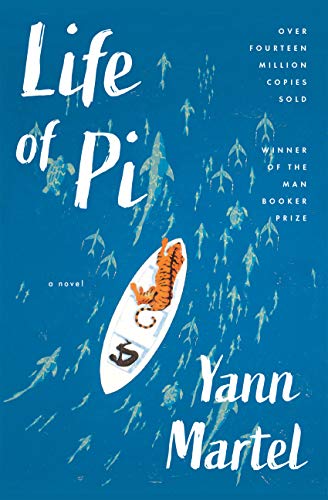
Life of Pi — Yann Martel
First published: September 11, 2001 · Knopf Canada
Pages: 460 (paperback)
Goodreads: 3.94★ (1.77M+ ratings) · view
Audiobook runtime: ~11h 57m · narrated by Jeff Woodman (HighBridge Audio)
Commercial scale: 12M+ global sales · 2002 Man Booker Prize winner · Ang Lee 2012 film $609M box office / 4 Oscars
Cultural impact: Defining contemporary magic-realism-survival canonical text · Booker-to-mass-market crossover exemplar · sustained book-club and university-seminar curriculum
The 2002 Man Booker Prize winner with Ang Lee's 2012 4-Oscar film — 12 million copies, 227 days on a Pacific lifeboat with a Bengal tiger, and one of contemporary fiction's most-discussed philosophical-theological concluding reveals. Skip the Libby wait with Kindle + free CastReader AI TTS →
Life of Pi is Yann Martel's September 2001 magic-realism-survival canonical text — the 460-page novel where 16-year-old Piscine Molitor 'Pi' Patel, raised the son of the Pondicherry zoo keeper simultaneously practicing Hinduism, Christianity, and Islam, becomes the sole human survivor of the Japanese cargo ship Tsimtsum's Pacific sinking. Pi spends 227 days on a 26-foot lifeboat with a Bengal tiger named Richard Parker before reaching the Mexican coast, where Japanese Ministry of Transport investigators reject his survival-with-animals story as implausible and Pi tells them a second story (without animals, where the hyena is a French cook who cannibalizes Pi's mother and a sailor; Pi kills the cook; Pi is alone) — asking the investigators which story they prefer, receiving 'the animal story' as answer, and concluding 'And so it goes with God.' Life of Pi won the 2002 Man Booker Prize — one of literary fiction's most prestigious awards — and generated Ang Lee's 2012 film adaptation that won 4 Oscars (Best Director, Best Cinematography, Best Visual Effects, Best Original Score) on 11 nominations and grossed $609M globally. The 12M+ sales combined with 2002 Booker recognition and 2012 film adaptation make Life of Pi the exemplar Booker-to-mass-market crossover — a combination vanishingly rare in literary fiction. The 3.94★ Goodreads rating across 1,766,285+ ratings reflects the novel's polarizing philosophical-theological Part-3 reveal — readers either celebrate the two-stories ambiguity as transformative narrative-theory achievement or reject it as unsatisfying. At 11h 57m with Jeff Woodman's HighBridge Audio canonical production, Life of Pi is the genre-defining contemporary magic-realism-survival primary-source text.
This guide covers the 11h 57m runtime, the three-part structure, the Part-3 two-stories reveal, the Ang Lee film relationship, and every free / paid path.
Why 11h 57m Matters for Contemporary Literary Fiction
Booker-canonical contemporary-literary-fiction runtime benchmark.
| Title | Runtime | Year | Goodreads rating |
|---|---|---|---|
| Life of Pi (Martel) — this book | 11h 57m | 2001 | 3.94★ |
| The God of Small Things (Roy) | 13h 51m | 1997 | 4.08★ |
| Midnight's Children (Rushdie) | 24h 44m | 1981 | 4.04★ |
| Beloved (Morrison) | 10h 54m | 1987 | 3.95★ |
| One Hundred Years of Solitude (García Márquez) | 15h 36m | 1967 | 4.13★ |
| Cloud Atlas (Mitchell) | 19h 48m | 2004 | 3.99★ |
| The Old Man and the Sea (Hemingway) | 2h 49m | 1952 | 3.81★ |
Life of Pi sits at the mid-range Booker-canonical runtime — shorter than Midnight's Children's 24h 44m and Cloud Atlas's 19h 48m, suitable for 6-9 days of commute listening or a long weekend at 1.5x.
Three Listening Modes
Mode 1 — Canonical Audio (Jeff Woodman HighBridge Audio). $14.95 Audible credit or library-borrow via Libby; Audible Plus subscribers check rotating availability. Woodman's HighBridge production is universally praised as the definitive Life of Pi — no commercial alternative exists at its production level.
Mode 2 — AI TTS via CastReader. Free, unlimited re-listens, adjustable speed, voice-switching for Pi's adult-retrospective narrator + young-Pi + father + Richard-Parker-internal-voice + Part-3 Japanese-investigators. Particularly valuable for book-club preparation and university-seminar study. See CastReader for Kindle.
Mode 3 — Libby library-borrow + Spotify Premium. Libby with 1-2 week wait or Spotify Premium 15h monthly audiobook allocation (80% consumed by Life of Pi's 11h 57m).
The Jeff Woodman HighBridge Canonical Production
Jeff Woodman narrates the definitive HighBridge Audio edition in ~11h 57m. His distinguishing contribution: measured-literary register with subtle Indian-English inflection that suits Pi's bicultural Pondicherry-Toronto narrator voice. Woodman captures the first-person retrospective adult-Pi tone, the young-Pi memory-passages, and the Richard Parker internal-voice dialogue with consistent narrative authority.
Life of Pi does not have a second major canonical production — Woodman's HighBridge edition has remained the commercial standard since its release, and Martel's recent 2001 publication date means no historical alternative productions exist. Audible Plus subscribers should check monthly rotation for included-with-membership availability.
The Three-Part Structure
Part 1 — Toronto / Pondicherry (Pi's childhood). The novel opens with the adult Pi living in Toronto, interviewed by the unnamed author-frame-narrator who will publish Pi's story. The retrospective narration covers Pi's Pondicherry zoo-keeper-son childhood in 1970s India: his three-religions simultaneous practice (Hinduism from birth, Christianity from a Munnar hill-station priest, Islam from a Pondicherry baker), his zoology education from his father, his name's pool-naming origin (Piscine Molitor from a Parisian swimming pool), his 'Pi' nickname adoption to escape 'Pissing Pi' schoolyard bullying, and his zoo-animal observations that frame Part 2. The three-religions section is one of the novel's most-anthologized passages — Martel's theological-pluralism argument through 16-year-old Pi's earnest multi-tradition practice.
Part 2 — The Pacific (survival with Richard Parker). Pi's family emigrates on the Japanese cargo ship Tsimtsum with zoo animals bound for Canadian zoos. The ship sinks in a Pacific storm. 16-year-old Pi is the sole human survivor on a 26-foot lifeboat with a hyena, a zebra, an orangutan (Orange Juice), and a 450-pound Bengal tiger (Richard Parker — named by the zoo registrar's administrative swap of the tiger's hunter name). The hyena kills the zebra and orangutan; Richard Parker kills the hyena; Pi and Richard Parker survive together for 227 days. Pi's techniques: lifeboat-raft construction, rain-collection water, flying-fish / turtle / dorado protein, Richard-Parker-dominance-assertion through whistle-and-food-reward conditioning. Pi encounters a second Pacific-shipwreck-survivor — a blinded Frenchman also on a lifeboat, who attempts to kill and eat Pi; Richard Parker kills and eats the Frenchman. Pi reaches a mysterious floating algae-island that offers temporary paradise before Pi realizes the island is carnivorous (it digests humans at night via root-acid); Pi and Richard Parker leave. After 227 days, Pi's lifeboat reaches the Mexican coast; Richard Parker walks into the jungle without looking back.
Part 3 — Mexico (the two-stories reveal). Japanese Ministry of Transport investigators Okamoto and Chiba interview Pi at the Mexican hospital about the Tsimtsum sinking and reject his survival-with-animals story as implausible. Pi tells a second story: the hyena is the French cook who kills and cannibalizes Pi's mother (Gita Patel, the orangutan) and a Taiwanese sailor (the zebra); Pi kills the cook; Pi survives alone. Pi asks the investigators: 'Which is the better story?' Okamoto says 'The story with animals.' Pi replies: 'Thank you. And so it goes with God.' The investigators' official report concludes with the animal-story version. The novel ends with the adult Pi and the author-frame-narrator back in Toronto, and the reader retroactively re-interpreting Part 2 through the Part 3 reveal.
Why Life of Pi Became a Booker-to-Mass-Market Exemplar
Martel's September 2001 publication coincided with the September 11 attacks, which overshadowed initial reception. The 2002 Man Booker Prize win (awarded October 22, 2002) generated the commercial breakthrough that established Life of Pi's enduring audience. The novel's distinguishing Booker-to-mass-market achievement:
Theological pluralism as mainstream narrative. Pi's simultaneous Hindu-Christian-Islamic practice and the concluding 'And so it goes with God' exchange made theological-pluralism a mainstream-literary-discussion topic for readers who would not typically engage with theology-first texts.
Survival adventure as literary frame. The Pacific lifeboat + Bengal tiger survival narrative provides adventure-genre accessibility to a literary-Booker-winning text. Readers who would not typically engage with Booker-winners entered the novel through adventure and stayed for the philosophy.
Two-stories reveal as book-club fuel. The Part-3 two-stories concluding reveal ('Which is the better story?') became one of contemporary fiction's most-discussed passages — book clubs, university seminars, and online-discussion forums sustained multi-decade reading-cycles around the ambiguity.
Ang Lee 2012 film amplification. Lee's $120M production (Best Director Oscar — Lee's second) grossed $609M globally, won 4 of its 11 Oscar nominations, and drove a 2012-2013 second reading-wave. Booker winners with major commercial film success are vanishingly rare — The English Patient (Ondaatje, 1996 Oscar Best Picture) is one of few comparable cases. Life of Pi's combined Booker + $609M film achievement makes it the exemplar Booker-to-mass-market crossover.
The Ang Lee 2012 Film
Director Ang Lee (Crouching Tiger Hidden Dragon, Brokeback Mountain) spent ~4 years on Life of Pi. The 2012 release won 4 Oscars:
- Best Director (Ang Lee's second Best Director Oscar, after Brokeback Mountain)
- Best Cinematography (Claudio Miranda)
- Best Visual Effects (Richard Parker the tiger is entirely CGI for 84% of screen time)
- Best Original Score (Mychael Danna)
The film's distinguishing achievement: photorealistic CGI Bengal tiger sustained across the majority of the 127-minute runtime, combined with 3D cinematography that was widely considered the first post-Avatar 3D film to achieve genuine aesthetic-purpose 3D rather than ticket-upcharge gimmick. The film covers Parts 1-2 in detail and condenses Part 3 to a brief hospital scene — the two-stories reveal is present but less structurally-central than in the novel.
For listeners approaching Life of Pi for the first time: read the novel before watching the film for optimal Part-3 reveal impact. The film's visual-CGI achievement is most rewarding after novel-reading has established the Richard Parker internal-voice dimension.
Free and Paid Listening Paths (April 2026)
Free paths:
- Libby — commercial audiobooks via U.S. library card, 1-2 week wait as of April 2026
- Hoopla — commercial audiobooks, instant-lend (check your library's Hoopla access)
- Audible Plus — rotating included-with-membership availability
- Spotify Premium — 15h monthly audiobook allocation (Life of Pi at 11h 57m consumes ~80%)
- CastReader — free AI TTS on Kindle edition (requires Kindle purchase $8-12)
Paid paths:
- Audible Premium — 1 credit ($14.95) for Jeff Woodman HighBridge or purchase $14-20
- Kindle ebook — $8-12 (under copyright, no public-domain edition)
- Physical — Harvest paperback $14-16 / hardcover $20-25
Why Kindle + CastReader Wins for Life of Pi
For listeners prioritizing flexible re-engagement with the Part-3 two-stories reveal over single-narrator craft, Kindle + CastReader free AI TTS is the optimal path:
- Unlimited re-listens — critical for book-club preparation and university-seminar study focused on the two-stories ambiguity
- Adjustable pace — slow through the three-religions Part-1 chapters or the Part-3 investigator-interview for comprehension, speed through the Part-2 survival-at-sea narrative
- Pronunciation overrides — configure Piscine Molitor Patel, Richard Parker, Tsimtsum, Santosh Patel, Gita Patel, Ravi Patel, Pondicherry, Tomohiro Okamoto, Atsuro Chiba, Mamaji, Francis Adirubasamy, and the religious-vocabulary (Krishna, Vishnu, Ganesh, Brahman, Allah) for consistent AI narration
- Voice-switching — distinguish adult-Pi narrator / young-Pi memory / Santosh-Patel-father / Richard-Parker-internal-voice / Part-3 Japanese-investigators
- Economic advantage — $8-12 Kindle + unlimited CastReader costs less than two Audible credits ($29.90) for re-read-expecting listeners
For listeners wanting Woodman's definitive production on first listen, use Audible or Libby; then switch to CastReader for re-listens, book-club preparation, and the Part-3 reveal re-interpretation.
Life of Pi and Martel's Canon
Yann Martel's four-novel corpus:
- Self (1996) — earlier first novel, limited audience
- Life of Pi (2001) — Booker-winning canonical text
- Beatrice and Virgil (2010) — Holocaust-allegory novel, mixed-negative critical reception
- The High Mountains of Portugal (2016) — three-novellas magic-realism structure, mixed reception
Martel's non-novel work includes What Is Stephen Harper Reading? (2009, 101 Letters to a Prime Minister, the four-year open-letter book-recommendation project to the Canadian Prime Minister — collected as a non-fiction book). For listeners building Martel's canon: Life of Pi is his sole widely-read novel; the other three novels are typically read by Martel completists rather than mainstream audiences. Life of Pi's single-work-canonical status in Martel's corpus resembles several other Booker-winners (Arundhati Roy's The God of Small Things, Alan Hollinghurst's The Line of Beauty).
Related Reading
For listeners building the contemporary-Booker and magic-realism-survival library, these CastReader guides pair naturally with Life of Pi:
- The Book Thief (Markus Zusak) — TTS & Audiobook Guide · Allan Corduner Listening Library 13h 57m contemporary-literary-fiction peer, 16M-sales WWII-Nazi-Germany-Death-narrated novel
- The Kite Runner (Khaled Hosseini) — TTS & Audiobook Guide · Khaled Hosseini author-narration 12h 2m Afghanistan-diaspora literary peer
- Where the Crawdads Sing (Delia Owens) — TTS & Audiobook Guide · Cassandra Campbell 12h 12m Reese-Witherspoon-Book-Club survival-fiction descendant
- The Midnight Library (Matt Haig) — TTS & Audiobook Guide · philosophical-fiction descendant
- The Alchemist (Paulo Coelho) — TTS & Audiobook Guide · Jeremy Irons 4h 1m philosophical-fable peer
Limitations and Honest Notes
- Under copyright — Life of Pi is not in public domain; Martel is living and will not enter public domain under standard terms until at least 2071. No free legal audiobook or ebook editions exist.
- Part-3 spoiler sensitivity — the concluding two-stories reveal is structurally essential; avoid reading spoilers or discussion-group summaries before completing first read.
- Religious-vocabulary density — Pi's three-religions (Hindu / Christian / Islamic) chapters contain extensive religious-vocabulary and theological-concept references; pronunciation overrides in CastReader materially support comprehension.
- Film-adaptation viewing order — read the novel before watching Ang Lee's 2012 film for optimal Part-3 reveal impact. The film covers Parts 1-2 in detail but condenses Part 3.
- Author biographical note — Yann Martel was born in Spain (1963), raised in Canada, Costa Rica, France, Mexico, and Ontario, and wrote Life of Pi in Montreal and Saskatoon. His cosmopolitan biographical context informs Pi's bicultural Pondicherry-Toronto narrator positioning.
Related: Listen to Kindle | Audible Alternative Free | Turn Ebook into Audiobook | Send to Phone | Kindle Audiobook Free
