Atomic Habits Audiobook & Text to Speech Guide (2026) — James Clear's 20M-Copy-200-NYT-Week-#1 Habit-Science Bestseller
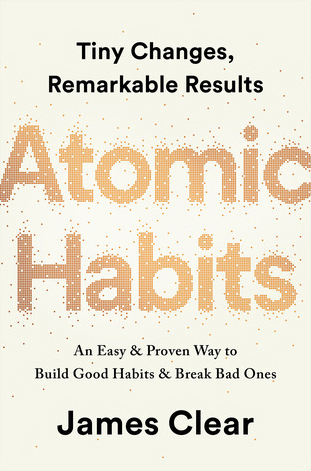
Atomic Habits: An Easy & Proven Way to Build Good Habits & Break Bad Ones — James Clear
First published: October 16, 2018 · Avery (Penguin Random House)
Pages: 319 (hardcover)
Goodreads: 4.32★ (1.4M+ ratings) · view
Audiobook runtime: ~5h 35m · James Clear self-narrated / Penguin Audio canonical production
Commercial scale: 20M+ global sales · 60+ language translations · 200+ consecutive weeks #1 NYT bestseller
Cultural impact: Universal corporate-training / fitness-coaching / personal-development adoption · James Clear 1M-subscriber newsletter · the default 'self-improvement' gift
The 2010s-2020s defining productivity / behavior-change framework — 20+ million copies, 200+ consecutive weeks #1 NYT bestseller, and the single self-help book most commonly recommended as 'the one that actually worked.' Skip the Libby wait with Kindle + free CastReader AI TTS →
Atomic Habits is James Clear's October 2018 systematic framework for building good habits and breaking bad ones — the 319-page book built around the central architecture that small habit changes (1% better or worse every day) compound dramatically over time. Clear organizes practical behavior change into the 4 Laws of Behavior Change (Make it obvious / attractive / easy / satisfying), introduces habit-stacking and environment-design as primary implementation mechanics, and distinguishes outcome-based habits ('I want to lose weight') from identity-based habits ('I'm a person who doesn't skip workouts') — a reframing that many practitioners cite as the book's central insight. The 4.32★ Goodreads rating across 1,400,000+ ratings reflects rare consensus on actionability; Atomic Habits has sold 20+ million copies globally across 60+ language translations and spent 200+ consecutive weeks as #1 on the NYT bestseller list — among the longest #1 runs of any non-fiction title in NYT history. Clear's weekly newsletter (1M+ subscribers), Habits Academy online course, and public-speaking practice reinforced the book's momentum. The book has become the default gift for anyone interested in self-improvement and is widely used in corporate onboarding, fitness coaching, addiction recovery, and educational settings. At 5h 35m with James Clear's self-narrated Penguin Audio production, Atomic Habits is the most-compact high-impact self-help audiobook of the 2010s-2020s — and among the most-re-listened productivity audiobooks in the category.
This guide covers the 5h 35m runtime, the James Clear self-narrated canonical production, the 4-Laws framework, and every free / paid path.
Why 5h 35m Matters for Self-Help Productivity
Behavior-change and productivity runtime benchmark.
| Title | Runtime | Year | Goodreads rating |
|---|---|---|---|
| Atomic Habits (Clear) — this book | 5h 35m | 2018 | 4.32★ |
| The Power of Habit (Duhigg) | 10h 53m | 2012 | 4.13★ |
| Tiny Habits (B.J. Fogg) | 10h 12m | 2019 | 4.14★ |
| Deep Work (Cal Newport) | 7h 44m | 2016 | 4.20★ |
| Essentialism (McKeown) | 6h 44m | 2014 | 4.01★ |
| The 7 Habits of Highly Effective People | 13h 4m | 1989 | 4.16★ |
| Mindset (Dweck) | 10h 39m | 2006 | 4.06★ |
| The Let Them Theory (Robbins) | 9h 48m | 2024 | 4.31★ |
Atomic Habits is among the most-compact high-impact self-help audiobooks — shorter than peer productivity titles while delivering a complete systematic framework. At 5h 35m, the book reads in 2-3 commute days or a single weekend at 1.25x-1.5x — making it the easiest self-help entry point for listeners testing whether the category works for them.
Three Listening Modes
Mode 1 — Canonical Audio (James Clear Penguin Audio 2018). $14.95 Audible credit or library-borrow via Libby; Audible Plus subscribers check rotating availability. Clear's self-narration is the unambiguous industry-standard production.
Mode 2 — AI TTS via CastReader. Free, unlimited re-listens, adjustable speed, pronunciation overrides for 4 Laws of Behavior Change / habit-stacking / temptation-bundling / identity-based-habits terminology. Particularly valuable for monthly / quarterly re-engagement cadence. See CastReader for Kindle.
Mode 3 — Libby / Hoopla library borrow. Libby 1-3 week wait. Hoopla instant-lend where available. The library route trades wait time for zero-dollar cost.
The James Clear Self-Narrated Canonical Production
Penguin Audio's 2018 self-narrated Atomic Habits production is the unambiguous industry-standard recording. James Clear self-narrates — uncommon for non-fiction but particularly effective here. Clear's direct, clean, slightly-formal delivery matches the book's applied-framework structure precisely; the author's personal conviction comes through in the examples (his high-school baseball injury, his habit-tracking journal, his identity-based-habits case studies), and the tone is closer to a well-prepared TED talk than a typical self-help audiobook.
No alternative production competes. Clear's delivery is distinctive for its lack of affectation — listeners frequently comment that his voice is one of the reasons Atomic Habits feels implementable rather than merely motivational. For first-listeners: Penguin Audio James Clear self-narration is the standard and unrivaled commercial recommendation. Many practitioners maintain this audiobook on rotation, re-listening specific chapters after each failed habit experiment or life-transition moment.
The 4 Laws of Behavior Change
Law 1 — Make It Obvious (Cue). Habits begin with environmental cues. Clear introduces habit-stacking ('after [current habit], I will [new habit]'), the habits scorecard (listing all current habits to build awareness), implementation intentions ('I will [behavior] at [time] in [location]'), and environment design (rearranging physical space to make cues for desired habits visible and cues for undesired habits invisible). The inverse — making bad-habit cues invisible — breaks established patterns.
Law 2 — Make It Attractive (Craving). Humans pursue habits that feel rewarding. Clear introduces temptation bundling (pairing a required habit with a wanted reward), joining cultures where the desired habit is normal behavior, and reframing motivation ('I get to work out' rather than 'I have to'). The inverse — making bad habits feel unattractive — disrupts craving.
Law 3 — Make It Easy (Response). Habit formation favors friction reduction. Clear introduces the 2-minute rule (starting any new habit at a 2-minute minimum version — 'read one page' rather than 'read for an hour'), environment-proof systems (removing friction from desired habits, adding friction to undesired ones), commitment devices (locking future self into better behavior), and automation (technology removing decision points). The inverse — making bad habits difficult — disrupts execution.
Law 4 — Make It Satisfying (Reward). Humans repeat habits that feel rewarding immediately. Clear introduces immediate-reward reinforcement (celebrating small wins), habit tracking (visual markers like the Seinfeld 'don't break the chain' calendar method), commitment devices with partners (accountability), and delayed-gratification reframing. The inverse — making bad habits unsatisfying via accountability contracts or immediate-consequence systems — disrupts reinforcement.
Identity-Based Habits: The Central Reframe
Clear's most-cited contribution is the distinction between outcome-based and identity-based habits:
Outcome-based: 'I want to lose weight.' 'I want to write a novel.' 'I want to run a marathon.' Focus is on the goal; behavior follows.
Identity-based: 'I'm a person who doesn't skip workouts.' 'I'm a writer who publishes weekly.' 'I'm a runner.' Focus is on the person you're becoming; behavior becomes evidence of identity.
Clear argues the identity-based frame produces durable habits because each habit instance reinforces the self-concept — 'every action is a vote for the type of person you wish to become.' The framework has become central in contemporary behavior-change coaching practice and is widely cited in the post-2018 self-help literature.
The Plateau of Latent Potential
Clear's second major framework: habits often feel ineffective because results lag behind effort. The 'plateau of latent potential' describes the period where the habit is compounding invisibly before becoming externally visible. Most habit abandonment happens during this plateau. Clear argues sustaining habits through the latent-potential phase requires trust in the compound mathematics rather than immediate-result feedback — a psychological reframe that pairs naturally with the 1%-better-every-day compounding thesis.
Why Atomic Habits Defines 2010s-2020s Behavior Change
James Clear's October 2018 publication synthesized and packaged prior behavior-change research into the single most-implementable framework in contemporary self-help. The book's foundational achievements:
4-Laws systematic framework. Clear's architectural achievement is reducing prior research (Duhigg's cue-routine-reward loop from The Power of Habit 2012, Fogg's tiny-habits from Stanford 2009+, Gawande's checklist methodology) into a single 4-Laws behavior-change system immediately applicable to any habit-change goal.
Identity-based habits reframe. The shift from outcome-thinking to identity-thinking has become central in contemporary behavior-change coaching and is widely cited across self-help, fitness, addiction-recovery, and educational domains.
Plateau of Latent Potential. The framework explaining why habits feel ineffective before breakthrough moments is frequently cited as one of the book's most-practical insights.
Compound-mathematics framing. The 1%-better-every-day thesis (1% daily improvement for 365 days = 37x growth) provides a mathematically-rigorous frame for habit effort investment that many practitioners cite as motivating.
Actionability-over-inspiration voice. Clear's designed choice to emphasize implementation over motivation differentiated Atomic Habits from competing self-help titles — readers consistently cite this actionability as the defining feature versus alternative productivity books.
The 200-Week NYT #1 Phenomenon
Atomic Habits debuted on the NYT bestseller list in October 2018 and has held #1 position for 200+ consecutive weeks as of April 2026 — among the longest #1 runs of any non-fiction title in NYT history. Contributing factors:
Compact format. The 5h 35m audiobook / 319-page book is approachable for commute listening, single-weekend reading, and corporate-training distribution.
Cross-demographic appeal. Atomic Habits reaches fitness, addiction-recovery, professional-development, educational, and general-interest audiences with a single framework.
Corporate adoption. Fortune 500 companies use Atomic Habits as new-hire onboarding, leadership training, and personal-development curriculum — generating sustained bulk sales.
Clear newsletter amplification. James Clear's weekly 3-2-1 Thursday newsletter (1M+ subscribers) sustains reader engagement and generates continuous re-recommendation traffic.
Gift-purchase dynamic. Atomic Habits has become the default self-improvement gift — birthdays, graduations, corporate holiday gifts, new-manager promotions — generating steady multi-copy purchases beyond single-reader demand.
Free and Paid Listening Paths (April 2026)
Free paths:
- Libby — Penguin Audio edition via U.S. library card, 1-3 week waits
- Hoopla — instant-lend (no wait) where available
- Audible Plus — occasional rotating Atomic Habits
- Spotify Premium — fits comfortably within 15h monthly audiobook allocation
- CastReader — free AI TTS on any Kindle edition
Paid paths:
- Audible Premium — 1 credit ($14.95) for Penguin Audio or purchase $15-20
- Kindle ebook — $11-14 (no public-domain option, still under copyright)
- Physical — Avery paperback $11-16, hardcover $18-25
First-Time Listener Guide
Atomic Habits is the canonical productivity audiobook of the post-2018 era — James Clear's commercial breakout that established the "Four Laws of Behavior Change" framework (Make it Obvious / Make it Attractive / Make it Easy / Make it Satisfying). Clear's self-narration is canonical; his deliberate, exposition-clear American-business-podcast register handles the framework material at 1.0x baseline; speed-listening past 1.25x flattens the framework's actionable specificity. The 5h 35m runtime is single-weekend-listenable; many practitioners describe completing Atomic Habits in two-to-three sessions (Friday evening + Saturday morning + Sunday afternoon) and then re-engaging specific chapters monthly.
If Atomic Habits is your first productivity-or-behavior-change book: the recommended next listen is The Power of Habit (Charles Duhigg, 2012, ~10h) — the predecessor that established the keystone-habit framework Clear built on. Deep Work (Cal Newport, 2016, ~7h) is the focused-attention companion; Mindset (Carol Dweck, 2006, ~10h) is the foundational growth-vs-fixed-mindset background. Save the contemporary descendants — Four Thousand Weeks (Burkeman, 2021, ~7h), The Let Them Theory (Robbins, 2024, ~6h), Hidden Potential (Grant, 2023, ~9h) — for after you've internalized Clear's foundational framework.
For listeners considering Atomic Habits as their first non-fiction-on-audio: the production-listening pattern differs from fiction. Fiction typically rewards uninterrupted attention; productivity-framework audio rewards listening + immediate-implementation cycles. Many practitioners describe listening to a chapter, then putting the audio aside and applying the framework to a current habit-formation goal before returning. Don't binge-listen Atomic Habits as fiction-equivalent — the cognitive load is implementation, not narrative.
For listeners pairing Atomic Habits with related listening contexts: the Huberman Lab podcast episodes on habit formation (Dr. Andrew Huberman) extend Clear's framework with neuroscience-mechanism context that the book doesn't address. Clear's own "3-2-1 Newsletter" (free email, ~150K subscribers) extends the book's framework with weekly applied content.
Why Kindle + CastReader Wins for Atomic Habits
For listeners prioritizing flexible chapter-specific re-engagement over Clear's canonical self-narration, Kindle + CastReader free AI TTS is the optimal path:
- Unlimited re-listens — no credit cost per engagement, critical for monthly / quarterly practitioner re-reads
- Adjustable pace — particularly valuable for quick 2x re-listens of specific Laws during habit-implementation
- Pronunciation overrides — configure atomic habits, habit stacking, temptation bundling, 2-minute rule, identity-based habits, plateau of latent potential, 4 Laws cue-craving-response-reward, Charles Duhigg, B.J. Fogg, Michael Phelps, David Brailsford, British Cycling, San Antonio Spurs, Aristotle, Cato the Elder for consistent AI narration
- Chapter-specific bookmarking — listeners commonly bookmark Law 1 (Make It Obvious), Law 3 (Make It Easy), identity-based-habits chapter, and plateau-of-latent-potential chapter for targeted re-engagement
- Paragraph highlighting — supports concentrated study of Clear's framework structure
For listeners wanting Clear's self-narration on first listen, use Audible or Libby; then switch to CastReader for ongoing practitioner re-engagement. Many committed Atomic Habits readers alternate — Penguin Audio for the first complete listen (experiencing Clear's authorial voice), CastReader for ongoing specific-Law re-listens.
Atomic Habits and the Productivity Canon
The 2010s-2020s productivity / behavior-change wave produced several canonical works alongside Atomic Habits:
- The Power of Habit (Charles Duhigg, 2012) — behavior-science predecessor
- Tiny Habits (B.J. Fogg, 2019) — Stanford-research-backed peer
- Deep Work (Cal Newport, 2016) — focused-productivity peer
- Essentialism (Greg McKeown, 2014) — minimalism-productivity peer
- The 7 Habits of Highly Effective People (Stephen Covey, 1989) — self-help canonical predecessor
- The Let Them Theory (Mel Robbins, 2024) — 2024-2025 self-help phenomenon
For listeners building the productivity canon: Atomic Habits → The Power of Habit → Tiny Habits → Deep Work → Essentialism forms a five-book progression covering behavior-formation through focused-execution through priority-management. The sequence is approximately 40 hours of total audiobook runtime.
Related Reading
For listeners building the productivity / self-help canon, these CastReader guides pair naturally with Atomic Habits:
- The Let Them Theory (Mel Robbins) — TTS & Audiobook Guide · Mel Robbins self-narrated 9h 48m, 2024-2025 self-help phenomenon
- The Body Keeps the Score (Bessel van der Kolk) — TTS & Audiobook Guide · Sean Pratt 16h 17m, trauma-science decade-defining non-fiction peer
- The Anxious Generation (Jonathan Haidt) — TTS & Audiobook Guide · Sean Pratt 10h 7m, 2024 social-psychology bestseller
- Sapiens (Yuval Noah Harari) — TTS & Audiobook Guide · Derek Perkins Harper Audio 15h 17m, big-history synthesis peer
- The Alchemist (Paulo Coelho) — TTS & Audiobook Guide · Jeremy Irons 4h, philosophical-fable peer
Limitations and Honest Notes
- Still under copyright — first published 2018; James Clear remains alive and publishing; copyright protection continues indefinitely. No free public-domain audio; all legal audio requires Audible/Libby/Hoopla routes.
- Framework over narrative — Atomic Habits is built around applicable frameworks rather than motivational storytelling. Readers expecting memoir-driven inspiration may find the tone drier than Duhigg's The Power of Habit; readers wanting actionable implementation will find the applied focus exactly right.
- Length is compact — at 5h 35m, Atomic Habits is the shortest major productivity audiobook; single-weekend-listenable at 1.25x-1.5x. This accessibility is part of the book's cross-audience appeal.
- Implementation is the challenge — Atomic Habits delivers the framework; actual habit formation requires sustained practitioner effort. Clear explicitly acknowledges this and pairs the book with his Habits Academy course for practitioners wanting structured implementation support.
- Post-2018 related reading — the 2020s behavior-change literature has continued evolving (The Let Them Theory 2024, Four Thousand Weeks 2021); serious practitioners should pair Atomic Habits with subsequent titles for contemporary context.
Related: Listen to Kindle | Audible Alternative Free | Turn Ebook into Audiobook | Send to Phone | Kindle Audiobook Free
