Don Quixote Audiobook & Text to Speech Guide (2026) — Miguel de Cervantes's 1605/1615 Foundational Western Novel and Spanish Golden Age Masterwork
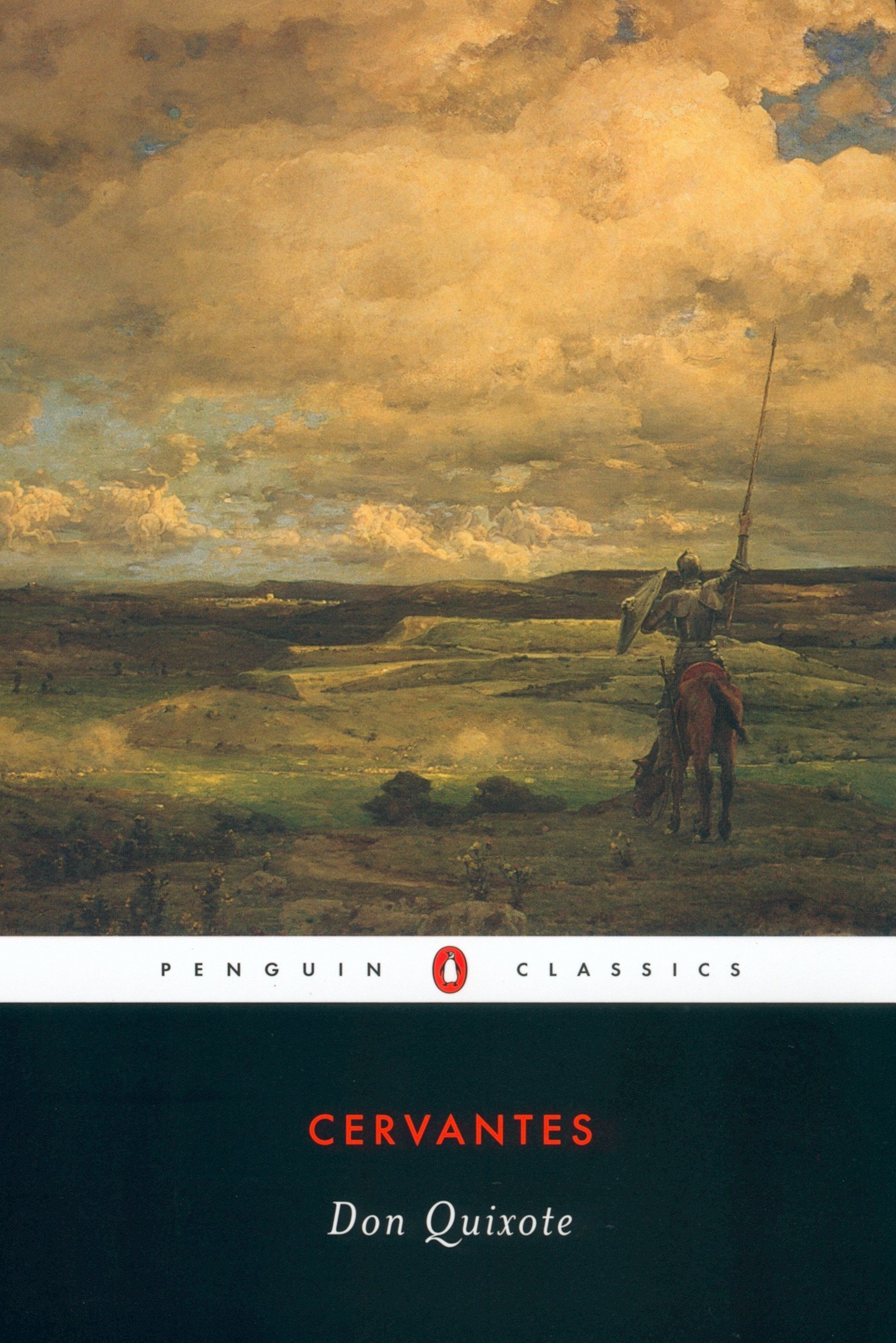
Don Quixote — Miguel de Cervantes (trans. Edith Grossman)
First published: 1605 Part 1 / 1615 Part 2 — Juan de la Cuesta (Madrid)
Pages: 1023 (Harper Perennial Modern Classics / Grossman)
Goodreads: 3.91★ (309K+ ratings) · view
Audiobook runtime: 39h 22m George Guidall / Recorded Books canonical English (Grossman) · ~12h Roy McMillan / Naxos abridged (Smollett) · LibriVox free Ormsby / Motteux
Commercial scale: 500M+ cumulative global sales (second only to the Bible by some estimates) · 421 years continuous print · 100+ language translations · global public-domain status
Awards & Recognition: 2002 Nobel Institute '100 Greatest Writers' poll — named 'most meaningful book of all time' by overwhelming margin · Harold Bloom Western Canon · universally-taught in Western-canon / Spanish-literature / comparative-literature curricula · foundational text of modern novel
Cultural position: Terry Gilliam 2018 The Man Who Killed Don Quixote w/ Adam Driver / Jonathan Pryce · Man of La Mancha 1965 Broadway musical (1972 film w/ Peter O'Toole / Sophia Loren) · 50+ film / TV adaptations across all languages · Dostoevsky / Flaubert / Nabokov / Kundera / García Márquez direct-homage · 'tilting at windmills' entered universal Western cultural lexicon
Cervantes's 1605/1615 foundational masterwork — the La Mancha hidalgo Alonso Quixano's chivalric-romance-induced madness transforming him into knight-errant Don Quixote de la Mancha, his adventures with illiterate peasant-squire Sancho Panza across rural Spain, the famous windmill-tilting and barber's-basin-helmet episodes, Part 2's metafictionally-complex encounters with characters who have read Part 1, Sancho's Barataria island-governorship, Quixote's deathbed-renunciation of chivalric romance — has been universally regarded as the foundational Western novel and the originating point for all modern prose fiction for 421 years, with George Guidall's canonical 39h 22m Recorded Books production of Edith Grossman's 2003 translation, Terry Gilliam's 2018 adaptation completing his 25-year obsession, the Man of La Mancha Broadway-canonical musical tradition, 500M+ estimated global cumulative sales (second only to the Bible), and the 'tilting at windmills' metaphor achieving folkloric-level universal Western cultural currency. Use CastReader AI TTS on Kindle Don Quixote text →
Don Quixote is Miguel de Cervantes's 1605/1615 Spanish novel about Alonso Quixano, a middle-aged hidalgo (minor Spanish nobleman) from La Mancha who becomes so obsessed with reading chivalric romances that he loses his sanity, renames himself Don Quixote de la Mancha, polishes his great-grandfather's rusty armor, adopts his nag Rocinante as noble steed, selects neighboring farmer's daughter Aldonza Lorenzo as his imagined 'Dulcinea del Toboso,' and sets forth to revive the dead tradition of knight-errantry — joined by illiterate peasant Sancho Panza as his 'squire' promised governorship of an island-kingdom. Part 1 (1605, 52 chapters) follows their episodic adventures through rural Spain: the famous windmill-tilting (which Quixote believes are giants), the flock of sheep that Quixote attacks as an opposing army, the barber's basin Quixote wears as the Helmet of Mambrino, the Sierra Morena mountain-exile, the inn-episodes with embedded-stories (El Curioso Impertinente, the Captive's Tale), and Quixote's final return home caged by friends convinced he has been enchanted. Part 2 (1615, 74 chapters, 10 years after Part 1) features substantial metafictional complexity — Quixote and Sancho encounter characters who have read Part 1 and recognize them; the Duke and Duchess extensively manipulate them for aristocratic entertainment; Quixote descends into the Cave of Montesinos encountering Dulcinea allegedly enchanted as a peasant; Sancho actually becomes governor of the fictional island Barataria and governs wisely before resigning; Don Quixote is defeated in duel by the Knight of the White Moon (disguised Sansón Carrasco), forcing him to abandon knight-errantry; Don Quixote returns home, falls ill, regains his sanity, renounces chivalric romance, and dies. The novel's central tension is the Don Quixote / Sancho Panza dialectical pairing — the mad-idealist master who sees giants, enchanted castles, and beautiful princesses; the practical-skeptical peasant squire who sees windmills, inns, and farm-girls — together embodying the idealism-vs-materialism polarity that has defined Western literary consciousness for 400 years. At 39h 22m, George Guidall's Recorded Books production of Edith Grossman's 2003 English translation is the canonical audiobook; LibriVox hosts multiple free public-domain productions of the Ormsby (1885), Motteux (1712), and Shelton (1612) English translations.
This guide covers the 39h 22m runtime, the 126-chapter 2-part architecture, the canonical translation choices, and every free / paid path.
Why 39h 22m Matters
Foundational Western literature and Spanish Golden Age runtime and rating benchmark.
| Title | Runtime | Year | Goodreads rating |
|---|---|---|---|
| Don Quixote (Cervantes) — this book | 39h 22m | 1605/1615 | 3.91★ |
| The Odyssey (Homer) | 13h | ~8th BCE | 3.84★ |
| The Iliad (Homer) | 24h | ~8th BCE | 3.86★ |
| The Divine Comedy (Dante) | 24h | 1320 | 4.08★ |
| Paradise Lost (Milton) | 12h | 1667 | 3.81★ |
| Gargantua and Pantagruel (Rabelais) | 30h | 1532-1564 | 3.83★ |
| Tom Jones (Fielding) | 40h | 1749 | 3.84★ |
| Ulysses (Joyce) | 45h | 1922 | 3.70★ |
Takeaway: Don Quixote is the foundational Western novel — the originating point for all modern prose fiction tradition. The 39h 22m George Guidall / Recorded Books production is the canonical first-listen recommendation. For first-time classical-literary-canon listeners: Homer (Odyssey 13h or Iliad 24h) → Don Quixote (39h — novel-origin) → Shakespeare (drama) → 19th-century realist novel (Tolstoy, Dostoevsky, Flaubert) → 20th-century modernist novel (Joyce, Faulkner, García Márquez) forms the canonical Western-literary-progression. Don Quixote's 421 years of continuous print, 500M+ cumulative global sales (second only to the Bible by some estimates), 100+ language translations, and universal scholarly-canonical recognition establish it as the single most-important novel in Western literary history.
The 1605-2026 Trajectory
- 1547 September 29: Miguel de Cervantes Saavedra born in Alcalá de Henares, Spain
- 1571 October 7: Cervantes fights in the Battle of Lepanto — loses use of left hand ('the one-handed man of Lepanto')
- 1575-1580: Cervantes captured by Barbary pirates, spends 5 years as Algiers slave before ransom
- 1585: La Galatea published — Cervantes's pastoral-romance first novel (commercially unsuccessful)
- 1603-1604: Cervantes composes Don Quixote Part 1 while working as royal-commissary tax-collector
- 1605 January: Don Quixote Part 1 published by Juan de la Cuesta (Madrid) — 52 chapters, immediate commercial success, sold out multiple printings in first year
- 1612: Thomas Shelton English translation Part 1 — first modern-novel English translation
- 1614 July: Alonso Fernández de Avellaneda publishes unauthorized Don Quixote Part 2 sequel — Cervantes accelerates his own Part 2 composition in response
- 1615 November: Cervantes's own Don Quixote Part 2 published by Juan de la Cuesta (Madrid) — 74 chapters, includes explicit refutations of Avellaneda's unauthorized sequel and Quixote's definitive deathbed ending as legal-anchor
- 1616 April 22: Miguel de Cervantes dies in Madrid — one day before William Shakespeare's death (April 23, 1616)
- 1712: Pierre Antoine Motteux French-to-English translation — canonical 18th-century English Don Quixote
- 1755: Tobias Smollett English translation — widely-respected literary-satiric register
- 1885: John Ormsby English translation — canonical late-Victorian Don Quixote
- 1949: Samuel Putnam English translation — academically-rigorous mid-20th-century canonical
- 1965: Dale Wasserman's Man of La Mancha Broadway musical opens (Richard Kiley / Joan Diener)
- 2003: Edith Grossman English translation (HarperCollins) — widely-regarded canonical contemporary English
- 2005: Instituto Cervantes 400th-anniversary commemorative Spanish edition
- 2018 May: Terry Gilliam's The Man Who Killed Don Quixote finally completed — 25-year obsession-project; Adam Driver / Jonathan Pryce
- 2026 April: 421 years continuous print · 500M+ cumulative global sales · global public-domain · George Guidall Recorded Books remains canonical English audiobook
The 126-Chapter 2-Part Architecture
Understanding Cervantes's bipartite novel architecture:
Part 1 (1605, 52 chapters, ~450 pages, ~16-17h audiobook):
- Chapters 1-6: Quixote's backstory, first expedition and return home, book-burning by priest and barber
- Chapters 7-15: Second expedition with Sancho Panza — the famous windmill-tilting (Chapter 8), the Basque duel, the Benedictine-friar and Toledan-merchants episodes
- Chapters 16-22: Inn-episodes — the muleteer and Maritornes scene, the galley-slaves liberation, the barber's basin / Helmet of Mambrino
- Chapters 23-27: Sierra Morena mountain-exile — Cardenio's abandoned-lover story, Quixote's Beltenebros penance
- Chapters 28-35: Embedded-narratives at the inn — Dorothea's disguised princess, El Curioso Impertinente (the Impertinent Curiosity embedded novella)
- Chapters 36-42: The Captive's Tale — longest embedded narrative
- Chapters 43-47: Wineskin-battle, continued inn-episodes
- Chapters 48-52: Canon-of-Toledo literary-theory discussion, Quixote's caged return home
Part 2 (1615, 74 chapters, ~573 pages, ~22-23h audiobook):
- Chapters 1-8: Quixote's recovery and third expedition planning; encounter with Sansón Carrasco (bachelor's degree-holder from Salamanca who will later become the Knight of the White Moon)
- Chapters 9-16: Third expedition — the three peasant-girls Sancho presents as 'enchanted Dulcinea,' the Cart of Death, the Knight of the Mirrors (Carrasco in disguise) duel
- Chapters 17-22: The Cave of Montesinos (Chapter 22-23) — Quixote's prophetic underground-descent encountering Dulcinea-enchanted-as-peasant
- Chapters 23-30: The puppet-show episode, the braying-aldermen conflict
- Chapters 31-57: The extended Duke-and-Duchess-castle sequence — Countess Trifaldi's bearded-ladies, the wooden horse Clavileño, Sancho's Barataria governorship (governs wisely, resigns)
- Chapters 58-65: Return journey, Camacho's wedding, the pilgrim-episode, Barcelona arrival, the enchanted-head
- Chapters 66-74: The Knight of the White Moon's defeat of Quixote in Barcelona, Quixote's enforced return home abandoning knight-errantry, Quixote's deathbed renunciation of chivalric romance and death
Major Episodes / Canonical Set-Pieces:
- Part 1 Chapter 8: Windmill-tilting (the single most-famous episode; 'tilting at windmills' global metaphor)
- Part 1 Chapters 16-17: Inn-episode with Maritornes (comic-physical slapstick climax of Part 1)
- Part 1 Chapter 21: Barber's basin as Helmet of Mambrino (Quixote's perceptual delusion textbook-example)
- Part 1 Chapters 23-27: Sierra Morena exile and Cardenio embedded-story
- Part 1 Chapters 33-35: El Curioso Impertinente embedded novella
- Part 2 Chapter 22-23: Cave of Montesinos (metafictional-prophetic underground descent)
- Part 2 Chapters 42-53: Sancho's Barataria governorship (the Sancho character-arc apex)
- Part 2 Chapter 64: Quixote's defeat by Knight of the White Moon
- Part 2 Chapter 74: Quixote's deathbed renunciation and death
126 chapters total (52 Part 1 + 74 Part 2), 1023 pages total. The windmill-tilting (Part 1 Ch. 8), Cave of Montesinos (Part 2 Ch. 22-23), and Quixote's deathbed (Part 2 Ch. 74) are widely studied as the three structural pillars of the novel.
The Translation Landscape
Don Quixote has a rich 400+ year English translation tradition. Choosing between translations significantly affects the reading / listening experience:
English Translations:
- Thomas Shelton 1612 — the first English translation; completed while Cervantes was still alive; archaic Elizabethan-Jacobean register; historically significant but demanding for modern readers
- Pierre Antoine Motteux 1712 — French-to-English via earlier French translation; canonical 18th-century English Don Quixote; criticized for second-hand-translation-from-French imprecision
- Tobias Smollett 1755 — Scottish novelist's translation; canonically-praised for capturing Cervantes's comic-satiric energy (Smollett was himself a comic-satiric novelist of Fielding's generation); slightly loose in fidelity but highly-readable
- John Ormsby 1885 — late-Victorian canonical; literal-fidelity register; Project Gutenberg standard; widely-respected
- Samuel Putnam 1949 — academically-rigorous mid-20th-century canonical; extensive footnotes
- J.M. Cohen 1950 — Penguin Classics standard for 50 years; accessible register
- Edith Grossman 2003 — widely-regarded canonical contemporary English; HarperCollins; the translation used in George Guidall / Recorded Books audiobook; preserves Cervantes's tonal-range (comic register, noble register, satiric register) in contemporary English; strongly recommended for first-time readers
- Tom Lathrop 2005 — Signet Classics; accessible-modern register; extensive explanatory apparatus
Spanish Original Editions:
- Real Academia Española / Instituto Cervantes 2005 commemorative 400th-anniversary edition (canonical scholarly Spanish)
- Cátedra academic edition (with extensive scholarly apparatus)
- Castalia academic edition
- Debolsillo mass-market contemporary Spanish
For first-time English readers: Edith Grossman 2003 (Harper Perennial). For free public-domain path: John Ormsby 1885 (Project Gutenberg). For abridged introduction: Tobias Smollett 1755 (Naxos audiobook). For Spanish-original or Spanish-learners: Real Academia Española / Instituto Cervantes edition.
Every Way to Listen
- George Guidall / Recorded Books — 39h 22m canonical first-listen English (Edith Grossman 2003 translation)
- Roy McMillan / Naxos — ~12h abridged (Tobias Smollett 1755 translation)
- Simon Vance / Tantor Audio — unabridged (John Ormsby 1885 translation)
- Ronald Pickup / Pan Macmillan — British-register alternative
- LibriVox free public-domain — Bob Neufeld (Ormsby), multiple other volunteer productions
- Pedro Alberto Roa / Spanish — Cervantes-original-language production
- Audible Premium 1 credit — ~$14.95 covers any commercial production
- Audible purchased audiobook — $20-35 for Guidall 39h 22m canonical
- Libby (U.S. libraries) — 1-2 week wait; George Guidall / Recorded Books reliably stocked
- Hoopla — classical-literature catalog
- Spotify Premium audiobook — 39h 22m requires 3 monthly 15-hour allocations (cross 3 billing cycles) for commercial productions
- LibriVox free — zero-cost Ormsby / Motteux paths (Don Quixote is global public-domain)
- Project Gutenberg free Kindle — Ormsby / Motteux / Shelton translations
- Purchased Kindle edition — $10-18 Edith Grossman Harper Perennial / Tom Lathrop Signet / J.M. Cohen Penguin Classics
- CastReader AI TTS with Kindle Don Quixote edition — unlimited re-listens, adjustable pace
Don Quixote's global public-domain status means comprehensive free-path options across Kindle / audio.
Libby Wait Times (April 2026)
Survey of major U.S. library networks as of April 2026.
- NYPL / Brooklyn Public Library: 0-1 week wait (George Guidall / Recorded Books prominently stocked; universal-canonical-assignment demand)
- Los Angeles Public Library: 0-1 week wait
- Chicago Public Library: 0-1 week wait
- Seattle Public Library: 0-1 week wait
- Boston Public Library: 0-1 week wait (Spanish-literature-canonical commitment)
- Miami-Dade Public Library: 0-1 week wait (Spanish-language demand; Spanish-original productions carried)
Don Quixote has very short library waits because its universal-canonical-assignment status ensures every major US library system carries multiple digital copies and multiple translations; Libby is strongly-recommended free path for Guidall / Recorded Books production specifically.
Why Kindle + CastReader Suits Don Quixote
Don Quixote's 126-chapter bipartite architecture and substantial 39h 22m runtime make it uniquely well-suited to CastReader AI TTS — 6-8 week evening-session consumption pattern rewards pause-and-resume bookmark flexibility, and the novel's canonical-universal status means Western-canon / Spanish-literature students commonly re-read across semesters.
Listeners commonly return to:
- Part 1 Chapter 1 opening ('In a village of La Mancha, the name of which I have no desire to call to mind, there lived not long since one of those gentlemen that keep a lance in the lance-rack...')
- Part 1 Chapter 8 windmill-tilting (the single most-famous episode in Western literature after the Odyssey; 'tilting at windmills' universal metaphor)
- Part 1 Chapters 16-17 inn-episode with Maritornes
- Part 1 Chapter 21 barber's basin / Helmet of Mambrino
- Part 1 Chapters 23-27 Sierra Morena exile / Cardenio story
- Part 1 Chapters 33-35 El Curioso Impertinente embedded novella
- Part 2 Chapter 10 Sancho's 'enchanted Dulcinea' deception
- Part 2 Chapter 22-23 Cave of Montesinos (metafictional-prophetic underground descent; widely studied as Part 2's structural centerpiece)
- Part 2 Chapters 42-53 Sancho's Barataria governorship (Sancho character-arc apex)
- Part 2 Chapter 64 Knight of the White Moon Barcelona duel defeat
- Part 2 Chapter 74 Quixote's deathbed renunciation ('I was mad, but I am now in my senses; I was once Don Quixote of La Mancha, but am now, as I said before, Alonso Quixano the Good')
For Cervantes-descended Western-canon paired-reading (Flaubert's Madame Bovary, Dostoevsky's The Idiot, Mark Twain's A Connecticut Yankee in King Arthur's Court, Graham Greene's Monsignor Quixote, García Márquez's One Hundred Years of Solitude), CastReader's cross-book bookmarking enables comparative-literature parallel engagement.
CastReader's pronunciation overrides handle Cervantes's extensive Spanish proper-noun catalog: Don Quixote de la Mancha, Alonso Quixano, Sancho Panza, Dulcinea del Toboso, Aldonza Lorenzo, Rocinante, Sansón Carrasco, the Knight of the White Moon / Knight of the Mirrors, Cardenio, Luscinda, Dorothea, Fernando, Duke and Duchess, Countess Trifaldi, Barataria, Montesinos, Cide Hamete Benengeli (Cervantes's fictional Moorish-historian frame-narrator), La Mancha, Toboso, the Sierra Morena. The Spanish pronunciation 'kee-HO-tay' is linguistically-authoritative vs the anglicized 'kwik-sote' — CastReader offers pronunciation-override choice matching the Edith Grossman translation's recommended Spanish pronunciation.
Send to Phone for Western-Canon Progression
At 39h 22m Don Quixote requires substantial sustained commitment — comparable to War and Peace or Les Misérables. Send to Phone preserves CastReader position across device switches — complete Part 1 (17h, Chapters 1-52) across weeks 1-3, Part 2 (23h, Chapters 1-74) across weeks 4-7 for a 7-week total consumption. For Western-canon progression, completing Don Quixote first and proceeding to 19th-century realist novels (Madame Bovary 15h → The Brothers Karamazov 40h → Anna Karenina 35h) over 6-9 months forms the canonical Western-literary immersion rhythm.
Limitations and Honest Notes
- Don Quixote's 126-chapter 2-part architecture with 10-year gap between parts creates structural unevenness — Part 1's broader comic-satirical register differs significantly from Part 2's metafictionally-complex register; first-time readers expecting consistent tone across both parts may be disoriented by the shift
- Cervantes's 1600s Castilian Spanish presents translation-dependency — reader experience varies significantly between Ormsby literal-Victorian, Smollett comic-satiric, and Grossman contemporary-canonical translations; choice of translation materially affects the novel
- Part 1's embedded-narratives (El Curioso Impertinente in Chapters 33-35, the Captive's Tale in Chapters 36-42) are sometimes experienced as digressive interruptions by first-time readers — the embedded-narrative technique is a Cervantine novelistic innovation but challenges narrative-momentum expectations
- Content considerations — extensive slapstick violence (Quixote and Sancho are frequently beaten and injured in the course of their adventures), some explicit sexuality in embedded tales (particularly El Curioso Impertinente), period-specific attitudes toward Spanish Jews / Moors / moriscos (reflecting 1600s post-Reconquista Iberian climate), and the central premise of Quixote's mental illness (contemporary readers may frame this as delusional disorder requiring sensitive framing)
- The complete Parts 1 + 2 at 39h 22m is a sustained 6-8 week commitment — some first-time readers prefer starting with Part 1 only (16-17h), then deciding whether to continue to Part 2 based on engagement
- Cervantes's satirical engagement with the 16th-century chivalric-romance genre (Amadís de Gaula, Palmerín, Belianís, Tirant lo Blanch) assumes familiarity that contemporary readers lack — footnoted editions (Grossman, Lathrop, Cohen) help contextualize Cervantes's parodic targets
- Abridged productions (Roy McMillan / Naxos ~12h) omit Part 1's embedded-narratives (El Curioso Impertinente, Captive's Tale) and Part 2's Barataria sequence — efficient entry-point but loses substantial novel-architecture
- Some contemporary readers find Quixote's repeated beatings and humiliations emotionally exhausting across sustained listening — Cervantes's slapstick-satirical register may feel period-specific / difficult
Related Reading
- Listen to Kindle — CastReader's Kindle-to-TTS path
- Send to Phone — cross-device position sync
- Kindle Text to Speech — Kindle TTS options overview
- Turn Kindle into Audiobook Free — free audiobook paths
- One Hundred Years of Solitude (García Márquez) Audiobook Guide — Spanish-language canonical descent (Pablo Neruda's 'greatest revelation in Spanish language since Don Quixote')
- Anna Karenina (Tolstoy) Audiobook Guide — 19th-century realist novel peer
- Les Misérables (Hugo) Audiobook Guide — 19th-century social-historical novel peer
- The Odyssey (Homer) Audiobook Guide — foundational-Western-epic predecessor
