The Outsiders Audiobook & Text to Speech Guide (2026) — S.E. Hinton's Age-16-Written Coppola-Film Greasers-vs-Socs YA-Canon Mandatory Classic
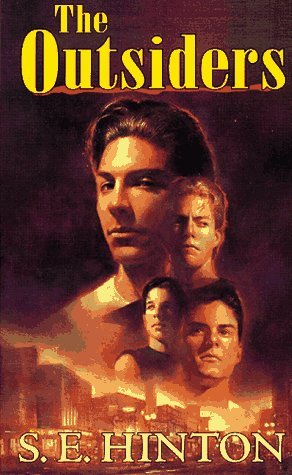
The Outsiders — S.E. Hinton
First published: April 24, 1967 · Viking Press (Hinton was 18 at publication; written at age 15-16)
Pages: 208 (paperback)
Goodreads: 4.15★ (1.6M+ ratings) · view
Audiobook runtime: ~4h 30m · Jim Fyfe / Listening Library canonical production
Commercial scale: 17M+ global sales · 60-year continuous print · universal U.S. middle-school / high-school mandatory curriculum · the founding work of modern YA literature
Cultural impact: Coppola 1983 film with Matt Dillon / Ralph Macchio / C. Thomas Howell / Patrick Swayze / Rob Lowe / Tom Cruise / Emilio Estevez / Diane Lane (the Brat Pack origin) · 'Stay gold, Ponyboy' / Greasers-vs-Socs shared cultural vocabulary
The founding work of modern YA literature — written by S.E. Hinton at age 16, universal U.S. middle-school / high-school mandatory curriculum, 17+ million copies, and Coppola's 1983 Brat Pack film. Skip the Libby wait with Kindle + free CastReader AI TTS →
The Outsiders is S.E. (Susan Eloise) Hinton's April 1967 Tulsa-gang-class-conflict YA classic — the 208-page novel where 14-year-old Ponyboy Curtis, living with his older brothers Darry (20, hardened-guardian since their parents' death) and Sodapop (16, 'movie-star handsome'), narrates the class-divided Greasers-vs-Socs gang world of 1965 Oklahoma. When Johnny Cade (Ponyboy's small, abused-at-home best friend) fatally stabs drunken Soc Bob Sheldon during a fountain-drowning attempt, Johnny and Ponyboy flee with Dallas 'Dally' Winston's help to an abandoned rural church at Windrixville, hiding for a week before returning to discover the church on fire with schoolchildren inside. The church-fire rescue leaves Johnny gravely burned; the novel's second half follows Johnny's hospital decline, the climactic Greaser-Socs rumble, Dally's grief-suicide by cop, and Ponyboy's English-class essay that becomes — in the novel's famous meta-reveal — the book itself. The Outsiders has sold 17+ million copies globally across 60-year continuous print and serves as mandatory middle-school / high-school English curriculum in the majority of U.S. school districts; the 4.15★ Goodreads rating across 1,600,000+ ratings holds across sixty years of forced-assignment reading. Hinton's age-15-16 writing achievement (she was 18 at publication) established YA as a category distinct from children's literature and launched the serious-social-realism YA register that Judy Blume, Robert Cormier, Lois Duncan, Chris Crutcher, and later YA writers built on. Francis Ford Coppola's 1983 film with the Brat Pack cast (Matt Dillon / Ralph Macchio / C. Thomas Howell / Patrick Swayze / Rob Lowe / Tom Cruise / Emilio Estevez / Diane Lane) remains one of the most-remembered teen-film adaptations of the 1980s. At 4h 30m with Jim Fyfe's Listening Library canonical production, The Outsiders is the most-compact high-impact YA audiobook on the curriculum — Stay gold, Ponyboy.
This guide covers the 4h 30m runtime, the Jim Fyfe canonical production, the Coppola film dimension, and every free / paid path.
Why 4h 30m Matters for YA Classic Curriculum
YA-classic and coming-of-age runtime benchmark.
| Title | Runtime | Year | Goodreads rating |
|---|---|---|---|
| The Outsiders (Hinton) — this book | 4h 30m | 1967 | 4.15★ |
| The Catcher in the Rye (Salinger) | 7h 43m | 1951 | 3.80★ |
| Lord of the Flies (Golding) | 6h 33m | 1954 | 3.70★ |
| A Separate Peace (Knowles) | 7h 0m | 1959 | 3.51★ |
| Of Mice and Men (Steinbeck) | 3h 8m | 1937 | 3.90★ |
| To Kill a Mockingbird (Lee) | 12h 17m | 1960 | 4.28★ |
| The Chocolate War (Cormier) | 6h 10m | 1974 | 3.73★ |
| The Giver (Lois Lowry) | 4h 49m | 1993 | 4.14★ |
The Outsiders is among the most-compact mandatory-curriculum YA audiobooks — shorter than Mockingbird, A Separate Peace, and Lord of the Flies, making it the most-accessible assigned-reading audiobook for classroom supplement or student review. At 4h 30m, the novel reads in 2-3 commute days or a single afternoon at 1.25x-1.5x.
Three Listening Modes
Mode 1 — Canonical Audio (Jim Fyfe Listening Library). $14.95 Audible credit or library-borrow via Libby; Audible Plus subscribers check rotating availability. Fyfe's teen-Ponyboy narration is the standard industry recommendation and widely-stocked curriculum supplement.
Mode 2 — AI TTS via CastReader. Free, unlimited re-listens, adjustable speed, pronunciation overrides for Ponyboy / Sodapop / Darry / Johnny / Dallas / Two-Bit / Windrixville / 1965-Tulsa-vernacular. Particularly valuable for student-review re-reads and classroom preparation. See CastReader for Kindle.
Mode 3 — Libby / Hoopla library borrow. Libby 0-1 week wait (very low due to school-library investment). Hoopla instant-lend where available.
The Jim Fyfe Canonical Production
Listening Library's Jim Fyfe recording is the industry-consensus standard Outsiders production. Jim Fyfe brings distinctive 14-year-old Ponyboy first-person delivery with appropriate teen-voice cadence, 1965-Tulsa class-conscious register, and the distinctive emotional flatness Ponyboy-as-narrator maintains through most of the novel before breaking in the final Johnny-hospital and Dally-death chapters.
The production handles Hinton's first-person narration complete, including the famous Windrixville-church 'Nothing gold can stay' Robert Frost poem recitation (a central novel-motif), Johnny's hospital letter to Ponyboy urging him to 'stay gold,' and the novel's closing meta-reveal that Ponyboy's English-class theme essay IS the novel (Ponyboy's opening line — 'When I stepped out into the bright sunlight from the darkness of the movie house...' — is revealed as the essay's opening line). No alternative production currently competes.
For first-listeners: Listening Library Jim Fyfe is the standard industry recommendation. Given The Outsiders's mandatory-curriculum status, this production is widely stocked at U.S. school libraries and is frequently used as classroom audio supplement for students with reading-level or audio-learning needs.
The Plot: Greasers-Socs-Church-Fire-Rumble Architecture
Opening — Drive-In Meeting Cherry Valance. 14-year-old Ponyboy Curtis walks home from the Nightly Double drive-in alone and is jumped by a Soc group; his Greaser gang (older brothers Darry and Sodapop, plus Johnny Cade, Dallas 'Dally' Winston, Two-Bit Mathews, Steve Randle) rescues him. The next night, the gang attends the drive-in; Dally sits behind two Soc girls (Cherry Valance and Marcia) and harasses them until Johnny tells him to stop. Johnny's intervention impresses Cherry, who begins an unlikely cross-class conversation with Ponyboy and Johnny about how Socs experience their world. Bob Sheldon (Cherry's Soc boyfriend) arrives to reclaim the girls; tension is defused, but the encounter plants the seed of the novel's fatal conflict.
The Fountain Killing. Ponyboy, tired and emotionally frayed after a fight with Darry, goes to the park with Johnny. Bob Sheldon's Soc group — drunk and still angry about Cherry's drive-in encounter with Greasers — arrives and attacks. Bob attempts to drown Ponyboy in the park fountain; Johnny, terrified Bob will succeed in killing Ponyboy, stabs Bob to death with his switchblade. The remaining Socs flee. Ponyboy and Johnny find Dally, who gives them money, a gun, and directions to an abandoned church on Jay Mountain at Windrixville. Johnny and Ponyboy ride a freight train to Windrixville, cut and dye their hair as disguise, and hide in the church for approximately a week.
The Windrixville Church Week. During their week in hiding, Ponyboy and Johnny discuss class, family, and what makes people 'tough' vs 'tuff.' Ponyboy recites Robert Frost's 'Nothing gold can stay' from memory; Johnny, not understanding the poem fully, asks Ponyboy to explain. The poem becomes the novel's central motif — the innocence-is-fleeting theme that will culminate in Johnny's dying message to Ponyboy to 'stay gold.' Dally visits with news that Cherry Valance has become a Greaser informant and that the Socs have set a Greasers-vs-Socs rumble for the following week. As Dally drives Johnny and Ponyboy back from an out-for-food trip, they discover the church on fire with a picnicking schoolchildren inside.
The Church Fire Rescue. Ponyboy and Johnny (over Dally's protests) enter the burning church and rescue all the schoolchildren. Johnny is gravely burned with a broken back when falling debris collapses on him. Dally rescues Ponyboy. All three are hospitalized; Ponyboy is released quickly, Dally has serious burns to his arm, and Johnny is in critical condition with no recovery prognosis. The local press and public celebrate the three Greasers as heroes — complicating the class-conflict framing.
The Rumble and Johnny's Death. The Greasers-vs-Socs rumble happens as scheduled — a bare-knuckle-only gang fight in a vacant lot. The Greasers win. Dally (having escaped the hospital for the rumble) drives Ponyboy to visit Johnny. Johnny, in final hours, tells Ponyboy to 'stay gold' and dies. Dally, unable to process Johnny's death, rushes out of the hospital, robs a grocery store, and is shot by police in a suicide-by-cop that Ponyboy understands as grief-driven.
Closing — The Essay Reveal. Ponyboy, traumatized, has been failing school and refusing to engage. His English teacher assigns him to write a theme essay on any subject. Ponyboy begins to write about Johnny, Dally, and the events of the past months — the novel's final page reveals that the essay Ponyboy writes IS the novel itself. The meta-reveal — 'When I stepped out into the bright sunlight from the darkness of the movie house' is revealed as the theme essay's opening line — is among the most-iconic endings in YA literature.
Why The Outsiders Founded Modern YA Literature
S.E. Hinton's April 1967 publication transformed teen fiction from the 'Seventeen magazine' mode into a category capable of serious psychological and social realism. The novel's foundational achievements:
Age-appropriate psychological authenticity. Hinton wrote The Outsiders at ages 15-16, at the same age as her protagonists. The novel's teen psychological authenticity — the way Ponyboy narrates without adult-moralizing, the way the gang's class-consciousness emerges from felt experience rather than imposed sociology — was unprecedented in 1967 teen fiction and remains the defining mark of strong YA to this day.
Class-realism without condescension. The novel's refusal to render the Greasers as delinquent-problems-to-solve or the Socs as mustache-twirling villains established the psychological-realism register that subsequent YA built on. Cherry Valance's 'things are rough all over' observation becomes the novel's moral: class boundaries are real, but cross-class humanity is also real.
Meta-narrative closure. The novel's closing reveal that Ponyboy's narration IS his English-class theme essay establishes self-awareness about writing as an act of meaning-making in response to trauma — a frame subsequent YA (Speak, The Perks of Being a Wallflower, countless others) reproduced.
YA as distinct category. Before The Outsiders, 'teen fiction' meant Nancy-Drew-adjacent mystery, Cherry-Ames-style career series, or Seventeen-magazine-appropriate romance. After The Outsiders, serious psychological and social realism became possible in YA — Hinton is widely credited with establishing YA as a distinct category with adult-literary aspirations.
Mandatory-curriculum penetration. The Outsiders is taught in the majority of U.S. middle-school and high-school English classrooms — a curricular reach matched by only a few other 20th-century novels. The 60-year continuous print and 17M+ copies largely reflect this institutional adoption plus voluntarily-chosen reader engagement.
The Coppola Brat Pack Film (1983)
1983 The Outsiders (Francis Ford Coppola). Matt Dillon as Dallas 'Dally' Winston, Ralph Macchio as Johnny Cade, C. Thomas Howell as Ponyboy Curtis, Patrick Swayze as Darry Curtis, Rob Lowe as Sodapop Curtis, Tom Cruise as Steve Randle, Emilio Estevez as Two-Bit Mathews, Leif Garrett as Bob Sheldon, Diane Lane as Cherry Valance, Glenn Withrow as Tim Shepard. The film's cast represents the foundational Brat Pack ensemble before St. Elmo's Fire (1985) formalized the grouping — most of the cast went on to major 1980s-1990s film careers.
Coppola was inspired to adapt after a librarian at Lone Star Elementary School in Fresno wrote him a letter (with 106 student signatures) requesting the film. Coppola visited Tulsa, cast primarily-unknown-teen actors, and shot on the actual novel locations (the Curtis house, the drive-in, the park fountain, Windrixville church). The 1983 theatrical release grossed $25M on a $10M budget; a 2005 'complete novel' director's cut restored scenes more faithful to Hinton's text and is considered the definitive version.
The film's cast legacy — seeing a young Cruise / Swayze / Lowe / Estevez / Macchio / Dillon / Howell before their individual breakthrough roles — makes Coppola's Outsiders among the most-rewatched 1980s teen films.
Free and Paid Listening Paths (April 2026)
Free paths:
- Libby — Listening Library edition via U.S. library card, 0-1 week waits (very low due to school investment)
- Hoopla — instant-lend (no wait) where available
- Audible Plus — occasional rotating Outsiders
- Spotify Premium — fits very comfortably within 15h monthly audiobook allocation
- CastReader — free AI TTS on any Kindle edition
Paid paths:
- Audible Premium — 1 credit ($14.95) for Listening Library or purchase $15-20
- Kindle ebook — $8-11 (no public-domain option, still under copyright)
- Physical — Penguin paperback $9-13 (standard school-curriculum edition), hardcover $15-20
Why Kindle + CastReader Wins for The Outsiders
For listeners prioritizing flexible student-review and scene-specific re-engagement over Fyfe's canonical performance, Kindle + CastReader free AI TTS is the optimal path:
- Unlimited re-listens — no credit cost per engagement, critical for middle-school / high-school student-review re-reads before essay assignments
- Adjustable pace — particularly valuable for slower close-reading of emotional peaks (church fire, Johnny's death, Dally's death, essay reveal)
- Pronunciation overrides — configure Ponyboy Curtis, Sodapop Curtis, Darrel 'Darry' Curtis, Johnny Cade, Dallas 'Dally' Winston, Two-Bit Mathews, Steve Randle, Bob Sheldon, Cherry Valance, Windrixville, Tulsa, greasy / Greaser, Soc / Socs, Madras, 'Nothing gold can stay' (Frost), switchblade, heater / fuzz / DQ / tuff-vs-tough for consistent AI narration
- Scene-specific bookmarking — listeners commonly bookmark the drive-in Cherry Valance meeting, the park fountain drowning attempt, the Windrixville church Frost-poem recitation, the church-fire rescue, Johnny's hospital deathbed 'Stay gold' moment, Dally's grocery-store death, and the final meta-essay-reveal for targeted re-engagement or essay-study
- Paragraph highlighting — supports middle-school / high-school close-reading assignments
For listeners wanting Fyfe's canonical voice on first listen, use Audible or Libby; then switch to CastReader for student-review re-listens or teacher-classroom preparation. The Outsiders's curriculum-standard status and compact runtime make it particularly well-suited to AI-TTS-with-bookmarking educational use.
The Outsiders and the YA Canon
The 1960s-1970s YA-realism wave produced several canonical works alongside The Outsiders:
- A Separate Peace (John Knowles, 1959) — boarding-school coming-of-age predecessor
- The Catcher in the Rye (J.D. Salinger, 1951) — adult-literary predecessor YA writers drew from
- Lord of the Flies (William Golding, 1954) — teen-savagery predecessor
- Go Ask Alice (Beatrice Sparks, 1971) — anti-drug YA follow-up
- The Chocolate War (Robert Cormier, 1974) — bleaker YA-realism descendant
- Are You There God? It's Me, Margaret (Judy Blume, 1970) — YA-realism peer
For listeners building the YA-classic canon: The Outsiders → The Catcher in the Rye → Lord of the Flies → The Chocolate War forms a four-book progression covering teen class-conflict through adult-literary teen-alienation through teen-savagery through institutional-corruption. The sequence represents the 20th-century YA mandatory-curriculum core.
Related Reading
For listeners building the YA-classic and coming-of-age curriculum canon, these CastReader guides pair naturally with The Outsiders:
- The Catcher in the Rye (J.D. Salinger) — TTS & Audiobook Guide · Ray Hagen Caedmon 7h 43m, adult-literary teen-alienation predecessor
- Lord of the Flies (William Golding) — TTS & Audiobook Guide · Martin Jarvis Listening Library 6h 33m, teen-savagery predecessor
- Of Mice and Men (John Steinbeck) — TTS & Audiobook Guide · Gary Sinise Penguin Audio 3h 8m, Depression-era working-class novella peer
- To Kill a Mockingbird (Harper Lee) — TTS & Audiobook Guide · Sissy Spacek Harper Audio 12h 17m, coming-of-age curriculum canonical peer
- The Fault in Our Stars (John Green) — TTS & Audiobook Guide · Kate Rudd Listening Library 7h 14m, modern-YA descendant
Limitations and Honest Notes
- Still under copyright — first published 1967; S.E. Hinton remains alive as of 2026; U.S. copyright extends to approximately 2062. No free public-domain audio; all legal audio requires Audible/Libby/Hoopla routes.
- Length is very compact — at 4h 30m, The Outsiders is the shortest major YA-classic audiobook; single-afternoon-listenable. This accessibility is part of its curriculum-adoption success.
- 1965 Tulsa vernacular — Hinton's class-specific slang (greaser / Soc / tuff / heater / madras / the Nightly Double) is period-authentic and central to the novel's realism. AI TTS handles the vocabulary cleanly with pronunciation overrides.
- Teen-realism tone — The Outsiders's Ponyboy-narrator voice is direct, emotionally-flat, and occasionally simpler than adult-literary fiction. This register is part of the novel's foundational YA-authenticity achievement, not a limitation.
- Classroom use caveat — The Outsiders contains period-accurate gang violence, teen smoking / drinking, and two on-page deaths (Bob's stabbing, Johnny's hospital death) plus one off-page death (Dally's). Teachers and parents familiar with curriculum adoption recognize these as integral to the novel's realism, but readers expecting pre-1967 'safe teen fiction' should note the darker tone.
Related: Listen to Kindle | Audible Alternative Free | Turn Ebook into Audiobook | Send to Phone | Kindle Audiobook Free
