The Fault in Our Stars Audiobook & Text to Speech Guide (2026) — John Green's Josh-Boone-Film $307M YA-Cancer-Amsterdam-Okay-Okay Phenomenon
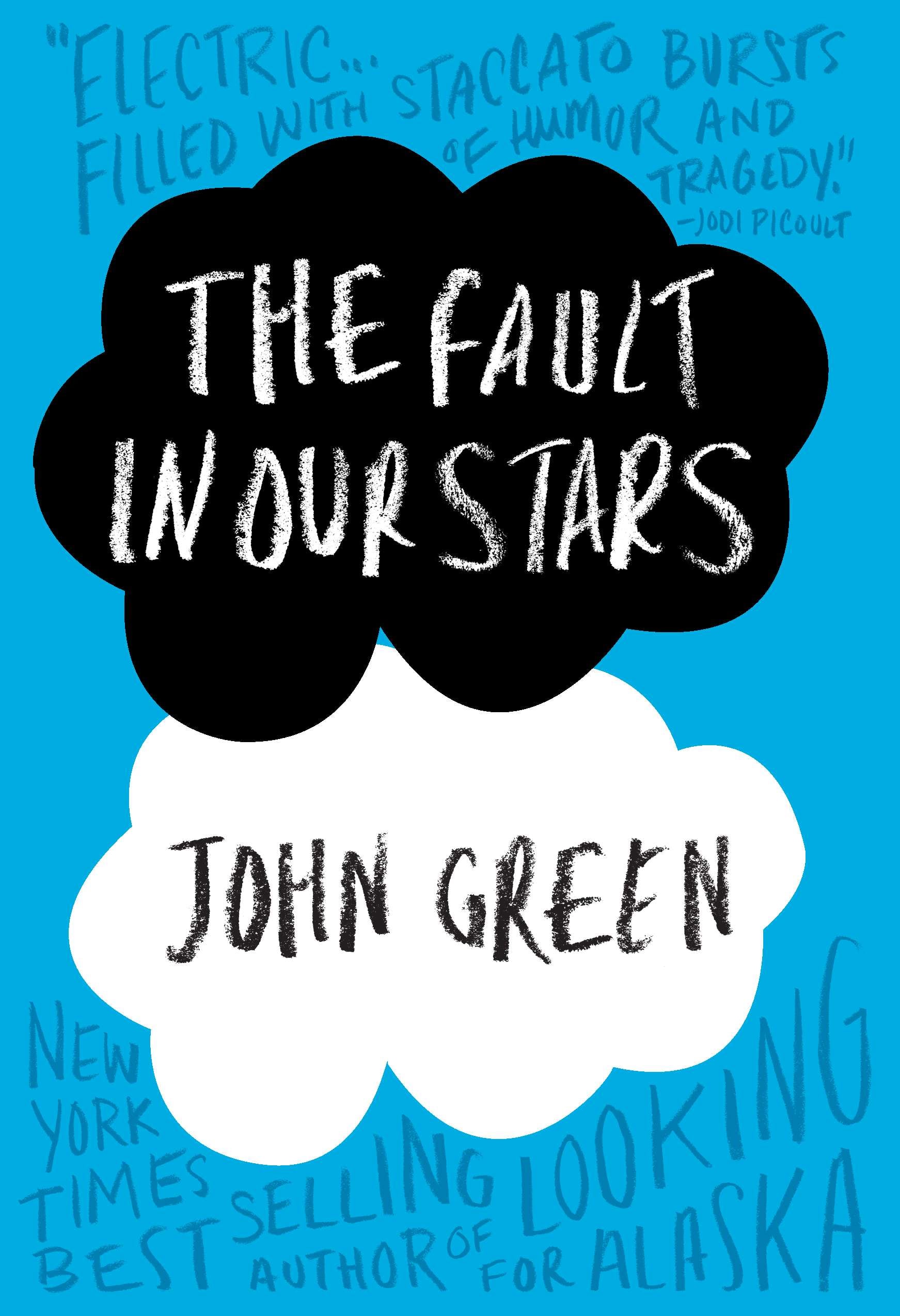
The Fault in Our Stars — John Green
First published: January 10, 2012 · Dutton Books
Pages: 313 (hardcover)
Goodreads: 4.12★ (5.79M+ ratings, among highest rating-count on platform) · view
Audiobook runtime: ~7h 14m · Kate Rudd / Listening Library canonical production (Audie Award)
Commercial scale: 23M+ global sales · 55+ language translations · sustained BookTok revival cycles
Cultural impact: Josh Boone 2014 film $307M box office (25× budget) with Shailene Woodley / Ansel Elgort · 'Okay? Okay.' refrain · Anne Frank House kiss scene · shared teen-reader vocabulary
The 2010s defining YA-contemporary commercial phenomenon — Audie-winning Kate Rudd narration, Josh Boone's $307M film (25× budget), and the 5.79M Goodreads ratings count among the platform's highest. Skip the Libby wait with Kindle + free CastReader AI TTS →
The Fault in Our Stars is John Green's January 2012 YA-contemporary cancer-romance masterwork — the 313-page novel where 16-year-old Hazel Grace Lancaster (living with stage-IV thyroid cancer metastasized to her lungs, kept alive by the experimental drug 'Phalanxifor' and dependent on a portable oxygen cart) meets 17-year-old Augustus 'Gus' Waters (osteosarcoma survivor with a prosthetic right leg) at a church-basement cancer support group. Their bond over Hazel's obsession 'An Imperial Affliction' by the reclusive Peter Van Houten leads to Gus's Wish-foundation-funded Amsterdam trip where they meet a drunk bitter Van Houten, climb the Anne Frank House (the novel's most-iconic scene), and learn Gus's cancer has returned and metastasized. The novel's final sections follow Augustus's decline, the pre-funeral eulogy rehearsal, and Hazel's reading of Gus's final letter to Van Houten. The 4.12★ Goodreads rating across 5,785,000+ ratings is among the platform's highest rating-count tallies; the novel has sold 23+ million copies globally across 55+ language translations, Josh Boone's 2014 film with Shailene Woodley and Ansel Elgort grossed $307M on a $12M budget (among the most profitable ratios of the 2010s), and the novel's cultural artifacts ('Okay? Okay.' refrain, 'Some infinities are bigger than other infinities' quote, Anne Frank House kiss) became shared teen-reader vocabulary. John Green's Nerdfighter community (through his YouTube Vlogbrothers channel with brother Hank and his PBS Crash Course videos) amplified the novel's cultural reach and sustained BookTok-era TikTok revival cycles. At 7h 14m with Kate Rudd's Audie-winning Listening Library canonical production, The Fault in Our Stars is the YA audiobook most commonly cited as 'the one that made me cry' on commute.
This guide covers the 7h 14m runtime, the Kate Rudd canonical production, the Josh Boone film dimension, and every free / paid path.
Why 7h 14m Matters for YA Contemporary
YA-contemporary and illness-romance runtime benchmark.
| Title | Runtime | Year | Goodreads rating |
|---|---|---|---|
| The Fault in Our Stars (Green) — this book | 7h 14m | 2012 | 4.12★ |
| Looking for Alaska (Green) | 7h 12m | 2005 | 3.91★ |
| Paper Towns (Green) | 7h 56m | 2008 | 3.73★ |
| Turtles All the Way Down (Green) | 7h 12m | 2017 | 3.95★ |
| Eleanor & Park (Rowell) | 7h 55m | 2013 | 4.02★ |
| Five Feet Apart (Lippincott) | 8h 40m | 2018 | 3.97★ |
| Everything, Everything (Yoon) | 5h 43m | 2015 | 3.97★ |
| A Monster Calls (Ness) | 3h 58m | 2011 | 4.37★ |
The Fault in Our Stars sits at the standard YA-contemporary runtime — paced for single-week commute listening or single-weekend engagement. At 7h 14m, the novel reads comfortably across 3-5 days or a single weekend at 1.25x.
Three Listening Modes
Mode 1 — Canonical Audio (Kate Rudd Listening Library 2012). $14.95 Audible credit or library-borrow via Libby; Audible Plus subscribers check rotating availability. Rudd's Audie-winning teen-girl first-person voicing of Hazel is the unambiguous industry-standard production.
Mode 2 — AI TTS via CastReader. Free, unlimited re-listens, adjustable speed, pronunciation overrides for Hazel / Augustus / Van Houten / Lidewij / Phalanxifor / Amsterdam-place-names. Particularly valuable for teen-reader shared-Kindle access and scene-specific re-engagement. See CastReader for Kindle.
Mode 3 — Libby / Hoopla library borrow. Libby 0-2 week wait (lower than adult fiction due to high YA library-copy investment). Hoopla instant-lend where available.
The Kate Rudd Canonical Production
Listening Library's 2012 Kate Rudd recording is the industry-consensus definitive Fault in Our Stars production. Kate Rudd brings distinctive teen-girl first-person delivery — her Hazel Lancaster voice handles Green's precocious-teen dialogue rhythms, dry humor, and emotional crescendos with particular strength. Rudd earned an Audie Award for her work on The Fault in Our Stars, and the production's teen-voicing set the standard for subsequent YA audiobook casting decisions.
The production handles Van Houten's bitter alcoholic monologues (voiced with restrained contempt), Gus's letter readings (delivered in Rudd's Hazel voice reading Gus's text — an approach that preserves first-person consistency while honoring Gus's written voice), Hazel's mother's protective exasperation, and Isaac's pre-breakup-with-Monica anger. No alternative production competes. Rudd also narrated Green's Looking for Alaska and Paper Towns, enabling Green-canon continuity for listeners who commit to reading through his work.
For first-listeners: Listening Library Kate Rudd is the unambiguous industry-standard recommendation. Many listeners return to this production annually during post-rewatch-film re-engagement cycles or during BookTok-driven YA-revival waves.
The Plot: Support-Group-to-Amsterdam-to-Funeral Architecture
Support Group Meeting — First Encounter. Hazel Grace Lancaster, 16, living with stage-IV thyroid cancer metastasized to her lungs and dependent on a portable oxygen cart, attends her mother's-required weekly cancer support group at a church basement in Indianapolis. The meetings are led by Patrick, a testicular-cancer survivor who delivers aggressively-optimistic platitudes in the literal heart of Jesus (a stained-glass rug in the church basement). Hazel meets Augustus 'Gus' Waters, 17, an osteosarcoma survivor with a prosthetic right leg who is accompanying his friend Isaac (who is about to have his second eye removed due to ocular cancer). Gus is immediately, unguardedly romantic; Hazel is wary of becoming 'a grenade' that will devastate everyone close to her when she dies, and tries to hold Gus at arm's length.
Book-Swap and Van Houten Contact. Hazel shares her obsession An Imperial Affliction by Peter Van Houten — a novel about cancer that ends mid-sentence because, Hazel believes, the narrator-protagonist (Anna) died mid-thought. Gus reads AIA and hates the ending; Hazel explains she's desperate to know what happens to the surviving characters (Anna's mother, Anna's pet hamster Sisyphus, Anna's friend 'the Dutch Tulip Man'). Gus contacts Van Houten through his assistant Lidewij Vliegenthart, receiving a reply that promises answers if Hazel and Gus visit Amsterdam in person. Gus uses his previously-unused Wish (granted by the fictional Make-A-Wish-adjacent Genies Foundation before his remission) to fly Hazel, Gus, and Hazel's mother Frannie to Amsterdam.
Amsterdam: Oranjee Dinner, Van Houten Confrontation, Anne Frank House. The Amsterdam trip opens with the iconic Oranjee restaurant dinner (Lidewij has arranged champagne service with 'It's a vintage we use for special occasions — the stars, it is the stars'). The next-morning Van Houten visit is catastrophic: Van Houten, a bitter alcoholic, refuses to engage Hazel's questions and delivers a series of cruel monologues mocking Hazel's cancer. Lidewij, appalled, resigns on the spot and takes Hazel and Gus to the Anne Frank House. Hazel, struggling with her oxygen cart, climbs the steep stairs — the novel's most-iconic scene. At the top, Hazel and Gus kiss, and the other visitors applaud. Later that evening, Gus reveals that his cancer has returned and metastasized extensively.
Return and Decline. Hazel and Gus return to Indianapolis; Gus's decline accelerates rapidly. They execute a pre-funeral eulogy rehearsal in the literal heart of Jesus — Isaac, Hazel, and Gus each speak. Gus dies a few days later. Hazel attends the actual funeral, delivers a funeral-audience-pleasing eulogy that differs from her real feelings, then discovers that Gus had been writing a final letter to Peter Van Houten asking Van Houten to write Hazel's eulogy. The novel ends with Hazel reading Gus's final letter — the cumulative emotional weight of which, delivered in Kate Rudd's voice, is the novel's most-cited moment by weeping audiobook listeners.
Why The Fault in Our Stars Defines 2010s YA Contemporary
John Green's January 2012 publication transformed the YA-contemporary commercial landscape and moved the category from niche YA shelves to general-bookstore teen-fiction prominence. The novel's foundational contributions:
Precocious-teen dialogue register. Green's distinctive voice — teens who read widely, speak in metaphors, and express philosophical abstractions — established a register that dozens of subsequent YA-contemporary authors imitated. The 'I don't know anything about you, but I think I kind of love you' Gus line and the 'Okay? Okay.' refrain became shared teen-reader vocabulary.
Cancer-romance-without-sentimentality. Green's refusal to deliver a redemptive-healing ending (Gus dies; the sick girl does not miraculously recover) repositioned YA-illness fiction as capable of serious emotional work without adult-literary condescension.
Amsterdam-as-destination. The Amsterdam trip sequence — Oranjee, Van Houten, Anne Frank House — generated a measurable tourism effect, with Amsterdam locations reporting TFIOS-driven visitor spikes through the mid-2010s.
Nerdfighter community amplification. John Green's YouTube Vlogbrothers channel (with brother Hank Green) and his PBS Crash Course educational videos built a teen-reader audience that converted directly to novel readership. The Nerdfighter community infrastructure was instrumental in the pre-social-media YA category moving to general-audience attention.
Film-adaptation profitability. Josh Boone's 2014 film with Shailene Woodley and Ansel Elgort grossed $307M on a $12M budget — 25× return among the most profitable ratios in 2010s Hollywood. The film's commercial success validated the YA-contemporary film-adaptation model and encouraged subsequent YA film options (Everything Everything, Five Feet Apart, The Hate U Give).
The Josh Boone Film Phenomenon
2014 The Fault in Our Stars (Josh Boone). Shailene Woodley as Hazel Grace Lancaster, Ansel Elgort as Augustus Waters, Nat Wolff as Isaac, Laura Dern as Hazel's mother Frannie, Sam Trammell as Hazel's father, Willem Dafoe as Peter Van Houten. $307M global box office on $12M budget — 25× return. Positive critical reception; nominated at multiple Teen Choice and MTV Movie Awards.
The film's June 2014 release drove massive post-film audiobook and novel sales. Woodley's Hazel performance earned particular praise, and the film's faithful reproduction of the Amsterdam / Anne Frank House sequence generated the most-GIF'd YA-film moments of the year. Green was closely involved with the adaptation (he was present on set, praised the casting, and wrote openly about the production experience).
Cultural afterlife. The film's soundtrack (featuring Charli XCX, Ed Sheeran, Birdy) reached double-platinum status. 'Okay? Okay.' became a widely-referenced teen couple in-joke. The Anne Frank House climb scene remains among the most-referenced YA-film moments.
Free and Paid Listening Paths (April 2026)
Free paths:
- Libby — Listening Library edition via U.S. library card, 0-2 week waits
- Hoopla — instant-lend (no wait) where available
- Audible Plus — occasional rotating TFIOS
- Spotify Premium — fits comfortably within 15h monthly audiobook allocation
- CastReader — free AI TTS on any Kindle edition
Paid paths:
- Audible Premium — 1 credit ($14.95) for Listening Library or purchase $15-20
- Kindle ebook — $9-12 (no public-domain option, still under copyright)
- Physical — Dutton paperback $10-14, hardcover $16-22
First-Time Listener Guide
The Fault in Our Stars is structured around a brutal third-act emotional pivot that long-time YA readers know to brace for. If TFIOS is your first time on audio, don't speed-listen the third act (chapters 16-25) — the Amsterdam sequence and what follows is the book's core architecture, and Kate Rudd's narration handles the pacing shifts deliberately. 1.0-1.25x baseline, drop to 1.0x for the final third. Don't read Goodreads top-reviews or watch the 2014 trailer before listening; the structural turn is largely undisclosable in marketing precisely because experiencing it sequentially is the point.
For first-time-Green readers: Looking for Alaska (2005) is the closest tonal predecessor and Green's debut John-Newbery-Medal winner; An Abundance of Katherines (2006) is the lighter follow-up. Save Paper Towns (2008) and Turtles All the Way Down (2017) for after — both engage the John Green prose template differently. Will Grayson, Will Grayson (Green + David Levithan, 2010) is collaborative and structurally distinct from the rest of the catalog.
For listeners coming from the Josh Boone 2014 film (Shailene Woodley as Hazel, Ansel Elgort as Augustus): the audiobook restores significant interior monologue Hazel-as-narrator material the film necessarily cuts. Many post-film readers describe the audio as the more-emotionally-resonant version of the story; Woodley's screen Hazel handles the spoken dialogue but cannot reproduce the on-page first-person introspective passages where Green's prose works hardest.
Free Listening Reality (Public Domain Note)
The Fault in Our Stars is not public domain and won't be until ~2107 (US 95-year rule from 2012 publication). No LibriVox authorized recordings exist; any "free TFIOS audiobook" outside the legitimate institutional channels listed above is pirated. The legitimate fully-free paths are all institutional or trial-based — see the Free Paths section above for the canonical list. For US-based listeners wanting unlimited re-listens (the book has a strong re-read pattern given the emotional intensity), Kindle ownership ($9-12) + free CastReader AI TTS is the cleanest legal path; CastReader OCR-narrates the Kindle ebook you legally own, treating it as fair-use accessibility equivalent to a screen reader.
Why Kindle + CastReader Wins for The Fault in Our Stars
For listeners prioritizing flexible scene-specific re-engagement over Rudd's canonical performance, Kindle + CastReader free AI TTS is the optimal path:
- Unlimited re-listens — no credit cost per engagement, critical for teen-reader shared access
- Adjustable pace — particularly valuable for emotional-peak scenes (Anne Frank House, final letter) that benefit from slow re-reading
- Pronunciation overrides — configure Hazel Grace Lancaster, Augustus Waters, Van Houten, Lidewij Vliegenthart, Phalanxifor, An Imperial Affliction, osteosarcoma, Rijksmuseum, Vondelpark, Oranjee, Anne Frank House, Funky Bones, BiPAP for consistent AI narration
- Scene-specific bookmarking — listeners commonly bookmark the Support Group first-meeting scene, the Oranjee dinner, the Van Houten confrontation, the Anne Frank House climb and kiss, the pre-funeral eulogy, and the final letter reveal
- Paragraph highlighting — supports emotional-scene close re-reading that standard audiobook listening can skim
For listeners wanting Rudd's canonical voice on first listen, use Audible or Libby; then switch to CastReader for BookTok-revival re-engagement or teen-reader shared access. Many committed TFIOS readers alternate — Listening Library for annual narrative re-listens, CastReader for scene-specific emotional re-engagement.
The Fault in Our Stars and the YA-Contemporary Canon
The 2005-2020 YA-contemporary wave produced several canonical works alongside TFIOS:
- Looking for Alaska (John Green, 2005) — Printz-winning predecessor
- Paper Towns (Green, 2008) — Green peer
- Eleanor & Park (Rainbow Rowell, 2013) — YA-romance peer
- Fangirl (Rowell, 2013) — YA-contemporary peer
- Five Feet Apart (Rachael Lippincott, 2018) — illness-romance descendant
- Everything, Everything (Nicola Yoon, 2015) — illness-romance peer
- A Monster Calls (Patrick Ness, 2011) — YA-grief peer
For listeners building the YA-contemporary canon: The Fault in Our Stars → Looking for Alaska → Eleanor & Park → A Monster Calls forms a four-book progression covering cancer-romance through boarding-school-coming-of-age through class-difference romance through child-grief. The sequence represents the decade's defining YA-contemporary emotional range.
Related Reading
For listeners building the YA-contemporary and teen-emotional-fiction canon, these CastReader guides pair naturally with The Fault in Our Stars:
- The Summer I Turned Pretty (Jenny Han) — TTS & Audiobook Guide · Jessica Almasy 7h 13m, 2020s YA-summer-romance phenomenon
- The Kite Runner (Khaled Hosseini) — TTS & Audiobook Guide · Khaled Hosseini self-narrated 12h 1m, multi-generational emotional-epic peer
- A Little Life (Hanya Yanagihara) — TTS & Audiobook Guide · Oliver Wyman Random House Audio 32h 51m, adult-literary emotional-fiction descendant
- The Midnight Library (Matt Haig) — TTS & Audiobook Guide · Carey Mulligan Penguin Audio 8h 50m, existential-YA-adjacent peer
- The Great Alone (Kristin Hannah) — TTS & Audiobook Guide · Julia Whelan Macmillan Audio 15h 2m, YA-crossover family-trauma peer
Limitations and Honest Notes
- Still under copyright — first published 2012; John Green remains alive and publishing; copyright protection continues indefinitely. No free public-domain audio; all legal audio requires Audible/Libby/Hoopla routes.
- Emotional intensity — TFIOS is widely cited as an emotionally-demanding listen. Sensitive readers / listeners should plan for the final third's weight.
- Teen-voice register — Green's precocious-teen dialogue ('Our last night at the Venn diagram of Halcyon Days and cancer' etc.) is distinctive and has both passionate defenders and critical detractors. Readers who dislike the register will find the whole novel affected; readers who embrace it will find TFIOS the flagship work.
- Length is compact — at 7h 14m, TFIOS is a 3-5 day commute-listening commitment; many listeners complete it in a single weekend.
- Film-order flexibility — many contemporary readers encounter TFIOS post-film; either order works, though reading the novel first preserves the Amsterdam-sequence narrative architecture that the film necessarily compresses.
Related: Listen to Kindle | Audible Alternative Free | Turn Ebook into Audiobook | Send to Phone | Kindle Audiobook Free
