The Sound and the Fury Text to Speech: Free Audio for Faulkner's Nobel-Laureate Yoknapatawpha Compson Family Modernist Canon
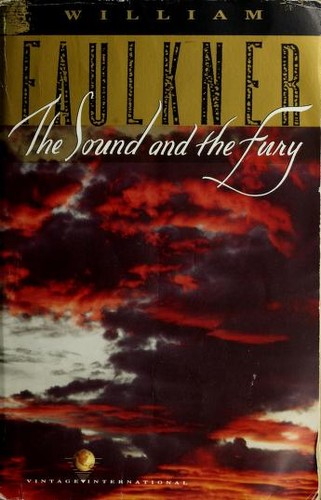
Author: William Faulkner (1897-1962, 19 novels + 125 short stories, 1949 Nobel Prize in Literature + 1955 + 1963 Pulitzer Prizes for A Fable + The Reivers, Oxford-Mississippi-based, 1950 Nobel Banquet Speech 'I decline to accept the end of man') Published: Jonathan Cape and Harrison Smith October 7, 1929 · Chatto & Windus UK 1931 — 1,789 first-year copies (commercial underperformance) Pages: 326 · Goodreads: 3.89★ / 150K ratings Audiobook: Grover Gardner · Blackstone Audio · 11h 2m (canonical) · Grover Gardner · Random House Audio 2005 · 10h 55m re-narration · John Slattery · Hartley Audio · 10h 30m alt Awards: Modern Library 100 Best Novels 20th Century #6 (top-10) · Time 100 Best English-Language Novels 1923-2005 · BBC 100 Novels That Shaped Our World · Guardian 100 Greatest Novels · Harold Bloom Western Canon central-text · Le Monde 100 Books of the Century · AP English Literature + IB-HL + modernist-stream-of-consciousness-canon-required · 2M+ copies global · 35+ language translations · 1946 Malcolm Cowley Portable Faulkner Compson genealogy appendix canonical-reading-aid · Dublin-IMPAC International Best First 25-Years award 1999 · Faulkner 1949 Nobel Prize recognition basis Adaptations: 1959 20th Century Fox CinemaScope film (Martin Ritt directing, Jerry Wald producing, Irving Ravetch + Harriet Frank Jr. screenplay, Alex North score, Charles G. Clarke cinematography, 117 minutes, $2M budget / $3M box office) w/ Yul Brynner (Jason Compson IV — Golden Globe Best Actor Drama nomination) + Joanne Woodward (Quentin IV) + Margaret Leighton (Caddy Compson) + Jack Warden (Ben Compson) + Stuart Whitman (Charlie Busch) + Ethel Waters (Dilsey) — widely-regarded adaptation-failure · James Franco 2014 indie adaptation (Franco directing + playing Benjy, 103 minutes) w/ Scott Haze (Jason) + Tim Blake Nelson (Compson Sr) + Jacob Loeb (Quentin) + Ahna O'Reilly (Caddy) + Loretta Devine (Dilsey) · 2003 BBC Radio 4 Hanif Kureishi-adapted dramatization · 1982 Richard Pearce PBS American Playhouse TV adaptation w/ Stacy Keach + Elizabeth Franz + Theresa Saldana
William Faulkner's The Sound and the Fury is the canonical Southern Gothic modernist masterpiece. Published by Jonathan Cape and Harrison Smith on October 7, 1929, the 326-page novel introduced Faulkner's Yoknapatawpha County and established his reputation as the American modernist equal of James Joyce and Virginia Woolf. Its four-narrator stream-of-consciousness structure (Benjy Compson April 7 1928 / Quentin Compson June 2 1910 / Jason Compson April 6 1928 / Dilsey perspective April 8 1928 Easter Sunday) remains one of the most-formally ambitious novels in 20th-century American literature. The novel was foundational to Faulkner's 1949 Nobel Prize in Literature — awarded December 1950 for his entire Yoknapatawpha County oeuvre. If you own the Kindle or EPUB copy and want to hear Grover Gardner's canonical 11-hour narration while you commute, walk, or cook, use CastReader AI TTS to convert your copy to unabridged audio for free →.
The Compson family — old-Mississippi aristocracy descended from a Civil War general — collapses between 1900 and 1928. The four Compson children: Quentin Compson III (Harvard freshman, commits suicide by drowning in the Charles River on June 2, 1910); Candace 'Caddy' Compson (the family's emotional center, pregnant out-of-wedlock 1910, exiled, later Nazi-officer's mistress); Jason Compson IV (bitter, inherits family business, embezzles from his niece); Benjamin 'Benjy' Compson (mentally impaired, castrated 1913, cared for by Black servant Luster Gibson). Their parents: Jason Compson III (alcoholic philosopher-attorney, dies 1911); Caroline Bascomb Compson (hypochondriac mother). Caddy's daughter Quentin IV Compson (raised by grandmother Caroline) flees Yoknapatawpha with a circus traveling-man in April 1928, stealing $7,000 Jason had embezzled from her absent mother Caddy's child-support remittances. Dilsey Gibson — the novel's moral center, Black matriarch, de facto Compson-family-maintainer — manages Easter weekend 1928 as the Compsons' world disintegrates.
Section 1 (April 7, 1928 — Benjy Compson, age 33) opens without explanation in Benjy's associative present-tense perception. Benjy cannot temporally order events — his 1900 childhood moments (Caddy climbing the pear tree in muddy drawers to see Damuddy's funeral through the parlor window), his 1910 adolescence (Caddy getting married, no longer smelling like trees), and his 1928 present (Luster searching for a lost quarter at the golf course whose 'caddie' trigger-word unlocks Caddy-memories) intermingle without signposting. Faulkner uses italics to mark time-shifts; readers must reconstruct Compson history from fragmentary associations. Section 2 (June 2, 1910 — Quentin Compson III) presents Harvard-freshman Quentin's suicide-day Cambridge-Massachusetts stream-of-consciousness, unmarked-intercut with his 1909 Mississippi jealousy-obsession of Caddy's sexual-awakening. Section 3 (April 6, 1928 — Jason Compson IV) delivers Jason's straight-bitter first-person monologue — his resentments of Quentin (dead), Caddy (exiled), Benjy (castrated), and his niece Quentin (the circus-flight daughter). Section 4 (April 8, 1928 Easter Sunday) shifts to conventional close-third-person from Dilsey's perspective — her church attendance with Benjy at Reverend Shegog's Easter sermon, Jason's discovery of the $7,000 theft, Quentin IV's escape.
Faulkner drafted the novel October 1927 - October 1928 in Oxford, Mississippi. Its 1929 publication sold only 1,789 copies in the first year; commercial recognition arrived only after Malcolm Cowley's 1946 Portable Faulkner Compson-genealogy-appendix made the novel teachable. The title comes from Macbeth Act V Scene 5: 'Life's but a walking shadow, a poor player / That struts and frets his hour upon the stage / And then is heard no more. It is a tale / Told by an idiot, full of sound and fury, / Signifying nothing.'
Why 11 Hours Matters
The Sound and the Fury is Faulkner's most-formally-ambitious audiobook at 326 pages / 11 hours. Grover Gardner's canonical Blackstone Audio edition is the gold-standard narration — his 4-distinct-voice handling of Benjy, Quentin, Jason, and the Dilsey section is pedagogy-canonical. CastReader's AI narration with 0.75× slowdown is excellent for Sections 1-2 (Benjy/Quentin stream-of-consciousness); 1× is ideal for Sections 3-4 (Jason/Dilsey conventional narration).
Key Themes
1. Four-Narrator Structure — Benjy (impaired perception / italicized time-shifts) + Quentin (Joycean interior monologue / June 2 1910 suicide day) + Jason (bitter straight first-person) + Dilsey (conventional close-third-person).
2. Yoknapatawpha County Foundation — Faulkner's fictional Mississippi county (Lafayette County-based) debuts in Flags in the Dust (1927) and The Sound and the Fury (1929); ultimately extends across 13 novels + 60+ short stories.
3. Compson Family Decline — Old-Mississippi aristocracy disintegrating across 1900-1928. The Compsons appear in multiple Faulkner works; the 1946 Malcolm-Cowley-edited Portable Faulkner genealogy appendix provides complete 1699-1946 family history.
4. Racial Dynamics — The Gibson family — Dilsey, Luster, Frony, T.P. — are Black servants whose perspectives Faulkner portrays with greater moral centrality than any White character. Dilsey's Easter Sunday section is one of Faulkner's most-celebrated Black-character portrayals.
5. Macbeth Allusion Title — 'a tale told by an idiot, full of sound and fury, signifying nothing' (Act V Scene 5) — the novel's four-narrator structure literalizes Shakespeare's metaphor.
Yoknapatawpha County
Faulkner's 2,400-square-mile fictional Mississippi county — county seat Jefferson, population 15,611 (9,313 Black + 6,298 White) — is modeled on Lafayette County, Mississippi (Oxford = Jefferson). 13 of Faulkner's 19 novels + 60+ short stories are set in Yoknapatawpha. Major Yoknapatawpha works: Flags in the Dust (1927 as Sartoris) + The Sound and the Fury 1929 (Compson family) + As I Lay Dying (1930 Bundren family) + Sanctuary (1931) + Light in August 1932 (Christmas family) + Absalom, Absalom! 1936 (Sutpen family) + The Unvanquished (1938) + The Hamlet (1940) + Go Down, Moses (1942) + Intruder in the Dust (1948) + The Town (1957) + The Mansion (1959) + The Reivers (1962). Faulkner drew an actual hand-labeled map of the county for the 1936 Random House edition of Absalom, Absalom!
Adaptations
Martin Ritt's 1959 20th Century Fox CinemaScope film (117 minutes) starred Yul Brynner (Jason — notoriously miscast, Golden Globe Best Actor Drama nomination) + Joanne Woodward (Quentin IV) + Margaret Leighton (Caddy) + Jack Warden (Ben) + Stuart Whitman (Charlie) + Ethel Waters (Dilsey). The film abandoned the four-narrator structure and rearranged chronology — widely-considered an adaptation-failure despite strong cast. James Franco's 2014 indie adaptation (103 minutes) attempted a more-experimental multiple-Benjy-actor approach; received mixed critical reception. 2003 BBC Radio 4 Hanif-Kureishi-adapted dramatization. 1982 Richard Pearce PBS American Playhouse TV.
Reading Order
Faulkner's major works chronology: Flags in the Dust 1927 (as Sartoris) + The Sound and the Fury 1929 (Compson family) + As I Lay Dying 1930 (Bundren family) + Sanctuary 1931 + Light in August 1932 (Christmas family) + Absalom, Absalom! 1936 (Sutpen family) + The Unvanquished 1938 + The Hamlet 1940 + Go Down, Moses 1942 + Intruder in the Dust 1948 + A Fable 1954 Pulitzer (WWI) + The Town 1957 + The Mansion 1959 + The Reivers 1962 Pulitzer posthumous. Short-story collections: These 13 (1931) + Knight's Gambit (1949) + Collected Stories (1950). For newcomers, most scholars recommend beginning with As I Lay Dying (1930 — shorter, more accessible) before The Sound and the Fury (1929 — most-difficult).
Why Listen Now
- Modern Library 100 top-10 canonical — One of the 20th century's most-influential novels
- Faulkner Nobel Prize foundation — The work that cemented his 1949 Nobel recognition
- Grover Gardner canonical audiobook — Four-distinct-voice handling is pedagogy-standard
- Yoknapatawpha County origin — Debut of Faulkner's 13-novel fictional Mississippi geography
- 11-hour deep-dive — Complex modernist formalism rewards careful listening
How to Listen to The Sound and the Fury Free
- Libby / Hoopla — Free via library card; 2-4 week hold queue for Grover Gardner's audiobook
- CastReader AI TTS — Upload your Kindle/EPUB copy to CastReader for instant narration
- LibriVox — US public domain January 1, 2025 under 95-year-rule; multi-reader readings now available
- Canonical first-listen recommendation: Grover Gardner Blackstone Audio 11h 2m with 0.75× slowdown for Sections 1-2
Related: As I Lay Dying Text to Speech | Beloved Text to Speech | Blood Meridian Text to Speech | Ulysses Text to Speech | Kindle Text to Speech | Audible Alternative Free | Turn Ebook Into Audiobook