The Handmaid's Tale Audiobook & Text to Speech Guide (2026) — Margaret Atwood's Claire-Danes-Audie-Winning Gilead-Dystopian-Feminist-Masterpiece
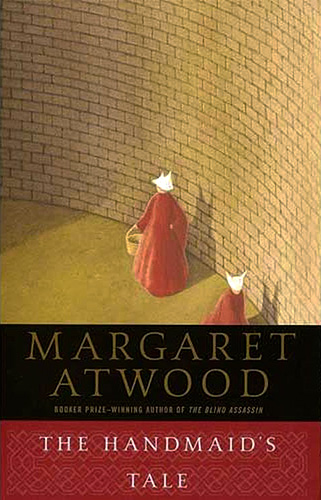
The Handmaid's Tale — Margaret Atwood
First published: September 1985 · McClelland and Stewart
Pages: 311 (paperback)
Goodreads: 4.15★ (2.48M+ ratings) · view
Audiobook runtime: ~11h 1m · Claire Danes Audible Studios 2012 (2013 Audie Award Solo Narration / Female winner)
Commercial scale: 8M+ global sales · 40+ years continuous print · defining feminist-dystopian curriculum text
Cultural impact: Hulu 2017-2025 six-season 15-Emmy Outstanding-Drama-Series-winning adaptation · red-cloak-white-wing protest-symbol · 2019-Booker-winning sequel The Testaments
The defining late-20th-century feminist-dystopian novel — 40 years of continuous print, 8+ million copies, Claire Danes's 2013-Audie-winning canonical audiobook, and the Hulu adaptation that anchored Gilead at the center of post-2017 American political-feminist conversation. Skip the Libby wait with Kindle + free CastReader AI TTS →
The Handmaid's Tale is Margaret Atwood's September 1985 Gilead-dystopian-feminist canonical text — the 311-page first-person novel where protagonist June Osborne, renamed Offred ('Of Fred') in the near-future theocratic Republic of Gilead, serves as enslaved Handmaid to Commander Fred Waterford and his Wife Serena Joy, memorizes every detail of her environment as psychological survival, participates in the monthly Ceremony (ritualized Wife-supervised rape intended to produce a child), flashes back to her pre-Gilead life with husband Luke and daughter Hannah, and is ultimately either rescued by the Mayday underground or taken to her death by the Eyes — the novel ends ambiguously, followed by a 'Historical Notes' 2195 epilogue presenting Offred's story as transcribed tape-recorded testimony. The Handmaid's Tale has sold 8+ million copies globally, has been in continuous print since 1985, and is taught in university English-literature curricula worldwide as a defining late-20th-century feminist-dystopian canonical text. Hulu's 2017-2025 six-season television adaptation won 15 Emmy Awards including Outstanding Drama Series 2017, positioned the novel at the center of post-2017 American political-feminist conversation, and made the iconic red-cloak-and-white-wing Handmaid costume a global protest symbol used at Roe v. Wade reversal rallies and women's-rights marches internationally. The 4.15★ Goodreads rating across 2,477,370+ ratings reflects sustained critical and reader esteem across forty years of publication. Atwood's 2019 Booker Prize win for sequel The Testaments cements her literary stature. At 11h 1m with Claire Danes's Audible Studios 2013-Audie-winning production, The Handmaid's Tale is the genre-defining feminist-dystopian primary-source text.
This guide covers the 11h 1m runtime, the Claire Danes Audie-winning canonical production, the Hulu adaptation dimension, and every free / paid path.
Why 11h 1m Matters for Feminist Dystopia
Feminist-dystopian-canon audiobook runtime benchmark.
| Title | Runtime | Year | Goodreads rating |
|---|---|---|---|
| The Handmaid's Tale (Atwood) — this book | 11h 1m | 1985 | 4.15★ |
| The Testaments (Atwood, sequel) | 13h 15m | 2019 | 4.16★ |
| 1984 (Orwell) | 11h 22m | 1949 | 4.19★ |
| Brave New World (Huxley) | 8h 4m | 1932 | 3.87★ |
| Fahrenheit 451 (Bradbury) | 5h 1m | 1953 | 3.97★ |
| Oryx and Crake (Atwood) | 10h 29m | 2003 | 4.00★ |
| The Power (Alderman) | 12h 3m | 2016 | 3.75★ |
The Handmaid's Tale sits at the dystopian-canon median runtime, paced for the alternating present-tense-survival and flashback-memory structure. At 11h 1m, the novel reads comfortably across 7-10 days of commute listening or a single long weekend at 1.5x.
Three Listening Modes
Mode 1 — Canonical Audio (Claire Danes Audible Studios 2012). $14.95 Audible credit or library-borrow via Libby; Audible Plus subscribers check rotating availability. Danes's 2013-Audie-winning production is the definitive Handmaid's Tale — her calibrated emotional restraint suits Offred's first-person interior voice across the novel's fragmentary structure.
Mode 2 — AI TTS via CastReader. Free, unlimited re-listens, adjustable speed, pronunciation overrides for Offred / Serena Joy / Aunt Lydia / Gilead-protocol terminology / Historical Notes epilogue. Particularly valuable for college-course re-reads or Hulu-synchronized re-engagement. See CastReader for Kindle.
Mode 3 — Elisabeth Moss Hulu-companion edition. Moss (who plays June Osborne across all six Hulu seasons) narrates the adaptation-companion edition. For listeners who arrive at the novel via Hulu, this is the direct character-performance bridge.
The Claire Danes Audible Canonical Production
Claire Danes (b. 1979, American actress — Homeland, Romeo + Juliet, Temple Grandin) narrates the definitive 2012 Audible Studios edition in ~11h 1m. Her performance won the 2013 Audie Award for Solo Narration / Female — the industry's highest recognition for single-narrator audiobook craft.
Danes's interpretive choice is calibrated emotional restraint — avoiding both over-dramatization (which would flatten Offred's survival-strategy affect control) and affectless flatness (which would lose the novel's psychological horror). Her production tracks Offred's interior state through the alternating present-tense-survival and flashback-memory structures, gives the Ceremony passages appropriate weight without melodrama, and handles the Historical Notes 2195 academic-epilogue with precise tonal shift.
For first-listeners: Danes Audible is the standard commercial recommendation. The Elisabeth Moss edition (Hulu June Osborne) is the adaptation-companion option for listeners who encountered the novel via the television series.
The Plot: Alternating Present-Tense / Flashback Architecture
Present-tense — Waterford household Gilead. Protagonist Offred lives in a Waterford household bedroom with a window (Serena's chosen placement), permitted only memorized chaperoned walks with Ofglen (her shopping partner and eventual Mayday-resistance contact), required to participate in monthly Ceremonies (Wife-supervised ritualized reproductive rape by Commander Fred), and surveilled by Marthas (domestic servants Rita and Cora), the driver Nick, and the household's Eyes (regime secret police with informant networks). Commander Fred begins breaking protocol by summoning Offred for secret Scrabble games, reading forbidden magazines, and eventually taking her to Jezebel's (an illicit regime-tolerated sex club for Commanders). Serena, suspecting Fred may be infertile, arranges Offred's illicit reproductive sex with driver Nick (to produce a child Serena will claim as Fred's). Offred and Nick develop a mutual attachment. The novel's climax comes when Serena discovers Fred's Jezebel's outings, Ofglen is arrested and commits suicide to avoid Mayday-network exposure, and Eyes arrive at the Waterford house — Nick reveals he is Mayday, tells Offred to go with the arriving Eyes (they are actually Mayday agents), and the novel ends with her stepping into the waiting van: either to freedom or to her death. Atwood refuses to resolve which.
Flashback — Pre-Gilead to Red Center. Interspersed chapters establish Offred's pre-Gilead identity as June Osborne, a married mother with husband Luke and young daughter Hannah. The novel tracks the regime's establishment: the President of the United States assassinated, Congress machine-gunned, the Constitution suspended under emergency powers, women's access to bank accounts frozen, women dismissed from employment, the regime reorganizing under theocratic authority. June, Luke, and Hannah attempt to flee to Canada across the Vermont border; they are captured; Luke is taken away (fate unknown); Hannah is taken away (later revealed to be raised by a Commander's family); June is taken to the Rachel and Leah Re-Education Center ('the Red Center') under Aunt Lydia's reprogramming for Handmaid training. Close friend Moira attempts escape from the Red Center; June encounters her later at Jezebel's. The flashback structure enforces the novel's deep psychological point — Gilead happened in the lifetime of readers with living memory of pre-Gilead life.
Epilogue — Historical Notes 2195. The novel closes with a 'Historical Notes' academic-symposium transcript dated 2195, 200 years after Gilead's fall. Professor Pieixoto presents his paper at the Twelfth Symposium on Gileadean Studies at the University of Denay, Nunavit, explaining that Offred's narrative is a reconstructed transcript from cassette-tape recordings discovered in a Bangor, Maine safe-house. The epilogue's academic distance — with casual scholarly sexism lingering in the post-Gilead future — refuses the reader the comfort of full resolution.
Why The Handmaid's Tale Is the Defining Feminist Dystopia
Margaret Atwood's September 1985 publication reshaped the dystopian canon by adding gendered-theocratic-patriarchy to the established surveillance-state (1984) and consumer-conditioning (Brave New World) traditions. The novel's foundational contributions:
Gendered theocracy as dystopian architecture. The Gilead regime's organizing principle — reproductive enslavement of fertile women as Handmaids — established feminist dystopia as a major literary form. Pre-Atwood dystopias rarely centered women's reproductive autonomy; post-1985 dystopia increasingly does.
Coded-language protocol. The Gilead dialogue protocols ('Blessed be the fruit', 'May the Lord open', 'Under His Eye', 'Praise be') demonstrate how totalitarian regimes colonize everyday speech. Atwood's craft is making these phrases function as both terrifying political architecture and realistic-everyday dialogue.
'Everything in this book has already happened somewhere.' Atwood's famous claim that she invented nothing in the novel — every Gilead practice has historical precedent (forced surrogate motherhood, theocratic fertility laws, women's property restrictions, forced religious dress codes) — grounds the speculative architecture in documented history. The novel is post-apocalyptic historical fiction written in the future tense.
Ambiguous ending as political statement. Offred's final stepping-into-the-van is deliberately unresolved — Atwood refuses both the triumphant-escape and the tragic-death endings because the regime-level dystopia cannot be resolved by individual heroism.
The Hulu Adaptation and Cultural Resurgence
Hulu 2017-2025 Six-Season Adaptation. Elisabeth Moss as June Osborne (Offred) in a defining performance. Ann Dowd as Aunt Lydia. Joseph Fiennes as Fred Waterford. Yvonne Strahovski as Serena Joy. O-T Fagbenle as Luke. Samira Wiley as Moira. Alexis Bledel as Ofglen / Emily. Bruce Miller developer / showrunner. Six seasons total (2017-2025, 66 episodes). Won 15 Emmy Awards including Outstanding Drama Series 2017 (first streaming-platform winner) and multiple Lead Actress in a Drama Series wins for Moss.
Seasons 1-2 adapt the novel directly; Seasons 3-5 extend the Gilead universe beyond the novel with Atwood's consulting involvement (June's escape, Canadian refugee life, Mayday operations, Serena's fall, Fred Waterford's trial); Season 6 (final, 2025) incorporates The Testaments material with June working to help her daughter Hannah and eventually reunite.
The red-cloak-white-wing protest symbol. The Hulu costume (adapted from Atwood's novel description of red dresses and white wings) became a defining political-protest visual symbol — used at 2017 U.S. reproductive-rights protests, 2022 Roe v. Wade reversal rallies, Polish abortion-rights protests, Texas and Alabama reproductive-rights marches, and feminist protests internationally. The image-as-symbol has exceeded the novel and show in cultural reach.
Film precedent. Volker Schlöndorff's 1990 theatrical film (Natasha Richardson as Offred, Faye Dunaway as Serena, Robert Duvall as the Commander, Harold Pinter screenplay) received mixed critical reception; it predates the novel's post-2017 cultural resurgence and is less-watched than the Hulu adaptation.
Free and Paid Listening Paths (April 2026)
Free paths:
- Libby — commercial audiobooks via U.S. library card, 2-5 week waits (Hulu-driven demand)
- Hoopla — commercial audiobooks, instant-lend (no wait) where available
- Audible Plus — occasional rotating Handmaid's Tale productions
- Spotify Premium — 15h monthly audiobook allocation (Handmaid's Tale at 11h 1m = 73% of monthly budget)
- CastReader — free AI TTS on any Kindle edition (owned or library-borrowed)
Paid paths:
- Audible Premium — 1 credit ($14.95) for Claire Danes Audible Studios or purchase $18-25
- Kindle ebook — $10-14 (no public-domain option, still under copyright)
- Physical — Anchor Books paperback $12-16, hardcover / Folio illustrated $25-80
Why Kindle + CastReader Wins for The Handmaid's Tale
For listeners prioritizing flexible re-engagement over single-narrator craft, Kindle + CastReader free AI TTS is the optimal path:
- Unlimited re-listens — no credit cost per engagement, critical for college-course study and Hulu-synchronized re-reads
- Adjustable pace — particularly valuable through Offred's fragmentary interior-monologue chapters
- Pronunciation overrides — configure Offred, Serena Joy, Aunt Lydia, Ofglen, Mayday, Eyes, Angels, Econowives, Jezebel's, the Red Center for consistent AI narration
- Paragraph highlighting — supports comprehension through Atwood's denser flashback-memory passages
- Historical Notes epilogue — CastReader handles the academic-frame 2195 epilogue cleanly with academic-tone adjustment
For listeners wanting the 2013-Audie-winning production on first listen, use Audible or Libby for Claire Danes; then switch to CastReader for re-listens and Hulu-synchronized study.
First-Time Listener Guide + Free Listening Reality
The Handmaid's Tale is structurally a first-person testimonial — Offred's narrator-voice is the entire engine of the book. Claire Danes's 2012 Audible Studios narration won the 2013 Audie for Best Audiobook of the Year and remains the consensus definitive English-language audio production. 1.0-1.25x for first listen; the testimonial-prose style rewards deliberate pacing where Offred's withheld information lands cleanly. Don't speed-listen the historical-notes epilogue — Atwood's frame device recontextualizes the entire preceding narrative.
If The Handmaid's Tale is your first Atwood: recommended next reads are The Testaments (2019, ~14h, sequel) which won the Booker Prize, then the MaddAddam trilogy (Oryx and Crake / The Year of the Flood / MaddAddam, ~36h combined) for Atwood's longer-form speculative work. Save Cat's Eye, Alias Grace, The Blind Assassin for committed Atwood readers — those represent her literary-fiction range outside speculative work.
For listeners coming from the Hulu series (2017-, Elisabeth Moss as Offred): the audiobook restores significant material the show necessarily compresses or invents. The show extends well past Atwood's novel into post-novel territory; the audio restricts you to the original 1985 testimony and historical-notes frame. Audio-first is the recommended sequence if you haven't started the show; show-first listeners often describe the audio as a different and more-restrained experience than the show's escalating intensity.
The Handmaid's Tale is not public domain and won't be until ~2080 (US 95-year rule from 1985 publication). No LibriVox authorized recordings exist; any "free Handmaid's Tale audiobook" outside legitimate channels is pirated. Legitimate paths: Libby / Hoopla at U.S. libraries (broadly stocked given sustained post-2017-show demand), Audible 30-day trial (one credit covers Danes's canonical edition), Spotify Premium (at 11h 1m fits within the 15-hour monthly allocation), Kindle ownership ($8-12) + free CastReader AI TTS for unlimited re-listens.
The Handmaid's Tale and the Feminist Dystopia Canon
The post-1985 feminist-dystopia canon produced several major works in direct dialogue with Atwood:
- The Children of Men (P.D. James, 1992) — infertility-dystopia peer
- Oryx and Crake (Atwood, 2003, MaddAddam trilogy) — genetically-engineered-apocalypse companion
- Never Let Me Go (Ishiguro, 2005) — dystopian-literary peer with organ-harvesting focus
- The Power (Naomi Alderman, 2016) — gender-reversal-dystopia descendant (dedicated to Atwood)
- Parable of the Sower (Octavia Butler, 1993) — climate-theocratic-dystopia parallel
- Red Clocks (Leni Zumas, 2018) — near-future-reproductive-rights dystopia
For listeners building the feminist-dystopia canon: The Handmaid's Tale → The Testaments → The Power → Parable of the Sower → Never Let Me Go. The five-book set constitutes the core of post-1985 feminist speculative fiction.
Related Reading
For listeners building the dystopian-canon and feminist-literature genre library, these CastReader guides pair naturally with The Handmaid's Tale:
- 1984 (George Orwell) — TTS & Audiobook Guide · Simon Prebble Blackstone 11h 22m, surveillance-totalitarianism canonical predecessor
- Jane Eyre (Charlotte Brontë) — TTS & Audiobook Guide · Thandiwe Newton Naxos 19h 5m, first-person-female-Bildungsroman predecessor
- The Kite Runner (Khaled Hosseini) — TTS & Audiobook Guide · Hosseini-author-read 12h 3m, theocratic-regime-survival literary peer
- The Book Thief (Markus Zusak) — TTS & Audiobook Guide · Allan Corduner Listening Library 13h 57m, totalitarian-regime-witness historical peer
- Dune (Frank Herbert) — TTS & Audiobook Guide · Macmillan Audio 2007 full-cast 21h 2m, religious-theocratic-worldbuilding sf peer
Limitations and Honest Notes
- Still under copyright — first published 1985; Margaret Atwood still living as of 2026; U.S. copyright extends to 2080+ under the 95-year post-publication term. No free public-domain audio; all legal audio requires Audible/Libby/Hoopla routes.
- Psychological intensity — the novel's Ceremony passages, Red Center flashbacks, and Gilead violence are psychologically heavy; first-listeners may prefer non-commute contexts for the denser chapters.
- Hulu-viewing order — Hulu Season 1 adapts the novel; Seasons 2-6 extend beyond. Reading novel first preserves Atwood's ambiguous ending; reading after Hulu enables comparison with the show's expanded resolution.
- Historical Notes 2195 epilogue — often skipped in casual reads but essential to the novel's full meaning; CastReader handles the academic-frame shift cleanly.
- Companion reading — The Testaments (2019 Booker winner, ~13h 15m) continues the Gilead saga with multi-narrator structure; essential companion for readers wanting full-universe engagement.
Related: Listen to Kindle | Audible Alternative Free | Turn Ebook into Audiobook | Send to Phone | Kindle Audiobook Free
