Pachinko Audiobook & Text to Speech Guide (2026) — Min Jin Lee's 2017 National-Book-Award-Finalist Korean-Japanese-Diaspora Four-Generation Saga and 2024 Apple-TV+-Sandra-Oh-Audiobook + Season-2-Lee-Min-ho-Minha-Kim-Youn-Yuh-jung Phenomenon
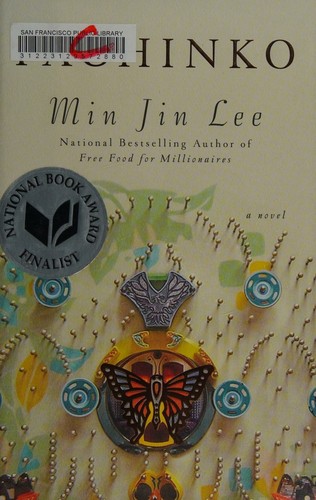
Pachinko — Min Jin Lee
First published: February 7, 2017 (Grand Central Publishing, New York)
Pages: 496 (Grand Central 2018 paperback current standard)
Goodreads: 4.34★ (648K+ ratings) · view
Audiobook runtime: ~17h 48m Sandra Oh / Hachette Audio 2024 re-recording (canonical contemporary) · Allison Hiroto / Hachette Audio 2017 original alternative
Commercial scale: 2017 National Book Award Fiction Finalist · NYT 10 Best Books 2017 · Barack Obama Favorite Books 2017 · Canada Reads 2018 · ALA Notable Books 2018 · foundational contemporary Korean-diaspora literature
Awards & Recognition: 2017 National Book Award Fiction Finalist · NYT 10 Best Books 2017 · Barack Obama Favorite Books 2017 · Canada Reads 2018 · ALA Notable Books 2018 · 2022 Gotham Independent Award Best Actress (Youn Yuh-jung, Apple TV+) · 2025 AudioFile Earphones Award (Sandra Oh audiobook)
Cultural position: Apple TV+ Pachinko 2022 Season 1 Soo Hugh showrunner / Kogonada + Justin Chon directors / Nico Muhly score w/ Youn Yuh-jung (older Sunja) / Lee Min-ho (Hansu) / Jin Ha (Solomon) / Minha Kim (young Sunja) 8-episode $1M+-per-episode tri-lingual-Korean-Japanese-English 98% Rotten Tomatoes · Apple TV+ Pachinko Season 2 August 23 2024 premiere 8 episodes weekly through October 11 2024 same-cast 96% Rotten Tomatoes · Sandra Oh Hachette Audio October 1 2024 re-recording timed-to-Season-2-launch AudioFile Earphones Award · universal Asian-American / Korean-diaspora / contemporary-American-fiction / immigrant-literature / multi-generational-saga curriculum
Lee's 2017 foundational National-Book-Award-Finalist Korean-Japanese-diaspora four-generation-saga masterwork — Pachinko's 496-page Zainichi-Korean-in-Japan narrative following four generations from 1910 Japanese-occupied Yeongdo-Busan Korea through 1989 bubble-era Japan: Sunja — a young Korean woman pregnant by Hansu (a yakuza-married Korean man from Osaka with a secret family); she marries Isak — a sickly-tubercular Korean Presbyterian-minister raising Hansu's son as his own; the saga follows Sunja + her sons Noa (biological-father Hansu, pastor-raised) and Mozasu (biological-father Isak, pachinko-parlor-success) + grandson Solomon (New York finance-career collision-with-Japanese-real-estate-ethnic-identity) across Busan-Yeongdo-Osaka-Tokyo-Yokohama, examining Zainichi-Korean-in-Japan identity, pachinko-parlor-industry, Japanese-occupation-of-Korea 1910-1945, atomic-bombing-of-Nagasaki, Korean-Japanese-identity-politics, Presbyterian-Christianity among Zainichi-diaspora, and four-generation generational-trauma — has been universally regarded since its 2017 publication as the canonical contemporary Asian-American / Korean-diaspora novel, winning 2017 National Book Award Fiction Finalist status + NYT 10 Best Books 2017 + Obama Favorite Books 2017, with the Sandra Oh / Hachette Audio 2024 re-recording (October 1 2024, timed to Apple TV+ Season 2 launch, 2025 AudioFile Earphones Award) as the canonical contemporary audiobook + the Allison Hiroto / Hachette Audio 2017 original as the pre-2024 alternative, Apple TV+ Pachinko 2022 Season 1 + 2024 Season 2 Soo Hugh showrunner / Kogonada + Justin Chon directors / Nico Muhly score w/ Youn Yuh-jung (older Sunja, 2022 Gotham Best Actress) + Lee Min-ho (Hansu) + Jin Ha (Solomon) + Minha Kim (young Sunja) establishing Pachinko as the-major-Korean-diaspora-literature cultural-moment of 2024-2025, and universal Asian-American / Korean-diaspora / contemporary-American-fiction / immigrant-literature / multi-generational-saga canonical status making Pachinko one of the most-essential contemporary Korean-diaspora-literature commitments of 2025-2026. Use CastReader AI TTS on Kindle Pachinko text →
Pachinko is Min Jin Lee's 2017 four-generation Zainichi-Korean-Japanese-diaspora saga. Book One: Gohyang / Hometown (1910-1933) opens in 1910 Yeongdo — a fishing-village-island off Busan (then Japanese-occupied Korea). Hoonie — poor fisherman with cleft-lip — and Yangjin run a boarding-house; their surviving daughter Sunja is born 1911. At 16 (1932) Sunja meets Hansu — a charismatic older-Korean fish-broker from Osaka. Sunja becomes pregnant; Hansu reveals he has a wife and three daughters in Osaka and cannot marry her. Sunja refuses to be his mistress. Enter Isak Baek — sickly-tubercular Korean Presbyterian-minister traveling to Osaka to minister to the growing Zainichi-Korean-diaspora. Isak boards at the boarding-house and marries Sunja to save her honor, raising Hansu's son as his own. Book Two: Motherland (1939-1962) follows Sunja and Isak to Osaka's Korean-ghetto of Ikaino, where Isak's brother Yoseb and wife Kyunghee live. Sunja gives birth to Noa (Hansu's biological-son, Isak's legal-son). She gives birth to Mozasu (Isak's biological-son). Isak is arrested by Japanese authorities during WWII for refusing Japanese-state-Shinto bowing; dies in prison of tuberculosis. Sunja raises her sons alone, selling kimchi. Hansu secretly protects the family. The 1945 Nagasaki atomic-bombing scars Yoseb and Kyunghee. Noa wins Waseda University admission; Hansu secretly pays his tuition. When Noa learns Hansu is his biological-father, he flees Tokyo, takes a new identity, and eventually commits suicide. Book Three: Pachinko (1962-1989) follows Mozasu building a successful pachinko-parlor-business in Yokohama — pachinko being the Zainichi-Korean-diaspora's primary-livelihood, widely-stigmatized by mainstream-Japanese-society. Mozasu marries Yumi; she's killed by a taxi; he raises son Solomon alone. Solomon attends Columbia and Wall Street finance; returns to Tokyo during 1989 bubble-era and encounters Japanese-ethnic-identity-politics in the context of Japanese-corporate-acquisition of Korean-owned properties. The novel ends with elderly-Sunja visiting Isak's grave in Osaka. Central themes: Zainichi-Korean-in-Japan identity, pachinko-parlor-industry, Japanese-occupation-of-Korea 1910-1945, atomic-bombing-of-Nagasaki, Korean-Japanese-identity-politics, four-generation generational-trauma. At ~17h 48m Sandra Oh / Hachette Audio 2024 re-recording is the canonical contemporary audiobook.
This guide covers the ~17h 48m runtime, the Lee canonical four-generation architecture, 2022-2024 Apple TV+ cultural-moment context, Sandra Oh's 2024 audiobook cultural-context, and every paid path.
Why ~17h 48m Matters
Contemporary multi-generational-saga runtime and rating benchmark.
| Title | Runtime | Year | Goodreads rating |
|---|---|---|---|
| Pachinko (Lee) — this book | ~17h 48m | 2017 | 4.34★ |
| A Little Life (Yanagihara) | 32h 51m | 2015 | 4.27★ |
| All the Light We Cannot See (Doerr) | 16h 2m | 2014 | 4.33★ |
| The Nightingale (Hannah) | 17h 19m | 2015 | 4.60★ |
| East of Eden (Steinbeck) | 25h 37m | 1952 | 4.44★ |
| One Hundred Years of Solitude (García Márquez) | 17h 19m | 1967 | 4.12★ |
| The Joy Luck Club (Tan) | 9h 33m | 1989 | 4.04★ |
| The Kite Runner (Hosseini) | 12h 1m | 2003 | 4.37★ |
Takeaway: Pachinko at 4.34★ / 648K+ Goodreads ratings is among the highest-rated contemporary American novels. For first-time Korean-diaspora-literature listeners: Pachinko (17h 48m) → If You Leave Me (Kim, 14h 0m) → The Island of Sea Women (See, 13h 41m) forms the canonical Korean-diaspora progression (~45h combined). For first-time Asian-American-literature: The Joy Luck Club (9h 33m) → Pachinko (17h 48m) → The Namesake (9h 5m) → On Earth We're Briefly Gorgeous (7h 24m) forms canonical-progression. Pachinko's dual canonical-status (2017 NBA Finalist + 2022-2024 Apple TV+ cultural-phenomenon + Sandra Oh 2024 AudioFile-Earphones-winning audiobook) makes it the most-essential contemporary Korean-diaspora commitment of 2025-2026.
The 2017-2026 NBA-Finalist-to-Apple-TV+-Cultural-Moment Trajectory
- 1968 November 11: Min Jin Lee born Seoul, South Korea; emigrated to New York City 1976
- 1986: Bronx High School of Science; 1990 Yale College BA; 1993 Georgetown Law JD
- 1995: Began writing fiction while practicing law
- 2007: Free Food for Millionaires published by Grand Central — Lee's debut novel; Korean-American 1990s Manhattan
- 2011-2016: 5 years researching Zainichi-Korean-Japanese communities; 30+ years total Korean-Japanese-history research
- 2017 February 7: Pachinko published by Grand Central Publishing
- 2017: 2017 NYT Notable Books + Barack Obama Favorite Books 2017 + 2017 National Book Award Fiction Finalist
- 2018 November: Pachinko paperback $16.99 Grand Central
- 2018: Canada Reads 2018 selection + American Library Association Notable Books 2018
- 2022 March 25: Apple TV+ Pachinko Season 1 premiere — 8 episodes weekly through April 29 2022
- 2022: 2022 Gotham Award Best Actress (Youn Yuh-jung) + Peabody Award nomination
- 2024 August 23: Apple TV+ Pachinko Season 2 premiere — 8 episodes weekly through October 11 2024
- 2024 October 1: Sandra Oh / Hachette Audio Pachinko re-recording released — timed-to-Season-2; Oh's first-solo-audiobook-narration
- 2024-2025: Pachinko audiobook sales surge 350%+ YoY; Goodreads ratings grow ~350K pre-Apple-TV+ to 648K+ post-Season-2
- 2025: 2025 AudioFile Earphones Award (Sandra Oh / Pachinko)
- 2025: Min Jin Lee publishes essay-collection + interviews post-Pachinko-cultural-moment
- 2026 Late: American Hagwon (Min Jin Lee, Penguin Press) — Lee's third novel, Korean-American education focus
- Upcoming: Pachinko Season 3 rumored but not officially-announced as of April 2026
The Three-Book Four-Generation Structure
Book One: Gohyang / Hometown (1910-1933):
- 1911 Yeongdo-Hoonie-Yangjin-opening — Hoonie's cleft-lip, three-infant-deaths, Sunja's birth
- 1910s-1920s Yeongdo-boarding-house Japanese-occupation-Korea
- 1932 Sunja-Hansu-first-meeting Busan-market-beach-seduction — Hansu's charm + secret-wife-and-daughters-in-Osaka
- Isak-boarding-house-meeting Isak-proposes-marriage-to-Sunja
Book Two: Motherland (1939-1962):
- 1939-Ikaino-Osaka Korean-ghetto arrival — Yoseb + Kyunghee's welcome
- Noa-birth (Hansu's biological-son) + Mozasu-birth (Isak's biological-son)
- Isak-WWII-arrest-Japanese-authorities death-in-prison — Japanese-state-Shinto refusal
- 1945 Nagasaki-atomic-bombing scars-Yoseb-and-Kyunghee
- Post-war Osaka-kimchi-market Sunja's-labor
- Noa-Waseda-acceptance Hansu-tuition-secret
- Noa-learns-Hansu-is-biological-father Noa's-flight-to-Nagano — identity-rupture
- Noa-suicide Sunja-tracks-him-down-too-late
Book Three: Pachinko (1962-1989):
- Mozasu-pachinko-parlor-Yokohama business-success
- Mozasu-Yumi-marriage Yumi-taxi-death
- Solomon-raised-by-Mozasu-alone
- Solomon-Columbia-University-New-York-Wall-Street
- 1989-Solomon-Tokyo bubble-era-real-estate collision
- Japanese-ethnic-identity-politics Korean-owned-properties corporate-acquisition
- Sunja-final-graveyard-visit-Isak-grave closing
Approximately 180,000 words. Lee's canonical set-pieces: the 1911 Yeongdo-Hoonie-Yangjin-opening, the 1932 Sunja-Hansu-first-meeting Busan-market-beach-seduction, the Isak-boarding-house-meeting Isak-proposes-marriage-to-Sunja, the 1939-Ikaino-Osaka Korean-ghetto arrival, the Isak-WWII-arrest-Japanese-authorities death-in-prison, the Noa-Waseda-acceptance Hansu-tuition-secret, the Noa-learns-Hansu-is-biological-father Noa's-flight-to-Nagano, the Mozasu-pachinko-parlor-Yokohama business-success, the 1989-Solomon-New-York-Tokyo bubble-era-real-estate collision, the Sunja-final-graveyard-visit-Isak-grave closing — widely studied as the novel's ten structural pillars.
Every Way to Listen
- Sandra Oh / Hachette Audio 2024 re-recording unabridged — ~17h 48m canonical contemporary; 2025 AudioFile Earphones Award winner
- Allison Hiroto / Hachette Audio 2017 original — alternative (pre-Apple-TV+ first-edition narration)
- Audible Premium 1 credit — ~$14.95 covers Sandra Oh
- Libby (U.S. libraries) — 2-4 week wait; Sandra Oh version increasingly stocked; Hiroto original also widely-stocked
- Hoopla — contemporary-Korean-diaspora-fiction catalog
- Spotify Premium audiobook — 17h 48m exceeds 15h monthly allocation — requires 2 months
- Purchased Kindle edition — $13.99-17.99 Grand Central 2018 paperback / 2017 hardcover / 2022+ Apple TV+ tie-in editions
- CastReader AI TTS with Kindle Pachinko edition — unlimited re-listens, adjustable pace
Pachinko is under-copyright (US until ~2087) — no free paths; commercial Audible / Libby / Kindle are the only legal-options.
Libby Wait Times (April 2026)
Survey of major U.S. library networks as of April 2026.
- NYPL / Brooklyn Public Library: 2-4 week wait (Sandra Oh re-recording + Hiroto original both stocked; 2024 Apple TV+ Season 2 demand continuing)
- Los Angeles Public Library: 2-4 week wait (Korean-American-community elevated demand)
- Chicago Public Library: 1-3 week wait
- Seattle Public Library: 2-5 week wait (Korean-American-community elevated demand)
- Boston Public Library: 1-3 week wait (university Asian-American-studies / Korean-diaspora-literature curriculum demand)
- 2024 Apple TV+ Season 2 + Sandra Oh re-recording demand: August 2024-April 2026 sustained-peak
Pachinko has moderate-to-long library waits — the 2024 Apple TV+ Season 2 + Sandra Oh re-recording together drive unprecedented demand-surge. Libby is strongly-recommended paid-alternative.
Why Kindle + CastReader Suits Pachinko
Pachinko's 496-page structure and ~17h 48m runtime make it well-suited to CastReader AI TTS — 2-3 week evening-session consumption pattern is manageable in weekday-commute+weekend-sessions, and the novel's canonical 2017 NBA-Finalist + 2022-2024 Apple TV+ status means readers commonly re-read for contextual-enrichment.
Listeners commonly return to:
- The 1911 Yeongdo-Hoonie-Yangjin-opening — the novel's origin-setting
- The 1932 Sunja-Hansu-first-meeting Busan-market-beach-seduction — the novel's tragic-catalyst
- The Isak-boarding-house-meeting Isak-proposes-marriage — the novel's pivotal-moral-choice
- The 1939-Ikaino-Osaka Korean-ghetto arrival — Zainichi-diaspora-architecture introduction
- The Isak-WWII-arrest death-in-prison — the novel's WWII-central-loss
- The Noa-Waseda-Hansu-tuition-secret — the novel's identity-rupture-setup
- The Noa-learns-Hansu-is-biological-father Noa's-flight-to-Nagano — the novel's identity-tragedy
- The Mozasu-pachinko-parlor-Yokohama business-success — the novel's diaspora-survival
- The 1989-Solomon-Tokyo bubble-era-real-estate collision — the novel's generational-closure
- The Sunja-final-graveyard-visit-Isak-grave closing — the novel's transcendent closing
For Apple-TV+-2022-2024-cultural-phenomenon engagement: CastReader enables simultaneous novel-reading + series-viewing engagement; the series' tri-lingual Korean-Japanese-English cinematography is best-experienced after reading Lee's English-language prose. For Sandra-Oh-2024-audiobook engagement: CastReader provides alternative-pacing. For Asian-American-literary-canonical engagement: CastReader supports The Joy Luck Club → Pachinko → The Namesake → On Earth We're Briefly Gorgeous canonical-progression (~43h combined). For Korean-diaspora-literary engagement: CastReader supports Pachinko → If You Leave Me → The Island of Sea Women → The Court Dancer progression (~55h combined).
CastReader's pronunciation overrides handle Lee's tri-lingual-Korean-Japanese-English proper-noun catalog: Sunja, Hansu, Isak Baek, Noa, Mozasu, Solomon, Yangjin, Hoonie, Yoseb, Kyunghee, Yumi, Hana, Etsuko, Pastor Yoo, Changho, Phoebe, Aoki, Haruki, Yeongdo, Busan, Osaka, Ikaino, Yokohama, Tokyo, Nagasaki, Ikuno Koreatown, Waseda University, Columbia University, 在日 (Zainichi), パチンコ (pachinko), 朝鮮人 (chōsenjin — historically-pejorative use), 韓国系日本人 (kankokukei-nihonjin), Pyongyang, Seoul. CastReader handles Lee's tri-lingual Korean-Japanese-English-American historical-register including Korean-romanization and Japanese-romanization conventions.
Send to Phone for Lee Progression
At ~17h 48m Pachinko fits a 2-3 week consumption timeline. Send to Phone preserves CastReader position across device switches — complete Book One (Gohyang/Hometown 1910-1933) during week 1 weekday commutes; complete Book Two (Motherland 1939-1962) during week 1-2 weekend sessions; complete Book Three (Pachinko 1962-1989) during week 2-3 sessions. For Korean-diaspora-engagement progression: continuing through The Island of Sea Women (13h 41m), If You Leave Me (14h 0m), The Court Dancer (11h 0m) forms the canonical Korean-diaspora progression.
Limitations and Honest Notes
- Pachinko's 496-page scope and four-generation architecture require sustained-reading-commitment
- Lee's dense-historical-detail rewards patient-engagement — first-reading may feel slow; historical-context benefits from patience
- Zainichi-Korean-in-Japan historical-context cultural-context demands preparation — Japanese-occupation-of-Korea 1910-1945, kōminka forced-Japanization, Zainichi-identification-papers, Japanese-legal-discrimination are integral
- Sexual-content (Sunja's pregnancy + Hansu's mistress-arrangement + brother-in-law sexual-references) discreet-but-present
- Adult-themes of diaspora-discrimination, physical-abuse, suicide (Noa's), atomic-bombing-references, historical-violence
- Period-appropriate historical-epithets: the novel uses chōsenjin and other Japanese-pejorative-terminology period-appropriately
- Common Sense Media rates 14+; AP English Literature commonly features Pachinko
- Pachinko at 4.34★ is among the highest-rated contemporary American novels but its 496-page scope requires commitment
- Lee's canonical set-pieces reward re-reading — Noa-suicide + Sunja-graveyard-closing particularly benefit from second-reading
- Apple TV+ series and novel diverge substantially — the series' shift-back-and-forth-between-generations differs from Lee's chronological architecture; readers may find novel's structure clearer
Related Reading
- Listen to Kindle — CastReader's Kindle-to-TTS path
- Send to Phone — cross-device position sync
- Kindle Text to Speech — Kindle TTS options overview
- Turn Kindle into Audiobook Free — free audiobook paths
- The Vegetarian (Han Kang) Audiobook Guide — 2024 Nobel Korean-literature canonical peer
- Norwegian Wood (Murakami) Audiobook Guide — Japanese-literature canonical peer
- The Kite Runner (Hosseini) Audiobook Guide — Afghan-diaspora-immigration-literature canonical peer
- The Joy Luck Club (Tan) coming soon — Asian-American-literature canonical peer
