Alice's Adventures in Wonderland Audiobook & Text to Speech Guide (2026) — Lewis Carroll's 1865 Victorian Children's Fantasy Masterwork and 160th Anniversary Cultural Moment
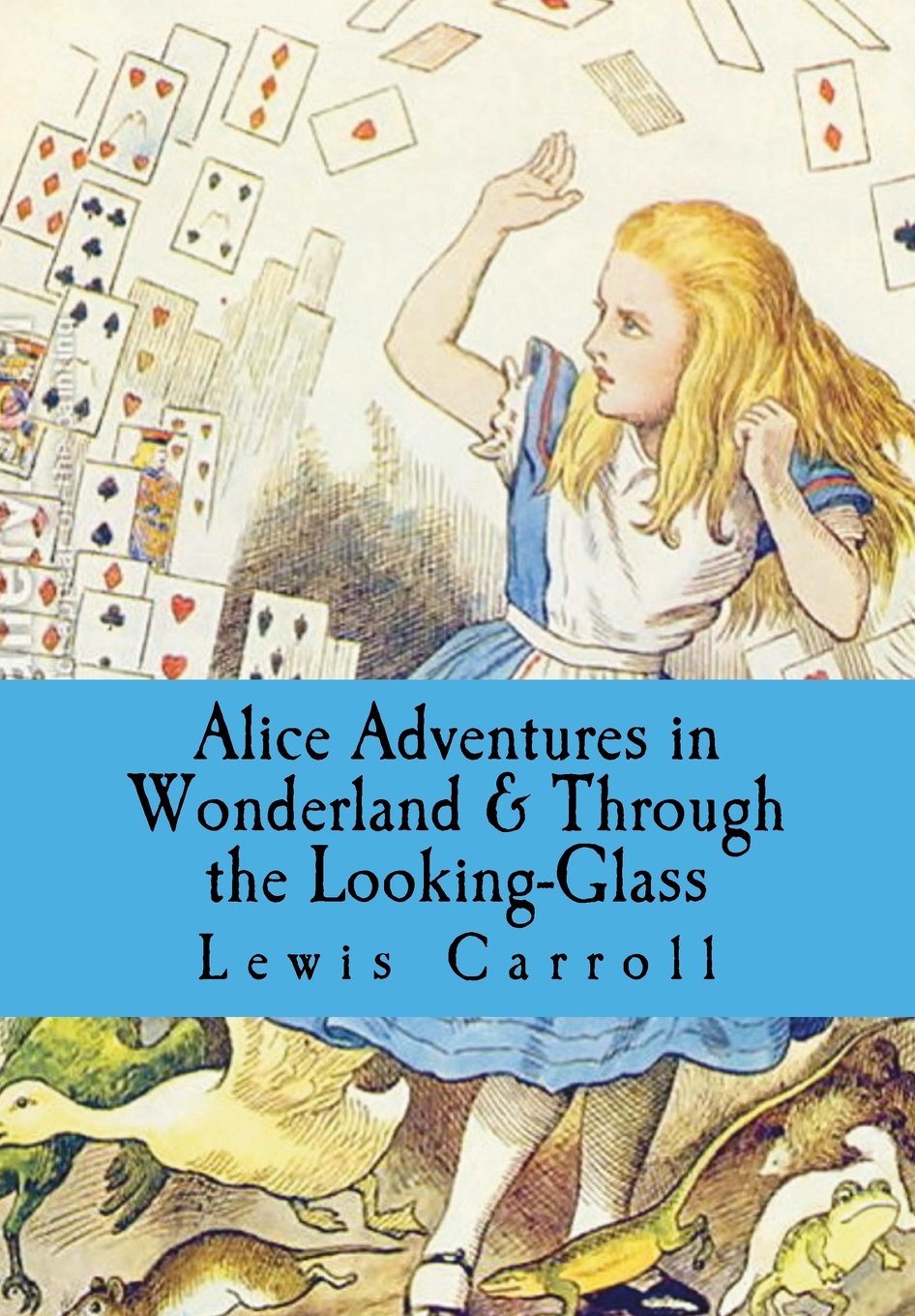
Alice's Adventures in Wonderland — Lewis Carroll (Charles Lutwidge Dodgson)
First published: November 26, 1865 (Macmillan & Co., London; John Tenniel illustrations)
Pages: 239 (Penguin Classics / Puffin Classics standard)
Goodreads: 4.06★ (615K+ ratings) · view
Audiobook runtime: ~2h 44m Scarlett Johansson / Audible 2013 canonical · ~3h 1m Jim Dale / Listening Library · ~3h Juliet Stevenson / Naxos · ~3h Michael Page / Brilliance · LibriVox free Kara Shallenberg / multi-reader
Commercial scale: 160+ years continuous literary tradition · foundational Victorian-children's-literature + portal-fantasy + nonsense-genre canonical · global public-domain · 150+ languages translated · universally-assigned children's-literature / Victorian-literature curriculum · 615K+ Goodreads ratings
Awards & Recognition: BBC Big Read top-100 · Guardian 100 Best Novels · Library of Congress canonical · foundational Victorian-nonsense / portal-fantasy / children's-literature
Cultural position: 160th anniversary 2025 cultural moment · 2010 Tim Burton Disney $1.025B w/ Mia Wasikowska / Johnny Depp / Helena Bonham Carter / Anne Hathaway · 1951 Walt Disney animated classic · 2011 Christopher Wheeldon Royal Ballet · 2016 James Bobin Through the Looking Glass sequel · 200+ historical adaptations
Carroll's 1865 foundational-Victorian-children's-fantasy masterwork — Alice's Adventures in Wonderland's 12-chapter 239-page narrative of Oxford-mathematics-don Charles Lutwidge Dodgson's golden-afternoon improvised tale for 10-year-old Alice Liddell becoming the canonical children's-literature work, with Alice's pursuit of the White Rabbit down the rabbit-hole into Wonderland, encounters with Caterpillar / Duchess / Cheshire Cat / Mad Hatter-March Hare-Dormouse tea-party / Queen of Hearts croquet / Mock Turtle / trial-scene culminating in Alice's 'You're nothing but a pack of cards!' awakening from the dream — has been universally regarded as the foundational Victorian children's-literature novel, the foundational work of Victorian-nonsense-genre, and the foundational portal-fantasy since its 1865 Macmillan & Co. publication with John Tenniel's canonical illustrations, with the Scarlett Johansson / Audible 2013 production widely-praised as the canonical contemporary American audiobook alongside Jim Dale / Listening Library British alternative, 160th anniversary 2025 cultural-moment driving sustained Victorian-children's-fantasy resurgence, Tim Burton's 2010 Disney $1.025B Alice in Wonderland w/ Mia Wasikowska / Johnny Depp / Helena Bonham Carter / Anne Hathaway driving the largest Alice-cultural-visibility of the 21st century, and 160 years of continuous literary-critical / 200+ film / stage / ballet / opera / video-game adaptation / universal-classroom-assignment engagement establishing Alice as one of the most-culturally-visible Victorian-era literary properties. Use CastReader AI TTS on Kindle Alice text →
Alice's Adventures in Wonderland is Lewis Carroll's 1865 children's-fantasy novel about a young girl who follows a talking rabbit down a rabbit-hole into an absurd underground world. Seven-year-old Alice sees the White Rabbit in a waistcoat carrying a pocket-watch and follows him down a rabbit-hole; falls slowly through a vertical tunnel; lands in a hall of locked doors. She drinks from a 'DRINK ME' bottle (shrinks) and eats an 'EAT ME' cake (grows); alternates size. Alice meets the Mouse in her tears-flood; the menagerie escape by 'caucus-race' (satire of Victorian politics). Alice grows huge in the White Rabbit's house; small and escapes. In the mushroom-forest Alice meets a Caterpillar smoking a hookah who asks 'Who are YOU?' The Duchess in her pepper-filled kitchen with the Cook throwing things and a baby becoming a pig. The Cheshire Cat grins from tree-branches; can vanish leaving only its smile; tells Alice everyone is mad. The Mad Hatter's tea-party with the March Hare and Dormouse — the Hatter asks 'Why is a raven like a writing-desk?'; time has stopped at 6 PM for the tea-party permanently. The royal croquet-ground ruled by the Queen of Hearts who orders heads off for the slightest offense; croquet is played with live flamingoes as mallets and hedgehogs as balls. The Mock Turtle and Gryphon tell Alice their tragic educational-history ('Reeling and Writhing, of course'). The Knave of Hearts' trial for stealing tarts; Alice testifies; refuses the Queen's 'Off with her head!' command and declares 'You're nothing but a pack of cards!' — cards fly at her; she awakes beside her sister; realizes she has been dreaming. Central themes: Victorian childhood versus adult-absurdity, nonsense as literary-mode, wordplay and puns, identity under size-change, dream-logic narrative, satirical engagement with Victorian education / politics. At ~2h 44m Scarlett Johansson / Audible 2013 production is the canonical contemporary American audiobook; Jim Dale / Listening Library ~3h 1m is the canonical British; LibriVox hosts free public-domain productions.
This guide covers the ~2h 44m runtime, the 12-chapter structure, Carroll's Christ-Church-Oxford biographical context, 160th anniversary 2025 cultural-moment companion-engagement, and every free / paid path.
Why ~2h 44m Matters
Victorian-children's-fantasy and portal-fantasy runtime and rating benchmark.
| Title | Runtime | Year | Goodreads rating |
|---|---|---|---|
| Alice's Adventures in Wonderland (Carroll) — this book | ~2h 44m | 1865 | 4.06★ |
| Through the Looking-Glass (Carroll) | 4h | 1871 | 4.08★ |
| The Wonderful Wizard of Oz (Baum) | 4h | 1900 | 4.00★ |
| Peter Pan (Barrie) | 4h 30m | 1911 | 4.05★ |
| The Wind in the Willows (Grahame) | 7h 30m | 1908 | 4.06★ |
| Winnie-the-Pooh (Milne) | 3h | 1926 | 4.29★ |
| The Lion, the Witch and the Wardrobe (Lewis) | 4h 1m | 1950 | 4.24★ |
| Charlotte's Web (White) | 3h 34m | 1952 | 4.21★ |
Takeaway: Alice's Adventures in Wonderland at 4.06★ / 615K+ Goodreads ratings is the foundational Victorian-children's-literature work with the shortest runtime among canonical children's-fantasy. For first-time Victorian-children's-literature listeners: Alice (2h 44m) → Through the Looking-Glass (4h) → The Wonderful Wizard of Oz (4h) → Peter Pan (4h 30m) → The Wind in the Willows (7h 30m) → Winnie-the-Pooh (3h) forms the canonical Victorian-Edwardian progression. Alice's status as the originating work of Victorian-nonsense and portal-fantasy makes it one of the most-essential entries in the children's-literature canon.
The 1865-2026 Trajectory
- 1832 January 27: Charles Lutwidge Dodgson (Lewis Carroll) born Daresbury, Cheshire, England
- 1851-1881: Dodgson at Christ Church, Oxford — student, then mathematics lecturer/don
- 1855: Dodgson meets 4-year-old Alice Liddell (daughter of Christ Church Dean Henry Liddell)
- 1862 July 4: 'Golden Afternoon' — Dodgson tells improvised Alice story during boating trip with Alice / Lorina / Edith Liddell on the Isis river; 10-year-old Alice asks Dodgson to write it down
- 1864: Alice's Adventures Under Ground — Dodgson's handwritten manuscript given to Alice Liddell
- 1865 November 26: Alice's Adventures in Wonderland published by Macmillan & Co., London, with John Tenniel illustrations — immediate bestseller
- 1871 December: Through the Looking-Glass, and What Alice Found There — Carroll's direct sequel
- 1876: The Hunting of the Snark — Carroll's narrative-nonsense-poem
- 1898 January 14: Charles Lutwidge Dodgson dies Guildford, Surrey
- 1934: Paramount Alice in Wonderland live-action w/ Charlotte Henry / Cary Grant / W.C. Fields
- 1951 July 26: Walt Disney Alice in Wonderland — animated classic w/ Kathryn Beaumont / Ed Wynn
- 1960: Martin Gardner's The Annotated Alice — canonical scholarly-annotated edition
- 1985: Harry Harris CBS Alice in Wonderland — two-part TV movie w/ Natalie Gregory / Red Buttons / Sammy Davis Jr.
- 1999: Nick Willing NBC Alice in Wonderland — TV film w/ Tina Majorino / Whoopi Goldberg / Ben Kingsley
- 2000: American McGee's Alice — dark-psychological-horror video-game
- 2009: Nick Willing SyFy Alice — reimagining miniseries
- 2010 March 5: Tim Burton's Alice in Wonderland — Walt Disney Pictures $1.025B global w/ Mia Wasikowska / Johnny Depp / Helena Bonham Carter / Anne Hathaway
- 2011: Christopher Wheeldon Royal Ballet Alice's Adventures in Wonderland — critically-acclaimed ballet production
- 2011: American McGee's Alice: Madness Returns — dark-psychological-horror video-game sequel
- 2013: Scarlett Johansson / Audible Alice audiobook production
- 2016 May 27: James Bobin Alice Through the Looking Glass — Walt Disney Pictures $299M sequel
- 2023-2024: Royal Opera House Alice's Adventures Under Ground (Gerald Barry opera)
- 2025 November 26: 160th anniversary of publication — sustained Victorian-children's-fantasy cultural engagement
- 2026 April: 160+ years continuous literary tradition · foundational Victorian-children's-literature + portal-fantasy + nonsense-genre canonical · global public-domain · elevated 2024-2026 Alice publishing / audiobook / Kindle sales driven by 160th-anniversary cultural-moment + Burton 2010 $1.025B film legacy
The 12-Chapter Structure
Understanding Carroll's novel architecture:
- Chapter 1 'Down the Rabbit-Hole' — Alice sees the White Rabbit, follows down the rabbit-hole, falls through the tunnel, lands in the hall of doors, drinks 'DRINK ME' and eats 'EAT ME'
- Chapter 2 'The Pool of Tears' — Alice's size-changes; flood of her tears; meets the Mouse
- Chapter 3 'A Caucus-Race and a Long Tale' — Caucus-race; Mouse's 'tail' pun-poem
- Chapter 4 'The Rabbit Sends in a Little Bill' — Alice grows huge in Rabbit's house; Bill the Lizard
- Chapter 5 'Advice from a Caterpillar' — Caterpillar with hookah; 'Who are YOU?'; 'Father William' recitation; mushroom size-control
- Chapter 6 'Pig and Pepper' — Duchess; Cook throwing pepper; baby becomes pig; first meeting with Cheshire Cat
- Chapter 7 'A Mad Tea-Party' — Hatter, March Hare, Dormouse; 'Why is a raven like a writing-desk?'; time stopped at 6 PM
- Chapter 8 'The Queen's Croquet-Ground' — Five / Seven / Two card-gardeners; Queen of Hearts; croquet with flamingoes and hedgehogs
- Chapter 9 'The Mock Turtle's Story' — Mock Turtle and Gryphon; educational-history ('Reeling and Writhing'); Lobster Quadrille
- Chapter 10 'The Lobster Quadrille' — Mock Turtle's songs; 'Beautiful Soup'
- Chapter 11 'Who Stole the Tarts?' — Knave of Hearts' trial begins; Hatter as witness; Alice grows
- Chapter 12 'Alice's Evidence' — Alice's testimony; 'You're nothing but a pack of cards!'; cards fly at her; Alice wakes beside her sister
12 chapters, approximately 27,500 words. Carroll's canonical set-pieces: Chapter 1 'Down the Rabbit-Hole', Chapter 2 Pool of Tears, Chapter 5 'Advice from a Caterpillar', Chapter 6 Cheshire Cat, Chapter 7 'A Mad Tea-Party', Chapter 8 Queen's Croquet, Chapter 9 Mock Turtle, Chapter 11 Knave's Trial, Chapter 12 'You're nothing but a pack of cards!' awakening — widely studied as the novel's nine structural pillars.
Every Way to Listen
- Scarlett Johansson / Audible 2013 — ~2h 44m canonical contemporary American
- Jim Dale / Listening Library — ~3h 1m canonical British-theatrical
- Juliet Stevenson / Naxos Audiobooks — ~3h classical-British unabridged
- Michael Page / Brilliance Audio — ~3h alternative
- Christopher Plummer — production including Through the Looking-Glass
- David Horovitch / Naxos — alternative unabridged
- Derek Jacobi / Naxos — classical-British alternative
- Tim Curry — alternative
- LibriVox free public-domain — Kara Shallenberg complete recording (consensus LibriVox canonical); Lynne T. alternative; multi-reader community productions (Alice is one of the most-frequently-recorded LibriVox titles)
- Audible Premium 1 credit — ~$14.95 covers Scarlett Johansson / Audible or any commercial single-narrator production
- Audible Essentials catalog — Jim Dale / Listening Library complete editions
- Libby (U.S. libraries) — 0-1 week wait; multiple productions reliably stocked
- Hoopla — Carroll catalog
- Spotify Premium audiobook — 2h 44m fits within 15h monthly allocation (single-month consumption)
- LibriVox free — zero-cost Kara Shallenberg complete path (Alice is global public-domain since Carroll's 1898 death)
- Project Gutenberg free Kindle — complete 1865 first-edition text
- Purchased Kindle edition — $8-20 Puffin Classics / Penguin Classics / Norton Critical Edition / Martin Gardner's The Annotated Alice (canonical scholarly-annotated)
- CastReader AI TTS with Kindle Alice edition — unlimited re-listens, adjustable pace
Alice's global public-domain status means comprehensive free-path options.
Libby Wait Times (April 2026)
Survey of major U.S. library networks as of April 2026.
- NYPL / Brooklyn Public Library: 0-1 week wait (Scarlett Johansson / Audible, Jim Dale / Listening Library, multiple classical-British productions all reliably stocked)
- Los Angeles Public Library: 0-1 week wait
- Chicago Public Library: 0-1 week wait
- Seattle Public Library: 0-1 week wait
- Boston Public Library: 0-1 week wait (university curriculum demand)
Alice has very short library waits — its universal-canonical-assignment and 615K+ Goodreads rating ensure every major US library system carries multiple digital copies and multiple productions. Libby is strongly-recommended free path. LibriVox Kara Shallenberg is the zero-wait free path.
Why Kindle + CastReader Suits Alice's Adventures in Wonderland
Alice's 12-chapter structure and accessible ~2h 44m runtime make it particularly well-suited to CastReader AI TTS — single-sitting consumption pattern is manageable as afternoon or bedtime reading, and the novel's universal classroom-canonical status means American / British / international students commonly re-read across grade-levels.
Listeners commonly return to:
- Chapter 1 'Down the Rabbit-Hole' — universally-quoted opening; the novel's foundational portal-fantasy moment ('Oh dear! Oh dear! I shall be too late!')
- Chapter 5 'Advice from a Caterpillar' (Caterpillar's 'Who are YOU?' philosophical question; 'Father William' recitation)
- Chapter 6 Cheshire Cat first-meeting ('We're all mad here. I'm mad. You're mad.')
- Chapter 7 'A Mad Tea-Party' — the novel's most-famous scene; widely-quoted Hatter / March Hare / Dormouse dialogue
- Chapter 8 Queen's Croquet Ground (Queen of Hearts' 'Off with her head!')
- Chapter 9 Mock Turtle's Story (Carroll's Victorian-education satire)
- Chapter 11 Knave of Hearts' Trial
- Chapter 12 'Alice's Evidence' — 'You're nothing but a pack of cards!' climactic awakening
For Martin Gardner's The Annotated Alice scholarly engagement: CastReader's cross-device bookmarking enables hearing Carroll's text while reading Gardner's extensive marginalia — essential for serious scholarly engagement with Carroll's Christ-Church-Oxford / Victorian-mathematics / Alice-Liddell-biographical reference layers. For Burton 2010 film companion-engagement: reading Alice after watching Burton provides useful original-canonical grounding; reading before reveals Burton's adaptation-choices. CastReader supports Alice → Through the Looking-Glass (4h direct sequel) → The Hunting of the Snark (1h 30m) → Carroll's poetry exploration.
CastReader's pronunciation overrides handle Carroll's British-nonsense proper-noun catalog: Alice, White Rabbit, Cheshire Cat (CHESH-ur), Mad Hatter, March Hare, Dormouse, Caterpillar, Mock Turtle, Gryphon (GRIF-un), Queen of Hearts, King of Hearts, Knave of Hearts, Duchess, Cook, Bill the Lizard, Five / Seven / Two (card-gardeners), Mary Ann (Rabbit's servant), Pat, Father William, Mabel, Ada, Dinah (Alice's cat), Kitty, Wonderland, Caucus-Race, Pool of Tears, Rabbit-Hole. CastReader handles Carroll's Victorian-English register with nonsense-word accommodations.
Send to Phone for Carroll / Victorian-Children's Progression
At ~2h 44m Alice's Adventures in Wonderland fits a single-sitting consumption timeline. Send to Phone preserves CastReader position across device switches — complete all 12 chapters during a single afternoon or bedtime listening session, or pace 2 chapters per week for 6-week bedtime-reading rhythm. For Carroll companion-progression, completing Alice (2h 44m) and proceeding to Through the Looking-Glass (4h), The Hunting of the Snark (1h 30m), and Sylvie and Bruno (12h) forms the Carroll-canonical-corpus immersion (~20h combined); for Victorian-children's-literature progression, continuing through Treasure Island (6h 30m), Peter Pan (4h 30m), The Wind in the Willows (7h 30m), and Winnie-the-Pooh (3h) forms the canonical Victorian-Edwardian-children's-literature progression (~27h combined).
Limitations and Honest Notes
- The novel's Victorian-English / Christ-Church-Oxford cultural specificity — readers unfamiliar with 1860s British-educational culture and Oxford academic humor may miss some of Carroll's satirical reference; scholarly editions (Martin Gardner's The Annotated Alice) provide essential context for fuller engagement
- The novel's nonsense-logic and dream-structure is its central feature — readers expecting conventional narrative with clear character-development and causal plot-progression will not find it; Alice's Wonderland is deliberately absurdist, chaotic, and dream-logical; appreciation requires acceptance of the nonsense-genre's conventions
- Some Victorian-British vocabulary ('caucus,' 'quadrille,' various educational-Latin terms in the Mock Turtle's curriculum) may require brief contextual explanation for young readers or non-British listeners
- Mathematical / logical inside-jokes — Carroll's Oxford-mathematics-don background informs numerous puzzles, paradoxes, and linguistic games throughout; Gardner's annotated edition extensively documents these layers; readers who want to catch every Carroll-layer should engage with scholarly commentary
- Carroll's biographical complexity — Carroll's close friendships with young girls (particularly Alice Liddell) and his photography of children (much of which has been lost) has been the subject of extensive 20th-century and 21st-century biographical speculation; the text itself is entirely-innocent of inappropriate content but adult readers engaging scholarly editions may encounter biographical-contextual discussion
- Nonsense-violence — the Queen of Hearts' frequent 'Off with her head!' threats and the trial-scene chaos are Carroll-satirical rather than graphic; these are treated absurdly and pose no serious-threat
- Drug-metaphor reading — the Caterpillar's hookah and mushroom consumption have been read as drug-metaphor in 20th-century counter-cultural interpretation (Jefferson Airplane's White Rabbit 1967); Carroll intended these simply as fantastic-elements without drug-reference, but contemporary adult readers may encounter this interpretive layer
- The 1951 Walt Disney and 2010 Tim Burton films compress / transform / reframe substantial material — both adaptations are companion-engagement rather than substitute-for-reading; the Burton film is a reimagined-sequel set 13 years after the original's events with adult-Alice returning to 'Underland'
- Through the Looking-Glass (1871, the direct sequel) is equally-canonical — readers engaging with Alice should plan to also read Through the Looking-Glass for complete Alice-story engagement
Related Reading
- Listen to Kindle — CastReader's Kindle-to-TTS path
- Send to Phone — cross-device position sync
- Kindle Text to Speech — Kindle TTS options overview
- Turn Kindle into Audiobook Free — free audiobook paths
- The Wonderful Wizard of Oz (Baum) Audiobook Guide — American-portal-fantasy peer; 1900
- The Little Prince (Saint-Exupéry) Audiobook Guide — French-philosophical-children's peer; 1943
- Charlotte's Web (White) Audiobook Guide — American children's-classic peer; 1952
- The Picture of Dorian Gray (Wilde) Audiobook Guide — Victorian-era Gothic-aesthetic peer; 1890
