The Sun Also Rises Text to Speech: Free Audio for Hemingway's Lost Generation Paris-Pamplona Debut Novel
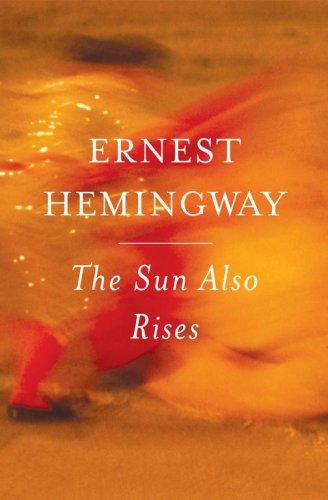
Author: Ernest Hemingway (1899-1961, 7 novels + 4 short-story collections + 3 non-fiction, 1954 Nobel Prize in Literature + 1953 Pulitzer Prize for The Old Man and the Sea) Published: Charles Scribner's Sons October 22, 1926 · Jonathan Cape UK 1927 as Fiesta — 23,000 first-year copies at then-record $2.00 price Pages: 251 · Goodreads: 3.83★ / 390K ratings Audiobook: William Hurt · Simon & Schuster Audio · 7h 11m (canonical) · Patrick Wilson · Random House Audio · 7h 2m · Frank Muller · Recorded Books · 7h 5m · James Earl Jones · Caedmon 1991 · partial Awards: Modern Library 100 Best Novels 20th Century #45 · Time 100 Best English-Language Novels 1923-2005 · BBC 100 Novels That Shaped Our World · Guardian 100 Greatest Novels · Harold Bloom Western Canon · Le Monde 100 Books of the Century · AP English Literature + American-literature-survey canonical · 4M+ copies global · 30+ language translations · Iceberg-theory-prose-foundation canon · 'Lost Generation' inaugural novel Gertrude-Stein-epigraph-origin Adaptations: 1957 20th Century Fox CinemaScope film (Henry King directing + producing, Darryl F. Zanuck producing, Peter Viertel screenplay, Hugo Friedhofer score, Leo Tover cinematography, 130 minutes) w/ Tyrone Power (Jake) + Ava Gardner (Brett) + Mel Ferrer (Cohn) + Errol Flynn (Mike — Golden Globe Best Supporting Actor nomination) + Eddie Albert (Bill) + Juliette Gréco (Georgette) + Gregory Ratoff (Count Mippipopolous) · 1984 NBC TV miniseries w/ Hart Bochner + Jane Seymour + Robert Carradine + Zeljko Ivanek + Leonard Nimoy + Ian Charleson · 2003 BBC Radio 4 full-cast dramatization · 2022 James Franco-announced but unreleased project
Ernest Hemingway's The Sun Also Rises is the canonical Lost Generation debut novel. Published by Charles Scribner's Sons on October 22, 1926, the 251-page novel inaugurated the iceberg-prose-style that would define 20th-century American literature. It established Hemingway as the voice of the post-WWI American expatriate Paris-generation, gave that cohort its enduring name via Gertrude Stein's epigraph 'You are all a lost generation,' and became the template for minimalist-dialogue-driven prose that Fitzgerald, Dos Passos, Raymond Carver, Ann Beattie, and countless others inherited. If you own the Kindle or EPUB copy and want to hear William Hurt's canonical 7-hour narration while you commute, walk, or cook, use CastReader AI TTS to convert your copy to unabridged audio for free →.
Jake Barnes, a Paris Herald-Tribune reporter expatriated from Kansas City, loves Lady Brett Ashley, a twice-married, currently-engaged British aristocrat from a Paris-expatriate crowd. Jake cannot consummate the love — a war wound on the Italian Front (he flew with the Italian air force during WWI) left him impotent. Brett, for her part, moves through lovers at a pace that exhausts them: she is engaged to Mike Campbell (a bankrupt Scottish war-veteran), has briefly taken Robert Cohn (a Princeton-educated Jewish novelist, boxing-champion) as a weekend-lover in San Sebastián, and — by Book 2 — falls for Pedro Romero, a 19-year-old Spanish matador. The novel's three-book structure moves from Paris cafés (the Select, the Dôme, the Rotonde, Zelli's Montmartre — all Hemingway's 1920s haunts) to Burguete trout-fishing in the Spanish Pyrénées (Jake and Bill Gorton's idyllic week before the fiesta) to Pamplona's San Fermín festival (July 6-14, the Plaza de Toros, Montoya's hotel, Romero's corrida). The fiesta ends with Cohn — who has beaten both Jake and Romero in jealous-drunk-rage — departing, Brett running off to Madrid with Romero, and Jake retrieving her from the Hotel Montana. The final dialogue: Brett — 'Oh, Jake, we could have had such a damned good time together.' Jake — 'Yes. Isn't it pretty to think so?'
Hemingway drafted the novel in 8 weeks July-September 1925 immediately after his actual Pamplona trip with Hadley Richardson (his first wife, the novel is dedicated to her and their son Bumby), Harold Loeb, Lady Duff Twysden, Pat Guthrie, Donald Ogden Stewart, and Bill Smith. The roman-à-clef characters mapped almost directly onto that group. The novel's title was Fiesta until F. Scott Fitzgerald (Hemingway's friend and de facto editor of this manuscript) recommended cutting the first 2 chapters of Brett-backstory and changing the title to The Sun Also Rises from Ecclesiastes 1:4-7.
Why 7 Hours 11 Minutes Matters
The Sun Also Rises is Hemingway's accessible-entry-point audiobook at 251 pages / 7 hours. William Hurt's canonical Simon & Schuster Audio edition captures Jake Barnes's reserved-American-expatriate register with cultured understatement; Patrick Wilson's Random House Audio edition is the contemporary-consensus alternative; Frank Muller's Recorded Books edition is the classroom-preferred. CastReader's AI narration is excellent for classroom use and first-pass reading; Hurt is recommended for iceberg-nuance re-listen.
Key Themes
1. Iceberg Theory Foundation — Hemingway's 'theory of omission': the war, Jake's specific wound, Brett's serial-loves, Cohn's Jewish-outsider status, the expatriate alcoholism, the fiesta's Catholic-penitent underpinnings are all omitted; readers feel their gravity through the prose's deliberate flatness.
2. Lost Generation Identity — Stein's epigraph gave the 1920s American-expatriate Paris cohort its enduring name. The novel documents the cohort's cultural formation: Hemingway + Fitzgerald + Pound + Joyce + Eliot + Dos Passos + McAlmon + Djuna Barnes + Stein + Sylvia Beach's Shakespeare and Company bookstore.
3. Roman-à-Clef Craft — The novel drafted in 8 weeks from Hemingway's actual July 1925 Pamplona trip. Jake = Hemingway; Brett = Lady Duff Twysden; Mike = Pat Guthrie; Cohn = Harold Loeb; Romero = matador Cayetano Ordóñez.
4. Bullfighting as Aesthetic Code — Pedro Romero's pure, classical bullfighting represents authentic aficionado artistry — the inverse of the expatriate characters' drunken disarray. Hemingway would revisit bullfighting in Death in the Afternoon (1932) and The Dangerous Summer (1985 posthumous).
5. Impotence as Generational Symbol — Jake's war-wound impotence parallels Tiresias in Eliot's The Waste Land (1922); sexual sterility symbolizes civilizational sterility.
Pamplona San Fermín Fiesta
The Pamplona bull-run and corrida sequences (Book 2 Chapters 13-18 + Book 3 Chapter 19) are the novel's emotional climax. Hemingway's fiesta-documentary realism — the encierro morning bull-run through Calle Estafeta, the Plaza de Toros afternoon corridas, Hotel Montoya's aficionado brotherhood, the riau-riau nightly dance procession — established fiesta-tourism among American readers that continues today. The Sun Also Rises is widely credited with making San Fermín the global tourist phenomenon it became by the 1960s-70s.
Adaptations
Henry King's 1957 20th Century Fox CinemaScope film (130 minutes) starred Tyrone Power (Jake) + Ava Gardner (Brett) + Mel Ferrer (Cohn) + Errol Flynn (Mike — Golden Globe Best Supporting Actor nomination) + Eddie Albert (Bill) + Juliette Gréco (Georgette) + Gregory Ratoff (Count Mippipopolous). Filmed in Morelia, Mexico rather than actual Pamplona, with $5M budget / $5M box office mixed-reception. The Tyrone-Power Jake was controversial for too-handsome casting. 1984 NBC TV miniseries w/ Hart Bochner + Jane Seymour + Robert Carradine + Zeljko Ivanek + Leonard Nimoy + Ian Charleson. 2003 BBC Radio 4 full-cast dramatization. 2022 James Franco-announced but unreleased project.
Reading Order
Hemingway's novel chronology: The Sun Also Rises 1926 (Lost Generation Paris-Pamplona debut) + A Farewell to Arms 1929 (WWI Italian-Front romance) + For Whom the Bell Tolls 1940 (Spanish Civil War) + Across the River and Into the Trees 1950 (Venice post-war — critically panned) + The Old Man and the Sea 1952 Pulitzer-Nobel (Cuba parabolic-novella) + The Garden of Eden 1986 posthumous + True at First Light 1999 posthumous. Short-story collections: In Our Time (1925 Nick Adams stories) + Men Without Women (1927) + Winner Take Nothing (1933). Non-fiction: Death in the Afternoon (1932 bullfighting) + Green Hills of Africa (1935 safari) + A Moveable Feast (1964 posthumous Paris memoir — essential companion to The Sun Also Rises).
Why Listen Now
- Lost Generation foundational text — The novel that defined 1920s American expatriate Paris-literature
- Iceberg theory demonstration — Hemingway's minimalist-prose technique at its clearest canonical form
- William Hurt canonical audiobook — Polished baritone match for Jake Barnes's reserved register
- 7-hour accessible length — Ideal first-read Hemingway for newcomers
- Pamplona tourism origin — Book that made San Fermín a global tourist phenomenon
How to Listen to The Sun Also Rises Free
- Libby / Hoopla — Free via library card; 2-4 week hold queue for William Hurt's audiobook
- CastReader AI TTS — Upload your Kindle/EPUB copy to CastReader for instant narration
- LibriVox — Not in US public domain until 2022; check individual-country availability
- Canonical first-listen recommendation: William Hurt Simon & Schuster Audio 7h 11m
Related: A Farewell to Arms Text to Speech | For Whom the Bell Tolls Text to Speech | The Old Man and the Sea Text to Speech | The Great Gatsby Text to Speech | Kindle Text to Speech | Audible Alternative Free | Turn Ebook Into Audiobook