A Farewell to Arms Text to Speech: Free Audio for Hemingway's WWI Italian Front Romance Novel
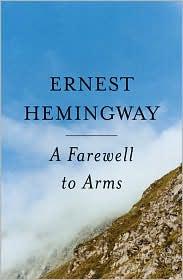
Author: Ernest Hemingway (1899-1961, 7 novels + 4 short-story collections + 3 non-fiction, 1954 Nobel Prize in Literature + 1953 Pulitzer Prize for The Old Man and the Sea) Published: Charles Scribner's Sons September 27, 1929 · Jonathan Cape UK 1929 · Scribner's Magazine serialization May-October 1929 with Boston Censorship over profanity Pages: 332 · Goodreads: 3.80★ / 340K ratings Audiobook: John Slattery · Simon & Schuster Audio · 8h 51m (canonical) · Robin Field · Listen & Live Audio · 8h 22m · Alexander Adams · Naxos AudioBooks · 8h 40m · James Earl Jones · Caedmon 1991 · partial Awards: Modern Library 100 Best Novels 20th Century #74 · Time 100 Best English-Language Novels 1923-2005 · BBC 100 Novels That Shaped Our World · Guardian 100 Greatest Novels · Harold Bloom Western Canon · Le Monde 100 Books of the Century · AP English Literature + American-literature-survey canonical · 5M+ copies global · 30+ language translations · 39-alternate-endings iceberg-theory-revision canonical pedagogical-text · Mussolini Italian-ban 1929-1943 · 1957 ALA Challenged Books list for Boston obscenity earlier Adaptations: 1932 Paramount film (Frank Borzage directing, Paramount producing, Benjamin Glazer + Oliver H.P. Garrett screenplay, Charles Lang cinematography, 89 minutes) w/ Gary Cooper (Frederic) + Helen Hayes (Catherine) + Adolphe Menjou (Rinaldi) + Mary Philips (Helen Ferguson) — 4 Academy Award nominations / 2 wins (Best Cinematography winner + Best Sound winner + Best Picture nom + Best Art Direction nom) · 1957 20th Century Fox CinemaScope film (Ben Hecht screenplay, Charles Vidor directing, David O. Selznick producing — his final production, 152 minutes, $4.4M budget / $5M box office) w/ Rock Hudson (Frederic) + Jennifer Jones (Catherine — Selznick's wife) + Vittorio De Sica (Rinaldi — Best Supporting Actor Oscar nomination) + Oscar Homolka (Dr Emerich) · 1966 ABC TV film w/ George Hamilton + Vanessa Redgrave · 2019 Aaron Sorkin-Luca Guadagnino announced-but-unproduced project
Ernest Hemingway's A Farewell to Arms is the canonical WWI Italian-Front romance novel. Published by Charles Scribner's Sons on September 27, 1929, the 332-page novel established Hemingway's commercial and literary peak at age 30. Drawn from his Red Cross ambulance-driver experience on the Italian Front (Fossalta di Piave July 8, 1918 wound; Milan American Red Cross hospital convalescence; Agnes von Kurowsky romance), the novel's 39-alternate-endings-revision-process is now AP Literature + MFA pedagogy-standard. If you own the Kindle or EPUB copy and want to hear John Slattery's canonical 9-hour narration while you commute, walk, or cook, use CastReader AI TTS to convert your copy to unabridged audio for free →.
Frederic Henry, an American serving as a lieutenant in the Italian Army's ambulance corps on the Italian-Austrian-Hungarian Front in 1917, is stationed at Gorizia. His doctor-friend Rinaldi (the novel's comic-ribald secondary protagonist, a model for Hemingway's own 1918 Milan hospital-roommate Bill Horne) introduces Frederic to a British VAD nurse named Catherine Barkley whose fiancé has been killed in the Somme. Frederic and Catherine's initial casual flirtation deepens through Book 1. At the Plava front Frederic is wounded by an Austrian Minenwerfer mortar (echo of Hemingway's own Fossalta di Piave wound). He convalesces at the American Red Cross Hospital in Milan through summer 1917, and Catherine — reassigned there — renews the romance. She becomes pregnant. Book 3 portrays the October 1917 Caporetto disaster: the Italian army collapses, Austrian-German-Hungarian forces break through the Isonzo, and 300,000 retreating Italian troops flee toward the Tagliamento river in rain. Frederic is separated from his ambulance company, nearly executed by Italian military-police courts-martial at the Tagliamento for suspected desertion, swims away, and makes a farewell to arms — his private unilateral separate peace. He reunites with Catherine in Stresa, rows at night with her to Switzerland (30 kilometers across Lake Maggiore, November 1917). Book 5: in Lausanne Catherine goes into labor. After 30-hour hemorrhagic labor, both Catherine and the baby die. Frederic leaves the hospital and walks back to his hotel in the rain — the novel's famous iceberg-theory closing.
Hemingway drafted the novel March-August 1928 in Key West and Piggott, Arkansas while awaiting the July 1928 birth of his second son Patrick (wife Pauline Pfeiffer's difficult Cesarean-section delivery informed Catherine's death scene). He wrote 39 alternate endings (Scribner's 2012 Special Edition prints all 39) before settling on the spare 3-paragraph final chapter — iceberg-theory at its extreme. The Italian ban (1929-1943, Mussolini's Fascist regime outraged by Caporetto-retreat portrayal) contributed paradoxically to international literary prestige.
Why 8 Hours 51 Minutes Matters
A Farewell to Arms is Hemingway's ideal middle-length audiobook at 332 pages / 8.5 hours. John Slattery's canonical Simon & Schuster Audio edition captures Frederic Henry's detached-American-veteran register; Robin Field's Listen & Live edition is more Italian-accented; Alexander Adams's Naxos edition is the British-nuanced alternative. CastReader's AI narration is excellent for classroom use and first-pass reading; Slattery is recommended for iceberg-nuance re-listen.
Key Themes
1. 39-Alternate-Endings Iceberg-Theory — Hemingway wrote 39 distinct endings; Scribner's 2012 Special Edition prints all 39; AP Literature + MFA pedagogy-standard revision text.
2. Caporetto-Retreat WWI Canon — Book 3's rain-soaked retreat toward the Tagliamento and the drumhead-courts-martial executions remain among the most-celebrated WWI literature passages. Mussolini banned the novel in Italy 1929-1943 for this reason.
3. War-Romance Juxtaposition — Hemingway pairs battlefield horror (Book 1 Plava + Book 3 Caporetto) with tender romance (Book 2 Milan hospital + Book 5 Lausanne). Death at the novel's close (Catherine's childbirth hemorrhage) privately-mirrors the war's mass-death.
4. Iceberg Theory Development — The novel's prose is more adjective-stripped than The Sun Also Rises (1926); Frederic's inner monologue is minimal. Hemingway's 'theory of omission' matures here.
5. Autobiographical Material — Frederic's Fossalta wound ≈ Hemingway's July 8 1918 wound. Catherine ≈ Agnes von Kurowsky (Red Cross nurse). Catherine's death ≈ Hemingway's wife Pauline's difficult 1928 Cesarean (baby Patrick survived).
The 39 Endings
Hemingway-scholars identify 39 distinct ending drafts preserved in the John F. Kennedy Presidential Library Hemingway Collection. Some alternates were more hopeful (Catherine's child survives); some more despairing (Frederic commits suicide); one ends with Frederic's decades-later old-age rumination. The final spare 3-paragraph ending — Frederic leaving the hospital and walking back in the rain — represents Hemingway's extreme iceberg-theory pruning. Scribner's 2012 Special Edition edited by Seán Hemingway (Ernest's grandson) prints all 39 alongside the canonical text.
Adaptations
Frank Borzage's 1932 Paramount film (89 minutes) starred Gary Cooper (Frederic) + Helen Hayes (Catherine) + Adolphe Menjou (Rinaldi) + Mary Philips (Helen Ferguson). 4 Academy Award nominations / 2 wins: Best Cinematography winner Charles Lang + Best Sound winner Franklin Hansen + Best Picture nomination + Best Art Direction nomination. Hemingway disapproved of Paramount's alternate happy-ending cut distributed in some markets. David O. Selznick's 1957 20th Century Fox CinemaScope film (152 minutes, $4.4M budget) starred Rock Hudson (Frederic) + Jennifer Jones (Catherine — Selznick's wife, his final production) + Vittorio De Sica (Rinaldi — Best Supporting Actor Oscar nomination) + Oscar Homolka (Dr Emerich). 1966 ABC TV film w/ George Hamilton + Vanessa Redgrave. 2019 Aaron Sorkin-Luca Guadagnino announced-but-unproduced project.
Reading Order
Hemingway's novel chronology: The Sun Also Rises 1926 (Lost Generation Paris-Pamplona debut) + A Farewell to Arms 1929 (WWI Italian-Front romance) + For Whom the Bell Tolls 1940 (Spanish Civil War) + Across the River and Into the Trees 1950 (Venice post-war) + The Old Man and the Sea 1952 Pulitzer-Nobel (Cuba parabolic-novella) + The Garden of Eden 1986 posthumous + True at First Light 1999 posthumous. Companion-text: A Moveable Feast (1964 posthumous Paris memoir).
Why Listen Now
- WWI literature canon — Alongside Erich Maria Remarque's All Quiet on the Western Front (1929) and Robert Graves's Good-bye to All That (1929), defines WWI modernism
- Iceberg theory mature form — Hemingway's prose at its most pared
- 39-endings revision process — AP Literature + MFA pedagogy-standard canonical text
- John Slattery canonical audiobook — Measured-American-veteran voice
- 9-hour approachable length — Classic introduction to mature Hemingway
How to Listen to A Farewell to Arms Free
- Libby / Hoopla — Free via library card; 2-4 week hold queue for John Slattery's audiobook
- CastReader AI TTS — Upload your Kindle/EPUB copy to CastReader for instant narration
- LibriVox — US public domain January 1, 2025 under 95-year-rule; multi-reader readings now available
- Canonical first-listen recommendation: John Slattery Simon & Schuster Audio 8h 51m
Related: The Sun Also Rises Text to Speech | For Whom the Bell Tolls Text to Speech | The Old Man and the Sea Text to Speech | All Quiet on the Western Front Text to Speech | Kindle Text to Speech | Audible Alternative Free | Turn Ebook Into Audiobook