E-text prepared by Al Haines
Eugene Field. Etched by W. H. W. Bicknell.
THE WORKS OF EUGENE FIELD Vol. X THE WRITINGS IN PROSE AND VERSE OF EUGENE FIELD
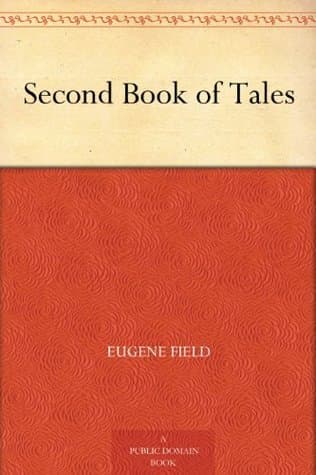
SECOND BOOK OF TALES
CHARLES SCRIBNER'S SONS NEW YORK 1911
Copyright, 1896, by JULIA SUTHERLAND FIELD.
NOTE
The tales down to and including "The Werewolf" in this volume have been selected from those which remained unpublished in book form at the time of Mr. Field's death. It was also thought desirable to take from "Culture's Garland," and to incorporate in this volume, such sketches as seemed most likely to prove of permanent value and of interest as illustrating Mr. Field's earlier manner; and these, eight in number, form the latter part of the book.
INTRODUCTION
Of all American poets Field, it seems to me, best understood the heart of a child. Other sweet singers have given us the homely life of the Western cabin, the unexpected tenderness of the mountaineer, the loyalty and quaint devotion of the negro servant, but to Field alone, and in preëminent degree, was given that keen insight into child nature, that compassion for its faults, that sympathy with its sorrows and that delight in its joyous innocence which will endear him to his race as long as our language is read.
His poems too always kindle afresh that spark of child-life which still lies smouldering in the hearts of us all, no matter how poor and sorrowful our beginnings. As we read, how the old memories come back to us! Old hopes, rosy with the expectation of the indefinite and unknowable. Old misgivings and fears; old rompings and holidays and precious idle hours. We know them all, and we know how true they are. We remember in our own case the very hour and day, and how it all happened and why, and what came of it,—joys and sorrows as real as our keenest experiences since.
This is a heritage plentiful and noble,—and this heritage is Field's.
In the last paragraphs of that tender prose poem of "Bill—the Lokil Editor"—one of the Profitable Tales—Bill—"alluz fond uv children 'nd birds 'nd flowers"—Bill, who was like the old sycamore that the lightning had struck,—with the vines spread all around and over it, covering its scars and splintered branches—occurs this passage:
"——That's Bill perhaps as he stands up f'r jedgment—a miserable, tremblin', 'nd unworthy thing, perhaps, but twined about, all over, with singin' and pleadin' little children—and that is pleasin' in God's sight, I know."
If Field had nothing else to bring he could say truthfully as he faced his Master:
"I followed in your footsteps. I loved the children and the children loved me."
F. HOPKINSON SMITH.
The Tales in this Book
HUMIN NATUR' ON THE HAN'BUL 'ND ST. JO. THE MOTHER IN PARADISE MR. AND MRS. BLOSSOM DEATH AND THE SOLDIER THE 'JININ' FARMS THE ANGEL AND THE FLOWERS THE CHILD'S LETTER THE SINGER MOTHER THE TWO WIVES THE WOOING OF MISS WOPPIT THE TALISMAN GEORGE'S BIRTHDAY SWEET-ONE-DARLING AND THE DREAM-FAIRIES SWEET-ONE-DARLING AND THE MOON-GARDEN SAMUEL COWLES AND HIS HORSE ROYAL THE WEREWOLF A MARVELLOUS INVENTION THE STORY OF XANTHIPPE BAKED BEANS AND CULTURE MLLE. PRUD'HOMME'S BOOK THE DEMAND FOR CONDENSED MUSIC LEARNING AND LITERATURE "DIE WALKÜRE" UND DER BOOMERANGELUNGEN THE WORKS OF SAPPHO
HUMIN NATUR' ON THE HAN'BUL 'ND ST. JO
Durin' war times the gorillas hed torn up most uv the cypress ties an' used 'em for kindlin' an' stove wood, an' the result wuz that when the war wuz over there wuz n't anythink left uv the Han'bul 'nd St. Jo but the rollin' stock 'nd the two streaks uv rails from one end uv the road to the other. In the spring uv '67 I hed to go out into Kansas; and takin' the Han'bul 'nd St. Jo at Palmyry Junction, I wuz n't long in findin' out that the Han'bul 'nd St. Jo railroad wuz jist about the wust cast of rollin' prairer I ever struck.
There wuz one bunk left when I boarded the sleepin'-car, and I hed presence uv mind 'nuff to ketch on to it. It wuz then just about dusk, an' the nigger that sort uv run things in the car sez to me: "Boss," sez he, "I 'll have to get you to please not to snore to-night, but to be uncommon quiet."
"What for?" sez I. "Hain't I paid my two dollars, an' hain't I entitled to all the luxuries uv the outfit?"
Then the nigger leant over an' told me that Colonel Elijah Gates, one uv the directors uv the road, an' the richest man in Marion County, wuz aboard, an' it wuz one uv the rules uv the company not to do anythink to bother him or get him to sell his stock.
The nigger pointed out Colonel Gates, 'nd I took a look at him as he sot readin' the "Palmyry Spectator." He wuz one of our kind uv people—long, raw-boned, 'nd husky. He looked to be about sixty—may be not quite on to sixty. He wuz n't bothered with much hair onto his head, 'nd his beard was shaved, all except two rims or fringes uv it that ran down the sides uv his face 'nd met underneath his chin. This fringe filled up his neck so thet he did n't hev to wear no collar, 'nd he had n't no jewelry about him excep' a big carnelian bosom pin that hed the picture uv a woman's head on it in white. His specs sot well down on his nose, 'nd I could see his blue eyes over 'em—small eyes, but kind ur good-natured. Between his readin' uv his paper 'nd his eatin' plug terbacker he kep' toler'ble busy till come bedtime. The rest on us kep' as quiet as we could, for we knew it wuz an honor to ride in the same sleepin'-car with the richest man in Marion County 'nd a director uv the Han'bul 'nd St. Jo to boot.
Along 'bout eight o'clock the colonel reckoned he 'd tumble into bed. When he 'd drawed his boots 'nd hung up his coat 'nd laid in a fresh hunk uv nat'ral leaf, he crawled into the best bunk, 'nd presently we heerd him sleepin'. There wuz nuthin' else for the rest uv us to do but to foller suit, 'nd we did.
It must have been about an hour later—say along about Prairer City—that a woman come aboard with a baby. There war n't no bunk for her, but the nigger allowed that she might set back near the stove, for the baby 'peared to be kind ov sick-like, 'nd the woman looked like she had been cryin'. Whether it wuz the jouncin' uv the car, or whether the young one wuz hungry or hed a colic into it, I did n't know, but anyhow the train had n't pulled out uv Prairer City afore the baby began to take on. The nigger run back as fast as he could, 'nd told the young woman that she 'd have to keep that baby quiet because Colonel 'Lijy Gates, one uv the directors uv the road, wuz in the car 'nd wunt be disturbed. The young woman caught up the baby scart-like, 'nd talked soothin' to it, 'nd covered its little face with her shawl, 'nd done all them things thet women do to make babies go to sleep.
But the baby would cry, and, in spite of all the young woman 'nd the nigger could do, Colonel Elijah Gates heard the baby cryin', and so he waked up. First his two blue yarn socks come through the curtains, 'nd then his long legs 'nd long body 'nd long face hove into sight. He come down the car to the young woman, 'nd looked at her over his specs. Did n't seem to be the least bit mad; jest solemn 'nd bizness like.
"My dear madam," sez he to the young woman, "you must do sumpin' to keep that child quiet. These people have all paid for their bunks, 'nd they are entitled to a good night's sleep. Of course I know how 't is with young children—will cry sometimes—have raised 'leven uv 'em myself, 'nd know, all about 'em. But as a director uv the Han'-bul 'nd St. Jo I 've got to pertect the rights of these other folks. So jist keep the baby quiet as you kin."
Now, there war n't nothin' cross in the colonel's tone; the colonel wuz as kind 'nd consid'rit as could be expected uv a man who hed so much responsibility a-restin' onto him. But the young woman was kind uv nervous, 'nd after the colonel went back 'nd got into his bunk the young woman sniffled and worrited and seemed like she had lost her wits, 'nd the baby kep' cryin' jist as hard as ever.