WHEN AFRICA AWAKES The “inside Story” of the Stirrings and Strivings of the New Negro in the Western World
By HUBERT H. HARRISON, D.S.C.
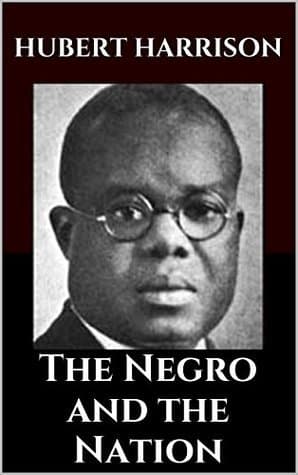
Author of “The Negro and the Nation,” “Lincoln and Liberty,” and Associate Editor of the Negro World
COPYRIGHTED
By HUBERT H. HARRISON, 1920.
PUBLISHED BY
THE PORRO PRESS
513 Lenox Avenue
NEW YORK CITY
1920
THIS LITTLE RECORD IS AFFECTIONATELY DEDICATED TO THOSE WHO STOOD BY MY SIDE IN LOVE, LABOR AND SACRIFICE WHEN THE FOUNDATIONS WERE LAID
TABLE OF CONTENTS
INTRODUCTORY
The Great War of 1914–1918 has served to liberate many new ideas undreamt of by those who rushed humanity into that bath of blood. During that war the idea of democracy was widely advertised, especially in the English-speaking world; mainly as a convenient camouflage behind which competing imperialists masked their sordid aims. Even the dullest can now see that those who so loudly proclaimed and formulated the new democratic demands never had the slightest intention of extending either the limits or the applications of “democracy.” Ireland and India, Egypt and Russia are still the Ithuriel’s spear of the great democratic pretence. The flamboyant advertising of “democracy” has returned to plague the inventors; for the subject populations who contributed their millions in men and billions in treasure for the realization of the ideal which was flaunted before their eyes are now clamoring for their share of it. They are demanding that those who advertised democracy shall now make good. This is the main root of that great unrest which is now troubling the decrepit statesmanship of Europe and America. But the rigid lines of the old regime will not permit the granting of these new demands. Hence the new war against democracy which expresses itself in the clever but futile attempt to outlaw the demands for fuller freedom as “sedition” and “Bolshevism.”
The most serious aspect of this new situation is the racial one. The white world has been playing with the catch-words of democracy while ruthlessly ruling an overwhelming majority of black, brown and yellow peoples to whom these catchwords were never intended to apply. But these many-colored millions have taken part in the war “to make the world safe for democracy,” and they are now insisting that democracy shall be made safe for them. This, in plain English, their white overlords do not intend to concede. “The undictated development of all peoples” was, at best, intended “for white people only.” Thus, white civilization is brought face to face with a crisis out of which may easily grow military conflicts of tremendous scope and, more remotely, the passing of international control out of the hands of a few white nations.
The tenseness of this new situation has been reflected here in the United States in the mental attitude of the Negro people. They have developed new ideas of their own place in the category of races and have evolved new conceptions of their powers and destiny. These ideas have quickened their race-consciousness and they are making new demands on themselves, on their leaders and on the white people in whose midst they live. These new demands apply to politics, domestic and international, to education and culture, to commerce and industry. It seems proper that the white people of America should know what these demands are and should understand the spirit in which they are being urged. Obviously, it is not well that they should be misrepresented and lied about. Futile fulminations about the spread of “Bolshevism” among Negroes by “agitators” will not help toward an understanding of this new phenomenon. They can but befog the issues and defer the dawning of a better day. On the other hand, the Negro people will profit by a clarified presentation of their own side of the case. It is to meet this dual need that this little book is launched. It is a compilation of some of the author’s contributions to Negro journalism between 1917 and the present year and consists of selected editorials, special articles and reviews written for The Voice, The New Negro, and The Negro World. I have selected for reproduction those only which could fairly be considered as expositions of the new point of view evolved during the Great War and coming into prominence since the peace was signed. So far, this point of view has not been fully presented-by the Negro. White men, like Messrs. Sandburg and Seligman, have essayed to interpret it to the white world. This little volume presents directly that which they would interpret.
It may seem unusual to put into permanent form the deliverances of this species of literature. But I venture to think that, as literature, they will stand the test; and I am willing to assume the risks. Besides, I feel that I owe it to my people to preserve this cross-section of their new-found soul. It was my privilege to assist in shaping some of the forms of the new consciousness; and to preserve for posterity a portion of its record has seemed a duty which should not be shirked.
It was in 1916 that I first began to hammer out some of the ideas which will be found in these pages. It was in that year that I gave up my work as a lecturer and teacher among white people to give myself exclusively to work among my own people. In the summer of 1917, with the financial aid of many poor but willing hearts I brought out The Voice, the first Negro journal of the new dispensation, and, for some time, the only one. The Voice failed in March, 1919; but in the meanwhile it had managed to make an indelible impression. Many of the writings reproduced here are taken from its files. The others are from The Negro World, of which I assumed the joint editorship in January of this year. A few appeared in The New Negro, a monthly magazine which I edited for a short time.
The account of the launching of the Liberty League is given here in the first chapter because that meeting at historic Bethel on June 12, 1917, and the labors of tongue and pen out of which that meeting emerged were the foundation for the mighty structures of racial propaganda which have been raised since then. This is a fact not generally known because I have not hankered after newspaper publicity.
It is hardly necessary to point out that the AFRICA of the title is to be taken in its racial rather than in its geographical sense.
HUBERT H. HARRISON.
New York, August 15, 1920.
CHAPTER I. THE BEGINNINGS
Launching the Liberty League
(From The Voice of July 4, 1917.)
The Liberty League of Negro-Americans, which was recently organized by the Negroes of New York, presents the most startling program of any organization of Negroes in the country today. This is nothing less than the demand that the Negroes of the United States be given a chance to enthuse over democracy for themselves in America before they are expected to enthuse over democracy in Europe. The League is composed of “Negro-Americans, loyal to their country in every respect, and obedient to her laws.”
The League has an interesting history. It grew out of the labors of Mr. Hubert H. Harrison, who has been on the lecture platform for years and is well and favorably known to thousands of white New Yorkers from Wall Street to Washington Heights.
Two years ago Mr. Harrison withdrew from an international political organization, and, a little more than a year ago, gave up lecturing to white people, to devote himself to lecturing exclusively among his own people. He acquired so much influence among them that when he issued the first call for a mass-meeting “to protest against lynching in the land of liberty and disfranchisement in the home of democracy,” although the call was not advertised in any newspaper, the church in which the meeting was held was packed from top to bottom. At this mass-meeting, which was held at Bethel Church on June 12, the organization was effected and funds were raised to sustain it and to extend its work all over the country.
Harrison was subsequently elected its president, with Edgar Grey and James Harris as secretary and treasurer, respectively. At the close of this mass-meeting he hurriedly took the midnight train for Boston, where a call for a similar meeting had been issued by W. Monroe Trotter, editor of The Boston Guardian. While there he delivered an address in Fanueil Hall, the cradle of American liberty, and told the Negroes of Boston what their brothers in New York had done and were doing. The result was the linking up of the New York and the Boston organizations, and Harrison was elected chairman of a national committee of arrangements to issue a call to every Negro organization in the country to send delegates to a great race-congress which is to meet in Washington in September or October and put their grievances before the country and Congress.
At the New York mass-meeting money was subscribed for the establishment of a newspaper to be known as The Voice and to serve as the medium of expression for the new demands and aspirations of the new Negro. It was made clear that this “New Negro Movement” represented a breaking away of the Negro masses from the grip of the old-time leaders—none of whom was represented at the meeting. The audience rose to their feet with cheers when Harrison was introduced by the chairman. The most striking passages of his speech were those in which he demanded that Congress make lynching a Federal crime and take the Negro’s life under national protection, and declared that since lynching was murder and a violation of Federal and State laws, it was incumbent upon the Negroes themselves to maintain the majesty of the law and put down the law-breakers by organizing all over the South to defend their own lives whenever their right to live was invaded by mobs which the local authorities were too weak or unwilling to suppress.