THE VISIONARY
OR PICTURES FROM NORDLAND
BY JONAS LIE
TRANSLATED FROM THE NORWEGIAN BY JESSIE MUIR
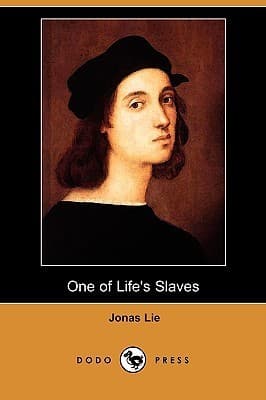
WITH A PREFACE AND PORTRAIT OF THE AUTHOR
LONDON HODDER BROTHERS 1894
PREFACE
Until a few years ago, Norway was an unknown country to most Englishmen. Occasionally a sportsman went there to kill salmon or to shoot reindeer, but the fjords, glaciers, mountains, and waterfalls were quite beyond the reach of any but the most venturesome travellers. Still less was it supposed that Norway possessed a modern school of poets and novelists. Wergeland, Welhaven, Munch, and Moe among the former, Björnson, Ibsen, Kjelland, and Lie among the latter, were, as far as Englishmen were concerned, "to fortune and to fame unknown." All this has been changed; sportsmen now complain that it becomes more difficult every year to hire rivers. Tourists swarm over the country from the Naze to the North Cape. Ibsen's dramas are played in London theatres, and his novels, and those of Björnson and Lie, are read in Germany and in France, as well as in England and America.
These three writers are of nearly the same age. Ibsen was born in 1828, at Skien on the south-eastern coast of Norway; Björnson in the Dovrefjeld in 1832; and Lie at Eker, near Drammen, in 1833. Five years after his son's birth, Lie's father was appointed sheriff of Tromsö, which lies within the Arctic Circle, and young Jonas Lauritz Edemil Lie, to give him his full name, spent six of the most impressionable years of his life at that remote port. There he heard from the sailors many strange tales of romantic adventure and of hazardous escape from shipwreck, with the not uncommon result that he wished to be a sailor himself. He was, therefore, sent to the naval school at Fredriksværn; but his defective eyesight proved fatal to the realisation of his wish and the idea of a seafaring life had to be given up. He was removed from Fredriksværn to the Latin School at Bergen, and in 1851 entered the University of Christiania, where he made the acquaintance of Ibsen and Björnson. He graduated in law in 1857, and shortly afterwards began to practise at Konsvinger, a little town in Hamar's Stift between Lake Miosen and the frontier of Sweden. Clients were not numerous or profitable at Konsvinger; Lie found time to write for the newspapers and became a frequent contributor to some of the Christiania journals. Meantime, Ibsen and Björnson were becoming famous in Norway, and in 1865 Lie, perhaps in a spirit of emulation, decided to abandon law for literature. His first venture was a volume of poems which appeared in 1866 and was not successful. During the four following years he devoted himself almost exclusively to journalism, working hard and without much reward, but acquiring the pen of a ready writer and obtaining command of a style which has proved serviceable in his subsequent career. In 1870 he published "The Visionary,"—"Den Fremsynte"—of which a translation is now, for the first time, offered to English readers. In the following year he revisited Nordland and travelled into Finmark. Having obtained a small travelling pension from the Government, immediately after his journey to Nordland, he sought the greatest contrast he could find in Europe to the scenes of his childhood and started for Rome. For a time he lived in North Germany, then he migrated to Bavaria, spending his winters in Paris. In 1882 he visited Norway for a time, but returned to the continent of Europe. His voluntary exile from his native land ended in the spring of 1893, when he settled at Holskogen, near Christiansund.
"The Visionary" was followed in 1871 by a volume of short stories "Fortoellinger," and during the next year by a larger and more ambitious book, "The Three-master Future,"—"Tremasteren Fremtiden"—a realistic sketch of life in the northern harbours of Norway. Two years later "The Pilot and his Wife"—"Lodsen og hans Hustru"—appeared, a book in every respect greatly in advance of its predecessors. Though written almost entirely in an Italian village it has been justly described by an able critic as "one of the saltiest stories ever published." It placed Lie on a higher pedestal than he had ever before occupied, and brought him into line with Ibsen and Björnson. "The Pilot and his Wife" made its author a popular Norwegian writer, and as it has been translated into several European languages—there are, I believe, two English versions—it was the first step towards the wider reputation Lie now enjoys. His next book was hardly a success. Leaving, happily only for a time, Norwegian folk and Norwegian scenes, he attempted, in 1876, a drama in verse, "Faustina Strozzi," the plot of which is derived from an incident in modern Italian history. He returned to Norwegian subjects in "Thomas Ross" and "Adam Schrader," published in 1878 and 1879, which deal with life and manners in Christiania; but even here he was not quite at home and these two novels are not of his best work. "Rutland" and "Go Ahead!"—"Gaa paa!"—are much better, and these two stories of Norwegian life as exhibited in the merchant navy added greatly to Lie's popularity at home.
"The Slave for Life"—"Livsslaven"—1883, is in a different vein. The plot is strong and the writer shows himself a keen and careful observer of human nature. Without imputing to him any attempt at imitating Ibsen, "The Slave for Life" certainly exhibits that pessimistic view of existence which is at once attractive to many and repulsive to not a few of Ibsen's readers. "The Family of Gilge,"—"Familjen paa Gilge"—is of a somewhat similar character. Ethical objections to these stories are, perhaps, superfluous; it must be admitted that both are popular and have added very considerably to Lie's fame. They were followed by "A Whirlpool"—"En Malström"—1886; "A Wedded Life"—"En Samliv"—1887; "The Story of a Dressmaker"—"Maisa Jons"—1888; and by "The Commodore's Daughters"—"Kommandörens Döttre"—1889, which has enjoyed the good fortune of being translated into English with an introduction by Mr. Edmund Gosse, a most competent Scandinavian scholar. Since 1889 Lie has published "Evil Forces"—"Onde Magter," a volume of poetry, and two collections of shorter stories, "Otte Fortoellinger" and "Trold." He has recently completed another novel, which will shortly appear, and is, it is believed, to be entitled "Niobe." Jonas Lie completed his sixtieth year on the 6th of November last, and this interesting occasion has been celebrated by a festival given in his honour by the students of his old University at Christiania. A special number of Samtiden a Norwegian magazine, has also been devoted to a series of articles on his life and literary work.
The present volume, as has already been said, is a translation of Lie's first story. His literary style is at times very colloquial, and his sentences are often of great length, running on for ten, fifteen, or even twenty lines without a full stop. The difficulty of rendering such a mass of words into English prose without sacrificing the meaning, and of maintaining the easy familiarity of the conversation has been fairly overcome by the translator. The story is simple as compared with some of Lie's later productions, but it will always be interesting, not only in itself but as the earliest production of Norway's most popular novelist. Ibsen and Björnson may be better known in England, in America, and on the Continent of Europe, but Jonas Lie is dearer to the Norwegian heart. He has laid the scene of "The Visionary" in Nordland, the home of his childhood, the last district of Norway to receive the faith of Christendom, and even now the abode of superstitions which have survived centuries of Christian teaching. Except along the coast, and there towns and villages are few and far between, Nordland is very sparsely occupied by men of Norwegian birth. Fins and Laplanders wander over the interior during the brief summer, and have, to some extent, intermarried with the Norwegians on the coast, who are chiefly fishermen and sailors. The seafaring life of the people and the slight intermixture of Fin and Lap blood have not tended to lessen their superstitions, and, doubtless, young Lie heard many a strange tale of sea-goblins and land-spirits as he wandered in his boyhood along the quay and in the streets of Tromsö. Many of the impressions he then received have contributed to the tragic interest of "The Visionary." For "The Visionary" is a tragedy in which resistless Fate hurries its victims to destruction. The hero, David Holst, is one of those unhappy beings who seem doomed to a more than ordinary share of the ills of life. He has inherited from his mother at least a tendency to insanity, and he lives in fear of being involved in a terrible catastrophe, from which he only saves himself by strong efforts of will and by the recollection of the lost love of his youth. The awful calamity which overtook him at the very moment his betrothal to Susanna was sanctioned by her father proved, in fact, his salvation, and delivered him from madness, but its effects were never eradicated. Like Hamlet he found the times out of joint; but, instead of contending with them, he patiently submitted to Fate and won for himself, if not absolute peace, at least a certain amount of tranquillity. Throughout his life he was subject to visions. In his earliest days the appearance of a lady carrying a white rose marked the near approach of calamity. In later life a vision of his beloved Susanna was sometimes vouchsafed to him, and as he lay on his death-bed she came, after a long interval, as if beckoning him to join her.
The other characters of the story are naturally drawn. David's stern, yet not unkind father; the minister and his wife; the old clerk, and Susanna herself, will soon make themselves known to the reader. The refusal of Susanna to give up David when she learns that his doctor fears he may become insane, and her victory over her father's objections to her engagement, are proofs of Lie's insight into the depth and steadfastness of the love of a good woman. The story of her death, of the bringing home her body in the boat, and of the scene in the death-chamber, are full of pathos, and are told with the simplicity of a great artist.
"The Visionary" is written in the spirit of a true Nordlander, who is ever contrasting life and nature in the south of Norway with life "up there" at home, and with the more varied aspects of nature in Nordland. The vivid description of the great storm are evidently impressions and recollections of actual experience. Before he became an author Lie had often mused
"On Man, on Nature, and on Human Life,"
and the first results of these musings were given to the world in "The Visionary."
J.A.J.H.
CONTENTS
PART I—INTRODUCTION PART II—NORDLAND AND NORDLANDERS
PART III—CHAPTERS I.—HOME II.— ON THE SHORE III.— THE SERVANTS' HALL IV.—AMONG THE VÆTTE ROCKS V.—CONFIRMATION VI.—AT THE CLERK'S VII.—TRONDENÆS VIII.—AT HOME IX.—THE CHRISTMAS VISIT X.—THE STORM XI.—CONCLUSION
PART I
INTRODUCTION
INTRODUCTION
I know many people who have felt the same inclination that sometimes comes over me, to choose bad weather to go out in. They are generally men who have passed from a childhood lived in the open air of the country, to an occupation which entails much sitting still, and for whom the room sometimes seems to become too narrow and confined—or else they are poets. Their recollection and imagination live, more or less unknown to themselves, in a continual longing to get away from the confined air of a room, and the barrack-life of a town.
So one day when the country comes into the town in the shape of a downright storm of wind and rain, which shakes the tiles on the roofs, and now and then flings one after you, while the streets become rivers, and every corner an ambush from which the whirlwind makes a sudden attack upon your umbrella, and, after a more or less prolonged and adroit struggle, tears it, and turns it inside out, until at last you stand with only the stick and the ribs left in your hand—at such a time, it now and then happens that a quiet, dignified civil servant, or business man, instead of sitting at home, as usual, in the afternoon in his comfortable room after the day's toil in the office, says to his wife that he "is sorry he must go out into the town for a little while." And what he unfortunately must go out for is, of course, "business." For little would it become a sedate, grave man, perhaps an alderman, and one of the fathers of the town, to acknowledge, even to himself, that he is childish enough to go and wander about in bad weather, that he only wants to walk down to the quay to see the spray dash over the bitts, and to watch the ships in the harbour playing at shipwreck. He must, of course, have something to do there; if nothing else, at any rate to see "ne quid detrimenti capiat respublica"; that is to say, that the town, whose welfare, in one way or another, it is his business to look after, is not blown down.
The fact is, there is a revolution in the streets—not a political revolution, Heaven preserve him from that—but one which has an attraction for him, because it awakens all his old recollections, and in which, much to his disgrace, he contrives surreptitiously to join, although, in its own way, it too defies all police arrangements, breaks windows, puts out street-lamps, tears the tiles from the house-roofs, damages piers and moorings, and chases police and watchmen into their holes. It is Nature's loud war-cry, in the very midst of the civilised town, to all the recollections of his childhood, to his imagination and his love of Nature; and he obeys it like an old trumpeter's horse that hears the signal of his youth, and instantly leaps the fence.
After an hour or two out in the storm, the fire in his veins is subdued, and home he comes once more a quiet, grave man, carefully puts his stick and goloshes in their accustomed places in the hall, and is pitied by his wife, who has been anxious about him, and is now helping him off with his wet things. Strange to say, he himself, in spite of adverse circumstances, is in capital spirits that evening, and has such a number of things to tell about this storm—every thing of course, as becomes the occasion, in the form of anxiety lest damage should be done, or fire break out in the town.
It was in such weather that I—a practising doctor, and having, as such, good reason, both on my own account and on that of others, for being out at all times of the day or night—one rainy, misty, stormy October afternoon, roamed the streets of Kristiania, finding pleasure in letting the rain dash in my face, while my mackintosh protected the rest of my person.
Darkness had gradually fallen, and the lighted gas-lamps flared in the gusty wind, making me think of the revolving lights on a foggy night out on the coast. Now and again an unfastened door swung open and shut again, with a bang like a minute gun. My inward comment on these occasions was that, even in our nervous times, there must still be an astonishing number of people without nerves; for such bangs thunder through the whole house right up to the garret, as a gust fills the passage, and doors fly open and shut, shut and open; everybody feels the discomfort, but no one will take the trouble to go down and fasten the origin of the evil; the porter is out in the town, and as long as he is away the inmates must put up with an absence of all domestic comfort.
It was just such an unfastened, unweariedly banging door that led to what I have to relate.