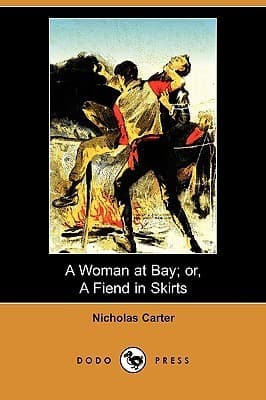
New Nick Carter weekly; No. 28. July 10, 1897; Nick Carter at the track; or, How he became a dead game sport. cover

New Nick Carter weekly; No. 28. July 10, 1897; Nick Carter at the track; or, How he became a dead game sport.

by Nicholas Carter

0Listen Free

Free AI audiobook with natural voice. No signup required.

About This Book

"New Nick Carter weekly no. 197: The little glass vial; or "A beautiful blackmailer brought to bay" is a gripping detective story written by Nicholas Carter. This thrilling installment follows the adventures of the renowned detective, Nick Carter, as he unravels a complex web of intrigue and deception. In this captivating tale, Nicholas Carter weaves together elements of suspense, action, and mystery, creating a fast-paced narrative that captivates the reader from start to finish. The story not only showcases Carter's brilliance as a detective but also explores themes of trust, betrayal, and the consequences of one's actions. "The little glass vial; or A beautiful blackmailer brought to bay" is a must-read for fans of crime fiction and those who enjoy intricately plotted detective stories. Nicholas Carter's storytelling prowess ensures that readers are enthralled as they follow the master detective's relentless pursuit of justice and the unmasking of a cunning and beautiful blackmailer.

9

Chapters

~108 min

Est. Listening Time

English

Language

0

{1}

Entered according to Act of Congress in the year 1897 by Street & Smith, in the Office of the Librarian of Congress, Washington, D. C.

Entered as second class Matter at the New York, N. Y., Post Office.

Issued weekly. Subscription price, $2.50 per year. July 10, 1897.

No. 28. Street & Smith, Publishers. NEW YORK. 29 Rose St., N. Y. 5 Cents.

Nick Carter at the Track; OR, HOW HE BECAME A DEAD GAME SPORT.

By the Author of “NICK CARTER.” {2}

CHAPTER I. DENVER BAY.

“And so, you see, I stand to lose twenty thousand dollars.”

“That’s a large sum.”

“Yes, Mr. Carter, it’s a large sum; but a middle-aged gentleman like yourself ought to be aware that risks are sometimes forced upon people who handle money in large sums.”

The celebrated detective smiled as he looked into the excited countenance of the Wall Street man before him.

Half an hour before, if the broker had seen him at all, he would hardly have referred to him as “a middle-aged business man.”

The detective had just returned from an expedition to the upper part of the city, during which he had appeared as a{3} verdant country boy of an inquiring turn of mind.

“Of course,” the detective said, slowly, “people who handle money for the profit of others are expected to keep it in motion—honestly in motion.”

He glanced keenly into his visitor’s face as he emphasized the last three words.

“My case is hardly what you suppose it to be,” said Mr. James Wheeler, broker. “The money I handle belongs to two heirs—both minors. With that, however, you have nothing to do.”

“You’re mistaken,” said Nick Carter, coldly. “If I am to handle your case I must have your fullest confidence.”

“Regarding my present venture, certainly, but I fail to see how past complications can interest you.{4}”

“I have always made it a point,” said the detective, rising to his feet, “not to engage in any case which is not entirely square and above-board. You come here with a statement that you have risked twenty thousand dollars belonging to two innocent children in the next Brooklyn Handicap, an illegal proceeding, and if you have done this for your own personal gain you have taken the first step toward a crime, and in that case I refuse to have anything to do with the matter.”

“Do you remember,” said Wheeler, putting out a hand to restrain the detective, who seemed about to leave the room, “about the recent daylight robbery in Wall Street, which resulted in the loss of twenty thousand dollars in cash?”

“Now you talk like a man of sense,” said the detective, resuming his seat and drawing a note-book from his pocket.

“Three weeks ago yesterday,” he continued, referring to the book, “the office of Mr. James Wheeler, broker, was entered during the noon hour by two men who claimed to be Texans seeking an investment. The broker was absent, and his clerks were careless.

“Result, when the Texans left, the broker was short exactly twenty thousand dollars. Have I stated the case correctly?”

The Wall Street man, sitting with his hands on his knees, stared in the detective’s face with a look of surprise mingled with consternation.

“Great God!” he exclaimed at length. “The matter wasn’t even reported to the police.”

“Very true. Perhaps you will have the kindness to tell me the reason why.{5}”

“It would have ruined me. My creditors, and especially the friends of these heirs, would have pounced down upon me in less than twenty-four hours.”

“And so, instead of facing the matter like a man, you endeavor to play even by staking money on the next handicap?”

“That’s it exactly, and I pledge you my word of honor that in doing so I only sought to restore to the children the money of which they have been robbed.”


Continue reading or listen to the full book Open in Reader →

How to Listen

  1. 1. Click "Listen Free" above
  2. 2. The book opens in CastReader's browser reader
  3. 3. Click the play button — AI narration starts with word highlighting
  4. 4. Use "Send to Phone" to continue listening on your phone

Frequently Asked Questions about “New Nick Carter weekly; No. 28. July 10, 1897; Nick Carter at the track; or, How he became a dead game sport.

Is "New Nick Carter weekly; No. 28. July 10, 1897; Nick Carter at the track; or, How he became a dead game sport." free to read and listen to?

Yes. "New Nick Carter weekly; No. 28. July 10, 1897; Nick Carter at the track; or, How he became a dead game sport." is a public domain work from Project Gutenberg. CastReader converts it to audio using AI text-to-speech — completely free, no account or payment needed.

Who wrote "New Nick Carter weekly; No. 28. July 10, 1897; Nick Carter at the track; or, How he became a dead game sport."?

"New Nick Carter weekly; No. 28. July 10, 1897; Nick Carter at the track; or, How he became a dead game sport." was written by Nicholas Carter.

How long does it take to listen to "New Nick Carter weekly; No. 28. July 10, 1897; Nick Carter at the track; or, How he became a dead game sport."?

"New Nick Carter weekly; No. 28. July 10, 1897; Nick Carter at the track; or, How he became a dead game sport." has 9 chapters. Estimated listening time is approximately 108 minutes with CastReader's AI narration.

Can I listen to "New Nick Carter weekly; No. 28. July 10, 1897; Nick Carter at the track; or, How he became a dead game sport." on my phone?

Yes. Open the book in CastReader's browser reader, then use "Send to Phone" to stream audio to your phone via Telegram. No app download needed.

What voice is used for the "New Nick Carter weekly; No. 28. July 10, 1897; Nick Carter at the track; or, How he became a dead game sport." audiobook?

CastReader uses Kokoro TTS, a natural-sounding AI voice. It handles punctuation, names, and dialogue naturally. Most listeners forget it's AI after a few minutes.

Is there a human-narrated audiobook of "New Nick Carter weekly; No. 28. July 10, 1897; Nick Carter at the track; or, How he became a dead game sport."?

"New Nick Carter weekly; No. 28. July 10, 1897; Nick Carter at the track; or, How he became a dead game sport." is in the public domain, so human-narrated versions may exist on LibriVox or Audible. CastReader's AI narration is instant and free — no waiting or subscription required.