Directions for Binding
Enclosed in this envelope is the cord and the needle with which to bind this book. Start in from the outside as shown on the diagram here. Pass the needle and thread through the center of the book, leaving an end extend outside, then through to the outside, about 2 inches from the center; then from the outside to inside 2 inches from the center at the other end of the book, bringing the thread finally again through the center, and tie the two ends in a knot, one each side of the cord on the outside.
THEO. PRESSER CO., Pub's., Phila., Pa.
HOW TO USE THIS BOOK
This book is one of a series known as the CHILD'S OWN BOOK OF GREAT MUSICIANS, written by Thomas Tapper, author of "Pictures from the Lives of the Great Composers for Children," "Music Talks with Children," "First Studies in Music Biography," and others.
The sheet of illustrations included herewith is to be cut apart by the child, and each illustration is to be inserted in its proper place throughout the book, pasted in the space containing the same number as will be found under each picture on the sheet. It is not necessary to cover the entire back of a picture with paste. Put it only on the corners and place neatly within the lines you will find printed around each space. Use photographic paste, if possible.
After this play-work is completed there will be found at the back of the book blank pages upon which the child is to write his own story of the great musician, based upon the facts and questions found on the previous pages.
The book is then to be sewed by the child through the center with the cord found in the enclosed envelope. The book thus becomes the child's own book.
This series will be found not only to furnish a pleasing and interesting task for the children, but will teach them the main facts with regard to the life of each of the great musicians—an educational feature worth while.
This series of the Child's Own Book of Great Musicians includes at present a book on each of the following:
Printed in the U.S.A.
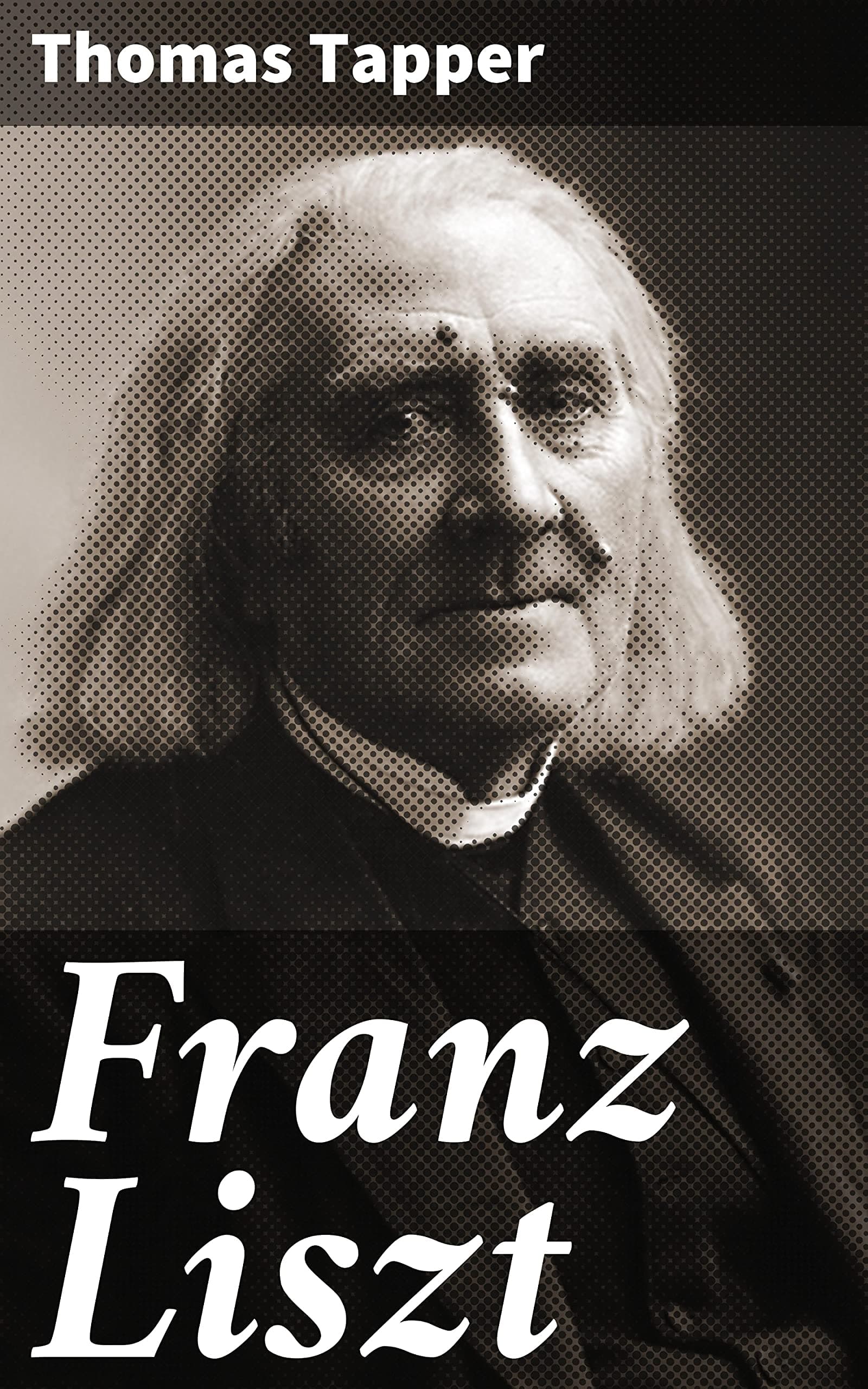
Franz Liszt
The Story of a Boy Who Became a Great Pianist and Teacher
This Book was made by
Philadelphia Theodore Presser Co. 1712 Chestnut Str.
Copyright 1921, by Theo. Presser Co. British Copyright Secured
BORN
DIED
The Story of a Boy Who Became a Great Pianist and Teacher
This is the house in which was born a little boy who became a famous pianist and a great teacher. This house is in Raiding, in Hungary.
Now-a-days there is a little tablet over the door, which tells us that Franz Liszt was born in this house, on the Twenty-second Day of October, 1811.
Do you remember that once upon a time Joseph Haydn lived as court musician in the Esterhazy family? He wore a tie wig and a wonderful bright uniform; for he was master of the music in that great house.
Now, long after Joseph Haydn's time, Adam Liszt, father of Franz, lived with the Esterhazy's. He was the family steward, having charge of all the property.
And, too, he loved music. So we may believe that he told his little boy, Franz, about the great master Haydn. For Adam Liszt was not only a lover of music but he gave his son his first lessons in piano playing. Liszt's mother was of German blood. She was born in lower Austria.
Little Franz practiced so faithfully and so eagerly, I am sure, that when he was only nine years of age he gave a concert in public. He played so well that some good friends offered to send him to Vienna where he could continue his studies.
And so the little boy left home and began the studies that led him to become the greatest pianist of his time. His piano teacher was a man of whom almost everybody knows. Does he not have a round, good-natured face? And does he not look kind? Well, he could be severe when his pupil's lessons did not please him.
His name was Carl Czerny. Here is his picture.
On New Year's day of the year that little Franz was eleven years old he played in public in Vienna. It must have been a wonderful occasion. All the great people were there; and among them was one who was greatest of all, Beethoven.
Then Adam Liszt thought his boy should go to Paris. He wished him to become a student in the conservatory there. But its director, Cherubini, refused to admit Franz to the classes. So, like most of us, he studied with a private teacher. Also, he traveled to England and to all the countries of Europe, giving concerts. His fame was becoming greater and his playing was the delight of all who heard him. Here are two pictures of Franz as a boy. He dressed differently from boys of to-day. But do you not think his face is a fine one? Full of light and life and eagerness?
Franz was only sixteen years old when his father died. They had been good comrades, had traveled together and talked with one another about music and musicians. The boy must have grieved keenly over the loss of so good and kind a companion as his father had been. But he went earnestly to work to earn a living for his mother and himself. He knew many famous people and we may be sure that everyone helped him. Here are two of Franz's friends of that time.