The Round House Text to Speech: Free Audio for Louise Erdrich's 2012 National Book Award-Winning Ojibwe Justice Trilogy Novel
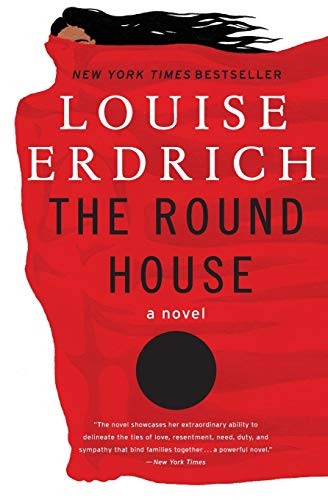
Author: Louise Erdrich (b. 1954 Little Falls MN, Dartmouth BA 1976 + Johns Hopkins MA 1979, enrolled Turtle Mountain Band of Chippewa, 2021 Pulitzer Fiction winner The Night Watchman + 2012 NBA Fiction winner The Round House + 1984 NBCC Fiction winner Love Medicine + 2018 MacArthur Fellow, Birchbark Books Minneapolis owner) Published: Harper October 2, 2012 · 321 pages · 1M+ copies / 20+ languages · Justice Trilogy middle volume Goodreads: 3.94★ / 60K+ ratings Audiobook: Gary Farmer (Cayuga Nation, Dead Man + Smoke Signals + Reservation Dogs) · HarperAudio · 11h 13m · 2013 AudioFile Earphones Award Awards: 2012 National Book Award Fiction (beat Junot Díaz This Is How You Lose Her, Ben Fountain Billy Lynn's Long Halftime Walk NBCC winner, Dave Eggers A Hologram for the King, Kevin Powers The Yellow Birds) · 2013 Andrew Carnegie Medal for Excellence in Fiction · Minnesota Book Award Adaptations: HBO 2015–17 limited-series option abandoned · Sony Pictures Classics 2019-ongoing option unclear status · 2019 New Zealand Shared Stories Wellington stage adaptation · Erdrich prefers Indigenous-helmed production
Louise Erdrich's The Round House is the 2012 National Book Award Fiction winner — the middle volume of her Justice Trilogy and the novel that helped drive the 2013 Violence Against Women Act reauthorization. Published October 2, 2012 by Harper, the 321-page novel follows 13-year-old Turtle Mountain Ojibwe Joe Coutts through the summer of 1988 after his mother Geraldine is sexually assaulted by a non-Native attacker — an act that cannot be prosecuted under the 1885 Major Crimes Act and 1978 Oliphant v. Suquamish ruling because the crime scene straddles the reservation-federal-state jurisdictional gap. 1M+ copies sold, 20+ languages, narrated by Dead Man and Reservation Dogs actor Gary Farmer in the canonical 11h 13m HarperAudio edition. If you own the Kindle or EPUB copy and want Farmer's 2013 AudioFile Earphones-Award narration during your commute, use CastReader AI TTS to convert your Kindle copy to unabridged audio free →.
Why The Round House matters
Louise Erdrich's The Round House, published October 2, 2012 by Harper, won the 2012 National Book Award for Fiction — beating Junot Díaz's This Is How You Lose Her (2012 NBA Finalist + NYT Best Books), Ben Fountain's Billy Lynn's Long Halftime Walk (2012 NBCC winner), Dave Eggers's A Hologram for the King, and Kevin Powers's The Yellow Birds. 2012 NBA ceremony chair was Roxana Robinson. The win was Erdrich's first NBA after multiple previous nominations (The Antelope Wife 1998 NBA Finalist, The Plague of Doves 2008 NBA Finalist + 2009 Pulitzer Finalist).
Erdrich went on to win the 2021 Pulitzer Prize in Fiction for The Night Watchman and the 2018 MacArthur Foundation "Genius" Fellowship. Additional Round House recognition: 2013 Andrew Carnegie Medal for Excellence in Fiction + Minnesota Book Award + NYT 10 Best Books 2012 + Washington Post Top 10 2012.
The Major Crimes Act premise and jurisdictional crisis
The central legal obstacle is the 1885 Major Crimes Act and the 1978 Oliphant v. Suquamish Indian Tribe Supreme Court ruling — which established that Native American tribal courts cannot criminally prosecute non-Native offenders on reservation land, requiring federal-district-court prosecution. When Geraldine Coutts is sexually assaulted by non-Native Linden Lark, she cannot identify precisely where on the reservation-federal-state-land boundary the attack occurred — making prosecution jurisdictionally impossible. Joe's coming-of-age becomes a quest for extra-legal justice.
Erdrich explicitly wrote the novel as a political intervention: DOJ 2016 statistics show 1 in 3 Native American women will be sexually assaulted in her lifetime, with 67% of those assaults committed by non-Native offenders. Erdrich's 2013 New York Review of Books essay and congressional testimony helped secure the 2013 Violence Against Women Act reauthorization's limited tribal criminal jurisdiction provision. The novel is often cited by tribal-sovereignty advocates alongside the 2022 Castro-Huerta v. Oklahoma Supreme Court decision.
The Justice Trilogy
- The Plague of Doves (2008, HarperCollins) — 2009 Pulitzer Finalist / 1911 reservation vigilante-lynching historical backstory
- The Round House (2012, Harper) — 2012 NBA winner / 1988 sexual-assault jurisdiction crisis
- LaRose (2016, Harper) — 2016 NBCC winner / 1999 traditional Ojibwe "gift-of-child" restorative justice after hunting accident
All three novels center on justice-system failures on the fictional Turtle Mountain-inspired Ojibwe reservation and weave historically interrelated families (Coutts-Lafournais-Kashpaw-Milk-Iron-Ravich). Reading order doesn't matter narratively.
TTS and Audiobook Comparison
| Production | Runtime | Narrator | Status |
|---|---|---|---|
| HarperAudio 2012 | 11h 13m | Gary Farmer | Canonical / 2013 Earphones Award |
| CastReader AI TTS | ~11h (1.0×) | Neural voice | Instant, free with your Kindle copy |
Erdrich's oeuvre highlights
- Love Medicine (1984 debut) — 1984 NBCC Fiction winner
- The Beet Queen (1986)
- Tracks (1988)
- The Antelope Wife (1998) — 1998 NBA Finalist
- The Plague of Doves (2008) — 2009 Pulitzer Finalist (Justice Trilogy I)
- The Round House (2012) — 2012 NBA winner (Justice Trilogy II)
- LaRose (2016) — 2016 NBCC Fiction winner (Justice Trilogy III)
- Future Home of the Living God (2017)
- The Night Watchman (2020) — 2021 Pulitzer Fiction winner
- The Sentence (2021)
- The Mighty Red (2024)
Adaptation status
- HBO 2015–17 limited-series option with Erdrich consulting → abandoned 2017 citing production-sensitivities around Native-American casting and reservation-setting logistics
- Sony Pictures Classics 2019-ongoing option — current status unclear; Erdrich has said she's cautious about any adaptation that doesn't center Native-American creative control
- 2019 New Zealand Theatre Shared Stories stage adaptation (Wellington Festival)
- 2022 Kiri Te Kanawa Theater Auckland stage adaptation
Free listening paths
- Libby / Hoopla: 1–3 week hold on Farmer HarperAudio production
- Audible Plus: periodic availability since 2022
- CastReader AI TTS: instant Kindle-copy alternative — dialogue-highlight tracks Joe / Mooshum / Bazil / Geraldine / Cappy-Angus-Zack voice shifts
Limitations and Honest Notes
Gary Farmer's Cayuga-Nation-accented narration carries specific Indigenous-English register authenticity that no neural TTS can replicate — his vocal placement of Mooshum's elder-Ojibwe cadence in particular is difficult to match. For readers encountering The Round House for the first time, we strongly recommend Farmer's HarperAudio edition. TTS works well when: (1) you've heard Farmer before and want an instant re-listen, (2) the library hold is out, or (3) you want adjustable speed and dialogue-highlight on a long commute.
Try The Round House with CastReader
- Buy or borrow the Kindle edition of The Round House (Harper, 2012, ASIN B0077TK7N6)
- Open CastReader on your Kindle copy
- Pick a neural voice with warm mid-range register for 13-year-old Joe's first-person narration
- Enable dialogue-highlight mode for Joe / Mooshum / Bazil / Geraldine voice shifts
- Set playback speed 1.0–1.1× to preserve Erdrich's deliberate pacing
Start listening to The Round House free →
Related Reading
- The Good Lord Bird by James McBride — Text to Speech — 2013 NBA Fiction (the following year's NBA winner, counterpoint)
- All the Pretty Horses by Cormac McCarthy — Text to Speech — 1992 NBA + NBCC Americana border-country counterpoint
- March by Geraldine Brooks — Text to Speech — 2006 Pulitzer historical fiction with justice themes
- Interpreter of Maladies by Jhumpa Lahiri — Text to Speech — 2000 Pulitzer diaspora-identity parallel
- Gilead by Marilynne Robinson — Text to Speech — 2005 Pulitzer quiet-register comparison