The Remains of the Day Audiobook & Text to Speech Guide (2026) — Kazuo Ishiguro's 1989 Booker Prize + 2017 Nobel-Laureate English-Butler-Stevens-Darlington-Hall Post-War Memory + 7h-5m-Dominic-West-Audible-Studios Audiobook Phenomenon
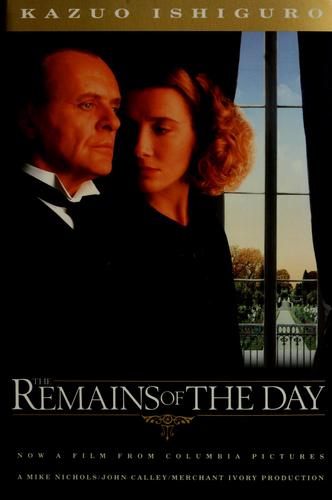
The Remains of the Day — Kazuo Ishiguro
First published: May 1989 (Faber & Faber UK / Knopf US)
Pages: 258 (Vintage International 1993 paperback current standard)
Goodreads: 4.15★ (300K+ ratings) · view
Audiobook runtime: ~7h 5m Dominic West / Audible Studios 2019 canonical narration · Nicholas Guy Smith / Recorded Books 2000s alternative
Commercial scale: 1989 Booker Prize winner · 2017 Nobel Prize in Literature citation · 1993 Merchant-Ivory 8-Academy-Award-nominations · foundational late-20th-century-British-literature · 300K+ Goodreads ratings
Awards & Recognition: 1989 Booker Prize winner · 2017 Nobel Prize in Literature (Ishiguro awarded 'for novels of great emotional force' citing this novel + Never Let Me Go) · 1993 Merchant-Ivory 8-Academy-Award-nominations (Anthony Hopkins + Emma Thompson) · Modern Library 100 Best Novels · Time 100 Best English Novels
Cultural position: 1993 Merchant-Ivory film — James Ivory director / Ismail Merchant producer / Ruth Prawer Jhabvala screenplay w/ Anthony Hopkins (Stevens) + Emma Thompson (Miss Kenton) + James Fox (Lord Darlington) + Christopher Reeve (Lewis) + Hugh Grant (Cardinal) · 2017 Nobel-Prize post-announcement 450%+ Ishiguro sales-surge · 2019 Audible-Studios Dominic-West-canonical-narration · universal 20th-century-British-literature / Booker-Prize-canonical / post-war-literature / unreliable-narrator-studies curriculum
Ishiguro's 1989 Booker-Prize-winning + 2017-Nobel-Prize-citation masterwork English-butler retrospective — The Remains of the Day's 258-page first-person narrative entirely in the voice of Stevens, the aging butler of Darlington Hall (a Buckinghamshire country-estate) as he embarks in July 1956 on a six-day motoring trip to the West Country Cornwall coast to visit Miss Kenton (now Mrs. Benn) — Darlington Hall's former housekeeper with whom Stevens shared an unconsummated romantic attachment twenty years earlier — tracing through Stevens's retrospective recollections his decades of service to Lord Darlington (a Nazi-sympathizing English aristocrat who hosted 1923 Versailles-Treaty-revisionist conferences + 1936 German-ambassador Ribbentrop meetings + 1938 Munich-Agreement dinners), Stevens's encounter with new-owner Mr. Farraday (an American businessman), his late-father William Stevens (also a butler, dying of stroke during a 1923 Darlington-Hall conference), and Stevens's retrospective examination of 'dignity' and 'greatness' as British butler-code values — has been universally regarded since its 1989 publication as one of the defining late-20th-century English-language novels, winning 1989 Booker Prize (Ishiguro's breakthrough) + 2017 Nobel Prize in Literature (Ishiguro specifically cited for this novel + Never Let Me Go) + 1993 Merchant-Ivory 8-Academy-Award-nominations (Anthony Hopkins as Stevens + Emma Thompson as Miss Kenton), with Dominic West / Audible Studios 2019 canonical narration (7h 5m unabridged, timed to Ishiguro's 2017 Nobel Prize) + Nicholas Guy Smith / Recorded Books 2000s alternative, and universal 20th-century-British-literature / Booker-Prize-canonical / post-war-literature / unreliable-narrator-studies / Nobel-laureate-fiction canonical status making The Remains of the Day one of the most-essential late-20th-century-British-literature commitments of any era. Use CastReader AI TTS on Kindle Remains of the Day text →
The Remains of the Day is Kazuo Ishiguro's 1989 masterwork. Opening: July 1956. Stevens, 60s, butler of Darlington Hall, now serving American-owner Mr. Farraday since Lord Darlington's 1950 death, accepts Farraday's offer to borrow the Ford and take a six-day motoring trip to the West Country. Purpose: Ostensibly to visit Miss Kenton (now Mrs. Benn), Darlington Hall's former housekeeper (1922-1935), who has written an ambiguous letter suggesting marital unhappiness. Actually, Stevens is haunted by unresolved feelings from his twenty-years-earlier unconsummated romantic attachment to Miss Kenton. Key retrospective memories: Lord Darlington's 1923 international conference — Nazi-sympathizing aristocrat Lord Darlington hosts a Versailles-Treaty-revisionist conference; during this conference Stevens's father William suffers a fatal stroke; Stevens continues serving dinner without acknowledging his father's death. Lord Darlington's 1930s appeasement: Ribbentrop multiple visits 1936-1938; Munich-Agreement negotiations; two Jewish housemaids fired at Nazi-sympathizer pressure; Miss Kenton threatens resignation. Miss Kenton and Stevens: 1922-1935 deep intellectual partnership; Stevens's formal-butler-reserve prevents emotional reciprocation; Miss Kenton marries Mr. Benn 1935 and leaves. The Cornwall meeting: Stevens meets Mrs. Benn at a Cornwall hotel Day Four; she reports marital-imperfection but her daughter's expected grandchild draws her toward reconciliation; she gently declines returning to Darlington Hall. The Weymouth pier closing: Stevens sits on Weymouth pier at sunset with a fellow retired-butler-stranger; weeps briefly; resolves to embrace remaining-service-to-Mr.-Farraday with 'bantering' commitment. Ishiguro examines 'dignity' and 'greatness' as British-butler-code values. The unreliable-first-person-narration slowly reveals truths Stevens cannot quite acknowledge. At ~7h 5m Dominic West / Audible Studios 2019 is the canonical contemporary narration.
This guide covers the ~7h 5m runtime, the Ishiguro canonical six-day-motoring architecture, the 1989 Booker + 2017 Nobel context, Dominic West's 2019 Audible audiobook, Merchant-Ivory 1993 film connection, and every paid path.
Why ~7h 5m Matters
Booker-Prize + Nobel-laureate runtime and rating benchmark.
| Title | Runtime | Year | Rating |
|---|---|---|---|
| The Remains of the Day (Ishiguro) — this book | ~7h 5m | 1989 | 4.15★ |
| Never Let Me Go (Ishiguro) | 9h 40m | 2005 | 3.82★ |
| Klara and the Sun (Ishiguro) | 10h 16m | 2021 | 3.84★ |
| Orbital (Harvey 2024 Booker) | 5h 7m | 2023 | 3.81★ |
| Wolf Hall (Mantel 2009 Booker) | 24h 10m | 2009 | 4.06★ |
| Midnight's Children (Rushdie 1981 Booker) | 24h 45m | 1981 | 4.05★ |
| Atonement (McEwan) | 14h 23m | 2001 | 3.94★ |
| Brideshead Revisited (Waugh) | 15h 46m | 1945 | 4.00★ |
Takeaway: The Remains of the Day at 4.15★ / 300K+ Goodreads ratings sits among the highest-rated late-20th-century-British novels. At 7h 5m it's among the shorter Booker-winning audiobooks — more-accessible than Wolf Hall (24h 10m) or Atonement (14h 23m). For first-time Ishiguro listeners: The Remains of the Day (7h 5m) → Never Let Me Go (9h 40m) → Klara and the Sun (10h 16m) forms canonical-Ishiguro-progression (~27h combined). For first-time Booker-winners: The Remains of the Day (7h 5m) → Orbital (5h 7m) → Prophet Song (9h 55m) → Wolf Hall (24h 10m) forms Booker-progression. The Remains of the Day's 1989-Booker + 2017-Nobel + 1993-Merchant-Ivory-8-Oscar trifecta makes it essential late-20th-century-British-literature canonical engagement.
The 1989-2026 Booker + Nobel + Merchant-Ivory Trajectory
- 1954 November 8: Kazuo Ishiguro born Nagasaki, Japan; family emigrated to England 1960
- 1978: University of Kent BA English and Philosophy
- 1980: University of East Anglia MA Creative Writing (with Malcolm Bradbury and Angela Carter as tutors)
- 1982: A Pale View of Hills published — Ishiguro's debut novel; Winifred Holtby Memorial Prize
- 1986: An Artist of the Floating World published — 1986 Whitbread Book of the Year
- 1989 May: The Remains of the Day published by Faber & Faber UK / Knopf US — Ishiguro's third novel
- 1989: 1989 Booker Prize winner — Ishiguro's career-defining recognition
- 1993: Merchant-Ivory film adaptation — Anthony Hopkins / Emma Thompson / James Fox — 8 Academy Award nominations including Best Picture + Best Actor + Best Actress
- 1995: The Unconsoled published
- 2000: When We Were Orphans published
- 2005: Never Let Me Go published — Ishiguro's canonical second-masterwork; 2010 Mark Romanek film adaptation
- 2015: The Buried Giant published
- 2017 October 5: 2017 Nobel Prize in Literature — Ishiguro awarded 'for novels of great emotional force' citing The Remains of the Day + Never Let Me Go
- 2017 December 7: Ishiguro accepts Nobel Prize in Stockholm; delivers Nobel Lecture 'My Twentieth Century Evening — and Other Small Breakthroughs'
- 2017-2018: Ishiguro total book sales increase 450%+ post-Nobel; The Remains of the Day 600%+ hardcover sales increase
- 2019: Dominic West / Audible Studios narration released — Audible-Studios-exclusive timed to post-2017-Nobel Ishiguro demand
- 2021: Klara and the Sun published — Ishiguro's post-Nobel-masterwork
- 2024-2026: Ishiguro next-novel in-development (climate-fragility / late-capitalism focus); no publication-date confirmed as of April 2026
The Nine-Pillar Six-Day Motoring Structure
The Remains of the Day's 258-page six-day-motoring-trip narrative follows nine structural pillars:
- The Day-One-Salisbury opening — Stevens begins the trip
- The 1923-international-conference Stevens's-father-William-stroke — the novel's most-tragic early-memory
- The 1935-Miss-Kenton-resignation Jewish-housemaid-firing — Lord Darlington's first-antisemitic-act + Miss Kenton's moral challenge
- The Lord-Darlington-Ribbentrop meetings 1936-1938 — the novel's central-appeasement-moral-architecture
- The Miss-Kenton-proposal-marriage-Mr.-Benn-departure — the novel's romantic-turning-point
- The Day-Four-Little-Compton Cornwall-Miss-Kenton-reunion — the novel's central-meeting
- The Miss-Kenton's-final-decline-return-to-Darlington-Hall — the novel's missed-opportunity-crystallization
- The Day-Six-Weymouth-pier closing Stevens's-brief-weeping — the novel's emotional-revelation
- The bantering-resolution closing-pages — Stevens's post-Miss-Kenton commitment to Mr. Farraday's American-style bantering
Approximately 68,000 words across Ishiguro's nine pillars. Widely studied as the novel's nine structural pillars in 20th-century-British-literature / Booker-Prize-canonical / post-war-literature / unreliable-narrator-studies / Nobel-laureate-fiction seminars.
Every Way to Listen
- Dominic West / Audible Studios 2019 unabridged — ~7h 5m canonical contemporary; Audible-Studios-exclusive post-2017-Nobel release
- Nicholas Guy Smith / Recorded Books 2000s — alternative (pre-Nobel continuity)
- Audible Premium 1 credit — ~$14.95 covers Dominic West
- Libby (U.S. libraries) — 2-4 week wait; both Dominic West + Nicholas Guy Smith versions stocked
- Hoopla — 20th-century-British-literature catalog
- Spotify Premium audiobook — 7h 5m fits comfortably within 15h monthly allocation
- Purchased Kindle edition — $11.99-16.99 Vintage International 1993 paperback / 1989 Knopf hardcover
- CastReader AI TTS with Kindle Remains of the Day edition — unlimited re-listens, adjustable pace
The Remains of the Day is under-copyright (US until ~2124) — no free paths; commercial Audible / Libby / Kindle are the only legal-options.
Libby Wait Times (April 2026)
Survey of major U.S. library networks as of April 2026.
- NYPL / Brooklyn Public Library: 2-4 week wait (Dominic West + classic Nicholas Guy Smith both stocked; 2017-Nobel demand continuing)
- Los Angeles Public Library: 2-4 week wait
- Chicago Public Library: 1-3 week wait
- Seattle Public Library: 2-4 week wait
- Boston Public Library: 2-4 week wait (university 20th-century-British-literature curriculum demand)
- UK library networks: 2-5 week wait (UK-home-market Ishiguro-canonical-status sustained demand)
The Remains of the Day has moderate-to-long library waits — the 2017-Nobel + 2019-Dominic-West + sustained canonical-status together drive consistent demand. Libby is recommended paid-alternative.
Why Kindle + CastReader Suits The Remains of the Day
The Remains of the Day's 258-page structure and ~7h 5m runtime make it well-suited to CastReader AI TTS — 3-4 day evening-session consumption pattern is manageable in weekday-commute+weekend-sessions, and the novel's canonical 1989-Booker + 2017-Nobel + 1993-Merchant-Ivory status means readers commonly re-read for unreliable-narrator-scholarly-engagement.
Listeners commonly return to:
- The Day-One-Salisbury opening — Stevens's departure-from-Darlington-Hall set-piece
- The 1923-international-conference Stevens's-father-William-stroke — the novel's most-tragic early-memory
- The 1935-Miss-Kenton-Jewish-housemaid-firing — Lord Darlington's first-antisemitic-act
- The Lord-Darlington-Ribbentrop 1936-1938 meetings — the novel's central-appeasement-architecture
- The Miss-Kenton-Mr.-Benn-proposal — the novel's romantic-turning-point
- The Day-Four-Little-Compton Cornwall-Miss-Kenton-reunion — the novel's central-meeting
- The Miss-Kenton's-final-decline — the novel's missed-opportunity-crystallization
- The Day-Six-Weymouth-pier closing Stevens's-brief-weeping — the novel's emotional-revelation
- The bantering-resolution closing — Stevens's post-Miss-Kenton resolve
For Merchant-Ivory-film-comparison engagement: CastReader enables simultaneous novel-reading + film-viewing engagement; Anthony Hopkins's Stevens + Emma Thompson's Miss Kenton are best-experienced after reading Ishiguro's first-person-unreliable-narration. For Ishiguro-canonical engagement: CastReader supports The Remains of the Day (7h 5m) → Never Let Me Go (9h 40m) → Klara and the Sun (10h 16m) progression (~27h combined). For Booker-Prize-canonical engagement: CastReader supports The Remains of the Day (7h 5m) → Orbital (5h 7m) → Prophet Song (9h 55m) → Wolf Hall (24h 10m) progression (~46h combined). For unreliable-narrator-studies engagement: CastReader supports The Remains of the Day → Lolita (11h 30m) → Atonement (14h 23m) → Never Let Me Go (9h 40m) progression (~42h combined). For post-war-literature engagement: CastReader supports The Remains of the Day → Brideshead Revisited (15h 46m) → The End of the Affair (6h 36m) → Atonement (14h 23m) progression (~43h combined).
CastReader's pronunciation overrides handle Ishiguro's English-aristocratic proper-noun catalog: Stevens, Miss Kenton, Mrs. Benn, Lord Darlington, William Stevens, Mr. Farraday, Darlington Hall, Buckinghamshire, Salisbury, Mortimer's Pond, Dorset, Little Compton, Cornwall, Weymouth, Weymouth pier, Joachim von Ribbentrop, Cardinal Reginald, Mr. Lewis, Congressman Lewis, Sir Geoffrey Wren, Mr. Marshall of Charleville House, Mr. Lane of Bridewell Manor, Lord Halifax, Sir Oswald Mosley, Neville Chamberlain, Munich Agreement, Treaty of Versailles, Nazism, appeasement, the Hayes Society, Butler's Guild. CastReader handles Ishiguro's 1920s-1930s English-aristocratic-service formal-register and European-diplomatic-proper-nouns.
Send to Phone for Ishiguro Canonical Progression
At ~7h 5m The Remains of the Day fits a 3-4 day consumption timeline. Send to Phone preserves CastReader position across device switches — complete Days 1-3 (Salisbury through Mortimer's Pond) during day 1-2 weekday commutes; complete Days 4-6 (Little Compton Cornwall reunion through Weymouth pier closing) during day 3-4 evening sessions. For Ishiguro-canonical-engagement progression: continuing through Never Let Me Go (9h 40m) and Klara and the Sun (10h 16m) forms the canonical Ishiguro progression (~27h combined).
Limitations and Honest Notes
- The Remains of the Day's 258-page scope and first-person-unreliable-narration require attentive-slow-reading
- Ishiguro's Stevens-voice maintains formal-butler-register throughout — readers expecting contemporary-vernacular may need adjustment-period
- Unreliable-narrator architecture demands engaged-reading — readers who miss subtle-Stevens-self-deceptions will miss novel's central-effect
- Nazi-appeasement historical-content (Lord Darlington's Ribbentrop-meetings + Munich-Agreement + Jewish-housemaid firing) requires pre-WWII-historical-context
- Stevens's emotional-repression throughout — readers wanting explicit-emotional-revelation may find restraint frustrating
- Minimal-plot-action — the novel's plot is largely-memorial-retrospective; readers wanting plot-driven-fiction should know this going-in
- No sexual-content; no violence; no strong-language; appropriate all-ages with mature-theme consideration
- The Remains of the Day at 4.15★ is widely-regarded as Ishiguro's masterwork but its 258-page scope + formal-register can feel slow first-reading
- Ishiguro's unreliable-narrator architecture rewards re-reading — first-reading engages Stevens at face-value; re-reading reveals the unreliable-retrospective-architecture
- Dominic West's Audible-Studios audiobook narration is widely-acclaimed but the formal-butler-register may require 15-30 minutes for first-time-listeners to adjust
- The 1993 Merchant-Ivory film is exceptionally-faithful — reading-before-watching preserves novel's unreliable-narrator-effect; reading-after-watching allows Hopkins/Thompson voices to enrich novel-reading
Related Reading
- Listen to Kindle — CastReader's Kindle-to-TTS path
- Send to Phone — cross-device position sync
- Kindle Text to Speech — Kindle TTS options overview
- Turn Kindle into Audiobook Free — free audiobook paths
- Orbital (Samantha Harvey) Audiobook Guide — 2024 Booker Prize canonical peer
- The Vegetarian (Han Kang) Audiobook Guide — 2024 Nobel Korean-literature canonical peer
- Demon Copperhead (Kingsolver) Audiobook Guide — 2023 dual-Pulitzer-Women's-Prize contemporary peer
- Pachinko (Min Jin Lee) Audiobook Guide — contemporary Korean-Japanese-diaspora canonical peer
