The Known World Text to Speech: Free Audio for Edward P. Jones's 2004 Pulitzer Prize + 2003 NBCC Triple-Crown Slavery Novel
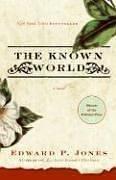
Author: Edward P. Jones (b. 1950 Washington DC, Holy Cross BA 1972 + University of Virginia MFA 1981, 2004 Pulitzer Prize Fiction + 2003 NBCC + 2005 IMPAC Dublin triple-crown + 2004 MacArthur Fellowship + 1992 PEN/Hemingway for Lost in the City debut stories, George Washington University + Princeton + University of Maryland professor) Published: Amistad / HarperCollins August 14, 2003 · 388 pages · Oprah's Book Club 2004 selection · 1M+ copies / 25 languages Goodreads: 3.85★ / 40K+ ratings · novel followed by All Aunt Hagar's Children (2006 — companion short-story collection, 2006 NBA Fiction Finalist) Audiobook: Kevin R. Free · Brilliance Audio · 14h 36m (canonical unabridged, 2003) · AudioFile Earphones Award · Dion Graham Blackstone 2013 14h 40m alternative Awards: 2004 Pulitzer Prize Fiction (beat Marilynne Robinson Gilead 2004 NBCC + 2005 Pulitzer winner, Frederick Reiken The Lost Legends of New Jersey) · 2003 NBCC Fiction · 2005 International Dublin IMPAC Literary Award (€100K — largest English-language fiction prize at the time) · 2004 Hurston/Wright Legacy Award · 2004 Kenyon Review Award for Literary Achievement · 2004 MacArthur 'Genius' Fellowship Adaptations: No realized film/TV adaptation — 388-character cast + Márquez-style genealogical sprawl + 1855 Virginia historical detail make adaptation logistically challenging · HBO 2006-2008 option abandoned · 2016 Plan B Pictures interest never advanced
Edward P. Jones's The Known World is the 2004 Pulitzer + 2003 NBCC + 2005 IMPAC Dublin triple-crown-winning historical novel that exposed the suppressed history of free Black slave-owners in antebellum America. Published August 14, 2003 by Amistad Press (HarperCollins Black imprint), the 388-page novel opens in Manchester County, Virginia, 1855, where 31-year-old Henry Townsend — a formerly-enslaved free Black man who now owns 33 slaves himself — dies of fever. His widow Caldonia struggles to maintain order over enslaved overseer Moses as historical pressures build. Jones uses Henry's plantation to explore the historically-suppressed reality that approximately 1% of 1830 American slaveholders were free Black Americans themselves. The April 2004 Pulitzer announcement beat Marilynne Robinson's Gilead (which took the 2005 Pulitzer instead), and the triple-crown — Pulitzer + NBCC + IMPAC Dublin — was followed shortly by the 2004 MacArthur 'Genius' Fellowship. Sales reached 1M+ copies in 25 languages, with Oprah's Book Club 2004 selection driving mass readership. If you own the Kindle or EPUB copy and want to hear Kevin R. Free's canonical 14h 36m Brilliance Audio narration while you commute, walk, or cook, use CastReader AI TTS to convert your copy to unabridged audio free →.
Why The Known World matters
Jones's triple-crown (Pulitzer + NBCC + IMPAC Dublin) is one of the most decorated fiction runs of the 21st century. Only a handful of novels have achieved this three-prize sweep: Cormac McCarthy's The Road (2007 Pulitzer + James Tait Black), Marilynne Robinson's Gilead (2005 Pulitzer + 2004 NBCC), Junot Díaz's The Brief Wondrous Life of Oscar Wao (2008 Pulitzer + 2008 NBCC + 2008 John Sargent Sr. First Novel Prize). Jones's combination includes the IMPAC Dublin — then the largest English-language fiction prize at €100K, awarded for a novel with sustained international literary impact. The 2004 MacArthur Fellowship — awarded the same year for "the exceptional creativity" of his oeuvre — cemented Jones as a major contemporary American voice alongside his debut story collection Lost in the City (1992 PEN/Hemingway Award).
The Manchester County Premise
Jones's fictional Manchester County, Virginia in 1855 is a composite of several real Virginia antebellum counties. Henry Townsend — a 31-year-old formerly-enslaved free Black man — was manumitted by his white master William Robbins (Henry's former owner, still his paternal patron), studied bootmaking, married free Black schoolteacher Caldonia Townsend, and became a slave-owner himself. He owns 33 enslaved people on a 50-acre plantation. When Henry dies of fever early in the novel, the plantation's racial-hierarchy paradox becomes acute: Caldonia (free Black widow-owner) struggles to maintain order as enslaved overseer Moses (the plantation's most trusted enslaved-leader) makes an escape attempt with his wife and young son. Jones's novel then spirals into a 388-character family-tree of enslaved and free Black Virginians, plus their white masters, their sheriffs, and their itinerant free-Black merchants across 3 decades of pre- and post-Civil War reverberations.
TTS and Audiobook Comparison
| Option | Length | Narrator | Notes |
|---|---|---|---|
| Kevin R. Free / Brilliance Audio | 14h 36m | Kevin R. Free | Canonical unabridged · Earphones Award |
| Dion Graham / Blackstone | 14h 40m | Dion Graham | 2013 alternative (Earphones Award winner) |
| CastReader AI | ~14h 36m | neural TTS | Free, Kindle-copy instant alternative |
The Historical Revisionism
Jones's novel draws on suppressed Southern U.S. history: between 1800-1860, approximately 3,500 free Black Americans owned slaves (peak 1830 census data), concentrated in Virginia, South Carolina, Louisiana, and Maryland. Motivations ranged widely: some free Black slave-owners purchased family members to legally extract them from slavery (a legal loophole — a freed-Black could buy a spouse or child and technically "own" them rather than the child being sold to a stranger); others purchased enslaved people as commercial plantation labor. Jones's Henry Townsend represents the latter and more morally troubling category. The novel has been widely taught at university (20th-century American literature + African-American studies + Civil War-era history + critical race theory programs), with Jones invited to lecture at Princeton, University of Virginia, and Library of Congress 2012 National Book Festival.
Jones's Oeuvre
- Lost in the City (1992) — debut Washington DC story collection · 1992 PEN/Hemingway Award · 1992 NBA Fiction Finalist
- The Known World (2003) — novel · 2004 Pulitzer + 2003 NBCC + 2005 IMPAC Dublin
- All Aunt Hagar's Children (2006) — companion story collection · 2006 NBA Fiction Finalist · 14 stories thematically linked to Lost in the City and The Known World
Jones has published sparely (two collections + one novel in 30 years) but each release is major. He has said he writes "by hand in notebooks" and revises extensively before typing. He teaches at George Washington University.
García Márquez-Style Genealogical Structure
Jones's 388-character cast deploys a narrative technique borrowed from Gabriel García Márquez's One Hundred Years of Solitude (1967 — Buendía family-tree) — a sprawling multi-generational register where minor characters suddenly become central 200 pages later, and the narrative voice casually foreshadows deaths and marriages decades in advance. Reviewers have compared The Known World to Toni Morrison's Beloved (1987 Pulitzer) for its engagement with slavery's historical suppressions, and to Ralph Ellison's Invisible Man (1952 NBA winner) for its multi-voiced reckoning with Black American history. The Audiobook particularly benefits from Kevin R. Free's ability to keep 388 characters distinctly voiced across 14+ hours.
Limitations and Honest Notes
- CastReader is desktop browser only: Works on Kindle Cloud Reader (read.amazon.com) in Chrome, Edge, Firefox
- Text-heavy historical fiction works well: Jones's prose flows well in TTS, but the 388-character cast benefits from a paper-reference map
- Not DRM bypass: CastReader reads what's visually rendered on screen
Try The Known World with CastReader
- Open your Kindle copy at read.amazon.com in Chrome, Edge, or Firefox
- Install CastReader extension or sync your copy via paste
- Pick your voice — any neural-TTS voice handles Jones's omniscient-third-person prose
- Press play — listen across ~15 hours (three-week commute listening)
Start listening to The Known World free →
Related Reading
- Gilead (Marilynne Robinson) — TTS & Audiobook Guide — 2005 Pulitzer
- The Underground Railroad (Colson Whitehead) — TTS & Audiobook Guide — 2017 Pulitzer + 2016 NBA slavery canon
- The Nickel Boys (Colson Whitehead) — TTS & Audiobook Guide — 2020 Pulitzer
- Beloved (Toni Morrison) — TTS & Audiobook Guide — 1988 Pulitzer
- Interpreter of Maladies (Jhumpa Lahiri) — TTS & Audiobook Guide — 2000 Pulitzer debut collection