Invisible Man Text to Speech: Free Audio for Ralph Ellison's Nameless Narrator Harlem National Book Award 1953 African-American Canon Masterpiece
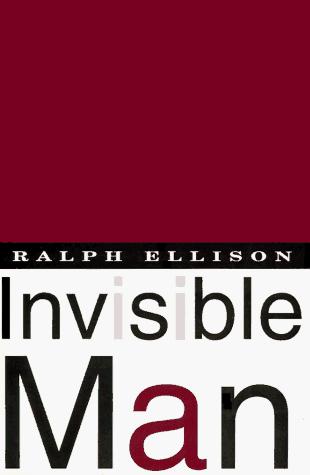
Author: Ralph Ellison (1913-1994, Oklahoma-City-born, Tuskegee-Institute-music, 1 novel in lifetime + 1 posthumous novel + 2 essay collections, 1953 National Book Award for Fiction + 1969 Presidential Medal of Freedom + 1985 National Medal of Arts) Published: Random House April 14, 1952 · Albert Erskine editor · 1952-1954 initial 50,000 hardcover copies · Signet 1953 paperback 1M+ copies by 1958 Pages: 581 · Goodreads: 3.90★ / 220K+ ratings Audiobook: Joe Morton · Random House Audio · 18h 36m (canonical) · Adam Lazarre-White · Random House 2017 · 18h 33m alt · Ralph Ellison BBC Radio 1955 · partial-reading-historical-recording Awards: 1953 National Book Award for Fiction (beat Hemingway's The Old Man and the Sea + Steinbeck's East of Eden + Bellow's The Adventures of Augie March) · 1963 survey of 200 American literary critics: most-distinguished American fiction of past 20 years · Modern Library 100 Best Novels 20th Century #19 · Time 100 Best English-Language Novels 1923-2005 · BBC 100 Novels That Shaped Our World · Harold Bloom Western Canon · Library of Congress Books That Shaped America · Norton Anthology African-American Literature central-text · AP English Literature + American-canon-required · 5M+ copies global 30+ language translations Adaptations: No major film adaptation — Ellison refused 1950s-1970s film-rights-options · Christopher Bond 1985 Philadelphia Drama Guild stage-adaptation (Michael Kahn director, Kene Holliday narrator) · Oren Jacoby 2012 Court Theatre Chicago 3-hour-adaptation (Christopher McElroen director) · Oren Jacoby 2012 Ralph Ellison: An American Journey PBS American Masters documentary · 2023 Cincinnati Playhouse 70th-anniversary adaptation by John Rhodes
Ralph Ellison's Invisible Man is the canonical African-American Bildungsroman of the 20th century. Published by Random House on April 14, 1952, the 581-page novel won the 1953 National Book Award for Fiction — beating Hemingway's The Old Man and the Sea, Steinbeck's East of Eden, and Bellow's The Adventures of Augie March in one of the most-competitive NBA-decisions in National-Book-Award history. A 1963 survey of 200 American literary critics ranked it the most-distinguished American fiction of the past 20 years. Modern Library 100 #19, 5M+ copies sold across 30+ language translations, never out of print since 1952. If you own the Kindle or EPUB copy and want to hear Joe Morton's canonical 18h 36m narration while you commute, walk, or cook, use CastReader AI TTS to convert your copy to unabridged audio free →.
The novel's nameless first-person narrator begins in a forgotten underground basement in Harlem, where he has retreated after his Brotherhood-organizing career collapses. The Prologue (one of American literature's most-famous novel-openings) establishes: 'I am an invisible man. I am a man of substance, of flesh and bone, fiber and liquids — and I might even be said to possess a mind. I am invisible, understand, simply because people refuse to see me.' The 25 chapters narrate the narrator's journey: (Chapter 1) the Battle Royal scene at a Southern-white-town-notables dinner, where 20 Black boys are blindfolded, forced to fight each other for the audience's entertainment, and scramble on an electrified carpet for fake-brass-slugs; (Chapter 2-6) Southern Negro college — a fictional Tuskegee-modeled institution where the narrator, while driving the white-trustee Mr. Norton, takes Norton to meet Jim Trueblood (an incestuous sharecropper) and the Golden Day tavern, resulting in the narrator's expulsion by college-president Dr. Bledsoe; (Chapter 7-15) Harlem, where the narrator arrives with sealed-expulsion-letter-recommendations from Bledsoe (which he later discovers warn potential employers not to hire him), works briefly at the Liberty Paints factory (where he is gassed in an industrial accident), and is recruited by the Brotherhood — a Marxist organization (based on the Communist Party USA) — as a Harlem-speaker-organizer; (Chapter 16-22) Brotherhood activism in Harlem, where the narrator becomes a successful-speaker but increasingly recognizes that the Brotherhood leadership views him as a functional-Black-representative rather than as an individual person; (Chapter 23-25) the Harlem riot (based on the 1943 Harlem riot) and Ras the Exhorter (a Black-nationalist agitator partly modeled on Marcus Garvey-era Harlem-nationalists) — the narrator flees the riot, escapes into an underground Harlem basement, and begins his Prologue-narrated reflection. The Epilogue closes the novel's frame — the narrator contemplates emerging from his underground-basement to re-engage with visible-society.
Ellison wrote the novel 1945-1952 during his Manhattan-Tivoli-NY years — seven-year-composition-revision interrupted by his Newport-dwelling. 1952 first print run 2,500 copies. The novel's 1953 NBA drove sales to 50,000 hardcover copies by end of 1953. Signet 1953 paperback sold 1M+ copies by 1958.
Why 18h 36m Matters
Invisible Man is Ellison's only-completed novel at 581 pages / 18h 36m. Joe Morton's canonical Random House Audio edition captures the jazz-cadenced prose with African-American-Broadway-register authenticity. CastReader's AI narration is excellent for classroom use and re-read; Morton is strongly recommended for first-listen call-and-response-rhetorical nuance.
TTS and Audiobook Comparison
| Option | Length | Narrator | Notes |
|---|---|---|---|
| Joe Morton / Random House Audio | 18h 36m | Joe Morton | Canonical recommended |
| Adam Lazarre-White / Random House 2017 | 18h 33m | Adam Lazarre-White | Re-recording |
| Ralph Ellison / BBC Radio 1955 | partial | author-reading | Historical rarity |
| CastReader AI | ~18h 36m | neural TTS | Free, classroom-ready |
The 1953 National Book Award Decision
The 1953 National Book Award for Fiction is one of the most-famous decisions in NBA history. The 1953 committee — composed of Howard Mumford Jones (Harvard), Alfred Kazin, Irita Van Doren, and Clifton Fadiman — awarded Invisible Man over:
- Ernest Hemingway's The Old Man and the Sea (September 1952, 5.3M Life-magazine-copies in 2 days, 1953 Pulitzer Prize winner)
- John Steinbeck's East of Eden (September 1952, 500,000+ first-year sales)
- Saul Bellow's The Adventures of Augie March (September 1953)
Ellison's win over Hemingway — who had just published his Pulitzer-Nobel-celebrated novella — marked the NBA's recognition of African-American literature as a canonical American-literary tradition.
Ellison's Catalog
- Invisible Man (1952) — canonical sole-lifetime novel, NBA 1953
- Shadow and Act (1964) — essays, foundational-African-American-criticism
- Going to the Territory (1986) — second essay collection
- Flying Home and Other Stories (1996, posthumous) — John Callahan edited
- Juneteenth (1999, posthumous) — Ellison's unfinished second-novel, John Callahan edited manuscript
- Three Days Before the Shooting... (2010, posthumous) — 1,000-page complete-second-novel-manuscript
Context and Impact
Invisible Man is the foundational African-American Bildungsroman. Its 1953 NBA win over Hemingway catalyzed the canonization of African-American literature in American-university curricula. Norton Anthology African-American Literature uses Invisible Man as central-text. Harold Bloom's Western Canon includes Invisible Man as essential. AP English Literature, IB-HL, college American Studies, African-American-Studies, and Post-War-American-Literature all assign the novel regularly. Ellison's 1964 Shadow and Act essay collection + 1969 Presidential Medal of Freedom + 1985 National Medal of Arts + 1994 Newsweek cover-obituary confirm his career-long canonical standing. Henry Louis Gates Jr.'s 1988 The Signifying Monkey foundational African-American literary theory draws heavily on Ellison's jazz-cadenced rhetoric.
Next Steps
Own a Kindle or EPUB copy of Invisible Man? Convert it to free unabridged audio with CastReader →. CastReader reads what's rendered on screen with neural TTS voices — zero cost, zero limits, zero subscription.
Looking for more canonical literary fiction audio guides? See our Kindle Text-to-Speech master guide, Audible alternative, and turn any ebook into an audiobook roundups.