Dracula Audiobook & Text to Speech Guide (2026) — Bram Stoker's Public-Domain Tim-Curry-Full-Cast-Narrated Founding-Vampire-Fiction Gothic-Canon Phenomenon
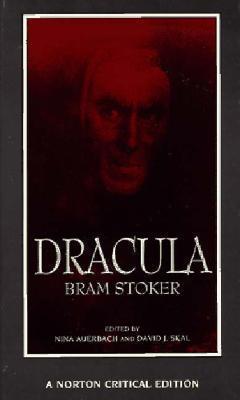
Dracula — Bram Stoker
First published: May 26, 1897 · Archibald Constable and Company
Pages: 488 (Norton Critical Edition)
Goodreads: 4.02★ (1.5M+ ratings) · view
Audiobook runtime: ~15h 28m (Audible Studios full-cast: Tim Curry / Alan Cumming / Simon Vance / Susan Duerden / Katherine Kellgren) / ~16h 28m (single-narrator editions)
Commercial scale: 20M+ global sales · 127 years continuous print · full public domain worldwide · 125+ years unbroken film-adaptation tradition
Cultural impact: Founding vampire-fiction text · Victorian-Gothic-horror canonical work · codified essentially all modern vampire-mythology conventions · direct ancestor of Anne Rice / Stephen King / Twilight / True Blood / Passage
The founding vampire-fiction text — 20 million copies, 127 years of continuous print, and the single novel from which essentially all modern vampire-mythology conventions (sunlight aversion, garlic, stake through the heart, no reflection) descend. Skip the Libby wait with FREE public-domain Kindle + free CastReader AI TTS →
Dracula is Bram Stoker's May 1897 founding-vampire-fiction canonical text — the 488-page Victorian-epistolary novel following English solicitor Jonathan Harker's Transylvanian Castle-Dracula imprisonment, Count Dracula's ocean voyage to Whitby on the Demeter, his predation of Lucy Westenra and Mina Murray, and the Crew-of-Light pursuit (Van Helsing, Seward, Holmwood, Morris, Harker) that destroys him at his Transylvanian castle. Dracula has sold 20+ million copies globally since 1897, generated an unbroken 125+ year film-adaptation tradition (Nosferatu 1922 / Lugosi 1931 / Christopher Lee 1958-73 / Coppola 1992 $215M / BBC 2020 / Renfield 2023), and is universally cited as the founding vampire-fiction text — the novel from which Anne Rice's Interview with the Vampire (1976), Stephen King's Salem's Lot (1975), Stephenie Meyer's Twilight (2005), Charlaine Harris' Sookie Stackhouse / True Blood (2001-13), and essentially all contemporary vampire-horror-romance descend. The 4.02★ Goodreads rating across 1,502,348+ ratings places it among the highest-rated founding-genre classics. The novel codified essentially all modern vampire-mythology conventions: sunlight aversion, garlic repulsion, crucifix aversion, stake-through-heart destruction, no reflection in mirrors, native-soil requirement for resting. Dracula is fully public domain worldwide — both UK (since 1982, 70 years after Stoker's 1912 death) and U.S. (since 1953, 95 years after 1897 publication). At 15h 28m with Audible Studios' Tim-Curry full-cast canonical production, Dracula is the genre-defining Victorian-Gothic-vampire-fiction primary-source text.
This guide covers the full-cast + single-narrator canonical editions, public-domain free-audio paths, and every free / paid path.
Why 15h 28m Matters for Victorian-Gothic Classics
Victorian-Gothic-horror-canonical audiobook runtime benchmark.
| Title | Runtime | Year | Goodreads rating |
|---|---|---|---|
| Dracula (Stoker) — this book | 15h 28m | 1897 | 4.02★ |
| Frankenstein (Shelley) | 8h 35m | 1818 | 3.86★ |
| The Strange Case of Dr Jekyll and Mr Hyde (Stevenson) | 3h 17m | 1886 | 3.85★ |
| The Picture of Dorian Gray (Wilde) | 8h 32m | 1890 | 4.12★ |
| The Turn of the Screw (James) | 4h 12m | 1898 | 3.36★ |
| The Woman in White (Collins) | 26h 10m | 1859 | 4.07★ |
| The Monk (Lewis) | 16h 16m | 1796 | 3.91★ |
| The Castle of Otranto (Walpole) | 3h 56m | 1764 | 3.25★ |
| Carmilla (Le Fanu) | 4h 0m | 1872 | 3.81★ |
Dracula sits at the adult-Victorian-gothic-novel runtime, paced for the epistolary Crew-of-Light-pursuit narrative across Transylvania, Whitby, London, and back to Castle Dracula. At 15h 28m, the novel reads comfortably across 8-12 days of commute listening or two weekends at 1.5x. The full-cast Audible production uniquely suits the multi-character-journal-entry structure.
Three Listening Modes
Mode 1 — Canonical Audio (Audible Studios Tim-Curry full-cast or single-narrator editions). One Audible credit ($14.95/mo) or library-borrow via Libby. The full-cast production is considered the gold-standard Dracula audio.
Mode 2 — Free Library Audio (Libby / Hoopla / LibriVox). 0-1 week wait in U.S. metros for commercial editions; LibriVox public-domain volunteer recordings are instantly downloadable free. Extreme library-copy counts given perennial canonical-classic status.
Mode 3 — Kindle + AI TTS (CastReader). FREE Project Gutenberg Kindle-compatible download + free AI TTS for unlimited re-listens. The best free-audiobook path in the Victorian-gothic canon given Dracula's full public-domain status + CastReader's unlimited TTS.
Platform-by-Platform Breakdown
Option A — Audible (full-cast gold-standard)
The Audible Studios full-cast edition (~15h 28m, 2012) is the contemporary high-profile recommendation — Tim Curry as Van Helsing, Alan Cumming as Harker, Simon Vance as Seward, Susan Duerden as Mina, Katherine Kellgren as Lucy, Graeme Malcolm as Dracula, plus John Lee, Steven Crossley, and ensemble cast. The full-cast epistolary structure uniquely suits Dracula's journal-entry-by-multiple-characters narrative — one of the best-reviewed full-cast audiobook productions in the commercial catalog. Single-narrator alternatives: Alan Cumming solo (~16h 28m), Robert Whitfield Blackstone (~16h 28m).
Option B — Libby (free via library card)
Libby stocks Dracula (both full-cast and single-narrator editions) with 0-1 week waits as of April 2026 — the 1897 perennial-classic has universal library-catalog coverage and copy counts are extreme given Halloween-season and school-curriculum adoption. OverDrive MP3 or Libby-app streaming. Fully free with a U.S. public-library card.
Option C — Project Gutenberg + LibriVox (FREE public-domain)
Dracula is fully public domain worldwide. Project Gutenberg hosts the Kindle-compatible text at gutenberg.org/ebooks/345 — instantly downloadable free. LibriVox has multiple volunteer-narrated full recordings freely downloadable. For listeners wanting the absolute-zero-cost path, Project Gutenberg + LibriVox covers the complete listening experience with zero subscription or purchase.
Option D — Kindle (free Project Gutenberg) + CastReader AI TTS
FREE Project Gutenberg Kindle-compatible download + free CastReader AI TTS for unlimited re-listens at adjustable pace. Among the best free-audiobook paths in the canonical-classic catalog given Dracula's full public-domain status. Particularly valuable for Victorian-gothic-literature study where repeat-passages and vocabulary-analysis benefit from adjustable-pace re-engagement.
TTS Settings for Dracula
| Setting | Recommended value | Notes |
|---|---|---|
| Voice | Male / female mixed via CastReader voice-switching | Match per-character epistolary structure; approximate the full-cast production |
| Speed | 1.0-1.25x first listen; 1.5x re-listens | Stoker's Victorian prose supports moderate speed for modern listeners |
| Pronunciation overrides | Jonathan Harker, Mina Murray, Lucy Westenra, Abraham Van Helsing, Quincey Morris, Renfield, Carfax, Transylvania, Bistritz, Demeter, Carpathians, nosferatu, vrolok, vampyr | Moderate override list for Victorian and Transylvanian vocabulary |
| Chapter markers | Enable | 27 chapters benefit from epistolary-navigation |
| Auto-page-turn | Enable | 488 pages handle cleanly |
First-Time Listener Guide
Dracula is the canonical 1897 vampire novel — Bram Stoker's epistolary work (composed entirely of letters, journal entries, telegrams, newspaper clippings, and shipping manifests) that defined the modern vampire mythology and shaped 125+ years of horror, gothic, and supernatural fiction. The audiobook is uniquely well-suited to multi-narrator productions because of the epistolary structure — each character "writes" their own section, and dual or full-cast productions handle this cleanly. The 2017 Audible Studios production features a star-studded cast (Tim Curry as Van Helsing, Alan Cumming as Dr. Seward, Susan Duerden as Mina) and is widely considered the consensus contemporary canonical edition. The earlier Naxos AudioBooks Frederick Davidson 1990s production is the literary-classic alternative with single-narrator British-Victorian register.
1.0-1.25x baseline for first listen — Stoker's Victorian prose density and the epistolary register-shifting (Jonathan Harker's reserved Englishman vs. Renfield's institutional-asylum patient vs. Van Helsing's Dutch-accented broken English) reward deliberate pacing. The Demeter ship-log sequence in chapters 7-8 and the climactic Carpathian-pursuit chapters 25-27 are the production-craft setpieces; don't speed-listen them.
If Dracula is your first Victorian-Gothic horror novel: the closest tonal companions are Frankenstein (Mary Shelley, 1818, ~9h) — the 79-years-earlier proto-horror canonical novel; The Strange Case of Dr Jekyll and Mr Hyde (Stevenson, 1886, ~3h) — the duality-novella precursor; The Picture of Dorian Gray (Wilde, 1890, ~8h) — the late-Victorian gothic peer; and Carmilla (Le Fanu, 1872, ~4h) — the 25-years-earlier vampire novella that explicitly influenced Stoker.
For listeners coming from the multi-decade screen lineage — Bela Lugosi 1931 / Christopher Lee 1958 Hammer / Francis Ford Coppola 1992 / Luc Besson Renfield 2023 — the audiobook restores the epistolary structure that all film adaptations necessarily linearize. The novel's letter-by-letter accumulation of Dracula's threat — readers are kept slightly behind the characters' awareness for hundreds of pages — is the prose-craft choice that all dramatic adaptations must work around. Audio-first is the recommended sequence if you've never read the novel; the adaptations work better when you've internalized Stoker's actual structure first.
Free Listening Reality (Public Domain)
Dracula entered U.S. public domain on January 1, 1923 (95-year rule from 1897 publication; PD since the start of modern PD calculation). Worldwide PD since 1962 (Stoker died 1912 + 50 years). Free legitimate paths:
- LibriVox — multiple volunteer-recorded productions free, no library card required. Quality varies by volunteer; the Mark F. Smith 2008 production is widely-cited as the best free volunteer edition.
- Project Gutenberg — full e-text, plain ASCII, perfect for upload into CastReader for AI TTS.
- Internet Archive — multiple Dracula audiobook recordings hosted free.
- Libby / Hoopla — free with library card; commercial productions like the 2017 Audible Studios full-cast stock universally.
- Kindle public-domain edition — free download. Pair with CastReader free AI TTS for unlimited re-listens at zero cost.
Strongest free-economic case in the catalog given full PD status: zero-cost public-domain ebook + free AI TTS = fully-free unlimited re-listens.
Content Considerations
Dracula contains on-page content including: Victorian-Gothic horror atmosphere throughout, vampire-feeding and blood-imagery (Lucy's transfusions, Dracula's Mina-assault, the three Transylvanian vampire women at Castle Dracula), graphic staking-and-beheading (Lucy's post-death vampire destruction), implicit sexual-predation undertones (the Dracula-Mina psychic-linkage and consumption-of-blood sequences have been read as sexual-violence allegory in academic criticism), death of named characters (Lucy Westenra, Quincey Morris, Renfield, Mr. Swales, multiple Demeter crew members), and sustained threat-atmosphere across the full trilogy-length narrative. The novel was written in the late-Victorian period and contains period-typical xenophobic-Orientalist framings of Eastern Europe and period-typical gender-role assumptions about Mina and Lucy — contemporary readers note these dimensions. Stoker's biographical context — his Dublin origins, his Trinity College Dublin education, his thirty-year London career as business manager for Sir Henry Irving's Lyceum Theatre (1878-1905), his friendship with writers including Arthur Conan Doyle and Oscar Wilde, his 1890-1897 research-and-writing of Dracula drawing on Transylvanian folklore, Vlad III Dracula / Vlad Țepeș historical material, and earlier vampire-fiction including Le Fanu's Carmilla — adds substantial biographical and literary-historical weight to the reading.
Buying & Borrowing Links
- Audible (Audible Studios full-cast, 15h 28m) — one credit / $24.95 a la carte
- Audible (single-narrator editions, 16h 28m) — one credit
- Libby / Hoopla — free with U.S. library card, 0-1 week wait
- LibriVox — free public-domain volunteer recordings, instant download
- Project Gutenberg — free Kindle-compatible ebook, gutenberg.org/ebooks/345
- Spotify Premium — within 15-hour monthly allocation (full-cast) / slightly overflows (single-narrator)
- Kindle — free via Project Gutenberg upload or $0.99-5 commercial editions
- Project Gutenberg + CastReader — FREE public-domain ebook + free AI TTS for unlimited re-listens
Related Reading
- Victorian-Gothic-horror canon — Frankenstein (Shelley, 1818), The Strange Case of Dr Jekyll and Mr Hyde (Stevenson, 1886), The Picture of Dorian Gray (Wilde, 1890), The Turn of the Screw (James, 1898), Carmilla (Le Fanu, 1872, Stoker's direct predecessor), The Woman in White (Collins, 1859)
- Gothic-horror predecessors — The Castle of Otranto (Walpole, 1764, genre-founding), The Monk (Lewis, 1796), The Mysteries of Udolpho (Radcliffe, 1794)
- Modern vampire-fiction descendants — Interview with the Vampire (Rice, 1976), Salem's Lot (King, 1975), The Vampire Tapestry (Charnas, 1980), The Vampire Tapestry / Lestat Chronicles (Rice, 1976-onward), Twilight (Meyer, 2005), The Southern Vampire Mysteries / True Blood (Harris, 2001-13), The Passage (Cronin, 2010), Fledgling (Butler, 2005)
- Stoker canon — Dracula's Guest (1914 posthumous), The Lair of the White Worm (1911), The Jewel of Seven Stars (1903)
For listeners researching Victorian-gothic literature, founding-horror-fiction, or vampire-genre tradition, Dracula is the essential primary-source text — 20M+ copies, 127 years of continuous print, 125+ years of unbroken film-adaptation tradition, and foundational codification of essentially all modern vampire-mythology conventions makes it the single most-load-bearing Gothic-horror novel of Victorian literature.
The founding vampire-fiction text — Stoker's epistolary Crew-of-Light-vs-Dracula pursuit novel has defined 125+ years of vampire-mythology conventions and generated an unbroken film-adaptation tradition from Nosferatu (1922) through BBC's Dracula (2020). At 15h 28m with Audible's Tim-Curry full-cast gold-standard production, Dracula rewards first-listen via Audible or Libby for the full-cast craft, then Project Gutenberg + CastReader for absolute-zero-cost re-listens and Victorian-Gothic-literature study at flexible pace.
