Midnight's Children Text to Speech: Free Audio for Salman Rushdie's Booker-of-Bookers Indian Independence Epic
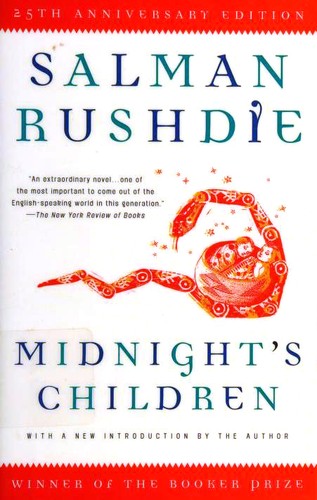
Author: Salman Rushdie (born June 19, 1947 Bombay India, 13+ novels + 4 non-fiction + short stories + children's books, Kashmiri-Muslim family, Rugby School + Cambridge King's College English historical-tripos, Ogilvy & Mather London copywriter 1970s, 1989-1998 hiding under Ayatollah Khomeini fatwa after Satanic Verses, 2022 Chautauqua Institution stabbing recovery, 2024 memoir Knife, canonical post-colonial Indian-English magical-realist writer — knighted 2007 + Companion of Honour 2023) Published: April 15, 1981 (Jonathan Cape UK first edition; Knopf US 1981; global 30+ co-publications since) Pages: 533 (Random House paperback) · Goodreads: 3.96★ / 80K ratings · word count approximately 240,000 words Audiobook: Lyndam Gregory · HarperAudio · 24h 8m (canonical) · Sam Dastor · Naxos AudioBooks · 24h 15m (alt) · Salman Rushdie · author-read excerpt · 2h 20m · Lyndam Gregory · Recorded Books · 2008 re-release · 24h 5m Awards: 1981 Booker Prize for Fiction Winner (against D.M. Thomas's The White Hotel, Ian McEwan's The Comfort of Strangers, Doris Lessing's The Sirian Experiments, Molly Keane's Good Behaviour, Ann Schlee's Rhine Journey — 34-year-old Rushdie's debut-feature Booker) · 1981 James Tait Black Memorial Prize · 1993 Booker of Bookers (25th anniversary best-of-Booker prize awarded at London Guildhall by Malcolm Bradbury + panel — beat 24 other Booker winners since 1969) · 2008 Best of the Booker (40th anniversary public-vote prize — beat J.G. Farrell's Troubles, Margaret Atwood's The Blind Assassin, Peter Carey's Oscar and Lucinda, J.M. Coetzee's Disgrace, Salman Rushdie's The Moor's Last Sigh in public-voted final) — ONLY novel to win all three Booker-tiered honors · Le Monde 100 Books of the Century · Time 100 Best English-Language Novels 1923-2005 · BBC 100 Novels That Shaped Our World · Harold Bloom Western Canon · AP English Literature + Commonwealth-literature + post-colonial-canon + magical-realism-survey + feminist-studies university-curriculum canonical · 20M+ copies global · 40+ language translations Adaptations: 2012 Mongrel Media/Hamilton-Mehta film (Deepa Mehta directing + producing + screenplay, Rushdie himself writing final-cut screenplay + narrating in voiceover, 148 minutes, Toronto International Film Festival 2012 premiere) w/ Satya Bhabha (adult Saleem Sinai) + Darsheel Safary (young Saleem) + Siddharth (Shiva) + Shahana Goswami (Amina Sinai) + Anita Majumdar (Jamila Sinai) + Ronit Chopra (Padma) + Shabana Azmi (Naseem Aziz) + Seema Biswas (Mary Pereira) + Rajat Kapoor (Aadam Aziz) + Anupam Kher (Ghani) + Rahul Bose (General Zulfikar) · 2003 Royal Shakespeare Company Barbican stage (Tim Supple directing, Simon Reade + Tim Supple adaptation, Zubin Varla as Saleem — often considered the superior-to-film adaptation) · 2018 Broadway musical (Tim Supple-based, Jonathan Dove composing) · 1987 BBC Radio 4 abridgment
Salman Rushdie's Midnight's Children is the canonical post-colonial Indian English novel. Published April 15, 1981 by Jonathan Cape UK and winning the 1981 Booker Prize (beating D.M. Thomas, Ian McEwan, and Doris Lessing when Rushdie was 34), it is the only novel in Booker Prize history to win all three Booker-tiered honors: the standard 1981 Booker Prize, the 1993 Booker of Bookers (25th-anniversary best-of prize), and the 2008 Best of the Booker (40th-anniversary public-vote prize). This three-tier sweep confirms Midnight's Children as arguably the most-acclaimed Booker winner in the prize's 56-year history. The novel has sold 20 million copies across 40+ languages and is AP English + Commonwealth-literature + post-colonial-canon + magical-realism-survey required reading globally. If you own the Kindle or EPUB copy and want to hear Lyndam Gregory's canonical 24-hour HarperAudio narration — Gregory is British-Indian-diaspora narrator whose Kashmiri-Bombay-Karachi-English register captures the novel's 30-year cross-subcontinental voice — or Sam Dastor's 24-hour Naxos AudioBooks alternative, use CastReader AI TTS to convert your copy to unabridged audio for free →.
The novel's narrator Saleem Sinai is born in Bombay at the exact stroke of midnight on August 15, 1947 — the moment of Indian independence from Britain. At that same moment, 1001 other children are born across the newly-independent India, each with a distinct magical power: Saleem has telepathic sinus-powers allowing him to convene nightly all-India telepathic conferences; his rival Shiva has warrior-strength knees; Parvati the Witch has actual magical powers. Saleem's Hindu nurse Mary Pereira, motivated by her Communist lover Joseph D'Costa's revolutionary rhetoric about 'making the rich poor and the poor rich,' secretly switches him with another baby — so Saleem grows up as the wealthy son of Muslim-Kashmiri Bombay family Ahmed and Amina Sinai, while the real biological Saleem (renamed Shiva) grows up in poverty. The novel's three-book structure spans 1915-1978: Book 1 covers the pre-independence Aadam Aziz-Naseem Ghani marriage, their daughter Mumtaz-Amina's rejection of first husband Nadir Khan for Ahmed Sinai, and their migration to Bombay. Book 2 covers 1947-1964 Saleem's childhood, the 1001-Midnight-Children telepathic conferences, the 1962 India-China war, Saleem's family's migration to Karachi (mirroring Rushdie's own 1964 family migration), the 1965 Indo-Pakistani war, and Saleem's war-service in East Pakistan. Book 3 covers 1964-1978: the 1971 Bangladesh liberation war, Indira Gandhi's 1975-1977 Emergency (the forcible sterilization of the Midnight-Children), the Widow-hand violence, and Saleem's eventual return to Bombay with his son Aadam Sinai.
The novel is narrated retrospectively by the 31-year-old Saleem to his servant-lover Padma in his pickle-factory kitchen — a frame structure paralleling Scheherazade's 1001 Nights. Rushdie wrote the novel in London over 5 years (1976-1981) while working as a copywriter at Ogilvy & Mather advertising agency, then devoted himself full-time to fiction after Midnight's Children's success.
Why 24 Hours 8 Minutes Matters
Midnight's Children is Rushdie's longest major novel — 533 pages spanning 63 years of Indian subcontinental history. Lyndam Gregory's canonical HarperAudio narration handles the Saleem-first-person-memoir frame with Padma-kitchen-listener interjections, the 1001-Midnight-Children telepathic conferences, the Indira-Emergency-Widow-hand-forcible-sterilization chapters, and the Bombay-Karachi-Dhaka-Delhi-Kashmir cross-subcontinental geography cleanly. Sam Dastor's Naxos alternative is British-Indian-RADA-trained register. CastReader's AI narration is cleaner for first-pass classroom use; Gregory or Dastor are recommended for nuanced re-listen — especially the Saleem-Padma-kitchen-frame.
| Book | Audiobook Length | Goodreads | Why Listeners Compare |
|---|---|---|---|
| Midnight's Children (Rushdie, 1981) | 24h 8m | 3.96★ / 80K | 1947-1978 India-Pakistan / Saleem Sinai / 1001 children |
| The Satanic Verses (Rushdie, 1988) | 21h 46m | 3.72★ / 50K | Bombay-London / angel-devil / fatwa-context Rushdie |
| Shame (Rushdie, 1983) | 12h 47m | 3.89★ / 20K | Pakistan post-1947 / Omar Khayyam Shakil / Zia-Bhutto |
| The Moor's Last Sigh (Rushdie, 1995) | 17h 6m | 3.91★ / 15K | Bombay Jewish-Iberian Zogoiby family / Whitbread winner |
| The God of Small Things (Roy, 1997) | 12h 57m | 4.04★ / 700K | Ayemenem Kerala 1969 / Rahel-Estha / 1997 Booker winner |
| One Hundred Years of Solitude (García Márquez, 1967) | 16h 43m | 4.11★ / 900K | Macondo Colombia Buendía family / magical-realism canon |
| The Tin Drum (Grass, 1959) | 20h 24m | 3.99★ / 65K | Danzig Oskar Matzerath / Rushdie-precursor-unreliable-narrator |
8 Key Elements of the Novel
- Saleem Sinai — Born midnight August 15, 1947 Bombay. Muslim urban-professional family (Ahmed and Amina Sinai). Actually biologically the son of Wee Willie Winkie and Vanita (the nurse Mary Pereira baby-switched). 'Handcuffed to history' narrator. Satya Bhabha 2012 film portrayal.
- Shiva — Born midnight August 15, 1947 Bombay. Biologically the wealthy son (switched to a poor family by Mary Pereira). Warrior-strength knees. Saleem's rival. Siddharth 2012 film portrayal.
- Midnight's Children — 1001 other children born in the hour after midnight August 15, 1947. Each with distinct magical powers. Saleem convenes them via telepathy for 'Midnight Children's Conference.' Later forcibly sterilized during Indira Gandhi's 1975-1977 Emergency.
- Aadam Aziz — Saleem's maternal grandfather. 1915 Kashmir. Amritsar Massacre survivor. Doctor. Marries Naseem Ghani after seeing her only through a perforated sheet one body-part at a time. Rajat Kapoor 2012 portrayal.
- Padma Mangroli — Saleem's pickle-factory-worker lover. Listens to Saleem's narration in the kitchen. Interjects and critiques. The novel's frame-narrator-listener, paralleling Scheherazade's 1001 Nights interlocutor. Ronit Chopra 2012 portrayal.
- Mary Pereira — The Goan Catholic nurse who baby-switched Saleem and Shiva at midnight August 15, 1947. Later becomes the Sinai family's servant then pickle-factory co-owner with Saleem. Seema Biswas 2012 portrayal.
- The Widow — Indira Gandhi character (unnamed, called 'the Widow' throughout). 1975-1977 Emergency. Forcible sterilization of Midnight's Children. Hand-of-the-Widow-grabs-castrates imagery in Book 3.
- Midnight — The exact moment of Indian independence. Saleem's birth moment. The 1001 Midnight Children's birth moment. The novel's temporal-ontological center. Every crucial plot event happens at midnight.
How to Listen to Midnight's Children with CastReader
- Own a Kindle or EPUB copy — Vintage / Random House / Jonathan Cape 1981 first edition / 25th-Anniversary edition 2006 w/ Rushdie new afterword / 40th-Anniversary edition 2021 w/ Rushdie new introduction / Folio Society illustrated 2021 are all recommended.
- Upload to CastReader — paste the text, select Davis/Ryan/Jenny voice. Saleem's adult-narrator register works well with Guy Neural; Padma's interjections with Aria; Aadam Aziz's Kashmiri-patriarch register with Davis. CastReader handles Rushdie's three-book structure and 400-word-per-line sentence architecture.
- Listen at your pace — 0.5×–3× control. First-time listeners: 0.85× for the 1001-Midnight-Children telepathic conference chapters, the Indira-Emergency-Widow-hand forcible-sterilization chapters, and the Bangladesh-1971-war chapters (political-historical complexity); 1× for most family-saga chapters; 1.5-2× for the pickle-factory-kitchen-frame Padma-listener sequences.
- Use the sleep timer — 24-hour unabridged pacing. Good for 5-7 evenings of commute + bedtime listening. Ideal for a 2-3 week listening project.
Rushdie's Post-Colonial Legacy
Midnight's Children pioneered the post-colonial magical-realist epic in English. Its direct descendants include Vikram Seth's A Suitable Boy (1993), Arundhati Roy's The God of Small Things (1997 Booker), Mohsin Hamid's Moth Smoke (2000) and The Reluctant Fundamentalist (2007), Kiran Desai's The Inheritance of Loss (2006 Booker), Aravind Adiga's The White Tiger (2008 Booker), Jhumpa Lahiri's Interpreter of Maladies (1999 Pulitzer) and The Namesake (2003), Rohinton Mistry's A Fine Balance (1995), and Chimamanda Ngozi Adichie's Half of a Yellow Sun (2006). More broadly, Midnight's Children extended Gabriel García Márquez's Colombian magical-realism into Indian-English, creating the template for 21st-century Booker-winning post-colonial fiction.
Rushdie's subsequent career — particularly the 1989-1998 Ayatollah Khomeini fatwa period following The Satanic Verses (1988) and the August 12, 2022 Chautauqua Institution stabbing attack that cost him his right eye — has made him one of the most politically-visible writers in the English language. His 2024 memoir Knife (2024) recounts the attack and recovery. Midnight's Children is his pre-fatwa peak and remains his most-acclaimed novel.
Listen Free Today
Midnight's Children is Rushdie's Booker-of-Bookers post-colonial masterwork — the midnight August 15, 1947 Indian independence moment, Saleem's sinus-telepathy and the 1001 Midnight Children's nightly conferences, the Aadam-Aziz-perforated-sheet Kashmir marriage, the pickle-factory-kitchen Padma-Saleem frame narration, the Bombay-Karachi-Dhaka migrations, the Indira-Emergency-Widow-hand forcible-sterilization chapters, and Saleem's crumbling-body ending. Whether you're encountering Rushdie for the first time or revisiting after watching the 2012 Deepa Mehta film, audio brings Rushdie's polyphonic Indian-English prose to life. Start listening free with CastReader → — upload your Kindle or EPUB copy, pick a voice, and Saleem is 'handcuffed to history' at midnight August 15, 1947 in sixty seconds.
Related reading:
- The God of Small Things text to speech → — Arundhati Roy's Kerala Booker-winning Rushdie-descendant
- One Hundred Years of Solitude text to speech → — García Márquez's magical-realism precursor
- Ulysses text to speech → — Joyce's modernist-narrator-experimentalism ancestor
- Kindle text to speech (Free) — full guide to Kindle + TTS
- Audible alternative free — other free audiobook paths
