The Shining Audiobook & Text to Speech Guide (2026) — Stephen King's Campbell-Scott-Hachette-Audio Overlook-Hotel-Torrance-Family Psychological-Horror Masterpiece
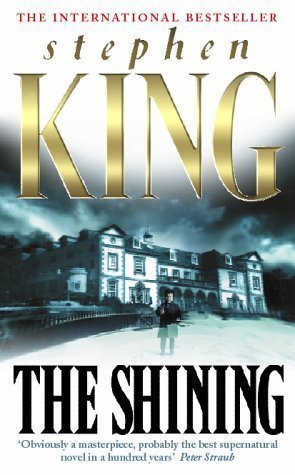
The Shining — Stephen King
First published: January 28, 1977 · Doubleday
Pages: 497 (paperback)
Goodreads: 4.28★ (1.73M+ ratings) · view
Audiobook runtime: ~15h 50m · Campbell Scott Hachette Audio 2013 (industry-canonical King-Shining audiobook)
Commercial scale: 15M+ global sales · 49+ years continuous print · career-establishing Stephen King literary-horror breakthrough
Cultural impact: Stanley Kubrick 1980 film (one of the 10 most-iconic horror films in cinema history) · King-scripted 1997 TV miniseries · Doctor Sleep 2013 sequel + Mike Flanagan 2019 film · 'REDRUM' / 'Here's Johnny!' / Grady twins / Room 237 permanent cultural references
The career-defining Stephen King supernatural-horror literary work — 49 years of continuous print, 15+ million copies, Campbell Scott's canonical Hachette audiobook, and the Kubrick film that became one of the 10 most-culturally-iconic horror films in cinema history. Skip the Libby wait with Kindle + free CastReader AI TTS →
The Shining is Stephen King's January 1977 Overlook-Hotel-Torrance-family psychological-horror canonical text — the 497-page multi-POV novel where recovering-alcoholic ex-schoolteacher Jack Torrance takes the off-season caretaker position at Colorado's Overlook Hotel to rebuild his family and write a play, but the hotel's accumulated supernatural entities — ghosts of its violent history including prior caretaker Delbert Grady (who murdered his family), the Room 217 decomposing bathtub-woman, the hedge-animals that move when unobserved, the 1920s Grand Ballroom ghost-party — target Jack for possession by exploiting his alcoholism, failures, and violent history (he broke his young son Danny's arm in an alcoholic rage two years earlier). Once the family is snowed in for winter, Jack descends into alcoholic rage, becomes fully possessed, and attempts to murder his wife Wendy and 5-year-old son Danny with a roque mallet. Danny has 'the shining' — a powerful psychic gift — which allows him to summon the Overlook's psychic hotel-chef Dick Halloran across half the continent from Florida. Halloran arrives in time; Jack is killed when the boiler he forgot to dump explodes (his now-possessed body momentarily reasserts humanity long enough to save Danny). The hotel burns; Halloran, Wendy, and Danny escape. The Shining has sold 15+ million copies globally, has been in continuous print since 1977, and is universally recognized as Stephen King's breakthrough supernatural-horror literary work. The 4.28★ Goodreads rating across 1,731,460+ ratings reflects 49 years of sustained critical and reader esteem. Stanley Kubrick's 1980 film adaptation is one of the 10 most-culturally-iconic horror films in cinema history, generating endless 'Here's Johnny!', 'REDRUM', Grady-twins, and Room 237 cultural references. Mike Flanagan's 2019 Doctor Sleep film (based on King's 2013 sequel novel) reconciles Kubrick film continuity with King novel canon. At 15h 50m with Campbell Scott's Hachette Audio 2013 canonical production, The Shining is the genre-defining haunted-location supernatural-horror primary-source text.
This guide covers the 15h 50m runtime, the Campbell Scott canonical production, the Kubrick-Flanagan adaptation dimension, and every free / paid path.
Why 15h 50m Matters for Supernatural Horror
Supernatural-horror-canon audiobook runtime benchmark.
| Title | Runtime | Year | Goodreads rating |
|---|---|---|---|
| The Shining (King) — this book | 15h 50m | 1977 | 4.28★ |
| It (King) | 44h 55m | 1986 | 4.25★ |
| Salem's Lot (King) | 17h 32m | 1975 | 4.06★ |
| Pet Sematary (King) | 15h 43m | 1983 | 4.02★ |
| Misery (King) | 12h 22m | 1987 | 4.20★ |
| Doctor Sleep (King, sequel) | 18h 39m | 2013 | 4.16★ |
| The Haunting of Hill House (Jackson) | 7h 29m | 1959 | 3.87★ |
| The Exorcist (Blatty) | 12h 51m | 1971 | 4.14★ |
The Shining sits at the Stephen-King-mid-range runtime, paced for the three-part family-arrival / winter-isolation-building-tension / possession-and-escape structure. At 15h 50m, the novel reads comfortably across 10-14 days of commute listening or two weekends at 1.5x.
Three Listening Modes
Mode 1 — Canonical Audio (Campbell Scott Hachette 2013). $14.95 Audible credit or library-borrow via Libby; Audible Plus subscribers check rotating availability. Scott's restrained narration with careful character differentiation is the industry-canonical Shining audiobook.
Mode 2 — AI TTS via CastReader. Free, unlimited re-listens, adjustable speed, pronunciation overrides for Jack Torrance / Wendy / Danny / Halloran / Overlook Hotel / Grady / REDRUM / Room 217. Particularly valuable for Stephen-King-canon-marathon reading or Kubrick-film-comparison study. See CastReader for Kindle.
Mode 3 — Libby / Hoopla library borrow. Libby 2-5 week wait due to perennial demand; Hoopla instant-lend where available. The library route trades wait time for zero-dollar cost.
The Campbell Scott Canonical Production
Campbell Scott (b. 1961, American actor — Roger Dodger, The Exorcism of Emily Rose, Royal Pains) narrates the definitive 2013 Hachette Audio edition in ~15h 50m. Scott's interpretive choice is measured restraint — avoiding both over-dramatization (which would flatten King's multi-POV psychological-horror architecture) and affectless flatness (which would lose the novel's supernatural weight).
Scott differentiates five major voices across the novel: Jack Torrance's descent from rational-narrator voice through alcoholic-rage register to fully-possessed Overlook-entity voice; Wendy's cautious-fearful register; Danny's 5-year-old voice distinct from adult narration; Halloran's measured Black-American-psychic-chef calm; and the Overlook entities' various voices (Delbert Grady's formal butler register, Lloyd the bartender's ingratiating voice, the 1920s ghost-party crowd-voices). The production avoids gimmicky horror-voice caricature while preserving the novel's supernatural weight.
For first-listeners: Campbell Scott Hachette 2013 is the standard commercial recommendation. Earlier productions by various narrators remain available in some library collections but are not competitive with Scott 2013.
The Plot: Three-Part Haunted-Hotel Descent
Part 1 — Arrival and summer (Chapters 1-12). Jack Torrance drives his family from Vermont to Colorado to take the off-season caretaker position at the Overlook Hotel. Hotel manager Stuart Ullman gives Jack a tour heavy with ominous history (prior caretaker Delbert Grady murdered his family with an axe before taking his own life; the 1920s ghost-party history; Room 217's prior suicide). Hotel chef Dick Halloran, during the family's arrival-day orientation, privately recognizes Danny's 'shining' — his own psychic gift. Halloran warns Danny about the hotel's malevolent presences, particularly Room 217, and gives Danny psychic emergency-summoning instructions. The family is left alone as the hotel closes for the season.
Part 2 — Winter isolation and Jack's descent (Chapters 13-40). October-November: the Torrance family settles into winter routine. Jack starts writing his play, Danny explores the empty hotel, Wendy tries to maintain normalcy. Early supernatural events accumulate: Jack discovers a scrapbook of hotel history that activates the Overlook's possession interest in him; Danny investigates Room 217 and encounters the decomposing bathtub-woman; the hedge-animals outside the hotel begin moving when unobserved; Jack hears the Grady daughters crying in empty hallways. Jack descends: he becomes violently angry about imagined grievances, begins talking to Lloyd the bartender at the long-closed Colorado Lounge bar (a ghost), has extended conversations with Delbert Grady in the Gold Ballroom about 'corporally punishing' his son. The hotel's alcoholism-predatory architecture exploits Jack's recovery status. The telephone and radio break, severing the family's contact with the outside world. A massive blizzard snows in the roads.
Part 3 — Possession, summons, and escape (Chapters 41-55). Jack becomes fully possessed by the Overlook's entities. He attempts to kill Wendy with a roque mallet; she escapes and barricades herself and Danny in the caretaker's apartment. Jack breaks through with the mallet, deeply injures Wendy, and pursues Danny through the hotel. Danny's desperate psychic 'shining' call reaches Halloran at his Florida winter-resort job. Halloran flies to Denver, charters a Sno-Cat, and rides through the blizzard to the Overlook. He arrives in time to distract Jack, who severely beats him. In the boiler room, Jack-as-person momentarily reasserts from the Overlook's possession to remember the boiler must be dumped to prevent explosion — but he delays long enough for the boiler to explode, destroying the hotel and killing Jack. Halloran, Wendy, and Danny escape in the Sno-Cat. Epilogue summer: Halloran has taken Wendy and Danny to his new Maine-resort position where Danny can begin healing from the trauma.
Why The Shining Is the Defining Haunted-Location Horror Novel
Stephen King's January 1977 publication — his third novel after Carrie (1974) and Salem's Lot (1975) — established King as a major literary-horror figure and reshaped late-20th-century supernatural horror. The novel's foundational contributions:
Haunted-location as accumulated-violence architecture. King's Overlook Hotel is haunted not by a single entity but by the accumulated psychic residue of decades of hotel violence — Grady's family murder, the 1920s party-crowd deaths, Room 217's suicide, the ongoing Colorado-high-society corruption. This 'accumulated-violence haunting' model — where the location itself is the entity — became the dominant late-20th-century haunted-location architecture (The Haunting of Hill House, Hell House, The Amityville Horror all predate but are elaborated by King's model).
Possession-as-addiction-legacy. The Overlook's possession of Jack works by exploiting his alcoholism, his history of domestic violence (the broken-arm incident with Danny), his professional failures, and his resentments. This 'supernatural-as-externalized-addiction' architecture — where the horror IS the character's worst self, amplified by supernatural agency — became foundational to subsequent literary-horror. King's own alcoholism (later publicly acknowledged as informing the Jack Torrance characterization) grounds the thematic architecture in direct experience.
The shining as psychic-gift child-protagonist. Danny's 'shining' gift became a foundational horror / fantasy trope — psychic children in horror fiction before The Shining were rare; after, they became common (Firestarter, IT, Stranger Things, and countless contemporary works derive from King's shining-model). Mike Flanagan's 2019 Doctor Sleep extends the canon, treating the shining as a world-building-significant psychic architecture.
Restrained horror prose style. Despite the novel's eventual graphic violence, King's craft is primarily atmospheric restraint — the Room 217 sequence, the hedge-animals set-pieces, and the ghost-party Gold Ballroom scenes work through restraint rather than explicit visceral description. This restraint-over-gore horror aesthetic influenced subsequent literary horror.
Film Adaptations and Cultural Legacy
1980 Stanley Kubrick film. Jack Nicholson as Jack Torrance, Shelley Duvall as Wendy, Danny Lloyd as Danny, Scatman Crothers as Halloran, Philip Stone as Grady. Budget $19M; box office $47M; mixed initial critical reception; near-universal retrospective recognition as one of the 10 most-culturally-iconic horror films in cinema history. Kubrick changed significant novel elements: Jack's characterization (Nicholson begins almost unhinged, eliminating the novel's slow-descent architecture), the hedge-animals replaced by the hedge-maze, the ending (hotel explodes in novel, preserves in film), Halloran killed in film (survives in novel). Stephen King famously dislikes the Kubrick adaptation for departing from the novel's psychological-horror architecture.
1997 ABC TV miniseries (King-scripted). Steven Weber as Jack, Rebecca De Mornay as Wendy, Courtland Mead as Danny, Melvin Van Peebles as Halloran. King personally scripted the miniseries to be faithful to the novel (including restoring the hedge-animals, the slow-descent Jack characterization, and the boiler-explosion ending). Mixed critical reception but widely appreciated by King-novel readers for faithfulness.
2019 Doctor Sleep film (Mike Flanagan). Ewan McGregor as adult Danny Torrance, Kyliegh Curran as Abra Stone, Rebecca Ferguson as Rose the Hat. Based on King's 2013 sequel novel. Flanagan's film deliberately reconciles the King novel canon with the Kubrick film canon — the Overlook Hotel appears as both novel-described and Kubrick-film-visual in ways that honor both sources. Widely praised for handling the continuity challenge gracefully.
Cultural references. Kubrick's visual grammar — the symmetrical hallway shots, the blood-elevator opening, the Grady twins ('Come play with us, Danny'), Room 237, the 'Here's Johnny!' door-break, Jack's typewriter 'ALL WORK AND NO PLAY MAKES JACK A DULL BOY' pages, the hedge-maze finale — has become one of the most-referenced horror-cinema visual vocabularies. The documentary Room 237 (2012) catalogs Kubrick-fan theories about the film's hidden meanings.
Free and Paid Listening Paths (April 2026)
Free paths:
- Libby — commercial audiobooks via U.S. library card, 2-5 week waits (perennial demand)
- Hoopla — commercial audiobooks, instant-lend (no wait) where available
- Audible Plus — occasional rotating Shining productions (Hachette Scott edition enters Plus periodically)
- Spotify Premium — 15h monthly audiobook allocation (Shining at 15h 50m slightly exceeds single-month budget)
- CastReader — free AI TTS on any Kindle edition (owned or library-borrowed)
Paid paths:
- Audible Premium — 1 credit ($14.95) for Campbell Scott Hachette or purchase $22-28
- Kindle ebook — $9-13 (under copyright until 2072+)
- Physical — Anchor / Pocket Books paperback $10-15, hardcover editions $20-30
Why Kindle + CastReader Wins for The Shining
For listeners prioritizing flexible re-engagement over single-narrator craft, Kindle + CastReader free AI TTS is the optimal path:
- Unlimited re-listens — no credit cost per engagement, critical for Stephen-King-canon-marathon reading and Kubrick-film-comparison study
- Adjustable pace — particularly valuable through the Overlook-atmosphere chapters or the Jack-descent-into-madness passages
- Pronunciation overrides — configure Jack Torrance, Wendy, Danny, Halloran, Grady, Overlook Hotel, REDRUM, Sidewinder, Stovington, shining for consistent AI narration
- Paragraph highlighting — supports comprehension through King's denser atmospheric passages and the multi-POV structure
- Kubrick-film comparison study — CastReader's adjustable pace enables scene-by-scene comparison with the Kubrick film, particularly valuable for horror-studies courses and cinema-criticism engagement
For listeners wanting the Campbell Scott canonical production on first listen, use Audible or Libby; then switch to CastReader for re-listens and comparison study.
The Shining and the Stephen King Horror Canon
Stephen King's 60+ novels span the late-20th-century horror canon; the core horror-entry-point set includes:
- Carrie (1974) — King's first novel, psychic-teenage-girl horror
- Salem's Lot (1975) — King's second novel, vampire-small-town horror
- The Shining (1977) — haunted-hotel / possession / shining architecture
- Pet Sematary (1983) — grief-and-loss horror
- It (1986) — childhood-horror novel, King's longest masterwork
- Misery (1987) — writer-imprisoned psychological horror
- Doctor Sleep (2013) — Shining sequel, adult Danny Torrance
- The Dark Tower series (1982-2004, 8 novels) — King's multi-decade magnum opus
For listeners building the King-horror-canon: The Shining → It → Pet Sematary → Misery → Salem's Lot is a complete late-20th-century horror-canon reading arc totaling ~100 hours. The Shining is the ideal single-novel entry-point for first-time King readers — compressed enough to be accessible, atmospheric enough to establish King's style, and permanently culturally relevant through Kubrick and Flanagan adaptations.
Related Reading
For listeners building the horror-canon and supernatural-fiction genre library, these CastReader guides pair naturally with The Shining:
- Dracula (Bram Stoker) — TTS & Audiobook Guide · Audible Studios full-cast 15h 28m, founding vampire/supernatural-horror predecessor
- Frankenstein (Mary Shelley) — TTS & Audiobook Guide · Dan Stevens Audible 8h 35m, 19th-century gothic-horror predecessor
- Wuthering Heights (Emily Brontë) — TTS & Audiobook Guide · Joanne Froggatt Naxos 2016 12h 6m, Gothic-moors-passion-tragedy predecessor
- Lights Out (Navessa Allen) — TTS & Audiobook Guide · BookTok-surge thriller-romance peer
- Life of Pi (Yann Martel) — TTS & Audiobook Guide · Jeff Woodman HighBridge 11h 57m, survival-tragedy literary peer
Limitations and Honest Notes
- Still under copyright — first published 1977; Stephen King still living as of 2026; U.S. copyright extends to 2072+ under the 95-year post-publication term. No free public-domain audio; all legal audio requires Audible/Libby/Hoopla routes.
- Horror intensity — the Room 217 bathtub-woman scene, the Jack-descent chapters, and the climactic mallet-pursuit are psychologically heavy; first-listeners may prefer non-commute contexts for the denser chapters.
- Kubrick-film-comparison consideration — reading novel first preserves King's psychological-horror architecture and the slow-descent Jack characterization that the film collapses. Kubrick-first viewers may find the novel's Jack feels 'different' from Nicholson's.
- King's own dislike of the Kubrick adaptation — documented in multiple interviews; readers should engage the novel on its own terms rather than as film-source.
- Companion reading Doctor Sleep — the 2013 sequel novel (~18h 39m) continues the story and resolves King novel / Kubrick film continuity ambiguity; essential companion for readers wanting full-universe engagement.
Related: Listen to Kindle | Audible Alternative Free | Turn Ebook into Audiobook | Send to Phone | Kindle Audiobook Free
