The Let Them Theory Audiobook & Text to Speech Guide (2026)
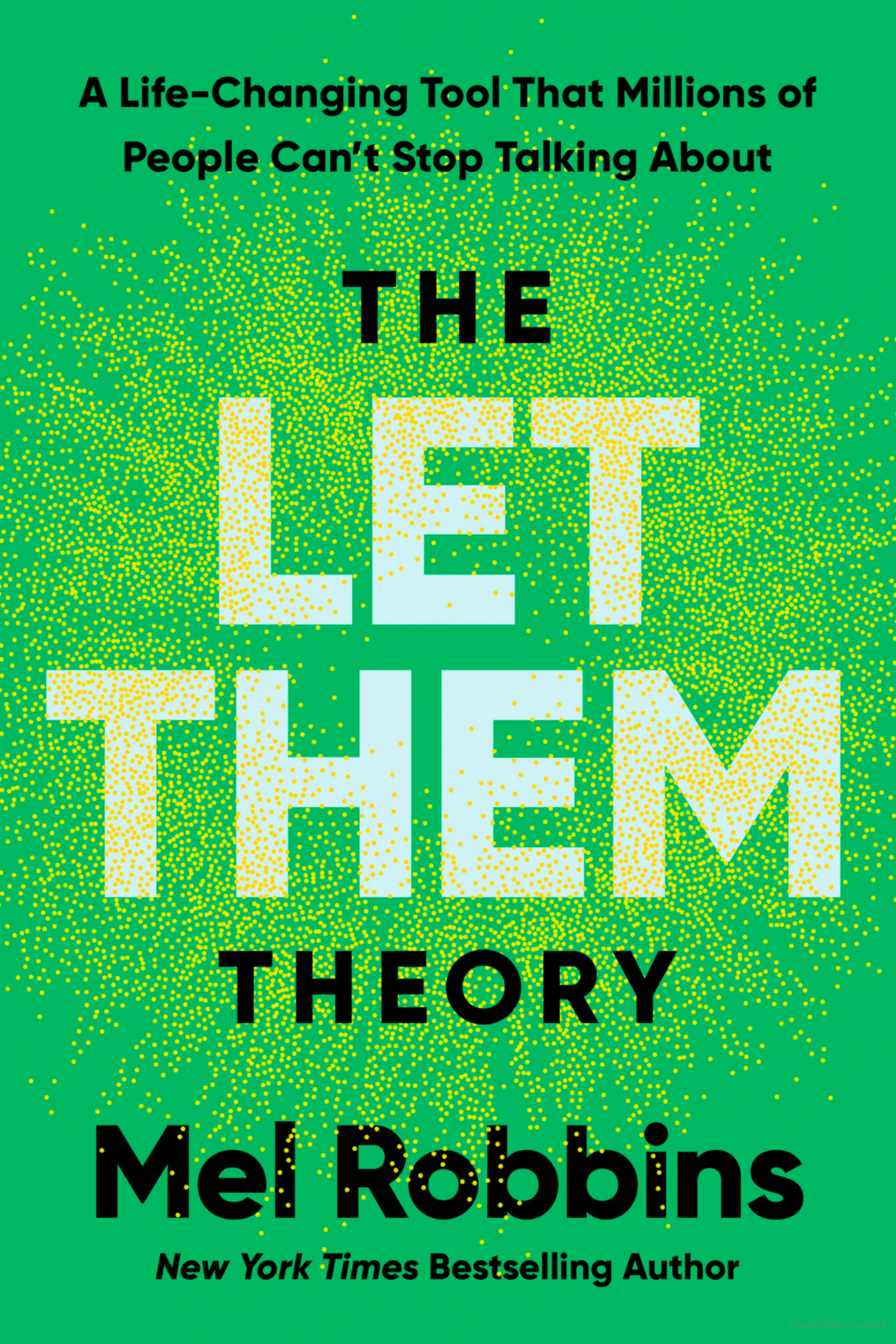
The Let Them Theory — self-help framework
Author: Mel Robbins
Published: December 24, 2024 · Hay House
Pages: 311
Goodreads: 4.01★ (300K+ ratings) · #2 Google searched book of 2025 — view
Audiobook: ~10h 15m · narrated by Mel Robbins
Prefer to re-read chapters on commute? CastReader reads Kindle Cloud Reader aloud for free — useful for framework reinforcement →
Self-help books are the category where listening-mode matters most. A novel survives silent reading because the plot carries it; a self-help framework needs repetition, emphasis, and application, and those land better when someone who invented the framework is speaking it into your ears. The Let Them Theory is designed around 8 applied life areas, and Mel Robbins narrates her own audiobook — which means her emphasis tells you what's load-bearing.
This guide covers the author-narrated Audible edition first (the recommended first-listen), then the Kindle TTS paths for revisiting specific chapters via re-listen — which is where self-help books actually change behavior.
Three Listening Modes — Ranked by How Self-Help Actually Works
Most self-help advice fails because readers finish the book once and put it on a shelf. The frameworks don't land until you apply them, and you don't apply them until you hear them in the context that triggers the pattern. Match listening mode to learning stage:
- First listen — Author's Audible production — Mel Robbins narrates her own audiobook. This is the canonical version. Her cadence tells you where the real moves are; print can't do that. One credit ($14.99 trial) or Libby free.
- Chapter reinforcement — Kindle AI TTS — once you own the Kindle edition, CastReader reads specific chapters on demand during commutes. Useful when you hit a real-world scenario (a difficult conversation, an anxious morning) and want to re-listen to the relevant chapter in 25 minutes.
- Background reviewer — Podcast-style — Libby re-borrows the audiobook every 2–4 weeks for background reinforcement. The book's 8-area structure means a borrow cycle can hit a different life area each borrow.
The book is designed for #2 and #3 specifically — structured content, short chapters, repeatable frameworks. Apple Books / Kindle Paperwhite / EPUB setups follow for readers who want to revisit the text or listen across devices.
About The Let Them Theory
The premise is simple enough to fit in a sentence: stop trying to control what other people think, say, or do — let them — and redirect that energy into what you actually control. Robbins builds out the framework across 8 applied life areas: adult friendships, family expectations, dating and relationships, career, social media and comparison, parenting adult children, money conversations, and identity in midlife.
Where the book differs from generic "don't sweat it" self-help is Robbins's second-half framework: after you "let them," you "let me" — a deliberate redirection of attention to decisions within your agency. The two halves of the phrase aren't equally weighted in the book; "let me" gets about 60% of the applied examples. The audiobook makes this clear because Robbins emphasizes the transitions. Reading the print edition, many readers miss the "let me" half and take away an incomplete version.
The book's Goodreads rating (4.01) is lower than the enthusiasm suggests because self-help is a polarized category — readers who come in skeptical often rate it 2–3 stars, readers who found it useful rate it 5. The 300K+ rating count is itself the signal of broad readership. For audiobook listeners specifically, reviews skew higher — Robbins's voice delivery lands better than the page.
How to Listen to The Let Them Theory — Every Platform
Option 1: Audible (Author-Narrated)
Mel Robbins reads her own book, as she does with all her titles. Her pacing is coached — she's been doing the same delivery style on The Mel Robbins Podcast since 2022, so audiobook listeners familiar with the show feel immediately oriented. For a self-help book specifically, author narration changes the product; this is the canonical edition.
- Runtime: ~10h 15m
- Price: $22.05 à la carte or one Premium Plus credit
- Free: 30-day Audible trial includes one credit. Redeem on The Let Them Theory; keep forever.
- Link: Audible — The Let Them Theory
Do not speed up beyond 1.2x on first listen — Robbins's emphasis cues get lost at 1.5x. On re-listens, 1.25x is fine because you already know where the beats land.
Option 2: Libro.fm (Indie-Supporting Alternative)
Same audio file, same narrator. Your purchase directs revenue to an independent bookstore.
- Price: $22.05 or one credit
- Free trial: First-month credit available
- Link: Libro.fm — The Let Them Theory
Option 3: Libby / Hoopla (Free via Library)
The Let Them Theory is the most-borrowed self-help audiobook of 2025 at most U.S. library systems. Waitlists are manageable because library investment is high — most systems bought 20+ digital copies.
- Libby: 2–4 weeks typical
- Hoopla: Usually instant when stocked; monthly borrow caps apply
- Cost: Free
For self-help specifically, returning to a Libby borrow 4–6 weeks later for a second listen is a pattern many readers report helps with retention. You don't need to own the book — you need to revisit the framework.
Option 4: Kindle Cloud Reader + CastReader
For readers who own the Kindle edition and want to re-read specific chapters on demand. After the first audiobook pass, CastReader is where the book lives on repeat — single chapters, 25 minutes each, AI voice narrator.
Steps:
- Open The Let Them Theory at read.amazon.com
- Install CastReader
- Navigate to the chapter you want to re-listen to
- Click the 🔊 icon → pick a voice (Bella or Nova — see TTS settings below)
Standard Chrome reader extensions fail on Kindle Cloud Reader because Amazon renders text in encrypted custom fonts. CastReader uses browser-side OCR. No account required.
Full Kindle Cloud Reader walkthrough →
For self-help specifically, the use case CastReader shines on is "I just had a scenario where the framework applies — let me listen to that chapter right now." Audiobook apps are less convenient for chapter-jump; Kindle Cloud Reader's table of contents makes this instant.
Option 5: Kindle iOS / Android — Assistive Reader
Assistive Reader works on The Let Them Theory because Enhanced Typesetting is enabled.
Steps:
- Open Kindle app → open The Let Them Theory
- Tap center → Aa → More
- Toggle Assistive Reader
- Play/pause, 30s skip, 0.5x–3x speed
Download Premium Siri voices first. For self-help register, Ava at 1.15x works — clean, unemotional delivery that doesn't try to imitate Robbins's coaching register.
Option 6: Kindle Paperwhite / Scribe
Native TTS works. Paperwhite requires Bluetooth headphones (no speaker); Scribe has a speaker.
Steps:
- Pair Bluetooth headphones (Paperwhite only)
- Open The Let Them Theory → tap center → Aa → toggle Text-to-Speech
- Press-and-hold page-turn button or tap Play
For a 10-hour self-help book, Kindle e-reader TTS is adequate for chapter re-listens but not ideal for first listen. The official audiobook or Kindle iOS Assistive Reader with Siri voices both sound better.
Option 7: Kindle for Mac / Windows
Desktop Kindle lacks Assistive Reader. Mac Speak Selection (Option + Esc) doesn't auto-turn pages. Windows Narrator reads UI chrome.
For desktop listening, CastReader on Kindle Cloud Reader auto-turns pages so you can let the book play during focus work or light admin tasks.
Option 8: Apple Books Edition
Apple Books sells The Let Them Theory as a $14.99 edition. iOS Speak Screen reads it continuously with page auto-turn:
- Buy and open in Apple Books
- iOS: Settings → Accessibility → Spoken Content → enable Speak Screen
- Two-finger swipe down from top of book
- Premium Siri voices read continuously
For self-help, Ava at 1.1x or Serena at 1.0x work. Avoid the default Samantha — the register is too chirpy for this category.
Option 9: EPUB / PDF
Hay House doesn't sell DRM-free EPUB or PDF directly. Libby sometimes lends EPUBs alongside the audiobook; those read cleanly in Apple Books (Speak Screen), Calibre with Read Aloud plugin, or CastReader's EPUB reader for supplementary reading.
TTS Settings Tuned for The Let Them Theory
Self-help books respond to voice tuning differently from fiction. The register matters more; speed matters less.
| Scene type | Voice style | Speed |
|---|---|---|
| Framework setup (first two chapters) | Mid-register female, clear and direct | 1.0x |
| Application examples | Same voice, conversational | 1.1x |
| Reader-addressed coaching passages | Slower, let the cues land | 0.95x |
| Chapter summaries | Can push to 1.2x | 1.2x |
| Re-listens (after first pass) | Same voice, 1.25x | 1.25x |
On CastReader, Bella or Nova fit Robbins's direct-coaching register. Avoid Heart (too warm for self-help) and Sky (too young). Match the voice to the book's tone: confident, pragmatic, slightly authoritative.
Why Author-Narration Matters for Self-Help (And What AI TTS Misses)
Novels work with AI TTS because the voice is performing the characters' voices, not the author's. Self-help is the opposite — the author IS the voice, and their delivery is part of the content. Mel Robbins emphasizes certain phrases because they're the framework's load-bearing sentences. AI TTS reads them at neutral register, and listeners pass over them the same way readers skim print.
For this specific book: the first full listen on the Audible edition is where the framework encodes. Re-listens can be AI TTS because the framework is already in memory — the AI voice just refreshes the structure. This is why many Let Them Theory readers own the audiobook AND the Kindle edition, not as redundancy but for different use cases.
Send Your Kindle Copy to Your Phone
Send to Phone for commute re-listens of specific chapters:
- Open The Let Them Theory at read.amazon.com
- Navigate to a chapter you want to revisit
- Activate CastReader → click Send to Phone
- Scan the Telegram QR — walk, listen to that chapter alone
For self-help, the chapter-specific re-listen is where application lives. Audiobook apps don't make chapter-jumping fast; CastReader + Send to Phone does.
Buying & Borrowing Links
- Kindle ebook: Amazon — $14.99
- Hardcover: Amazon · Bookshop.org
- Audiobook: Audible · Libro.fm · Spotify Audiobooks
- Apple Books: The Let Them Theory
- Library: Libby · Hoopla (varies by library)
- Goodreads: Book page · Mel Robbins author page
Related Reading
Non-Fiction Cross-Links
- The Body Keeps the Score — TTS Guide — trauma psychology, complementary to self-help frameworks
Adjacent Life-Design Reads
- Project Hail Mary — TTS Guide — a break from non-fiction, fiction focus
- The Widow — TTS Guide — fiction palate cleanser after heavy self-help
Career & Life Transition Reads (Ahead of Batch 4)
- Atomic Habits — TTS Guide (coming) — habit frameworks, same TTS category
Kindle & Platform Guides
