Wuthering Heights Audiobook & Text to Speech Guide (2026) — Emily Brontë's Joanne-Froggatt-Narrated Yorkshire-Moors-Gothic-Passion-Tragedy Canonical Single-Novel
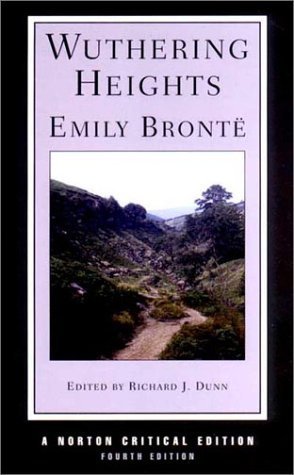
Wuthering Heights — Emily Brontë
First published: December 1847 · Thomas Cautley Newby
Pages: 464 (paperback)
Goodreads: 3.90★ (2.21M+ ratings) · view
Audiobook runtime: ~12h 6m · narrated by Joanne Froggatt (Naxos Audiobooks)
Commercial scale: 178+ years continuous print · universal university English-literature curriculum · polarizing canonical status
Cultural impact: William Wyler 1939 Oscar-winning film · Kate Bush 1978 #1 UK song · defining Gothic-moors-passion-tragedy canonical text · Emily Brontë's sole novel
The 19th-century's defining Gothic-moors-passion-tragedy single-novel — Emily Brontë's sole literary work published one year before her December 1848 death, 178 years of continuous print, and one of English literature's most-polarizing canonical texts. Skip the Libby wait with Kindle + free CastReader AI TTS →
Wuthering Heights is Emily Brontë's December 1847 Gothic-moors-passion-tragedy canonical text — the 464-page framed-narrative novel where outside observer Mr. Lockwood rents Thrushcross Grange, meets neighboring Wuthering Heights farmhouse's brooding master Heathcliff, and asks housekeeper Nelly Dean to narrate the property's multi-decade two-generation history: old Mr. Earnshaw brings home Liverpool orphan Heathcliff; Earnshaw's daughter Catherine forms intense bond with Heathcliff; Catherine marries the respectable Edgar Linton of Thrushcross Grange after overhearing Heathcliff called beneath her; Heathcliff returns wealthy for revenge; Catherine dies in childbirth to daughter Cathy; the second generation enacts partial reconciliation; Heathcliff dies having orchestrated revenge uniting the two estates under his control. Wuthering Heights is Emily Brontë's sole novel — she died December 1848 at age 30 from tuberculosis, 13 months after publication. The novel has been in continuous print since 1847 (178+ years), is standard university English-literature and Gothic-literature curriculum worldwide, and is simultaneously one of literature's most-polarizing canonical texts — the 3.90★ Goodreads rating across 2,209,650+ ratings reflects stark reader-reception divergence between 'masterpiece exploring generational trauma and psychological extremity' and 'toxic, abusive-character study with poor narrative structure' readings. William Wyler's 1939 Oscar-winning film (Laurence Olivier / Merle Oberon), Kate Bush's 1978 #1 UK single 'Wuthering Heights' (the first self-written #1 UK single by a female artist), and Andrea Arnold's 2011 adaptation anchor the novel's cultural afterlife. At 12h 6m with Joanne Froggatt's Naxos Audiobooks production, Wuthering Heights is the genre-defining Gothic-moors canonical primary-source text.
This guide covers the 12h 6m runtime, the framed-narrative structure, the two-generation Earnshaw-Linton-Heathcliff family tree, Joseph's Yorkshire-dialect, and every free / paid path.
Why 12h 6m Matters for Gothic Tragedy
Gothic-moors-passion-tragedy-canon audiobook runtime benchmark.
| Title | Runtime | Year | Goodreads rating |
|---|---|---|---|
| Wuthering Heights (E. Brontë) — this book | 12h 6m | 1847 | 3.90★ |
| Jane Eyre (C. Brontë) | 19h 5m | 1847 | 4.16★ |
| The Tenant of Wildfell Hall (A. Brontë) | 18h 14m | 1848 | 4.06★ |
| Rebecca (du Maurier) | 14h 7m | 1938 | 4.24★ |
| Jamaica Inn (du Maurier) | 10h 56m | 1936 | 3.93★ |
| The Turn of the Screw (James) | 4h 17m | 1898 | 3.42★ |
| Frankenstein (Shelley) | 8h 31m | 1818 | 3.88★ |
Wuthering Heights sits at the mid-range Gothic-canonical runtime — shorter than Jane Eyre's 19h 5m and Rebecca's 14h 7m but denser-per-minute due to the framed-narrative structure and two-generation character set. At 12h 6m, the novel reads comfortably across 6-9 days of commute listening or a long weekend at 1.5x.
Three Listening Modes
Mode 1 — Canonical Audio (Joanne Froggatt Naxos Audiobooks). $14.95 Audible credit or library-borrow via Libby; Audible Plus subscribers check rotating availability. Froggatt's 2016 Naxos production brings authentic Yorkshire-regional inflection — her Downton-Abbey-Anna-Bates Emmy-winning dialect work suits Brontë's moors setting.
Mode 2 — AI TTS via CastReader. Free, unlimited re-listens, adjustable speed, multi-voice configuration for the framed-narrative structure — Mr. Lockwood outer frame, Nelly Dean inner narration, two-generation character set (Catherine / Cathy, Heathcliff / Linton Heathcliff, Hindley / Hareton). Particularly valuable for first-time-reader comprehension. See CastReader for Kindle.
Mode 3 — LibriVox + Project Gutenberg free public-domain. Multiple volunteer-narrated editions (quality varies); pair with free Project Gutenberg ebook. The 1847 public-domain status makes Wuthering Heights one of the most-accessible-free Gothic classics globally.
The Joanne Froggatt Naxos Canonical Production
Joanne Froggatt (b. 1980, Littlebeck Yorkshire native — Downton Abbey's Anna Bates, Emmy-winner) narrates the 2016 Naxos Audiobooks edition in ~12h 6m. Her distinguishing contribution: authentic Yorkshire-regional inflection throughout the moors setting, with particular comprehension-aid value through servant Joseph's dense Yorkshire-dialect passages — Joseph's speech is notoriously difficult in print for non-Yorkshire readers, and Froggatt's native dialect-accuracy materially improves comprehension.
The Patricia Routledge Naxos earlier edition is the traditional-British-literary-register alternative for listeners preferring classic Received-Pronunciation reading. Alex Jennings and David Timson historical productions round out the canonical-recording set.
For first-listeners: Joanne Froggatt Naxos is the standard contemporary recommendation for authentic Yorkshire-regional engagement. The BBC Radio adaptations (multiple decades) provide full-cast dramatic alternatives worth seeking for listeners wanting character-differentiation beyond single-narrator productions.
The Plot: Framed Narrative with Two-Generation Structure
Outer frame (1801). Mr. Lockwood rents Thrushcross Grange on the Yorkshire moors and visits neighboring Wuthering Heights farmhouse. He meets its brooding master Heathcliff, the surly Joseph, the unwelcoming Zillah, and the silent young Cathy Linton. After a disturbing ghost dream in which a 'Catherine' calls to enter through the window, Lockwood returns to Thrushcross Grange and asks housekeeper Nelly Dean for the property's history.
Nelly Dean's inner narration — Generation 1 (1770s-1800s). Old Mr. Earnshaw brings home a Liverpool orphan boy he names 'Heathcliff'; Earnshaw's daughter Catherine forms intense bond with Heathcliff; Earnshaw's son Hindley resents Heathcliff deeply. After Earnshaw's death, Hindley (now master of Wuthering Heights) degrades Heathcliff to farmhand status. Catherine and Heathcliff roam the moors together; their bond becomes psychological-fusion ('I am Heathcliff'). After a visit to nearby Thrushcross Grange (the Lintons' estate), Catherine absorbs gentility-coded social aspirations. She agrees to marry the respectable Edgar Linton, arguing to Nelly that marrying Heathcliff 'would degrade' her — which Heathcliff overhears, before running away without hearing her subsequent declaration that she and Heathcliff are essentially one soul. Three years later, Heathcliff returns wealthy and educated. He marries Edgar's sister Isabella as cruel revenge-by-marriage, takes over Wuthering Heights by exploiting Hindley's alcoholism, and torments Catherine through proximity. Catherine dies in childbirth to her daughter Cathy.
Nelly Dean's inner narration — Generation 2 (1800s-1801). Heathcliff systematically orchestrates revenge: raises his sickly son Linton Heathcliff (by Isabella) as a weapon; traps young Cathy Linton (by Edgar) into marrying Linton Heathcliff on Edgar's deathbed; inherits both estates on the rapid successive deaths of Edgar, Hindley's son Hareton Earnshaw's father figure, and Linton. By the outer frame's 1801, Heathcliff controls both Wuthering Heights and Thrushcross Grange. Cathy Linton is widowed and young Hareton Earnshaw (Hindley's son, raised illiterate by Heathcliff as revenge-by-education-deprivation) works as farmhand.
Outer frame return (1802). Lockwood returns a year later to find Heathcliff dead, having stopped eating in grief-madness after seeing Catherine's ghost; young Cathy and Hareton are teaching each other literacy and romantically reconciling; the two properties will unite peacefully under their coming marriage.
Why Wuthering Heights Polarizes Readers
The 3.90★ Goodreads rating reflects stark reception divergence — unusual among canonical Victorian texts, which typically cluster 4.0-4.3★. The polarization stems from three interrelated factors:
Heathcliff as Byronic-hero vs. abuser. Heathcliff is simultaneously an abuse-survivor (racialized Liverpool-orphan, Hindley's systematic degradation, class-rejection) and an abuser (Isabella's cruel marriage, young Cathy's forced marriage, Hareton's education-deprivation, Linton Heathcliff's instrumentalization). Traditional readings celebrate him as Byronic-anti-hero; contemporary readings frequently reject him as abuser whose pain does not excuse his cruelty. The novel does not authorially resolve this tension.
Catherine as transcendent-passion vs. destructive-choice. Catherine's 'I am Heathcliff' declaration and her marriage-to-Edgar-while-loving-Heathcliff decision divide readers. Traditional readings celebrate transcendent-love; contemporary readings frequently critique class-aspiration-over-authentic-bond as the novel's central tragedy.
Framed narrative as masterful vs. confusing. Brontë's Lockwood-Nelly-embedded-narratives structure and two-generation character set (with name repetitions: Catherine/Cathy, Heathcliff/Linton Heathcliff, Earnshaw/Earnshaw) creates genuine structural density. First-time readers often consult character charts. The structure is either masterful — enabling the psychological density — or disorienting, depending on reader tolerance.
Brontë's craft rewards multiple readings — the novel performs differently on re-read, after learning the full two-generation structure.
Film Adaptations and Cultural Legacy
1939 William Wyler adaptation. Laurence Olivier as Heathcliff, Merle Oberon as Catherine. 8 Oscar nominations (won Best Cinematography). Covers only the first-generation narrative (ending with Catherine's death). The canonical classic-Hollywood adaptation. Widely considered among American Film Institute's top 100 films.
2011 Andrea Arnold adaptation. James Howson as Heathcliff (first casting of a Black actor as Heathcliff, addressing the novel's racialized-orphan origin), Kaya Scodelario as young Catherine. Atmospheric moors-cinematography, sparse dialogue. Divided critical reception but significant aesthetic achievement.
Multiple earlier film adaptations (1920, 1954 Spanish Buñuel 'Abismos de Pasión', 1970 Timothy Dalton, 1992 Juliette Binoche / Ralph Fiennes) and BBC TV adaptations (1998, 2009 Tom Hardy) demonstrate the novel's continuous adaptation appeal.
Kate Bush 'Wuthering Heights' (1978). The single most-distinctive cultural-afterlife event — 19-year-old Kate Bush wrote and performed the Emily-Bronte-voiced song 'Wuthering Heights' (referencing Catherine's ghost from the Lockwood-window-dream scene), which hit #1 UK and became the first self-written #1 UK single by a female artist. The song's enduring cultural presence — including the 'Wuthering Heights' annual flash-mob performances — represents literary-to-popular-culture crossover at the highest scale.
Cold Comfort Farm (Stella Gibbons, 1932). The definitive Wuthering-Heights parody — a brilliant comic novel that depends on reader familiarity with the Brontës' Yorkshire-moors-Gothic aesthetic. Essential companion reading.
Free and Paid Listening Paths (April 2026)
Free paths:
- LibriVox — multiple volunteer-narrated editions, full public domain, zero cost
- Project Gutenberg — free ebook (multiple formats), pairs with CastReader for free AI TTS
- Libby — commercial audiobooks via U.S. library card, 0-1 week wait as of April 2026
- Hoopla — commercial audiobooks, instant-lend (no wait)
- Audible Plus — rotating included-with-membership productions
- Spotify Premium — 15h monthly audiobook allocation (Wuthering Heights at 12h 6m consumes ~81%)
- CastReader — free AI TTS on any Kindle edition (public domain editions often $0)
Paid paths:
- Audible Premium — 1 credit ($14.95) for Joanne Froggatt Naxos or purchase $12-18
- Kindle ebook — $0-2 (public domain editions free or near-free)
- Physical — Penguin Classics paperback $8-12
Why Kindle + CastReader Wins for Wuthering Heights
For listeners prioritizing flexible re-engagement and framed-narrative comprehension over single-narrator craft, Kindle + CastReader free AI TTS is the optimal path:
- Multi-voice configuration — disambiguate Mr. Lockwood outer frame / Nelly Dean inner narration / two-generation character voices (Catherine vs. Cathy Linton, Heathcliff vs. Linton Heathcliff) that single-narrator productions consolidate
- Adjustable pace — slow through Joseph's dense Yorkshire-dialect passages or the two-generation transition chapters
- Pronunciation overrides — configure Wuthering Heights, Thrushcross Grange, Heathcliff, Catherine Earnshaw, Cathy Linton, Hareton Earnshaw, Linton Heathcliff, Hindley, Isabella, Nelly Dean, Mr. Lockwood, Joseph, Zillah, Gimmerton for consistent AI narration
- Paragraph highlighting — supports comprehension through Brontë's denser framed-narrative passages
- Public-domain Kindle edition — often $0, making the total cost of unlimited CastReader listening effectively free
For listeners wanting Joanne Froggatt's Yorkshire-authentic-dialect production on first listen, use Audible or Libby; then switch to CastReader for re-listens, two-generation-structure clarification, and college-course study.
Wuthering Heights in the Brontë Canon
Emily Brontë is one of three Brontë sisters whose 1846-1848 three-year publication span produced four canonical novels:
- Jane Eyre (Charlotte, 1847) — first-person-female-Bildungsroman
- Wuthering Heights (Emily, 1847) — Gothic-moors-passion-tragedy single novel
- Agnes Grey (Anne, 1847) — governess-social-realist novel
- The Tenant of Wildfell Hall (Anne, 1848) — proto-feminist abusive-marriage novel
Emily's place in this canon is distinguished by her single-novel-authorship status — unlike Charlotte's four-novel corpus or Anne's two-novel corpus, Emily produced only Wuthering Heights before her December 1848 death at age 30 from tuberculosis. The 1846 jointly-published Brontë-sisters Poems volume (under Currer / Ellis / Acton Bell male pseudonyms) contains Emily's poetry, which some critics rank alongside Wuthering Heights as her co-canonical achievement.
For listeners building the Brontë-canon: start with Wuthering Heights → Jane Eyre (the sister 1847 annus-mirabilis pair) → Agnes Grey → The Tenant of Wildfell Hall → Villette (Charlotte, 1853).
Related Reading
For listeners building the Victorian-Gothic and Brontë-canon library, these CastReader guides pair naturally with Wuthering Heights:
- Jane Eyre (Charlotte Brontë) — TTS & Audiobook Guide · Thandiwe Newton 2012-Audie-winning Naxos 19h 5m sister-novel, the 1847 Brontë annus-mirabilis pair
- Pride and Prejudice (Jane Austen) — TTS & Audiobook Guide · Rosamund Pike Audible Studios 2016 11h 35m, pre-Brontë Regency-romance canonical peer
- Frankenstein — TTS & Audiobook Guide · pre-Brontë Gothic-science canonical peer, Mary Shelley 1818
- Dracula (Bram Stoker) — TTS & Audiobook Guide · Audible Studios full-cast 15h 28m post-Brontë vampire-Gothic canonical peer
- The Little Prince (Saint-Exupéry) — TTS & Audiobook Guide · Viggo Mortensen HMH Audio 2h post-Brontë philosophical-fable descendant
Limitations and Honest Notes
- Full public domain worldwide — 1847 publication and 1848 author death place Wuthering Heights far beyond any copyright jurisdiction. Free legal editions are universally available.
- Polarizing rating — the 3.90★ Goodreads rating reflects stark reader-reception divergence rather than lower craft quality. First-time readers should expect either strong resonance or strong rejection; both reader responses are canonical.
- Framed-narrative complexity — Brontë's Lockwood-Nelly-embedded-narratives structure and two-generation character set (with name repetitions) requires attentive first-time reading. Character charts and re-reading support comprehension.
- Yorkshire-dialect difficulty — Joseph's dense Yorkshire-dialect passages are notoriously difficult for non-Yorkshire readers. Joanne Froggatt's Yorkshire-native Naxos production materially improves comprehension of these passages.
- Single-novel author — Emily Brontë died December 1848 at age 30, leaving only Wuthering Heights. No additional Emily Brontë novels exist beyond her 1846 jointly-published poetry.
Related: Listen to Kindle | Audible Alternative Free | Turn Ebook into Audiobook | Send to Phone | Kindle Audiobook Free
