The Old Man and the Sea Text to Speech: Free Audio for Ernest Hemingway's Pulitzer/Nobel Cuban Marlin Novella
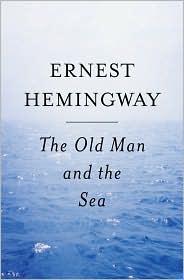
Author: Ernest Hemingway (1899-1961, 7 novels + 4 short-story collections + 3 non-fiction, Oak-Park-Illinois-born / Ketchum-Idaho-died by shotgun, Red-Cross-WWI-Italian-front, Paris-Lost-Generation-1921-1928, Key West-Havana-Ketchum residence, 1954 Nobel Prize in Literature winner + 1953 Pulitzer Prize for The Old Man and the Sea) Published: Life magazine September 1, 1952 (5.3 million copies sold in 2 days) · Charles Scribner's Sons hardcover September 8, 1952 · Jonathan Cape UK September 1952 Pages: 127 · Goodreads: 3.81★ / 1.3M ratings Audiobook: Donald Sutherland · Simon & Schuster Audio · 2h 29m (canonical) · Charlton Heston · Dove Audio · 2h 0m · Jack Gilford · Caedmon · 2h 5m · Will Patton · Simon & Schuster Audio 2018 · 2h 32m · Anthony Quinn · TV-tie-in 1990 · 2h 15m Awards: 1953 Pulitzer Prize for Fiction (Hemingway's only Pulitzer — unanimous board decision) · 1954 Nobel Prize in Literature (Swedish Academy motivation explicitly cites The Old Man and the Sea: 'for his mastery of the art of narrative, most recently demonstrated in The Old Man and the Sea, and for the influence that he has exerted on contemporary style') · Modern Library 100 Best Novels 20th Century · Time 100 Best English-Language Novels 1923-2005 · BBC 100 Novels That Shaped Our World · Guardian 100 Greatest Novels · Le Monde 100 Books of the Century · Harold Bloom Western Canon · AP English Literature + American-literature-survey canonical · National Book Foundation 'Book of the Decade' 1950s · 30M+ copies global · 40+ language translations · Life magazine 5.3M-copies-in-2-days September-1-1952-issue record Adaptations: 1958 Warner Bros film (John Sturges directing + producing, Leland Hayward producing, Peter Viertel screenplay, Dimitri Tiomkin score, James Wong Howe cinematography, Floyd Crosby underwater cinematography, 86 minutes, $5M budget / $5.6M box office) w/ Spencer Tracy (Santiago — 3rd-to-last role) + Felipe Pazos (Manolín — real-life Cuban boy) — Dimitri Tiomkin 1959 Academy Award Best Score winner + Spencer Tracy Best Actor Oscar nomination + James Wong Howe Best Color Cinematography Oscar nomination 3-Oscar-noms-1-win · 1990 Jud Taylor ABC TV film 3 hours w/ Anthony Quinn (Santiago) + Alexis Cruz (Manolín) + Gary Cole + Patricia Clarkson — Quinn Emmy-nominated · 1999 Aleksandr Petrov 20-minute paint-on-glass animated short (29,000 frames, 2.5 years production, Pascal Blais-Imagica-NHK co-production) — 1999 Academy Award Best Animated Short Film winner + 1999 British Academy Award winner + Annecy + Hiroshima + Ottawa festival wins · 1956 CBS TV Playhouse 90 · 2001 Sven Hartung German TV
Ernest Hemingway's The Old Man and the Sea is the canonical American novella. Published in Life magazine on September 1, 1952 — the issue sold 5.3 million copies in 2 days, one of the fastest-selling single-issue magazines in American publishing history — and shipped as a Charles Scribner's Sons hardcover on September 8, 1952, the novella rescued Hemingway's critical reputation after Across the River and Into the Trees (1950) had been panned. It won the 1953 Pulitzer Prize for Fiction (Hemingway's only Pulitzer) and was explicitly cited in the 1954 Nobel Prize in Literature committee's motivation. If you own the Kindle or EPUB copy and want to hear Donald Sutherland's canonical 2.5-hour narration while you commute, walk, or cook, use CastReader AI TTS to convert your copy to unabridged audio for free →.
Santiago, an old Cuban fisherman living alone in a shack near Cojímar harbor (a small fishing village 7 miles east of Havana), has gone 84 days without catching a fish. His young apprentice Manolín, who has fished with Santiago since he was five, has been forbidden by his parents to fish with the old man — they consider Santiago salao, the worst form of unlucky. But Manolín still cares for Santiago: he brings him sardines, beer, and newspapers, discusses American baseball (Joe DiMaggio especially — DiMaggio's father was a San Francisco fisherman), and helps prepare the skiff. On the 85th day, Santiago rows out far beyond the usual grounds into the Gulf Stream, alone. By noon he hooks an enormous marlin — an 18-foot fish weighing 1500 pounds, the largest he has ever encountered. The marlin drags the skiff for 2 days and 2 nights through the Gulf Stream; Santiago cannot subdue it. On the third day he harpoons and kills the marlin and lashes it to the skiff's side. But as he rows home, sharks attack the carcass. Santiago kills three sharks with his harpoon, then kills more with his knife, but the sharks keep coming. By the time he reaches Cojímar harbor after dark, only the marlin's 18-foot skeleton remains. Santiago drags his mast up the hill to his shack, collapses face-down on his bed, and sleeps. In the morning Manolín finds him — crying when he sees Santiago's torn hands — and they agree to fish together again. Santiago dreams of the lions he saw as a young sailor on the African coast.
Hemingway wrote the novella in 8 weeks in early 1951 in Cuba, then revised for nearly a year. His Cojímar-boat captain Gregorio Fuentes (1897-2002) — Hemingway's fishing companion 1935-1960 — was the primary model for Santiago. The 'iceberg theory' prose (Hemingway's 'theory of omission' articulated in Death in the Afternoon 1932) is at its most extreme in this 127-page novella: only the 'eighth above water' is written; the seven-eighths — Santiago's lifelong fishing trade, Hemingway's own post-African-plane-crash physical decline, the Cuban political context (Fulgencio Batista's March 1952 coup), the Afro-Cuban religious undercurrents — is implied.
Why 2 Hours 29 Minutes Matters
The Old Man and the Sea is CastReader's shortest curated-Pulitzer listing at 127 pages / 2.5 hours. Donald Sutherland's canonical Simon & Schuster Audio edition captures Santiago's weathered-Cuban-fisherman register with gravel timbre; Charlton Heston's Dove Audio edition is more heroic-American; Will Patton's 2018 edition is the contemporary consensus alternative. The novella's single-sitting length makes it Hemingway's most accessible work — it can be consumed on a single long walk or drive. CastReader's AI narration is excellent for classroom use and first-pass reading; Sutherland is recommended for iceberg-nuance re-listen.
| Book | Audiobook Length | Goodreads | Why Listeners Compare |
|---|---|---|---|
| The Old Man and the Sea (Hemingway, 1952) | 2h 29m | 3.81★ / 1.3M | Cojímar Cuba / Santiago-Manolín / marlin-sharks / iceberg |
| The Sun Also Rises (Hemingway, 1926) | 7h 1m | 3.80★ / 350K | Paris-Pamplona / Jake Barnes / Lost Generation / bullfight |
| A Farewell to Arms (Hemingway, 1929) | 8h 14m | 3.79★ / 300K | WWI Italian Front / Frederic-Catherine / Caporetto |
| For Whom the Bell Tolls (Hemingway, 1940) | 16h 33m | 3.98★ / 180K | Spanish Civil War / Robert Jordan-Maria / guerrilla band |
| A Moveable Feast (Hemingway, 1964) | 4h 19m | 4.07★ / 100K | Paris 1921-1928 memoir / Stein / Fitzgerald / Joyce |
| Death in the Afternoon (Hemingway, 1932) | 12h 26m | 4.04★ / 12K | Spanish bullfighting / 'iceberg theory' origin |
| The Pearl (Steinbeck, 1947) | 2h 13m | 3.51★ / 460K | Baja California Kino-Juana / poverty-parable companion |
8 Key Elements of the Novella
- Santiago — Old Cuban fisherman, Cojímar harbor resident. 84 days without a fish. Based on Hemingway's boat captain Gregorio Fuentes (1897-2002). Spencer Tracy 1958 film portrayal.
- Manolín — The boy. Fished with Santiago since age 5. Now forbidden by his parents. Brings Santiago food, beer, newspapers. Discusses DiMaggio and baseball.
- The Marlin — 18-foot / 1500-pound giant marlin. Santiago hooks it on day 85 morning. The marlin drags the skiff for 2 days and 2 nights before Santiago harpoons it on day 3.
- The Sharks — Mako shark first (Santiago kills with harpoon), then Galanos (shovelnose sharks). Strip the marlin carcass as Santiago rows home. He kills some with his knife lashed to an oar, but cannot save the flesh.
- Joe DiMaggio — Santiago's baseball hero. DiMaggio's father was a San Francisco fisherman. Santiago repeatedly invokes 'the great DiMaggio' as his moral exemplar during the marlin struggle.
- The African Lions — Santiago's recurring dream. As a young sailor he had seen lions on the African coast at a port in Africa. The dream recurs throughout the novella and closes the final page.
- 'A man can be destroyed but not defeated' — Santiago's self-declared credo. Hemingway's Code Hero ethic: grace under pressure, courage in loss, dignity beyond material outcome.
- Iceberg theory — Hemingway's 'theory of omission' (Death in the Afternoon 1932). Only 'one-eighth above water' is written; the rest is implied. The novella's 127-page length is Hemingway's most iceberg-ratio-extreme work.
How to Listen to The Old Man and the Sea with CastReader
- Own a Kindle or EPUB copy — Scribner 1952 first edition / Scribner Trade Paperback / Scribner Classics with Ralph Ellison introduction / Hemingway Library Edition 2012 w/ Patrick Hemingway foreword are recommended.
- Upload to CastReader — paste the text, select Jenny/Aria/Guy voice (Santiago's weathered register works well with Davis or Ryan Male; Manolín's youthful register with Aria). The novella's single-scene simplicity makes it ideal for first-time CastReader users.
- Listen at your pace — 0.5×–3× control. First-time listeners: 0.85× for the marlin-hooking and the shark-attack sequences (action-pacing needs absorption); 1× for most of the novella; 1.5-2× for the Cojímar-harbor opening and the African-lions dream sequences.
- Use the sleep timer — 2.5-hour length means a single-sitting listen. Ideal for one long commute, one long walk, or one evening before bed.
Hemingway's Nobel-Ensuring Legacy
The Old Man and the Sea restored Hemingway's critical reputation after the 1950 Across the River and Into the Trees critical failure. Its Pulitzer (1953) and Nobel (1954) cemented his position as the defining 20th-century American stylist. Its immediate literary descendants: Cormac McCarthy's The Road (2006) and Blood Meridian (1985) (iceberg-style minimalism), Raymond Carver's short-story collections (What We Talk About When We Talk About Love 1981), Denis Johnson's Jesus' Son (1992), and Haruki Murakami's Kafka on the Shore (2002 — Murakami credits Hemingway). The Code Hero ethic — 'grace under pressure' — has shaped American masculinity tropes from Norman Mailer to John Updike to Tim O'Brien.
Hemingway's 1960 departure from Cuba (after Batista's overthrow by Castro) and his 1961 Ketchum Idaho shotgun-suicide ended a 4-decade career. The Old Man and the Sea was his final major publication during his lifetime; A Moveable Feast (1964) and The Garden of Eden (1986) are posthumous.
Listen Free Today
The Old Man and the Sea is Hemingway's Pulitzer-Nobel cornerstone — Cojímar harbor's old Cuban fisherman, the 3-day marlin chase, the sharks-stripped-skeleton return, Santiago's 'A man can be destroyed but not defeated,' and the African-lions-on-the-shore final image. Whether you're encountering Hemingway for the first time or revisiting after watching the 1958 Spencer Tracy film or the 1999 Aleksandr Petrov Oscar-winning animated short, audio brings Hemingway's iceberg-theory prose to life. Start listening free with CastReader → — upload your Kindle or EPUB copy, pick a voice, and Santiago is rowing out past the harbor in sixty seconds.
Related reading:
- The Sun Also Rises text to speech → — Hemingway's Paris-Pamplona Lost-Generation companion
- For Whom the Bell Tolls text to speech → — Hemingway's Spanish Civil War companion
- East of Eden text to speech → — Steinbeck's California family-saga companion
- Kindle text to speech (Free) — full guide to Kindle + TTS
- Audible alternative free — other free audiobook paths
