March Text to Speech: Free Audio for Geraldine Brooks's 2006 Pulitzer Prize-Winning Little Women Civil War Companion Novel
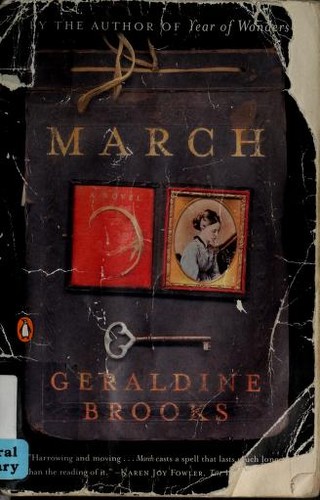
Author: Geraldine Brooks (b. 1955 Sydney Australia, University of Sydney BA 1977 + Columbia Journalism MA 1983, former Wall Street Journal Middle East + Balkans correspondent 1987-1994, 2006 Pulitzer Prize Fiction + 2011 Sidney Taylor Book Award + 2008 Dayton Literary Peace Prize People of the Book, married to journalist-historian Tony Horwitz 1984-2019 Horwitz's death) Published: Viking Press March 3, 2005 · 280 pages · 1M+ copies / 25 languages Goodreads: 3.86★ / 40K+ ratings · Little Women absent-father companion novel · historical-figure Bronson Alcott basis Audiobook: Richard Easton · HighBridge Audio · 9h 33m (canonical unabridged, 2005) · 2006 AudioFile Earphones Award · Easton (1933-2019) was Tony Award Best Actor in a Play 2001 The Invention of Love Awards: 2006 Pulitzer Prize Fiction — first Australian-born Fiction Pulitzer winner (Brooks later took US citizenship) · beat E.L. Doctorow The March (coincidentally also Civil War) + Mary Gaitskill Veronica · 2006 NBCC Fiction Finalist · 2006 James Tait Black Memorial Prize Finalist · 2005 Book Sense Book of the Year Adaptations: No realized film/TV adaptation — Little Women IP rights complications + period-drama budget concerns · Greta Gerwig 2019 Little Women Columbia Pictures adaptation (Saoirse Ronan + Florence Pugh + Timothée Chalamet — 6 Oscar noms / 1 win Best Costume Design) did not incorporate March material · Bronson Alcott biographical interest revived post-Gerwig
Geraldine Brooks's March is the 2006 Pulitzer Prize-winning Civil War companion novel that reimagines Louisa May Alcott's Little Women absent father. Published March 3, 2005 by Viking Press, the 280-page novel fills in the year-long 1861-1862 absence of Reverend Robert March, the absent Civil War chaplain father of Marmee and the four March daughters. Brooks reimagines March as a transcendentalist-abolitionist modeled on Amos Bronson Alcott (Louisa May's real father, Emerson-Thoreau circle, Concord Transcendentalist commune founder), drawing on Bronson's actual journals, letters, and the 1843 Fruitlands experiment. The April 2006 Pulitzer announcement made Brooks the first Australian-born writer to win the Pulitzer Fiction (Brooks later took US citizenship). The novel beat E.L. Doctorow's The March (which coincidentally covered Sherman's Civil War campaign) and Mary Gaitskill's Veronica. Sales reached 1M+ copies in 25 languages. If you own the Kindle or EPUB copy and want to hear Richard Easton's canonical 9h 33m HighBridge Audio narration (Tony Award-winning actor) while you commute, walk, or cook, use CastReader AI TTS to convert your copy to unabridged audio free →.
Why March matters
Brooks's Pulitzer was historic as the first Australian-born winner. Before Brooks, Pulitzer Fiction had been awarded exclusively to American-born writers (Vladimir Nabokov, naturalized, never won). The award marked Pulitzer's increasing openness to international writers working in American publishing — later echoed by Viet Thanh Nguyen's The Sympathizer (2016 Pulitzer — Vietnam-born) and Anthony Doerr's All the Light We Cannot See (2015 Pulitzer — German-setting). Brooks's career trajectory — from Wall Street Journal Middle East / Balkans correspondent 1987-1994 to Pulitzer-winning novelist — remains one of the most striking American literary debut stories. Her husband Tony Horwitz (Pulitzer Prize for National Reporting 1995, Confederates in the Attic 1998) shared her Civil War research interests; both were resident at Martha's Vineyard for the final decades of their partnership.
The Little Women Companion Premise
March opens in October 1861 at a Union Army hospital in Washington DC. Reverend Robert March — the Concord, Massachusetts abolitionist-transcendentalist Unitarian-Congregational pastor (modeled on Bronson Alcott) — has enlisted as a Union Army chaplain, leaving wife Marmee and the four "little women" Jo, Meg, Beth, Amy at home. Brooks's March narrates his year-long deployment: his mentor-friendship with a freed enslaved man Grace Clement (pre-war acquaintance from his itinerant Virginia peddler days), his trauma watching Union soldiers rape and murder Virginian enslaved women, his infatuation with Grace, his near-death illness at Washington's Georgetown Hospital, and his eventual return home as a broken man. Midway through the novel, the narrative perspective shifts to Marmee March (Louisa May's mother's fictional persona, Alcott-Abba's Unitarian-feminist voice), who comes to DC to nurse Robert. Her sections explore Marmee's pre-marriage radicalism and disappointment with Robert's transcendental inaction.
TTS and Audiobook Comparison
| Option | Length | Narrator | Notes |
|---|---|---|---|
| Richard Easton / HighBridge Audio | 9h 33m | Richard Easton | Canonical · 2006 Earphones Award · Tony winner |
| CastReader AI | ~9h 33m | neural TTS | Free, Kindle-copy instant alternative |
Geraldine Brooks's Oeuvre
- Nine Parts of Desire (1994) — non-fiction on Muslim women
- Year of Wonders (2001) — novel · 1665-1666 Plague-stricken Eyam Derbyshire village
- March (2005) — novel · 2006 Pulitzer Prize Fiction
- People of the Book (2008) — novel · 1996 Sarajevo Haggadah-restoration + 5-century European Jewish history · 2008 Dayton Literary Peace Prize
- Caleb's Crossing (2011) — novel · 1665 Martha's Vineyard Wampanoag first Harvard graduate
- The Secret Chord (2015) — novel · biblical King David
- Horse (2022) — novel · 1850s Kentucky Black horse-trainer + 2019 Smithsonian museum · 2022 NYT Bestseller
Bronson Alcott Historical Basis
Amos Bronson Alcott (1799-1888) was a real Concord, Massachusetts transcendentalist, educator, and philosopher — closely associated with Ralph Waldo Emerson, Henry David Thoreau, and Margaret Fuller. His failed 1843 Fruitlands utopian commune in Harvard, Massachusetts (vegan, no animal labor, no wool clothing, no tea or coffee) lasted seven months and bankrupted his family. His philosophical writings include Conversations with Children on the Gospels (1836) and Orphic Sayings (1840 Dial journal). Louisa May Alcott's novels — including Little Women (1868) — include disguised-autobiographical portrayals of Bronson as the absent or impractical father figure. Brooks drew primarily on Bronson's Journals (published posthumously), his letters to Emerson, and Megan Marshall's biographical research. The novel was praised by Bronson Alcott scholars for its fidelity to Bronson's transcendentalist moral sensibility — both his abolitionist fervor and his practical naïveté.
Limitations and Honest Notes
- CastReader is desktop browser only: Works on Kindle Cloud Reader (read.amazon.com) in Chrome, Edge, Firefox
- Civil War historical fiction works well: Brooks's period-authentic prose translates well to TTS
- Not DRM bypass: CastReader reads what's visually rendered on screen
Try March with CastReader
- Open your Kindle copy at read.amazon.com in Chrome, Edge, or Firefox
- Install CastReader extension or sync your copy via paste
- Pick your voice — any neural-TTS voice handles Brooks's period-authentic chaplain register
- Press play — listen across ~10 hours (two-week commute listening)
Start listening to March free →
Related Reading
- Gilead (Marilynne Robinson) — TTS & Audiobook Guide — 2005 Pulitzer · pastoral-minister register
- The Known World (Edward P. Jones) — TTS & Audiobook Guide — 2004 Pulitzer · antebellum Virginia
- The Underground Railroad (Colson Whitehead) — TTS & Audiobook Guide — 2017 Pulitzer
- All the Light We Cannot See (Anthony Doerr) — TTS & Audiobook Guide — 2015 Pulitzer
- The Good Lord Bird (James McBride) — TTS & Audiobook Guide — 2013 NBA · John Brown Civil War
