Frankenstein Audiobook & Text to Speech Guide (2026) — Mary Shelley's 1818 Gothic Foundational Masterwork and Guillermo del Toro 2025 Netflix Film Cultural Moment
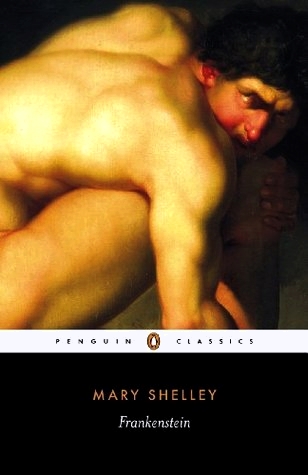
Frankenstein; or, The Modern Prometheus — Mary Wollstonecraft Shelley
First published: January 1, 1818 (Lackington Allen, anonymous) / 1831 Colburn Bentley revised standard-edition (Shelley named)
Pages: 288 (Penguin Classics standard 1831 edition)
Goodreads: 3.91★ (1.93M+ ratings) · view
Audiobook runtime: ~8h 35m Dan Stevens / Audible Originals 2022 canonical · ~8h 30m Ralph Cosham / Blackstone · ~8h 40m Simon Vance / Tantor · ~8h 30m Derek Jacobi / Naxos · ~4h Kenneth Branagh / Naxos abridged · LibriVox free Caden Vaughn Clegg / multi-reader
Commercial scale: 208+ years continuous literary tradition · foundational science-fiction + foundational Gothic + foundational women-writers canonical · global public-domain · universally-assigned curriculum · 1.93M+ Goodreads ratings · 200+ film/stage adaptations
Awards & Recognition: Harold Bloom Western Canon · Brian Aldiss Billion Year Spree canonical SF-foundational · universal Gothic / Romantic / SF / women-writers curricular · foundational bioethics literary text
Cultural position: Guillermo del Toro 2025 Netflix film w/ Oscar Isaac / Jacob Elordi / Mia Goth / Christoph Waltz · 1994 Kenneth Branagh TriStar $45M w/ Robert De Niro / Helena Bonham Carter · 1931 James Whale Universal Boris Karloff · 1935 Bride of Frankenstein · 1974 Mel Brooks Young Frankenstein · 2011 Danny Boyle National Theatre Cumberbatch-Miller · Penny Dreadful · 200+ adaptations
Shelley's 1818 foundational-Gothic-and-science-fiction masterwork — Frankenstein's 24-chapter 288-page three-volume narrative framed by Captain Walton's Arctic-expedition letters to his sister Margaret Saville, Victor Frankenstein's Geneva-to-Ingolstadt natural-philosophy-obsession culminating in the electrical-galvanic animation of an 8-foot-tall Creature from harvested-corpse parts, the Creature's abandonment and self-education through observing the De Lacey cottage-family and reading Milton's Paradise Lost / Plutarch's Lives / Goethe's Werther, the Creature's revenge-murders of Victor's brother William / servant Justine / friend Clerval / bride Elizabeth on her wedding night, Victor's Arctic-ice death-pursuit, and the Creature's final self-immolation promise — has been universally regarded as the foundational work of both science fiction and Gothic horror and the canonical Romantic-era women-writers novel since its anonymous 1818 Lackington Allen publication and 1831 Colburn Bentley expanded revised standard-edition, with the Dan Stevens / Audible Originals 2022 production widely-praised as the canonical contemporary audiobook, Guillermo del Toro's 2025 Netflix film w/ Oscar Isaac as Victor / Jacob Elordi as the Creature / Mia Goth as Elizabeth universally-anticipated as the major 2025 Academy Awards Frankenstein adaptation coinciding with del Toro's career-long passion-project realization, and 208 years of continuous literary-critical / 200+ film / stage / opera / ballet adaptation / foundational-bioethics-curriculum engagement establishing Frankenstein as the single most-adapted Gothic-horror property alongside Dracula. Use CastReader AI TTS on Kindle Frankenstein text →
Frankenstein is Mary Shelley's 1818 novel about an obsessive Swiss natural-philosophy student who creates a sentient being from assembled corpse-parts and then abandons him. Captain Walton's epistolary framing narrates his Arctic rescue of dying Victor Frankenstein on the polar ice. Victor narrates his Geneva upbringing with adopted-cousin Elizabeth Lavenza and friend Henry Clerval; his Ingolstadt University obsessive natural-philosophy / alchemical studies under M. Krempe and M. Waldman; his two-year harvesting-and-assembly of an 8-foot-tall Creature from charnel-house and dissecting-room corpse-parts; his November-night electrical-galvanic animation of the Creature; his horror at the Creature's appearance; his flight-and-abandonment. The Creature self-educates by observing the De Lacey exiled-cottage-family; teaches himself French; reads Milton, Plutarch, Goethe. The Creature's revenge-rage drives him to murder William Frankenstein (Victor's younger brother) and frame Justine Moritz; to confront Victor in the Alps demanding a female-companion mate; Victor agrees but, traveling to Scotland's Orkney Islands, destroys the half-completed female on the Creature's midnight-watching eyes. The Creature promises 'I will be with you on your wedding-night' — murders Clerval (Victor briefly imprisoned in Ireland) and murders Elizabeth on her Geneva wedding-night. Victor's Arctic pursuit brings him to Walton's ice-trapped ship. Victor dies of exhaustion; the Creature boards and announces self-immolation at the North Pole; departs on an ice-raft. Walton's closing letter to Margaret closes the novel. Central themes: Prometheanism, creation-and-abandonment, nature-versus-nurture, scientific-ethics, Romantic-Nature, epistolary-Gothic framing. At ~8h 35m Dan Stevens / Audible Originals 2022 production is the canonical contemporary audiobook; Kenneth Branagh / Naxos abridged ~4h provides classical-British alternative; LibriVox hosts free public-domain productions.
This guide covers the ~8h 35m runtime, the 24-chapter three-volume structure, Walton's framing epistolary letters, Guillermo del Toro 2025 Netflix companion-engagement, and every free / paid path.
Why ~8h 35m Matters
Gothic-horror and science-fiction-foundational runtime and rating benchmark.
| Title | Runtime | Year | Goodreads rating |
|---|---|---|---|
| Frankenstein (Shelley) — this book | ~8h 35m | 1818 | 3.91★ |
| Dracula (Stoker) | 16h | 1897 | 4.04★ |
| The Picture of Dorian Gray (Wilde) | 7h | 1890 | 4.13★ |
| Dr. Jekyll and Mr. Hyde (Stevenson) | 3h 30m | 1886 | 3.81★ |
| Wuthering Heights (Brontë) | 13h | 1847 | 3.88★ |
| Jane Eyre (Brontë) | 19h | 1847 | 4.15★ |
| The Time Machine (Wells) | 3h 15m | 1895 | 3.89★ |
| Brave New World (Huxley) | 8h 1m | 1932 | 3.98★ |
Takeaway: Frankenstein at 3.91★ / 1.93M+ Goodreads ratings is among the highest-engagement Gothic-and-SF canonical works. For first-time Gothic-literature listeners: Dr. Jekyll and Mr. Hyde (3h 30m) → The Picture of Dorian Gray (7h) → Frankenstein (8h 35m) → Dracula (16h) forms the canonical Gothic progression. For first-time science-fiction listeners: Frankenstein → The Time Machine → Brave New World → 1984 → Dune forms the canonical foundational-SF progression. Frankenstein's dual canonical-status (Gothic + SF foundational) makes it one of the most-essential commitments in the Western literary canon.
The 1818-2026 Trajectory
- 1797 August 30: Mary Wollstonecraft Godwin born London; mother Mary Wollstonecraft (A Vindication of the Rights of Woman, 1792) dies 11 days later from childbirth complications
- 1814-1816: Mary Godwin elopes with Percy Bysshe Shelley; daughter Clara born and dies 1815; son William born 1816
- 1816 summer: 'Year Without a Summer' — Byron / Percy Shelley / Mary Godwin / Claire Clairmont / John Polidori at Villa Diodati, Lake Geneva; famous ghost-story competition produces Mary's Frankenstein and Polidori's The Vampyre
- 1818 January 1: Frankenstein; or, The Modern Prometheus published anonymously by Lackington Allen (preface by Percy Shelley) — 3-volume first-edition
- 1818-1823: Various pirated stage-adaptations including Richard Brinsley Peake's Presumption; or, The Fate of Frankenstein (1823) — Creature becomes iconic on stage before ever on screen
- 1822: Percy Shelley drowns in Italy; Mary Shelley returns to England
- 1831 October: Colburn Bentley publishes Shelley's revised 1-volume edition with Shelley's 'Author's Introduction' — this 1831 edition becomes the standard canonical text
- 1851 February 1: Mary Shelley dies in London; buried St. Peter's Churchyard, Bournemouth
- 1910: Edison Studios produces first film Frankenstein — silent 12-minute adaptation
- 1931 November 21: James Whale's Frankenstein — Universal Pictures w/ Boris Karloff; Karloff's Creature-design becomes universal 20th-century iconography
- 1935: James Whale's Bride of Frankenstein — widely-regarded as the greatest horror-sequel ever made
- 1957: Hammer's The Curse of Frankenstein w/ Peter Cushing / Christopher Lee — Gothic-Technicolor revival
- 1974 December 15: Mel Brooks's Young Frankenstein w/ Gene Wilder — comedic masterpiece
- 1994 November 4: Kenneth Branagh's Mary Shelley's Frankenstein — TriStar $45M w/ Robert De Niro / Helena Bonham Carter
- 2011: Danny Boyle National Theatre Frankenstein w/ Benedict Cumberbatch / Jonny Lee Miller alternating Victor-and-Creature; Olivier Award
- 2014-2016: Penny Dreadful (Showtime) w/ Rory Kinnear as the Creature
- 2015 November 25: Paul McGuigan's Victor Frankenstein w/ Daniel Radcliffe / James McAvoy
- 2022: Dan Stevens / Audible Originals Frankenstein audiobook production
- 2025 November: Guillermo del Toro's Frankenstein — Netflix $120M+ w/ Oscar Isaac / Jacob Elordi / Mia Goth / Christoph Waltz (theatrical November; streaming December)
- 2026 April: 208+ years continuous literary tradition · foundational SF + foundational Gothic + women-writers-canonical · global public-domain · universally-assigned curriculum · elevated 2025-2026 audiobook / Kindle sales driven by del Toro 2025 Netflix visibility
The 24-Chapter Three-Volume Structure (plus Walton's Framing Letters)
Understanding Shelley's novel architecture:
Framing Epistolary (Walton's Letters 1-4) — Arctic-explorer Captain Robert Walton writes letters to his sister Margaret Saville in England describing his expedition north; Walton's ship becomes ice-trapped; Walton rescues a dying stranger (Victor Frankenstein).
Volume I (Chapters 1-8) — Victor's Narrative Part 1:
- Chapters 1-2 — Victor's Geneva childhood; Elizabeth Lavenza (adopted-cousin intended-bride); Henry Clerval; early fascination with alchemy / natural philosophy
- Chapters 3-4 — Victor at Ingolstadt University; M. Krempe dismisses alchemy; M. Waldman inspires modern chemistry; Victor's two-year obsessive natural-philosophy studies
- Chapter 5 — The Creature's animation — November-night electrical-galvanic animation; Victor's horror and flight; illness; Clerval's arrival and nursing
- Chapter 6 — Elizabeth's letters from Geneva; Victor's recovery
- Chapter 7 — News of William Frankenstein's murder; Victor's return to Geneva; Victor sees the Creature near the murder site
- Chapter 8 — Justine Moritz's trial and execution for William's murder (frame by the Creature who planted William's locket)
Volume II (Chapters 9-17) — The Creature's Autobiographical Narrative:
- Chapter 9 — Victor's grief and Alpine travels
- Chapter 10 — Victor's confrontation with the Creature on Montanvert glacier; the Creature begins his autobiographical narrative
- Chapters 11-16 — The Creature's autobiographical narrative: his abandonment; wandering; the De Lacey cottage-family observation; self-education in French; reading Milton's Paradise Lost, Plutarch's Lives, Goethe's Werther; attempt to befriend blind De Lacey; beaten by returning sighted family members; rage at human rejection; murder of William; framing of Justine
- Chapter 17 — The Creature's demand for a female-companion mate; Victor's agreement
Volume III (Chapters 18-24) — Victor's Narrative Part 2:
- Chapter 18 — Victor's travels with Clerval to England and Scotland
- Chapter 19 — Victor on Orkney Islands assembling the female Creature; destruction of the half-completed female on the Creature's midnight-watching eyes
- Chapter 20 — The Creature's threat: 'I will be with you on your wedding-night'; murder of Clerval in Ireland; Victor briefly imprisoned
- Chapter 21 — Victor returns to Geneva; marriage to Elizabeth
- Chapter 22 — Elizabeth's wedding-night murder at the Swiss inn
- Chapter 23 — Victor's father dies of grief; Victor begins Arctic pursuit
- Chapter 24 — Victor's Arctic pursuit brings him to Walton's ice-trapped ship; Victor narrates his story to Walton
Closing Framing (Walton's Final Letters) — Victor dies of exhaustion; the Creature boards the ship; laments Victor's death; announces his intention to self-immolate at the North Pole; departs on an ice-raft; Walton's final letter to Margaret closes the novel.
24 chapters (1831 standard) / 23 chapters (1818 first-edition) arranged in three volumes plus Captain Walton's framing letters, approximately 75,000 words. Shelley's canonical set-pieces: Walton's Letters 1-4 framing, Chapter 5 Creature's animation, Chapters 11-16 Creature's autobiographical narrative and De Lacey-family observation, Chapter 17 Victor's agreement to create a female, Chapter 19 Orkney Islands female-destruction, Chapter 20 'I will be with you on your wedding night,' Chapter 22 Elizabeth's wedding-night murder, Chapter 24 Arctic pursuit, Walton's closing letters — widely studied as the novel's ten structural pillars.
Every Way to Listen
- Dan Stevens / Audible Originals 2022 — ~8h 35m canonical contemporary English
- Ralph Cosham / Blackstone Audio — ~8h 30m single-narrator canonical
- Simon Vance / Tantor Audio — ~8h 40m single-narrator alternative
- Derek Jacobi / Naxos Audiobooks — ~8h 30m classical-British unabridged
- Kenneth Branagh / Naxos Audiobooks — ~4h abridged (Branagh's own 1994 film companion)
- Gildart Jackson / Recorded Books — alternative single-narrator
- Anthony Heald / Blackstone — alternative single-narrator
- LibriVox free public-domain — Caden Vaughn Clegg complete 1818-edition; Elizabeth Klett alternative; multi-reader community productions
- Audible Premium 1 credit — ~$14.95 covers Dan Stevens / Audible Originals or any commercial single-narrator production
- Audible Originals free-for-Premium-members — Dan Stevens 2022 free with Audible subscription
- Libby (U.S. libraries) — 0-1 week wait; multiple productions reliably stocked
- Hoopla — Gothic catalog
- Spotify Premium audiobook — 8h 35m fits within 15h monthly allocation
- LibriVox free — zero-cost Caden Vaughn Clegg complete path (Frankenstein is global public-domain since Shelley's 1851 death)
- Project Gutenberg free Kindle — complete 1818 and 1831 editions
- Purchased Kindle edition — $8-15 Penguin Classics / Oxford World's Classics / Norton Critical Edition / Broadview Press
- CastReader AI TTS with Kindle Frankenstein edition — unlimited re-listens, adjustable pace
Frankenstein's global public-domain status means comprehensive free-path options.
Libby Wait Times (April 2026)
Survey of major U.S. library networks as of April 2026.
- NYPL / Brooklyn Public Library: 0-1 week wait (Dan Stevens / Audible Originals, Ralph Cosham / Blackstone, Simon Vance / Tantor all reliably stocked; del Toro 2025 Netflix anticipated demand-surge through Q1-Q2 2026)
- Los Angeles Public Library: 0-1 week wait
- Chicago Public Library: 0-1 week wait
- Seattle Public Library: 0-1 week wait
- Boston Public Library: 0-1 week wait (university curriculum demand)
- Pre-del-Toro-Netflix demand surge: Q4 2025-Q1 2026 library waits may extend to 1-2 weeks as Frankenstein demand surges with del Toro Netflix release
Frankenstein has very short library waits — its universal-canonical-assignment and 1.93M+ Goodreads rating ensure every major US library system carries multiple digital copies and multiple productions. Libby is strongly-recommended free path. LibriVox Caden Vaughn Clegg is the zero-wait free path.
Why Kindle + CastReader Suits Frankenstein
Frankenstein's 24-chapter structure and accessible ~8h 35m runtime make it well-suited to CastReader AI TTS — 1-2 week evening-session consumption pattern is manageable in weekday-commute+weekend-sessions, and the novel's universal classroom-canonical status means literature and science-fiction students commonly re-read across semesters.
Listeners commonly return to:
- Walton's Letters 1-4 — the novel's Arctic-frame that contemporary readers sometimes gloss over but which is structurally essential
- Chapter 5 the Creature's animation — universally-quoted 'It was on a dreary night of November' opening; the novel's foundational-SF moment
- Chapters 11-16 the Creature's autobiographical narrative — the novel's philosophical heart; the Creature's self-education and De Lacey observation
- Chapter 17 Victor's agreement to create a female (the novel's ethical pivot)
- Chapter 19 Orkney Islands female-destruction — the novel's pivot toward tragedy
- Chapter 20 'I will be with you on your wedding night' — the novel's famous threat-line
- Chapter 22 Elizabeth's wedding-night murder — the novel's domestic-Gothic climax
- Chapter 24 Arctic pursuit
- Walton's closing letters — the Creature's final soliloquy and self-immolation promise
For Guillermo del Toro 2025 Netflix preparation: CastReader's cross-device bookmarking enables reading-the-book before del Toro-film-viewing to provide complete Shelleyan-philosophical context that del Toro's adaptation will necessarily interpret; for post-film engagement, re-reading with del Toro's visual-interpretive choices in mind reveals the novel's structural elements del Toro has emphasized. CastReader supports Frankenstein → additional Shelley (The Last Man 1826) / Romantic-women-writers (Jane Austen catalog) / Gothic progression.
CastReader's pronunciation overrides handle Shelley's Anglo-Swiss-German-Italian proper-noun catalog: Victor Frankenstein (FRAN-ken-stine), Elizabeth Lavenza (la-VEN-za), Henry Clerval (klehr-VAL), William Frankenstein, Alphonse Frankenstein, Caroline Beaufort, Justine Moritz (zhoos-TEEN MOH-ritz), Ernest Frankenstein, Captain Robert Walton, Margaret Saville, M. Krempe, M. Waldman, De Lacey family, Felix De Lacey, Agatha De Lacey, Safie, Geneva, Ingolstadt (ING-ol-shtat), Orkney Islands, Chamonix (sham-oh-NEE), Mont Blanc, Jura, Plainpalais, Montanvert, Archangel, St. Petersburg, Arctic. CastReader handles Shelley's Romantic-era Swiss-German-French-Alpine register with period-appropriate pronunciation options.
Send to Phone for Gothic Progression
At ~8h 35m Frankenstein fits a 1-2 week consumption timeline. Send to Phone preserves CastReader position across device switches — complete Walton's Letters and Volume I during weekday commutes week 1, Volume II (Creature's narrative) and Volume III (Victor's revenge) during weekend sessions weekend 1-2. For Gothic progression, completing Frankenstein (8h 35m) and proceeding to Dr. Jekyll and Mr. Hyde (3h 30m), The Picture of Dorian Gray (7h), and Dracula (16h) forms the canonical Gothic-immersion rhythm (~35h combined); for foundational-SF progression, continuing through The Time Machine (3h 15m), Brave New World (8h 1m), and 1984 (11h 22m) forms the canonical SF-immersion rhythm (~31h combined).
Limitations and Honest Notes
- The framing-epistolary structure (Walton's letters → Victor's narrative → Creature's narrative → back to Victor → back to Walton) requires listener-attention to nested-frame shifts — contemporary readers expecting linear narrative may find the structure initially disorienting though narrators (Stevens, Branagh, Cosham) manage it well
- Shelley's 1818-edition language is more-archaic than 19th-century Victorian peers — readers unfamiliar with Romantic-era prose should expect a brief adjustment period in Walton's opening letters
- Graphic violence — the Creature's murders of William / Justine's execution / Clerval's murder / Elizabeth's wedding-night murder; Victor's tomb-robbing and corpse-harvesting descriptions
- Existential and suicidal themes — Victor's despair; the Creature's final self-immolation declaration
- Promethean-scientific-hubris themes; period-specific frames around race / class / gender / colonial-context
- Abandonment-grief themes — Shelley's 1815 infant-daughter-loss biographically informed the novel's creator-abandonment themes; contemporary readers may find these themes intense
- Allusive intertextual-reference — the Creature's self-education through Milton / Plutarch / Goethe demands comfort with literary allusion; scholarly editions (Norton Critical) provide essential context
- The 1818-first-edition versus 1831-standard-edition choice — Shelley's 1831 revision simplified and expanded the 1818 text; scholarly engagement benefits from consulting both; Oxford World's Classics (Marilyn Butler edition) emphasizes 1818, Penguin Classics emphasizes 1831
- 20th-century film adaptations (1931 Whale, 1935 Bride of Frankenstein) bear little resemblance to Shelley's novel — the square-head-bolts-through-neck Creature is a Karloff creation; the original Creature is an 8-foot-tall articulate philosopher-reader
- Readers should NOT treat 20th-century film adaptations as substitute for reading the novel — Branagh 1994 and anticipated del Toro 2025 are the mainstream-adaptations most-faithful to Shelley's philosophical themes
Related Reading
- Listen to Kindle — CastReader's Kindle-to-TTS path
- Send to Phone — cross-device position sync
- Kindle Text to Speech — Kindle TTS options overview
- Turn Kindle into Audiobook Free — free audiobook paths
- Dr. Jekyll and Mr. Hyde (Stevenson) Audiobook Guide — Gothic doubled-identity peer; 1886
- The Picture of Dorian Gray (Wilde) Audiobook Guide — Gothic-aesthetic peer; 1890
- Dracula (Stoker) Audiobook Guide — Gothic vampire peer; 1897
- Brave New World (Huxley) Audiobook Guide — dystopian-SF descendant; 1932
