A Tale of Two Cities Audiobook & Text to Speech Guide (2026) — Charles Dickens's 1859 French-Revolution Historical Epic Behind 'It Is a Far, Far Better Thing' Sydney-Carton Sacrifice
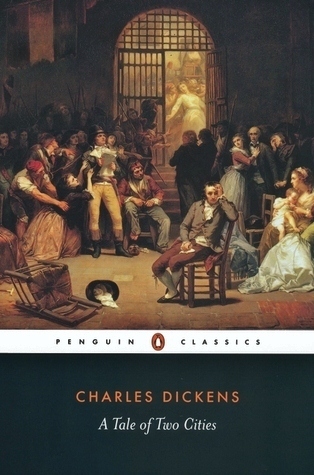
A Tale of Two Cities — Charles Dickens
First published: April-November 1859 — serialized in Dickens's All-the-Year-Round magazine; book publication November 26, 1859 (Chapman & Hall)
Pages: 489 (Penguin Classics unabridged)
Goodreads: 3.88★ (1.02M+ ratings) · view
Audiobook runtime: 13h 38m Simon Vance / Blackstone Audio · 13h 32m Martin Jarvis / Audible Studios · LibriVox free
Public domain: Dickens died 1870 · global public domain · Project Gutenberg free text · LibriVox free audio
Commercial scale: 200M+ estimated cumulative sales (historically cited as best-selling single-volume novel of all time, though contested) · 165+ years continuous print · 70+ language translations
Cultural position: 1935 MGM Ronald Colman film Oscar-nominated · 1980 CBS TV / 1989 BBC miniseries / 2018 BBC TV · universal US/UK secondary-education curriculum · iconic opening / closing sentences
The single most widely-read French Revolution novel in literary history — 165+ years continuously in print, estimated 200M+ cumulative sales, global public domain with free Project Gutenberg text and LibriVox audio, and the Sydney-Carton 'It is a far, far better thing' self-sacrifice that has shaped 165 years of Christ-figure literary characters. Use CastReader AI TTS on free Gutenberg text →
A Tale of Two Cities is Charles Dickens's 1859 historical novel set against the backdrop of the French Revolution, chronicling the intertwined fates of Londoners and Parisians across 18 years (1775-1793). The novel opens with the iconic 'It was the best of times, it was the worst of times' panoramic sentence and traces three interlocking storylines: Dr. Alexandre Manette, a Parisian physician imprisoned 18 years in the Bastille and 'recalled to life' by his daughter Lucie; Charles Darnay, French emigré who has renounced his aristocratic Evrémonde-family heritage, marries Lucie in London, and faces the Paris guillotine during the Revolution for his uncle's crimes; and Sydney Carton, cynical dissolute English lawyer who physically resembles Darnay, loves Lucie secretly, and in the novel's famous climax substitutes himself for Darnay at the guillotine, delivering the closing sacrifice-line 'It is a far, far better thing that I do, than I have ever done'. Dickens's 45-chapter structure across three books culminates in the Paris Terror climax with Madame Defarge's knitting-coded name list targeting the Evrémonde family, the Carton-for-Darnay substitution in the Bastille cell, and Carton's guillotine sacrifice. At 13h 38m with Simon Vance's Blackstone Audio canonical production (plus Martin Jarvis / Audible alternative and free LibriVox recordings), A Tale of Two Cities is the defining French Revolution historical epic.
This guide covers the 13h 38m runtime, the multi-narrator canonical landscape, the 3-book 45-chapter architecture, and every free / paid path.
Why 13h 38m Matters
Dickens-catalog runtime and rating benchmark.
| Title | Runtime | Year | Goodreads rating |
|---|---|---|---|
| A Tale of Two Cities (Dickens) — this book | 13h 38m | 1859 | 3.88★ |
| Great Expectations (Dickens) | 18h 35m | 1861 | 3.78★ |
| Oliver Twist (Dickens) | 14h 57m | 1838 | 3.88★ |
| David Copperfield (Dickens) | 36h 8m | 1850 | 4.04★ |
| Bleak House (Dickens) | 43h 15m | 1853 | 4.04★ |
| A Christmas Carol (Dickens) | 3h 24m | 1843 | 4.07★ |
| Les Misérables (Hugo) | 60h 5m | 1862 | 4.22★ |
| War and Peace (Tolstoy) | 61h 8m | 1869 | 4.13★ |
Takeaway: A Tale of Two Cities is the most accessible full-length Dickens at 13h 38m — noticeably shorter than Great Expectations (18h) or Oliver Twist (15h), and a fraction of David Copperfield (36h) or Bleak House (43h). Vance's measured 13h 38m production is the canonical library-standard anchor. Most committed listeners finish in 2 weeks at daily-commute cadence. At 1.25x the book compresses to about 10h 55m.
The 1859-2026 Trajectory
- 1859 April-November: Dickens serializes A Tale of Two Cities in his new magazine All-the-Year-Round (31 weekly installments) — immediate commercial success that establishes the new magazine
- 1859 November 26: Chapman & Hall publishes the book edition (London); Harper & Brothers simultaneously publishes US edition
- 1860-1870: Sustained UK / US sales; German / French / Russian translations; the novel becomes Dickens's canonical 'historical fiction' entry
- 1870 June 9: Dickens dies at age 58 from a stroke at his home in Gad's Hill Place, Kent; the novel enters public domain across UK upon his death plus the then-standard UK copyright term
- 1935: MGM's Jack Conway directs A Tale of Two Cities with Ronald Colman as Sydney Carton — Oscar-nominated for Best Picture and Best Film Editing; Colman's Carton performance remains the canonical screen portrayal
- 1958 Broadway: Jerome Kilty's Two for the Seesaw plays reference A Tale of Two Cities closing lines in popular-culture appropriation
- 1980: CBS TV film with Chris Sarandon (Carton / Darnay double role) — Golden Globe nomination
- 1989: BBC miniseries with James Wilby (Carton) / Xavier Deluc (Darnay) — BBC heritage-production canonical version
- 2010: Simon Vance / Blackstone Audio definitive unabridged production (13h 38m)
- 2018: BBC TV adaptation returns — one-off BBC Two TV film with Zack Morris (Carton)
- 2023 March: Broadway revival of 'A Tale of Two Cities: The Musical' (originally 2008 Broadway limited run) — niche but notable
- 2026 April: 165+ years continuous print · estimated 200M+ cumulative sales · Vance / Jarvis / LibriVox productions all widely stocked
The 3-Book 45-Chapter Architecture
Understanding Dickens's 3-book narrative structure:
Book the First: 'Recalled to Life' (1775, 6 chapters) — London / Dover / Paris setup:
- Chapters 1-3: The iconic 'It was the best of times' opening, the Dover Road night journey, the 'Recalled to Life' telegraphic message to Mr. Jarvis Lorry (Tellson's Bank)
- Chapter 4: Dover hotel meeting with Lucie Manette, Lorry's explanation of her father's 18-year Bastille imprisonment
- Chapter 5: Saint-Antoine wine-cask spilling scene (Paris foreshadowing) — the Defarge introduction
- Chapter 6: Dr. Manette's release from 18-year solitary Bastille confinement at the Defarge garret, the 'shoemaker' obsessive-compulsive work as his damaged identity
Book the Second: 'The Golden Thread' (1780-1792, 24 chapters) — London life:
- Chapters 1-3: Tellson's Bank, the Old Bailey Charles Darnay treason-trial, Sydney Carton's physical resemblance revelation
- Chapters 4-12: Soho Square life — Dr. Manette's recovery, Lucie's marriage to Darnay, Carton's 'night drunkard' secret love and boudoir-confession scene ('a life you love')
- Chapters 13-20: Paris 1789 interludes — Gaspard's child-in-the-street killing by Monseigneur the Marquis, Gabelle's peasant-uprising targeting, the Defarge wine-shop revolutionary-cell scenes, Madame Defarge's knitting registry
- Chapters 21-24: Bastille-storming reference (July 14, 1789), Foulon lynching, the three-years-of-Terror advance; Gabelle's arrest triggers Darnay's Paris return
Book the Third: 'The Track of a Storm' (1792-1793, 15 chapters) — Paris Terror:
- Chapters 1-5: Darnay's Paris arrest, La Force prison, the Conciergerie conditions
- Chapters 6-9: Darnay's first tribunal (with Dr. Manette's intervention securing his release), re-arrest based on Dr. Manette's own 18-year-old prison-journal denouncing the Evrémonde family
- Chapters 10-13: Madame Defarge's revelation — she is the sister of the murdered peasant girl Gaspard's family, seeking hereditary Evrémonde-extermination; the Miss Pross / Madame Defarge pistol-struggle scene
- Chapters 14-15: Sydney Carton's substitution at the Bastille-cell for Darnay, Carton and the seamstress in the tumbril to the guillotine, Carton's closing 'It is a far, far better thing' sacrifice monologue
45 chapters total across 3 books. Dickens's pacing is historically-dense — the French Revolution backdrop is not optional historical flavoring; readers unfamiliar with 1775-1793 French politics should prepare with brief contextual reading.
The Multi-Narrator Canonical Landscape
A Tale of Two Cities's public-domain status has produced multiple commercial and free narrations:
- Simon Vance / Blackstone Audio 2010 (13h 38m) — universal contemporary canonical recommendation; Vance is the premier contemporary Dickens narrator
- Martin Jarvis / Audible Studios (13h 32m) — BBC-heritage alternative, Jarvis is the classic BBC-radio Dickens narrator
- Frederick Davidson / Blackstone Audio (14h 14m) — older gravitas-heavy production, some listeners prefer
- Ralph Cosham / Blackstone Audio — alternative contemporary production
- Paul Scofield / Penguin Audio abridged (6h 30m) — abridged, not unabridged; not recommended
- LibriVox free productions — Mark F. Smith recording is the most widely-downloaded free option; multiple multi-voice LibriVox alternatives exist
For first-listeners: Simon Vance / Blackstone Audio 2010 is the universal recommendation. For BBC-heritage listeners: Martin Jarvis. For free-audio listeners: LibriVox Mark F. Smith.
Every Way to Listen
- Blackstone Audio (Simon Vance via Audible / Libby / Apple Books) — 13h 38m canonical production
- Audible Studios (Martin Jarvis) — 13h 32m BBC-heritage alternative
- Frederick Davidson / Blackstone older production — 14h 14m gravitas-heavy
- LibriVox free recording (Mark F. Smith or multi-voice) — free, commercial-quality
- Audible Premium 1 credit — ~$14.95 for any commercial production
- Audible purchased audiobook — $15-25
- Libby (U.S. libraries) — 0-2 week wait; Vance / Jarvis / Davidson editions all reliably stocked
- Hoopla — instant-lend availability for public-domain classics
- Spotify Premium audiobook — within 15-hour monthly allocation
- Project Gutenberg free Kindle text — $0 legal download
- Purchased annotated Kindle edition — $2-8 (Signet Classics / Penguin Classics / Vintage / Oxford World's Classics)
- CastReader AI TTS with free Gutenberg text — unlimited re-listens, adjustable pace, free, no Kindle purchase needed
Libby Wait Times (April 2026)
Survey of major U.S. library networks as of April 2026.
- NYPL / Brooklyn Public Library: 0-1 week wait (multi-version stock including Vance + Jarvis)
- Los Angeles Public Library: 0-2 week wait
- Chicago Public Library: 0-1 week wait
- Seattle Public Library: 0-1 week wait
- Boston Public Library: 0-2 week wait
- Houston Public Library: 0-2 week wait (strong high-school-curriculum demand)
A Tale of Two Cities has short library waits because its public-domain status means library networks stock multiple digital copies across multiple productions without licensing constraints. Libby is the recommended free path for classics readers.
Why Kindle + CastReader Suits A Tale of Two Cities
A Tale of Two Cities's public-domain status makes it uniquely well-suited to CastReader AI TTS — listeners can read directly from Project Gutenberg or Standard Ebooks free text without any Kindle purchase.
Listeners commonly return to:
- The opening 'It was the best of times, it was the worst of times' panoramic sentence (universal literary reference)
- Dr. Manette's 'Recalled to Life' resurrection in the Defarge garret (Book 1 emotional core)
- The Old Bailey Charles Darnay treason-trial (Book 2 opening)
- Sydney Carton's Soho-Square boudoir-confession to Lucie ('a life you love')
- Madame Defarge's knitting revelation and the Saint-Antoine wine-shop scenes
- The Paris tribunal scenes in Book 3
- The Miss Pross / Madame Defarge pistol-struggle scene
- The Carton-substitution Bastille-cell scene
- The closing tumbril sequence and 'It is a far, far better thing' guillotine monologue
For high-school-curriculum preparation (the novel is universally assigned in US Grade 10/11/12 English classes and UK A-Level Literature), free Gutenberg text + CastReader AI TTS enables unlimited re-listens at adjustable pace — the cost-efficient study-prep path.
CastReader's pronunciation overrides handle the Dickens catalog: Dr. Alexandre Manette (mah-NET), Lucie Manette (lu-SEE), Charles Darnay (dar-NAY), Sydney Carton, Jarvis Lorry, Miss Pross, Jerry Cruncher, Young Jerry, Mr. Stryver, Madame Thérèse Defarge (duh-FARZH), Ernest Defarge, The Vengeance, Gaspard, Monseigneur the Marquis Evrémonde, The Mender of Roads, Barsad (Solomon Pross), Gabelle, Foulon, Saint-Antoine, Saint-Germain, Soho Square, Fleet Street, Tellson's Bank, La Force prison, La Conciergerie, Place de la Révolution, Paris, London, Beauvais, Dover, Calais.
Send to Phone for Gradual Listening
At 13h 38m A Tale of Two Cities rewards 2-week gradual consumption. Send to Phone preserves CastReader position across device switches — start a chapter on Kindle during lunch, continue on iPhone for the evening commute, finish on the laptop during weekend mornings.
Limitations and Honest Notes
- At 13h 38m A Tale of Two Cities is a 2-week commitment — not a weekend listen
- Dickens's 19th-century prose register may feel unfamiliar to readers whose classic-literature exposure is limited to 20th-century works
- The French Revolution historical backdrop is not optional — readers unfamiliar with 1775-1793 French politics should prepare with brief contextual reading (the Reign of Terror, the Bastille, Robespierre, Marie Antoinette)
- Multiple commercial narrations exist with no single definitive canonical choice — Vance / Jarvis / Davidson are all respected; personal narrator preference matters
- The Goodreads rating (3.88★) is lower than some other Dickens works (Great Expectations 3.78★ is comparable; David Copperfield 4.04★ and Bleak House 4.04★ are higher-rated) — reflecting the polarized student-reader response given the book's canonical-curriculum status
- Dickens's portrayal of Madame Defarge as a monolithic vengeance-figure has attracted contemporary critical reconsideration — the 'revolutionary women as bloodthirsty hags' framing is historically contested
- The 200M+ cumulative-sales figure commonly cited for A Tale of Two Cities is historically contested — some scholars regard it as an unverified 1950s-era publishing estimate
Related Reading
- Listen to Kindle — CastReader's Kindle-to-TTS path (or direct Gutenberg text reading)
- Send to Phone — cross-device position sync
- Kindle Text to Speech — Kindle TTS options overview
- Turn Kindle into Audiobook Free — free audiobook paths (including public-domain LibriVox)
- The Great Gatsby Audiobook Guide — American-literary classic peer
- To Kill a Mockingbird Audiobook Guide — American-curriculum classic peer
- 1984 Audiobook Guide — 20th-century political-dystopia peer
- Jane Eyre Audiobook Guide — Victorian-era classic peer
- Little Women Audiobook Guide — 1860s American Civil War-era classic peer
